Review: Valknacht – Le Sacrifice d’Ymir


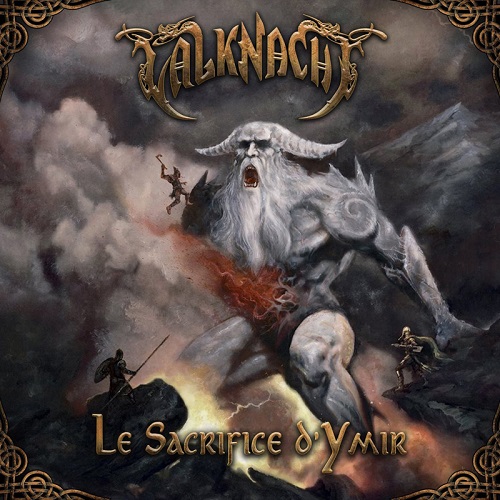
Valknacht is a five-piece paganish metal band from Quebec that have released three albums beginning in 2009–not to be confused with Walknut, the highly acclaimed side-project of Stringsskald from Темнозорь (Temnozor). I suppose I grabbed this album for an obvious reason: it presented a pagan tag from a relatively new act I had never heard of. With the folk and pagan metal scene now fifteen years in the making, a lot of the old stalwarts are simply running low on material. I am always hoping to stumble upon a new collaboration willing to pick up the slack and carry one of my favorite genres onward into a new era. Valknacht could be that band, but it’s going to take some work.

Valknacht – Bataille de Maldon, from Le Sacrifice d’Ymir

The album begins with a 3 minute intro track that I’ll not bother sampling here. You already know what it sounds like. Oars splash through the sea in time with viking voices oooing and OOOing and sometimes aaahhing. Break and repeat with some overbearing choral and brass synth, throw in a gong for good measure, and you will find yourself in the opening moments of “Bataille de Maldon”. Add a dash of synth woodwind, queue the crunch crunch crunch monotone guitar, and remind your drummer to make it metal in a few more measures. The black metal at 2:05 gives us a well-needed boost, and from there the song transitions to something that ought to be really, really cool. 2:40 made me think of Nokturnal Mortum’s “The New Era of Swords” from Weltanschauung, and for about one minute “Bataille de Maldon” is a song I really want to listen to. But the segment soon gives way to something fairly indistinguishable from what came before.

For the vast, vast majority of this 9:30 song, what you hear is an endless rain of double bass, rhythm guitar that only knows two patterns and three chords, a cheap synth whistle that’s totally unconvincing as the real deal, an admittedly interesting lead guitar, and total synth overkill plugging in every gap, sometimes doubled up with layers of “OOOOOOOOO”.

Yet, this could have all worked out really well. This band surely listened to a lot of Moonsorrow, and the string portion of the synth gets playfully close to Nokturnal Mortum at times. But the rest of the synth is just bad. It feels so fake. They use bold brass like they’re Equilibrium or Turisas, but the music isn’t nearly bombastic enough to merit it. The woodwinds have no depth, no air, no punctuation… Аркона (Arkona) is about the only band I can think of that pulls off fake woodwinds effectively (unless others are doing it so well I take them for studio musicians), and they must have much higher-end equipment than Valknacht at their disposal to do it with. It would have been nothing for one of the band members to pick up a whistle and record it proper. The vocals get really annoying really quickly for lack of dynamics or anything interesting to encase them. And the song goes on and on and on without ever adding much of anything. By 3:10 we’ve pretty much heard everything, and there’s next to nothing in the form of build-up or break until we hit a sudden transition at 8 minutes into an admittedly solid finale.

So, am I going to say anything good about this album? Surprisingly, yes. Quite a lot actually.

Valknacht – Le carmin des anges, from Le Sacrifice d’Ymir

The tragedy of Le Sacrifice d’Ymir is that just about anyone listening to this album will get the same impression that I did for its first 13 minutes. How many will keep listening? Few, I suspect, and it’s a shame because by the end this album is sounding pretty damn solid. “Le carmin des anges” is the closing track. It should have been the opening. Here is a song that cuts out all of the bullshit and condenses everything I did like about “Bataille de Maldon” into a much more manageable 5 minute package. The term “trying” drops back down my throat, and I hear some really badass Windir licks connected by groovy breaks and synth again reminiscent of Noktrunal Mortum. Thorleïf’s vocals do a total 360, and his previously dull deeper bellows sound epic when juxtaposed and then overlaid with higher-pitched rabid black metal screams.

The collective sound really works here, too. The Moonsorrow vibe they were going for in “Bataille de Maldon” flopped for a far-too-excessive attempt to be epic. That sort of music is meant to sound earthy, and the synth swarm just made it seem cheap and fake. On “Le carmin des anges”, a lot of the frivolous choral and brass sounds are gone, and what remains works far better with the Windir vibe they’re getting at.

Valknacht – Le sacrifice d’Ymir, from Le Sacrifice d’Ymir

You didn’t have to wait until the last track to find this though. The third, “Chants de guerre”, carries an infinitely more successful Moonsorrow vibe than the song before it. The woodwind’s fakeness is barely significant because the loop it plays is more of an unnatural Falkenbach chant than a harmony. Thorleïf’s full vocal range finally comes into play, and there is way more Windir-esque black metal–a sound they do right. Track 4, “Sur les ruines de Rome”, throws in some seemingly female screams and spoken lines that feel kind of reminiscent of Masha from Arkona, and could be a guest musician or further testament to Thorleïf’s range. (Liner notes for this album have been hard to come by.) As if Masha had been on their minds, track 5, “Le sacrifice d’Ymir”, feels pretty “slava!”, with some frantic whistle and guitar tapping. I had good cause to doubt another 10 minute track, but there is so much more going on here than in “Bataille de Maldon”. Thorleïf’s vocal dynamics alone are enough to make the overdrawn passages–and there are certainly a few–way less dull, the lead guitarist keeps up that Windir kick he’s proven pretty good at, that obnoxious rhythm guitar from the opener is all but missing, mixed down from a nuisance to its proper role and a background accessory.

“De murmures et de givre” starts nice but regrettably returns to a lot of the mistakes of “Bataille de Maldon”–a 7 minute track that could have probably made its point in three and a half. “Que le sang constelle mes mains” gives us our first and last taste of some accordion. Though its synthetic generation is painfully obvious, it does kick off with a melody pleasantly reminiscent of Finsterforst. Again though, the song drones on way too long with boring “I’m going to growl, you chugga-chug, and you hit a whole bunch of notes at once on your keyboard” moments.

So what’s the verdict? I think that this band either ran out of material and had to generate a few filler tracks, or else the minds behind it have some differences of opinion on how they ought to sound and they tried to accommodate everyone. Over all, fans of Windir will find plenty of moments to swoon over, and Moonsorrow die-hards will be modestly entertained. I got a Nokturnal Mortum vibe in some of the synth string utilization and rhythm guitar breakdowns, but not nearly enough to satisfy, and it has to take second stage to a lot of derivative crap. These guys have enormous potential, and they’re relatively young by band standards. I think the inclusion of “Bataille de Maldon” in its present state–at all let alone as the not-so-grand opener–is a little suspect. It would be nice to hear some session musicians for the folk instrumentation, or at least a better keyboard. And they really need to do something about song lengths relative to content. I will have long forgotten Le Sacrifice d’Ymir this time next year, but I won’t forget to check out their future releases. Turisas rose from a totally generic sound to release one of the best albums in folk metal. So did Finsterforst. Valknacht are certainly capable of becoming a band I could fall in love with.

October Music Series: Finsterforst – Urquell


http://www.youtube.com/watch?v=heSip-eSXls

…zum Tode hin was the most pleasant surprise of 2009. Like Turisas in 2007 and Nekrogoblikon in 2011, Finsterforst managed to rise from the depths of mediocrity to greatness in a single album. I’d spun Weltenkraft often enough to know them when I heard them, but there was absolutely nothing special about it. I only grabbed …zum Tode hin in the first place because I was very actively keeping up with metal in general at the time, and it ended up on my top 10 list come the end of the year.

…zum Tode hin adopts a folk-black sound which should immediately appeal to fans of Moonsorrow, while maintaining the strong emphasis on accordion that characterized Weltenkraft. But unlike Moonsorrow (at least for me), Finsterforst’s melodies are extraordinarily memorable. I can’t tell you how many times I’ve got Urquell stuck in my head, and this never proves a nuisance. Looking over my 2009 list again, …zum Tode hin is fairly unique in having stood the test of time. I still have yet to grow tired of listening to it.

Finsterforst are a German band that formed in 2004. Their name means “dark forest”. The album title translates to “Towards Death”, and this particular track to “Original Source”. They haven’t released an album since …zum Tode hin, and singer Marco Schomas has since left the band. That’s a bit disconcerting, because his vocals fit their style perfectly, but the good news is a new record’s finally on its way. “Rastlos” should be available by November 27th. Cheers.

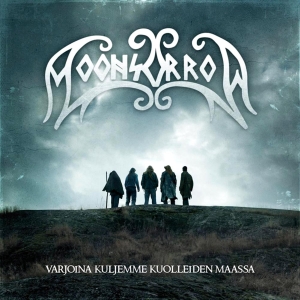
Review: Moonsorrow – Varjoina Kuljemme Kuolleiden Maassa


A few months ago I placed this album in my top 5 of 2011 so far, but I really didn’t have much to say about it. Despite having listened to ample amounts of this band over the years, I really am still in no position to thoroughly compare it to their past works (though I’ll certainly try). Moonsorrow has always been a band I’ve listened to in passing–something I put on for the mood it sets, not to appreciate its intricacies. In this sense Varjoina Kuljemme Kuolleiden Maassa is no different. But in the span of just, what, six months, I’ve listened to it more than all of their other albums combined since I first heard about them. So it’s got to have something special going for it.

Tähdetön

The first thing that makes Varjoina Kuljemme Kuolleiden Maassa so effective is showcased in the first minute of the opening song. That deep, crushing guitar tone that kicks it off doesn’t lose the spotlight until at least half way through the album, and it’s never abandoned completely. A quick skip through their larger discography tells me this is something fairly new. It’s not their first album to be largely driven by guitar chords, but I’ve found nothing as deep, encompassing, or persistent as this. The result is a fuller sound that keeps me connected as the surrounding styles vary. Tähdetön might move over time from something grim to something sweeping and beautiful, but a thread connects it all. The opening song doesn’t transition in the same sense as their previous works; it follows a steady progression.

Huuto (first 15 minutes)

The folk elements of the album are also worth noting. If a bit less authentic in feel than they used to be, they’re far more in touch with the music that surrounds them. I can’t help but think of Equilibrium’s Sagas throughout Huuto, and to a lesser extent on the other three tracks as well. You’ll find little in the raw here; it’s typically encased in or entirely consistent of dreamy keyboards that feel more fantasy than folk. This isn’t something entirely new for the band. They’ve always been pretty synth-heavy. But I don’t think you’ll find a parallel to Huuto’s intro on their past albums. I think it would have started out with just an acoustic guitar and the keyboards would have entered along with the distortion, or else would have been more of a drone than a dreamy accompaniment. Just like the intro to Tähdetön gives you a distinct example of what has changed on this album metal-wise, the intro to Huuto shows their new approach to folk. The keyboards and traditional sounds are inseparably fused, not two distinct elements of the band.

The third great thing for me is that they’ve returned to writing reasonably short songs. Their last couple releases have been made up predominantly of 30+ minute marathons that are hard to engage from start to finish. The longest song on Varjoina Kuljemme Kuolleiden Maassa is sixteen minutes. I have the option to single out a song once in a while and really get into it from start to finish, making each track a bit easier to appreciate.

Kuolleiden Maa (first 10 minutes)

A lot of what I’ve said about this album doesn’t really apply to the final song, Kuolleiden Maa, which is a fourth of the entire album. It is decidedly darker, and the only track that can really be described as black metal. It’s just as enormous as the rest of Varjoina Kuljemme Kuolleiden Maassa, but the feel is very different. That it’s my least favorite track should be no slight against it; it probably sounds more like what you would have expected on a new Moonsorrow album than any of the others. And it’s well placed to not disrupt the rest of the album. The three generally upbeat tracks come packaged together before the bleak conclusion. It also ends where the first track begins (though this sample doesn’t get that far into it), making the whole album very repeatable. The annoying bit of static you hear on the left in this sample is the product of youtube, by the way, and not something to worry about on the album proper.

In short, everything about Varjoina Kuljemme Kuolleiden Maassa feels bigger, more surreal, and all around more engaging than their past works. It has an incredibly dark ending, but I’d also say it’s all in all more happy and optimistic than their past works–something that certainly appeals to me when I’m in the mood for folk metal. As quintessentially Moonsorrow as it may be, it’s a definite step in a new direction, and the result is my favorite release by them to date. I didn’t actually sample my favorite track here. That would be Muinaiset. But all four feature songs (the rest are short intro/outro/transition tracks) are superb, and you’re definitely missing out if you don’t pick this one up.

My Top 5 Albums of 2011 So Far


Well, it’s June, and as usual I’m getting behind in music. There is a lot more to keep up with this year than the last, and I’ve only downloaded 30 new releases so far. Hopefully that will change over the summer. Allow me to kick off three months of more active music reviews with my top five albums of 2011 thus far.

5. Moonsorrow – Varjoina Kuljemme Kuolleiden Maassa

Moonsorrow have a lot of material out there, and suffice to say I haven’t heard enough of it. I am used to really long songs in black metal, but not in folk, and I always find myself treating them like the former, playing their albums for ambient effect and paying close attention only where the music reaches out and demands it. I’ve listened to all 30 minutes of Tulimyrsky 19 times apparently, and I don’t remember it. Likewise, I forgot they’d released an album this year until I was browsing last.fm and discovered that I’d listened to it 13 times.

So take that for what it’s worth. This album has four full songs with a few 1-2 minute tracks in between. The two middle ones of the four are decidedly more catchy, whether you want to call them better or not. Moonsorrow may never move me as successfully as Finsterforst did copying their style on the underrated masterpiece Zum Tode Hin, but nevertheless here is an album I will probably never tire of, even as I never fully embrace it. I want to call it my fifth favorite of the year so far, but it’s so difficult to place.

Their songs are too long for youtube, but this video fits in the vast majority of track 5, Huuto.

.

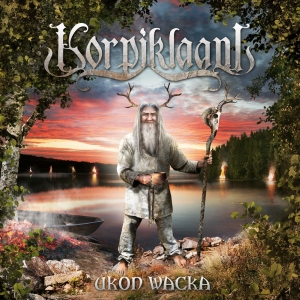
4. Korpiklaani – Ukon Wacka

Another year, another Korpiklaani album. Since 2003 they’ve released seven. That’s 83 songs that all sound pretty much the same and are all either about beer, drinking beer, being out of beer, having a hangover, or killing your hangover by drinking beer. But while they might not be folk metal’s most poetic troupe, they are hands down the most fun of the lot.

Ukon Wacka doesn’t really have any down time. From start to finish it’s a consistently enjoyable, catchy album. Sure, every song could have appeared on every other album without being out of place, but unlike on many of their others you’ll never find yourself skipping tracks. And like on Karkelo, they saved the best track for last, encouraging you to stick around:

.

3. Altar of Plagues – Mammal

I never really talk about White Tomb. I got it the first day it leaked and have listened to it dozens of times since, but it’s not something I feel inclined to sing the praises of. With the exception of the first few minutes of Watchers Restrained, there was never a point where I could tell people wow, you’ve got to hear this. It’s something a bit more personal–the sort of thing I like to play when I’m working late and really need to concentrate. It’s got a slow brooding energy that you can just feed off of. It empowers the listener without ever demanding much attention. Mammal can be described similarly, but should you choose to shut off the lights, sit back, and just soak it in, you’ll find it has a lot more to offer than their first album. I’ve only listened to it five times so far, but I feel confident placing it among the best. Here are the first 15 minutes of the opening track:

.

2. Krallice – Diotima

Here we get into the albums I consider true masterpieces. Krallice have pioneered a sound that few artists are physically capable let alone creatively inclined to emulate. But their last album, Dimensional Bleedthrough, was a bit of a disappointment. Last.fm claims I have listened to it twelve times, and I’m here to tell you I don’t remember the slightest thing about it. While it might have been more technical and refined than their first release, it lacked those standout moments that made songs like Wretched Wisdom and Forgiveness In Rot so unforgettable.

Diotima reclaims the beauty and emotion of their first album, and couples it with the mind-bending technical skill and complexity they have further developed since then. This is easily my second favorite album of 2011 at the moment, and may in time lay claim to the top slot. I highlighted Telluric Rings last week, so allow me to point out my other favorite, the title track. The lead guitar from 5:30 to 7:20 will leave you speechless.

.

1. Falkenbach – Tiurida

I was both shocked and disappointed to see this album go almost entirely unnoticed. I mean, Vratyas Vakyas is the second most important figure in the history of folk and viking metal after Quorthon. Yet even on wikipedia’s quite inclusive article on metal releases in 2011 it goes unmentioned. This would be excusable were it the washed-up product of an artist past his prime, but Tiurida is my favorite album of 2011.

The only complaint I have read is that it’s too repetitive, but that’s exactly what Falkenbach is meant to be. There’s a difference between repetitive and generic, and he has always been far from the latter. Indeed, it was my fear that Tiurida, his first release in six years, might lack that creative genius present in all his prior works and compensate by at last substituting some stylistic variance. But Vakyas never lost his edge, and has here created his best work since En Their Medh Riki Fara fifteen years ago. Let the glorious opening and closing tracks speak for themselves: