Film Review: The Chase (dir by Arthur Penn)


The Chase, a small-town Texas melodrama from 1966, opens with Robert Redford escaping from prison.

Redford is playing Bubber Reeves. Bubber, we’re told, has spent the last few years in a tough Texas prison, convicted of a murder that he didn’t commit. Now, he’s on the run and he’s probably returning to his hometown. His wife, Anna (Jane Fonda), still lives there, though Anna is now having an affair with Jake Rogers (James Fox). Jake is the son of the most powerful man in town, Val Rogers (E.G. Marshall). Jake also used to be Bubber’s best friend but now, he’s wracked with guilt about his affair with Anna.

Meanwhile, the townspeople are all worried that Bubber is going to seek revenge on the people who were responsible for him going to prison. Some of them know that he was actually innocent and some of them think that he’s actually the killer that he’s been made out to be but what they all have in common is that they’re worried about what Bubber’s gong to do when he shows up. Maybe they should have thought about the possibility of him getting mad and vengeful before they gave him a nickname like Bubber.

Anyway, Sheriff Calder (Marlon Brando) is convinced that Bubber is innocent but the townspeople still want him to allow them to gun Bubber down as soon as they see him. Sheriff Calder, however, is determined to keep the peace and make sure that the law prevails. He’s a man of unimpeachable integrity, working in a town full of people who are too cowardly to concern themselves with doing the right thing.

As everyone waits for Bubber to arrive. tempers come to the surface, a good deal of alcohol is consumed, and secrets are revealed. It all ends in tragedy, of course. One of the final scenes clumsily recreates the assassination of Lee Harvey Oswald. The Chase wouldn’t be an achingly self-serious film from 1966 if it didn’t.

There’s a few obvious problems with The Chase, the main one being that Robert Redford, who was 30 years-old when The Chase was released, looks surprisingly good for someone who has spent the last few years locked away in a tough Texas prison. Redford manage to escape from prison and run through a swamp without getting one single hair out of place. There’s nothing particularly dangerous about Redford in this film, which is surprising when you consider that The Chase was made just three years before Redford’s convincing turn as a laconic (if charming) killer in Butch Cassidy and the Sundance Kid. For The Chase to work, Bubber Reeves would have to be a force of nature but, whenever Redford’s on screen, you just find yourself wondering how someone who looks that good got stuck with a nickname like Bubber. The townspeople talk about Bubber like he’s a wild outlaw but Redford is just too laid back to pull it off. He comes across less like a wanted criminal and more like a California surfer who has somehow found himself in rural Texas.

As for the rest of the cast — well, there’s a lot of them. It’s a big ensemble film and good luck to anyone trying to keep track of who is related to who. Surprisingly enough, Marlon Brando is very convincing as a Texas sheriff, never allowing Sheriff Calder to turn into a stereotype. Less surprising is the fact that Robert Duvall, playing an frustrated husband, is also convincing in his role. Brando and Duvall, of course, would both go on to co-star in The Godfather. (Supposedly, when shooting of The Godfather began, Duvall was the only member of the cast with no fear of joking around with Brando, largely because they had bonded while working on The Chase.) Unfortunately, as good as Brando and Duvall are, they’re both let down in the hair department. Brando gets stuck with a hairpiece while Duvall is forced to go with a comb-over.

Some of the other performers are good and some of them are bad but none of them are particularly convincing as the residents of a small Texas town. James Fox, for instance, is very British. Jane Fonda and Angie Dickinson (cast as Calder’s wife) seem to be bored. E.G. Marshall is believably rich but never believably Southern. The other performers all tend to overact, especially once the people in town start drinking, shooting, hitting, and, in some cases, dancing. Somehow, Shelley Winters is not in the film, even though it seems like she should be.

The Chase was directed by Arthur Penn and written by Lillian Hellman. (The screenplay was based on a play and novel by Horton Foote.) Penn would follow up The Chase with Bonnie and Clyde and Alice’s Restaurant, two films that also dealt, for more successfully, with The Chase‘s themes of violence, community hypocrisy, and outlaw romanticism. Jane Fonda would go on to play Lillian Hellman in the 1977 film, Julia. For Julia, Fonda was nominated for an Oscar. For The Chase, she was not.

The Chase is one of those films that wants to say something important but doesn’t seem to be quite sure what. It’s a long and dramatic movie that doesn’t really add up to much. In the end, I think the main lesson to be learned here is not to allow your children to get a nickname like Bubber. There’s just no escape from a bad nickname.

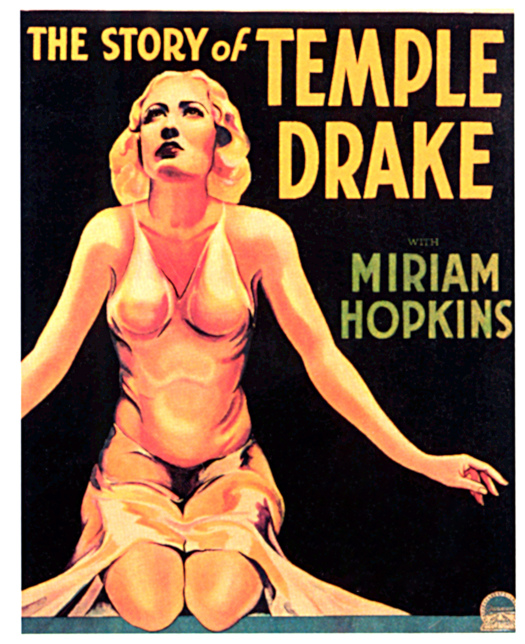
Pre-Code Confidential #24: THE STORY OF TEMPLE DRAKE (Paramount 1933)


gary loggins's avatarcracked rear viewer


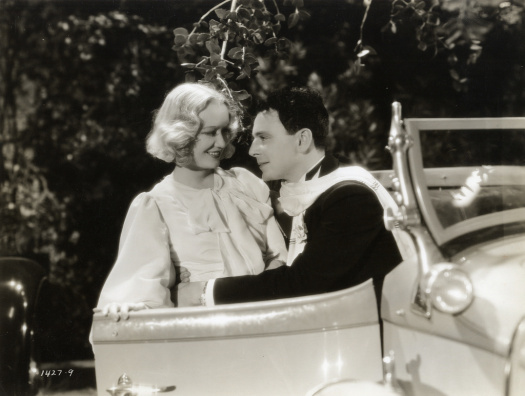
I’d heard so much about THE STORY OF TEMPLE DRAKE – that it was so depraved and salacious it almost singlehandedly led to stricter enforcement of the Production Code – that it was almost a letdown when I first viewed it. I say almost because, knowing the era this adaptation of William Faulkner’s SANCTUARY was made, I understand how shocked audiences must have been. THE STORY OF TEMPLE DRAKE could be a TV Movie of the Week today, but in 1933 people couldn’t handle this level of lasciviousness.

Georgia-born Miriam Hopkins is outstanding as Southern belle Temple, though she does lay on the “sho’ nuffs” a little too thick at times. Temple, daughter of a prominent judge, is a wild child, a big tease to all the men in town. Solid, steadfast lawyer Stephen Benbow wants to marry her, but the self-centered Temple thinks he’s too dull, preferring to party…

View original post 661 more words

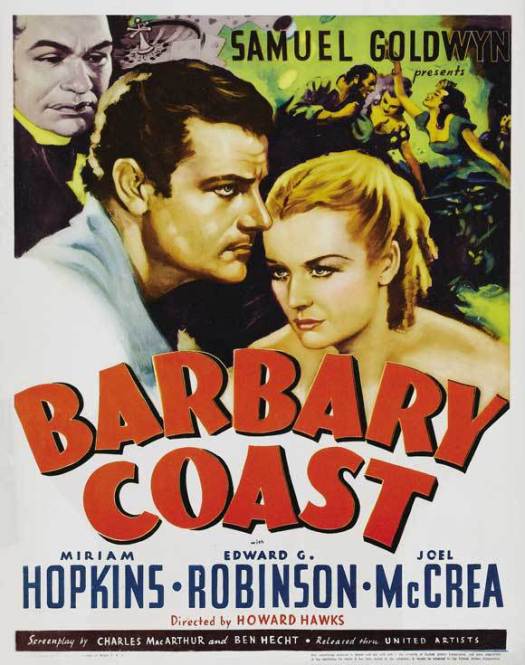
Fool’s Gold: BARBARY COAST (United Artists 1935)


gary loggins's avatarcracked rear viewer

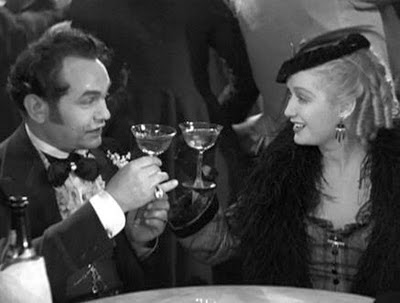
BARBARY COAST probably would’ve been better had it been made during the Pre-Code era. Don’t misunderstand; I liked the film. It’s an entertaining period piece directed by Howard Hawks , with his trademark overlapping dialog and perfect eye for composition, rivaled by only a handful (Ford and Hitchcock spring immediately to mind). But for me, this tale of rowdy San Francisco during California’s Gold Rush was too sanitized by Hays Code enforcer Joseph Breen, who demanded major script changes by screenwriters Ben Hecht and Charles MacArthur.

The result is a film that’s just misses the classic status mark. It’s 1849, and Susan Rutledge arrives in Frisco to marry her rich boyfriend, who has struck it rich in the gold strike. When she finds out he’s been killed by gambling czar Luis Chandalis, owner of the Bella Donna saloon, avaricious Susan sets her sights on him. Chandalis becomes enamored of her…

View original post 495 more words

Lisa Reviews An Oscar Nominee: The Heiress (dir by William Wyler)


(With the Oscars scheduled to be awarded on March 4th, I have decided to review at least one Oscar-nominated film a day.  These films could be nominees or they could be winners.  They could be from this year’s Oscars or they could be a previous year’s nominee!  We’ll see how things play out.  Today, I take a look at the 1949 best picture nominee, The Heiress!)

“I have been taught by the masters.”

— Catherine Sloper (Olivia De Havilland) in The Heiress (1949)

I’m not going to spoil too much of the ending of The Heiress, beyond saying that those are the words with which Catherine ends the film.  Taken out of context, they may not seem like much.  However, after you’ve spent two hours with Catherine, her father, and the man who claims that he’s in love with her, these are perhaps seven of the most chilling words ever uttered.  When you hear them, you don’t know if you should cheer or be very, very afraid.  Myself, I had both reactions but, then again, I often do.

The Heiress, which is based on a play that’s based on a novel by Henry James, takes place in 19th century New York City.  Austin Sloper (Sir Ralph Richardson) is a widely admired and very successful physician.  He’s also a very cold man, one who has never recovered from the death of his wife.  He lives with his daughter, Catherine (Olivia de Havilland).  Catherine is shy and is continually told that she’s plain and boring.  She’s devoted to her father, though Austin is cruelly manipulative of her.  Catherine, who has never been in a relationship, has pretty much accepted that she’s destined to be alone.

Or, at least, she has until she meets Morris Townsend (Montgomery Clift).

From the first minute that Catherine meets him, Morris seems to be perfect.  He’s handsome.  He’s intelligent.  He’s witty.  He’s charming.  He’s Montgomery Clift, for God’s sake!  For Catherine, it’s love at first sight and Morris says that it’s the same for him.  Suddenly, Catherine’s life no longer revolves around her father.  Now, she dreams of marrying Morris.

Austin isn’t happy about this.  Despite showing his daughter nothing but disdain for most of her life, Austin suddenly become protective of her.  He says that Morris only wants to marry her because she stands to come into a great deal of money.  To prove his point, he announces that, if Catherine and Morris get married, he will disinherit Catherine and neither she nor her husband will ever get their hands on his money.

How will Morris respond to Austin’s threat?  Well, you’ll have to watch the movie to find out and you really should!  The Heiress is a great movie, featuring noirish direction from William Wyler and brilliant performances from by de Havilland, Richardson, and Clift.  Dr. Sloper may be a monster but Richardson plays him with so much authority that it’s hard to dismiss his worries about Morris, no matter how much you may want to.  Montgomery Clift, meanwhile, keeps you guessing about Morris’s intentions.  And, finally, the great Olivia de Havilland deservedly won an Oscar for her performance as Catherine Sloper.  Over the course of the film, Catherine goes from being a withdrawn wallflower to being a … well, I can’t tell you anymore.  I don’t want to spoil the film any more than I already have.  The ending will leave you shaken in the best possible way.

The Heiress was nominated for best picture but lost to All The King’s Men.

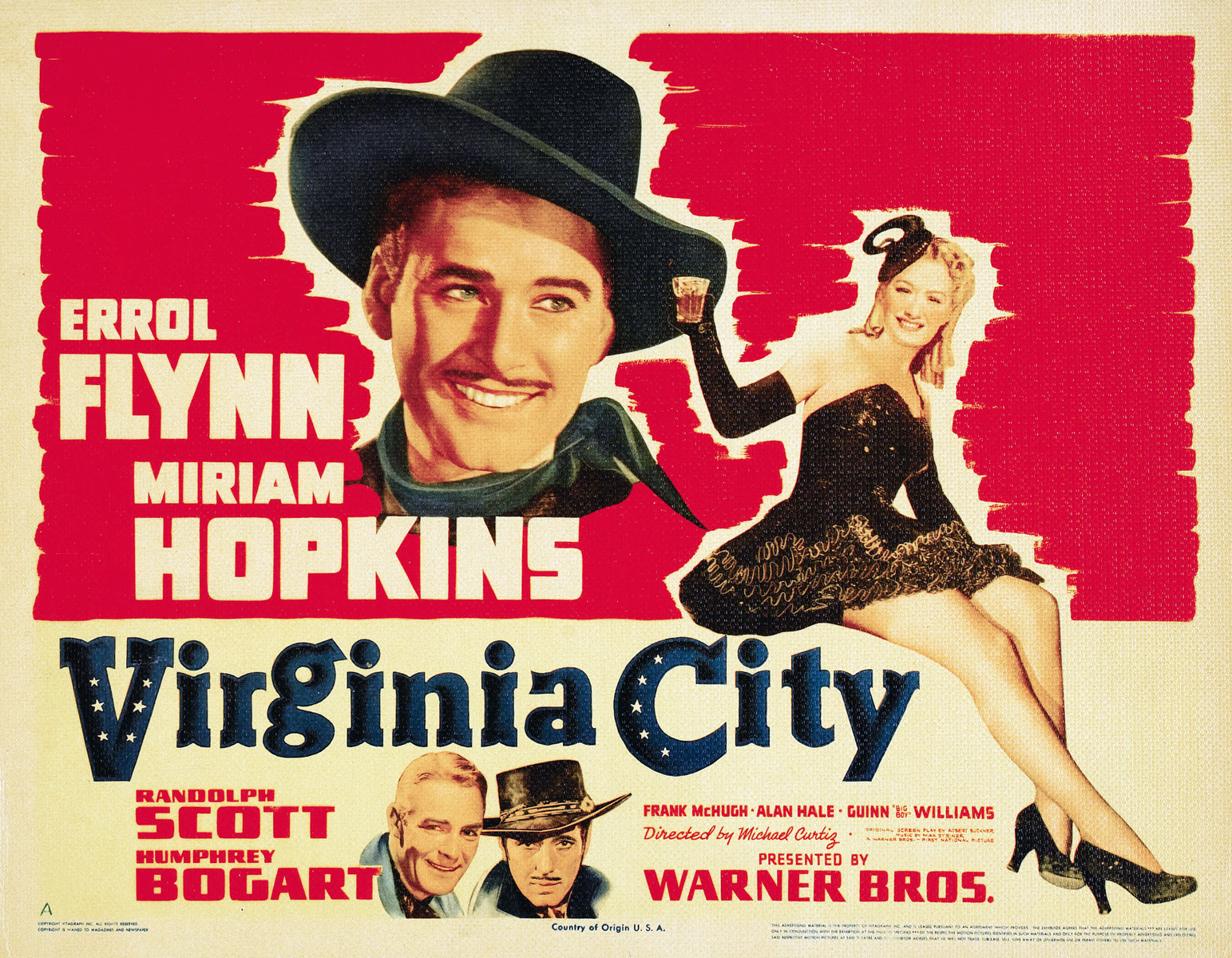
Rally ‘Round The Flag: Errol Flynn in VIRGINIA CITY (Warner Brothers 1940)


gary loggins's avatarcracked rear viewer

vc1

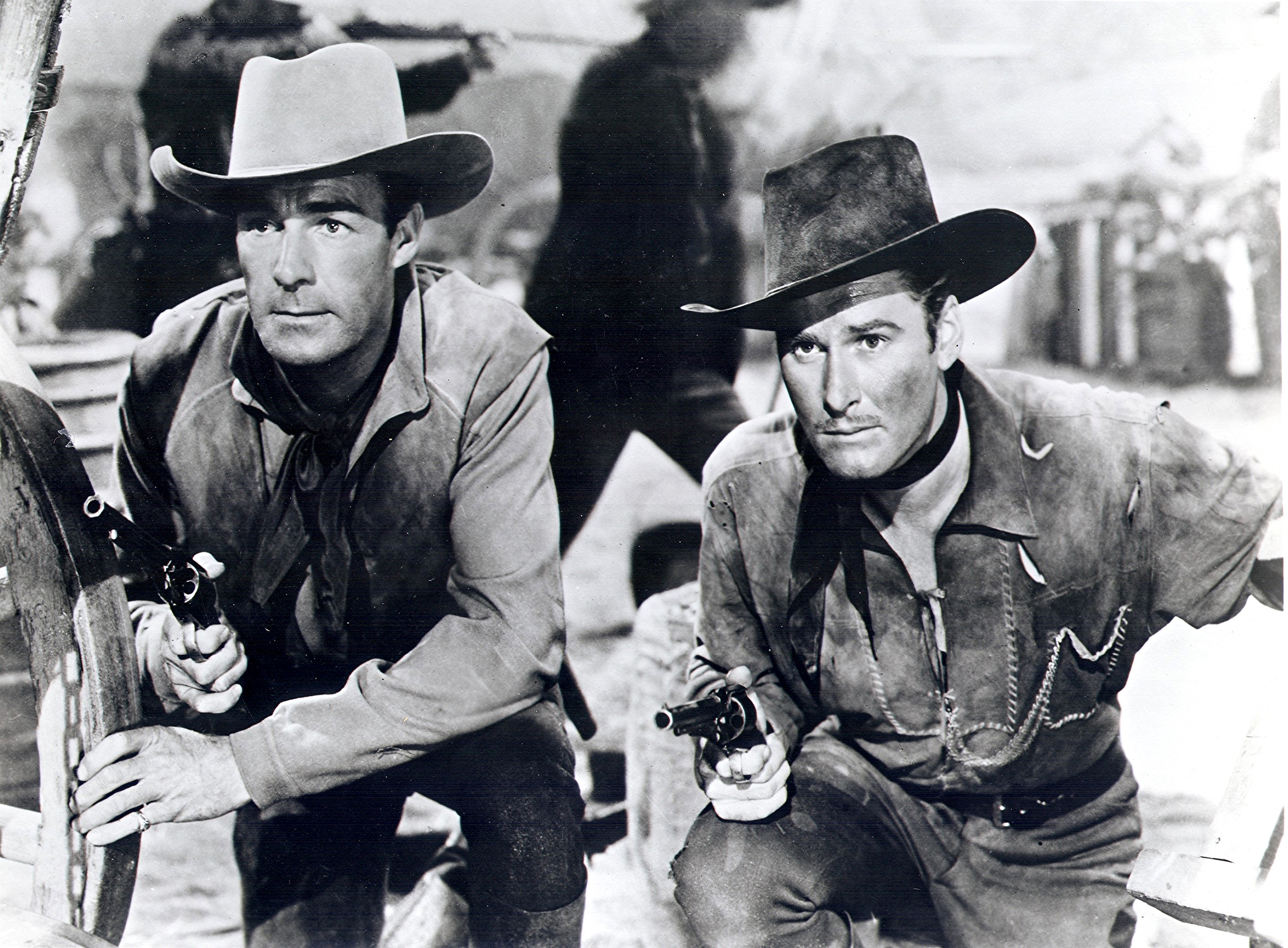
VIRGINIA CITY is a big, sprawling Western, filled with action, humor, and star quality. It’s the kind of movie they used to show around these parts every afternoon at 4 O’clock on DIALING FOR DOLLARS (George Allen was the local host), helping to spark my interest in classic films past, a flame which still burns bright today, two hours of pure entertainment, with square-jawed Errol Flynn going against square-jawed Randolph Scott backed by a Civil War setting and yet another sweepingly epic Max Steiner score.

vc2

We’re told “only the characters are fictional… The story is true” as we watch Union Captain Kerry Bradford (Flynn) and his two buddies Moose and Marblehead (Errol’s frequent co-stars/offscreen drinking compadres Alan Hale Sr and Guinn ‘Big Boy’ Williams) attempt to tunnel their way out of Libby Prison, aka ‘The Devil’s Warehouse’, when they’re caught by commanding Captain Vance Irby (Scott). He tells them Confederate troops…

View original post 689 more words

Halloween Havoc!: Fredric March in DR. JEKYLL & MR. HYDE (Paramount 1931)


gary loggins's avatarcracked rear viewer

hyde1

Robert Louis Stevenson’s DR. JEKYLL & MR. HYDE was first published in 1886, causing quite a stir in its day. The tale of man’s dark side was a huge hit, and over the years has been adapted on stage, radio, and numerous film and TV versions. John Barrymore (in the 1920 silent), Spencer Tracy (a lush 1941 MGM production), Boris Karloff (Meeting Abbott & Costello), Paul Massie (Hammer’s 1960 shocker), Jack Palance (Dan Curtis’ 1968 TV movie), and Kirk Douglas (a 1973 TV musical) are just a few actors who’ve sunk their teeth into the dual role. The best known is probably this 1931 horror film with Fredric March in an Oscar-winning turn as good Dr. Henry Jekyll and his evil counterpart, the snarling Mr. Hyde.

hyde2

Unless you’ve been living in a cave the past 130 years, you’re familiar with the story, so let’s look at the performances of Fredric March and Miriam…

View original post 668 more words

Lisa Reviews An Oscar Nominee: The Smiling Lieutenant (dir by Ernst Lubitsch)


The_Smiling_Lieutenant_posterLast night, I watched The Smiling Lieutenant, a musical comedy from 1931.  I recorded it off of TCM as a part of the 31 Days of Oscar and I have to admit that I really was not expecting much.  While I love old movies and I have a special place in my heart for pre-code movies and their obsession with lingerie and suggestive winks, I was concerned that The Smiling Lieutenant was a musical that was made at a time when the Hollywood studios were still figuring out how to use sound to tell a story.  I worried that the film would be one of those extremely creaky and overly theatrical movies that you always run the risk of coming across whenever you explore the cinema of the early 30s.

But you know what?  I was pleasantly surprised.  The Smiling Lieutenant is an undeniably old-fashioned film and yes, there were a few scenes that felt a bit too stagey.  Compared to what modern audiences are used to, some of the acting does seem stilted.  This is a film that will demand a bit of adjustment on the part of the viewer.  But, with all that in mind, The Smiling Lieutenant is still an enjoyable little movie.

The story is charmingly simple.  In Vienna, Lt. Nikki von Preyn (Maurice Chevalier) is in love with Franzi (Claudette Colbert), the worldly and free-spirited orchestra leader.  However, Nikki makes the mistake of winking at Franzi while in the presence of Princess Anna (Miriam Hopkins).  When Anna takes offense, Nikki says that he was only winking because Anna is so beautiful.  Anna immediately falls in love with Nikki and demands to marry him.  She explains that if Nikki doesn’t marry her, she’ll marry an American suitor which would totally scandalize Vienna.

Doing his patriotic duty, Nikki marries Anna.  However, Nikki still longs for the more experienced Franzi and spends his time pining for her.  Realizing that her husband is in love with another woman, Anna confronts Franzi and this is exactly where, if this was a modern film, there would be either be a huge cat fight or Anna and Franzi would team up to destroy Nikki.  However, since this is a 1931 pre-code film, Franzi realizes that Anna loves Nikki.  As a result, Franzi decides to help her boyfriend’s wife win back his interest.

And how does Franzi do this?  By giving Anna a makeover!  As Franzi explains in song, it’s time for Anna to “jazz up (her) lingerie!”

The Smiling Lieutenant is an entertaining movie.  I suppose that many would probably consider it to be the epitome of “fluff” but so what?  I imagine that for audiences in 1931, a film like The Smiling Lieutenant provided a nice escape from the Great Depression and isn’t escape one of the best things that a good film can provide?  Colbert, Hopkins, and Chevalier all give likable performances and, even 85 years after it was first released, it’s a fun little movie.

The Smiling Lieutenant was a huge box office hit and it was nominated for best picture of the year.  However, it lost to Grand Hotel.