Late Night Retro Television Review: CHiPs 3.5 “Death Watch”


Welcome to Late Night Retro Television Reviews, a feature where we review some of our favorite and least favorite shows of the past!  On Mondays, I will be reviewing CHiPs, which ran on NBC from 1977 to 1983.  The entire show is currently streaming on Prime!
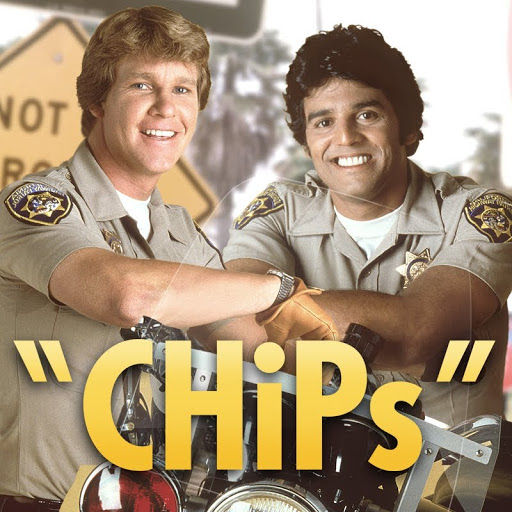
This week, someone dies!  OH MY GOD!

Episode 3.5 “Death Watch”

(Dir by Barry Crane, originally aired on October 13th, 1979)

Dennis (Christopher Stone) is a veteran movie stunt driver who has never gotten over the tragic death of his child and the way he was treated by a heartless insurance company.  He now drives up and down the freeway, looking for drivers who look like they have good insurance.  Using his stunt skills, he causes accidents and then, under one of many assumed names, he files an insurance claim.  Dennis’s wife (played by Dee Wallace, who was married to Stone at the time) thinks that Dennis is taking things too far but Dennis is convinced that he’s earned the right to commit insurance fraud.  As he puts it, the companies have enough money that it’s not going to hurt them if he steals some of it.

Unfortunately, his latest attempt to cause an accident results in a delivery van swerving to the side of the road and striking two policemen who have pulled over a drunk driver.  One of the policeman is series regular Bear (played by Brodie Greer).  The other is a guy named Steve (Stephen Parr) who we’ve never seen before but who is quickly established as being everyone’s best friend.  Or, I guess, he was everyone’s best friend as he dies shortly after being taken to the hospital.  I have to admit that Steve dying was a bit jarring.  It’s rare that anyone on CHiPs is seriously injured, much less killed.

The highway patrol officers are shaken by Steve’s death.  Ponch and Baker go to the station’s gym and work off their frustration.  Jon lifts weights.  Ponch takes off his shirt and starts hitting a punching bag and, despite the tragedy of the situation, it was hard not to laugh at the show using it as an excuse for Erik Estrada to once again take off his shirt.

The members of the highway patrol attend Steve’s funeral.  It’s pretty somber until Bear rolls into the church in his wheelchair and everyone breaks out into a huge smile.  They’re happy that Bear survived but I do have to wonder how Steve’s family felt when they saw all those smiles and heard the officers joking amongst themselves.  I guess they should have been happy that Ponch actually wore pants and a shirt to the funeral as opposed to showing up in a speedo.  Seriously, if anyone would do that, it would be Ponch.

All of the bad drivers are brought to justice.  The driver of the delivery van loses his job.  Dennis goes to prison.  By the end of the episode, everyone’s in a good mood again.  Rest in peace, Steve!

This episode deserves some credit for trying to deal with a serious issue.  Death is a big deal.  Unfortunately, CHiPs really isn’t the best format for heart-rendering drama.  Even after Steve was killed, the show still teased the audience with the promise of another crash.  In the end, the main message seemed to be that it was better to lose Steve than Bear …. or, God forbid, Ponch!

Late Night Retro Television Review: CHiPs 2.14 “Repo Man”


Welcome to Late Night Retro Television Reviews, a feature where we review some of our favorite and least favorite shows of the past!  On Mondays, I will be reviewing CHiPs, which ran on NBC from 1977 to 1983.  The entire show is currently streaming on Freevee!

This week, Jon Baker takes on …. THE REPO MAN!

Episode 2.14 “Repo Man”

(DIr by Alex Grasshoff, aired on January 6th, 1979)

This week features a truly memorable villain.

Doyle Ware (Mills Watson) is a repo man.  When people fall behind on their car payments, Doyle is the guy who shows up to repossess the vehicle.  That he’s a sleaze shouldn’t come as a surprise.  I mean, who likes a repo man, right?  But, as Baker and Ponch discover, Doyle is more than just a repo man.

He’s a criminal mastermind!

He steals cars and then informs the owner that the car has been destroyed in an accident.  Doyle offers to buy what little is left of the vehicle.  However, the truth is that the car hasn’t been destroyed.  And once Doyle gets the title, he proceeds to sell the car under the original owner’s name.  Then, once the buyer falls behind on their payments, he repossesses the car and sells it again.  What a sleazy guy!

When Baker and Ponch prevent Doyle from repossessing an old couple’s trailer, Doyle reacts by trying to destroy their credit.  He plants false reports that Baker and Ponch owe money.  Baker tries to buy an expensive saddle, just to be humiliated when the clerk (played by future playwright Terrence McNally) informs him that his credit score is awful.  Ponch starts to get notices at the police station, telling him that he owes money.  Getraer offers to help Baker but not Ponch.  Getraer can’t stand Ponch.

While dealing with his bad credit, Baker also becomes a local celebrity when he jumps, from a bridge, onto an out-of-control school bus.  Baker’s face appears on the local news and soon, people are demanding his autograph.  Baker is mortified.  Ponch is thrilled because, for some reason, people want his autograph too.  “Oh my God, you’re his partner!” someone says as they rush up to Ponch’s motorcycle.  Seriously, Ponch didn’t do anything!

Meanwhile, Grossman (who, as played by Paul Linke, is the most consistently likable member of the show’s supporting cast) gets an article published in a magazine.  Everyone at the station pretends like they haven’t read and enjoyed the article.  Poor Grossie!  Don’t worry, though.  A news crew films Grossie putting out a fire and he soon replaces Baker as everyone’s favorite local hero.  Baker’s happy to have both his good credit and his anonymity restored.

(This is actually a pretty big episode for Baker.  He also gets a subplot in which a watchmaker, played by Ned Glass, destroys Baker’s watch after he bring it in to get the wrist band fixed.)

This was a good episode.  The school bus rescue was genuinely exciting and Doyle Ware was a villain who was so sleazy that it was a lot of fun watching him get taken down.  CHiPs did a good job with Repo Man.

Retro Television Reviews: Fantasy Island 3.23 “Eagleman/Children of Mentu”


Welcome to Retro Television Reviews, a feature where we review some of our favorite and least favorite shows of the past!  On Tuesdays, I will be reviewing the original Fantasy Island, which ran on ABC from 1977 to 1986.  Almost the entire show is currently streaming is on Youtube!

This week, season 3 comes to an end!

Episode 3.23 “Eagleman/Children of Mentu”

(Dir by Michael Vejar, originally aired on May 17th, 1980)

As I watched the third season finale of Fantasy Island, I found myself growing a bit sad.  Even though I went into this program knowing that Ricardo Montalban and Herve Villechaize eventually came to despise each other, it’s still a bit jarring to see just how obvious that dislike was by the end of season 3.  Gone were the silly moments of banter that used to start each episode.  Instead, by the end of season 3, each episode opened with same stock footage of Tattoo announcing the plane and then Roarke and Tattoo heading down to the docks to meet their guests.  When Tattoo and Roarke do speak to each other, the actors barely look at each other.  As I said, it’s a shame and it’s hard not to feel that the show itself became a bit less interesting once Roarke and Tattoo stopped interacting.

As far as this week’s fantasies, they both feel somewhat familiar.  There’s a comedic fantasy and a vaguely serious fantasy, both featuring actors who had previously appeared on the show in different roles.  The comedic fantasy features Bob Denver as Morris Binstock who comes to the Island for a business retreat.  Accompanying him is his son, Barney (Keith Coogan).  Ever since the death of his wife, Morris has struggled to connect with his son.  His fantasy is to become his son’s favorite comic book hero, Eagleman!

And he gets his wish.  Roarke has set up an entire Eagleman secret headquarters in the closet of Morris’s room.  Morris puts on the Eagleman costume and he does a flew klutzy things and he gets to fly.  His son is happy.  But is Morris devoting so much time to being Eagleman that he’s running the risk of losing a promotion at work?  After all, a promotion would not only mean more money but it would also be something that would continue to exist, even after Morris left the Island.  It looks like obnoxious Hal Ripley (Larry Storch) is going to get the promotion but when the company’s CEO, H.H. Moran (Jim Backus), discovers that Morris has been pretending to be Eagleman to make his son happy, Moran makes Morris vice president.  H.H. Moran is all about family!

The more serious fantasy features Vernee Watson as Rochelle McKenzie, a reporter who is trying to track down Dr. Arthur Gates (Ralph Bellamy), a millionaire who vanished one day.  Roarke explains that Dr. Gates has been spotted on the nearby Island of Mentu.  Roarke warns her that the inhabitants of Mentu are not friendly and Rochelle will be putting her own life at risk if she goes to the island,

Rochelle still goes to the island and guess what?  Roarke was not lying about those angry inhabitants.  One of the men is horribly scarred.  Another has to use a crutch but still growls at every human he sees.  The island and the natives were exploited by a mining company and now, the natives distrust almost everyone they see.  However, Dr. Gates has decided to dedicate his life to taking care of them.  That’s a good thing because it turns out that the scarred native has a sick child and only Dr. Gates can provide the proper medical attention.

Both stories are fairly silly, though at least Rochelle’s story gives Ralph Bellamy a chance to take on the type of role that was usually given to Ray Milland.  If you only know Bellamy as the guy who was constantly getting dumped for Cary Grant in the 30s and 40s, this episode allows Bellamy a chance to show that he could be a likable and authoritative actor.  As for the Eagleman story, it was kind of uncomfortable to watch because Bob Denver looked like he was in his early 60s and it was hard not to worry about him seriously injuring himself whenever he put on the costume.

There’s an interesting moment in Rochelle’s fantasy, in which she tells Mr. Roarke that she feels foolish coming to the Island in pursuit of a “fantasy.”  She feels that she’s being childish but Roarke explains that fantasies are not childish and that one should always pursue their dreams.  Whether it was intentional or not, this scene serves as a mission statement for the entire series.  Yes, Fantasy Island was frequently silly and childish but, in the end, it still resonates because people will always have dreams and they will always have fantasies.  There will always be a place for Fantasy Island.