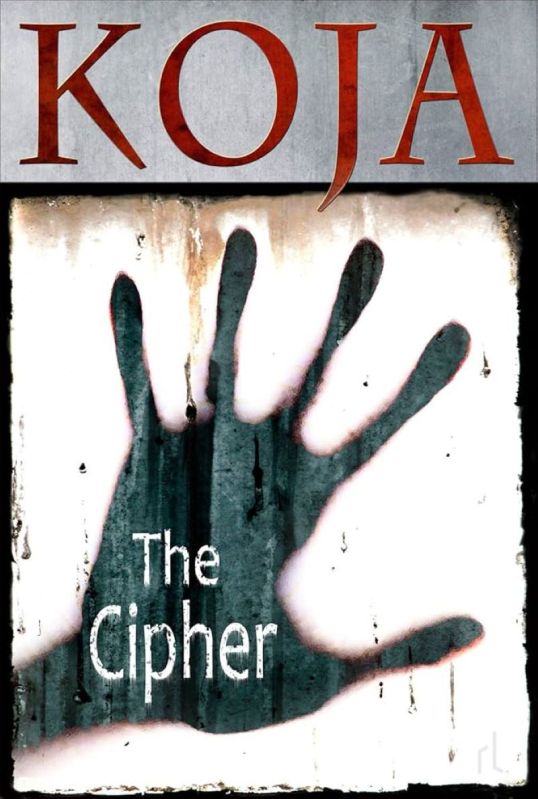
Kathe Koja’s The Cipher stands as a landmark achievement in splatterpunk and psychological horror, noted for its unapologetic dive into existential dread, fragmented narrative, and raw emotional landscape. Its reputation as a genre-defining work is well-earned, yet it also represents a demanding reading experience that diverges sharply from more traditional horror novels. For readers looking for straightforward thrills or clear-cut storytelling, Koja’s novel may feel opaque or even impenetrable. However, for those willing to engage deeply, The Cipher offers a poetic and unsettling exploration of alienation, obsession, and the unknowable.
At the heart of the novel’s challenge is Koja’s distinctive writing style. Eschewing conventional chapter structures or linear storytelling, The Cipher operates as an immersive psychological tapestry woven through the fragmented consciousness of its protagonist, Nicholas. The prose flows in long, often unruly sentences filled with impressionistic and surreal imagery that echo Nicholas’s damaged, chaotic inner world. His thoughts, memories, and anxieties drift in and out of focus, making the narrative feel like a fever dream or an inside-out nightmare. For readers new to literary horror or those more comfortable with clear plots and defined characters, this style can seem alienating and difficult to parse. The book frequently moves between blurred timelines, hallucinations, and raw emotional bursts, challenging the reader to accept ambiguity and psychological discomfort rather than easy narrative anchors.
The story revolves around Nicholas and Nakota, a dysfunctional and toxic couple trapped in a bleak urban environment that acts almost as a third character. This grim unnamed city, reminiscent of the American Rust Belt in decay during the early 1990s, exudes a cold, oppressive atmosphere that mirrors the emotional desolation of its residents. The setting’s grime and desolation bolster the novel’s themes of hopelessness and fragmentation, with Koja’s spare prose turning every scene into a sensory experience of discomfort and decay.
Central to the plot—and the horror—is the discovery of the Funhole, a mysterious and unnaturally black void located in a storage room of the apartment building. Hardly celebrated for whimsy, the Funhole is a locus of enigmatic and malevolent power that both fascinates and consumes. Nicholas and Nakota’s experiments with the Funhole—dropping insects, animals, and eventually cameras—reveal its capacity to distort and corrupt physical reality in grotesque ways, leading to disturbing mutations and aberrations. However, the real horror lies not just in these transformations but in the obsessive pull the Funhole exerts on the characters, particularly Nakota’s increasingly toxic fixation and Nicholas’s reluctant fascination.
Rather than relying on external action or traditional plot progression, The Cipher roots its terror in the psychological and emotional unraveling of its characters. The story is less about what happens and more about how it feels to fall apart in the face of an unknowable force. The degradation of Nicholas and Nakota’s relationship—marked by manipulation, dependency, and alienation—is the emotional thread binding the novel’s narrative chaos. This internal focus demands patience and a willingness to sit with discomfort from the reader; those unaccustomed to introspective or experimental fiction might find the experience frustrating or exhausting.
Overlaying all this is a strong vein of cosmic horror. The Funhole is presented as an unknowable abyss, an entity without explanation, echoing the eldritch voids found in the works of Lovecraft, Blackwood, and Machen. It refuses to comply with human curiosity or understanding, warping reality and identity in ways that defy definition. Unlike classic monster tales, the horror here is existential and diffuse, manifesting as a dark reflection of humanity’s inability to grasp the true nature of the universe or even themselves. In this respect, Koja’s work is a meditation on obsession and transformation, where the boundary between cosmic indifference and personal disintegration disappears.
While The Cipher has been celebrated for its ambition and literary risks, it offers little reprieve in terms of character likability or narrative closure. The protagonists are deeply flawed, often unlikable people caught in spirals of self-destruction. The novel’s resolution is ambiguous and bleak, leaving the audience with more questions than answers, emphasizing themes of loss, transformation, and the unknowable. It challenges standard genre expectations and eschews easy emotional satisfaction, positioning itself as a novel that unsettles rather than comforts.
Readers familiar with the edgier corners of horror fiction—fans of Clive Barker’s visceral fantasies or Poppy Z. Brite’s explorations of identity and desire—will find much to admire in Koja’s approach. The novel’s body horror is not gratuitous but symbolic, a metaphysical cracked mirror reflecting profound anxieties about embodiment, control, and alienation. Its grim realism and morally complex characters resonate alongside challenging literary experiments such as Fight Club and House of Leaves, where mental and existential crises are front and center.
In sum, Kathe Koja’s The Cipher stands as a bold, uncompromising exploration of despair, obsession, and cosmic terror wrapped in a chaotic, poetic narrative. It demands engagement on a deep level, rewarding readers with a unique experience that expands the scope of horror fiction. This is a novel best suited for those who prize atmosphere, psychological depth, and existential questioning over conventional scares or plot-driven horror. While it may prove inaccessible or taxing for some, for others it offers a transformative journey into the dark, tangled spaces of the mind and the universe—an unsettling masterpiece that lingers long after the final page is turned.
 Through the Shattered Lens