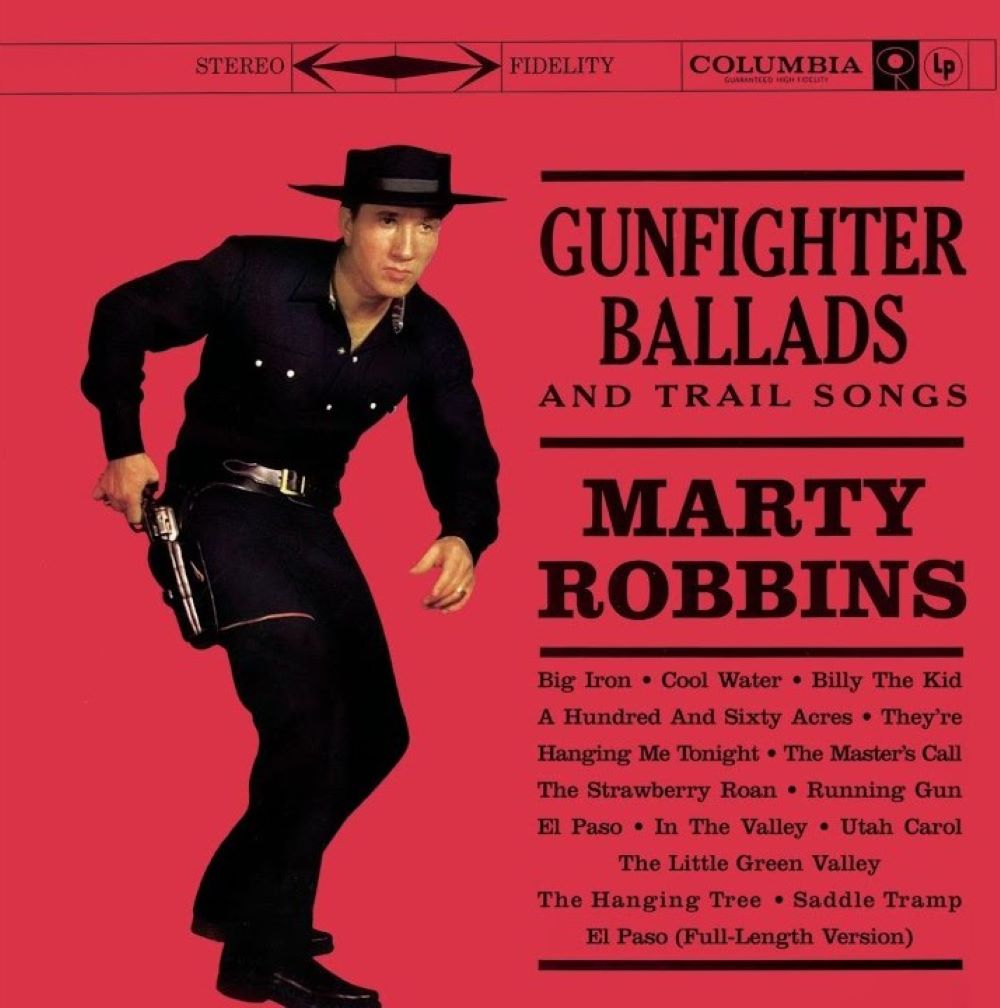
Song of the Day: Big Iron (by Marty Robbins)


Marty Robbins’ “Big Iron” is one of those songs that instantly takes you back to the Old West. It’s simple but powerful—a ranger rides into town to face down an outlaw, and you just feel that quiet tension building with every verse. Robbins’ steady voice gives the story a calm, almost cinematic vibe, like a slow pan across a dusty street before the final showdown. It’s storytelling stripped to the bone: two men, one promise of justice, and the air thick with purpose.

What’s cool is how “Big Iron” hasn’t just stayed stuck in the past. It’s popped up everywhere—from memes to movies to, of course, Fallout: New Vegas. That game gave the song a second life as a kind of anthem for wanderers—loners crossing desolate landscapes where myths feel more real than history. There’s something timeless about its message: standing your ground, even when the whole world’s gone sideways.

So when “Big Iron” opens the first episode of Fallout Season 2, it feels like a perfect fit. The familiar twang instantly throws you into that classic Fallout energy—part Western, part apocalypse. It’s not just a fun musical nod; it sets the tone for everything that follows. The song reminds us that even in a broken world, we’re still drawn to stories about courage, justice, and lone figures walking into danger with purpose. Robbins’ ballad might be old, but in Fallout’s world, it feels right at home.

Big Iron

To the town of Agua Fria rode a stranger one fine day
Hardly spoke to folks around him, didn’t have too much to say
No one dared to ask his business, no one dared to make a slip
For the stranger there amongst them had a big iron on his hip
Big iron on his hip

It was early in the morning when he rode into the town
He came riding from the south side slowly lookin’ all around
He’s an outlaw loose and running came the whisper from each lip
And he’s here to do some business with the big iron on his hip
Big iron on his hip

In this town there lived an outlaw by the name of Texas Red
Many men had tried to take him and that many men were dead
He was vicious and a killer though a youth of twenty-four
And the notches on his pistol numbered one and nineteen more
One and nineteen more

Now the stranger started talking, made it plain to folks around
Was an Arizona Ranger, wouldn’t be too long in town
He came here to take an outlaw back alive or maybe dead
And he said it didn’t matter, he was after Texas Red
After Texas Red

Wasn’t long before the story was relayed to Texas Red
But the outlaw didn’t worry men that tried before were dead
Twenty men had tried to take him, twenty men had made a slip
Twenty-one would be the ranger with the big iron on his hip
Big iron on his hip

The morning passed so quickly, it was time for them to meet
It was twenty past eleven when they walked out in the street
Folks were watching from the windows, everybody held their breath
They knew this handsome ranger was about to meet his death
About to meet his death

There was forty feet between them when they stopped to make their play
And the swiftness of the Ranger is still talked about today
Texas Red had not cleared leather for a bullet fairly ripped
And the Ranger’s aim was deadly with the big iron on his hip
Big iron on his hip

It was over in a moment and the folks had gathered ’round
There before them lay the body of the outlaw on the ground
Oh, he might have gone on living but he made one fatal slip
When he tried to match the Ranger with the big iron on his hip
Big iron on his hip

Big iron, big iron
When he tried to match the Ranger
With the big iron on his hip
Big iron on his hip
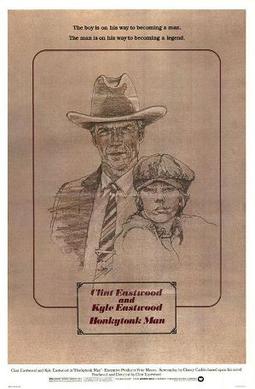
The Unnominated #17: Honkytonk Man (dir by Clint Eastwood)


Though the Academy of Motion Picture Arts and Sciences claim that the Oscars honor the best of the year, we all know that there are always worthy films and performances that end up getting overlooked.  Sometimes, it’s because the competition too fierce.  Sometimes, it’s because the film itself was too controversial.  Often, it’s just a case of a film’s quality not being fully recognized until years after its initial released.  This series of reviews takes a look at the films and performances that should have been nominated but were, for whatever reason, overlooked.  These are the Unnominated.

1982’s Honkytonk Man was a Clint Eastwood film that I had never heard of, until I came across it on Prime.  I decided to take a chance and I rented it.  I’m glad that I did because it turned out to be one of Eastwood’s best films.

Clint stars as Red Stovall, a country singer turned farmer during the Great Depression.  Kyle Eastwood stars as Red’s nephew, 14 year-old Whit “Hoss” Wagoneer.  When Red gets an opportunity to perform at the Grand Old Opry, he decides to head for Tennessee.  Since Red is dying of tuberculosis and barely knows how to drive a car, he is accompanied by Grandpa Wagoneer (John McIntire) and Whit.  Whit may be young but he knows how to drive and soon, he’s driving Red and Grandpa across the country.  When a highway patrolman (Tim Thomerson) stops them, he says that Whit is too young to drive.  After watching a speeding Red struggle to keep the car in the right lane, the patrolman pulls up beside them and says, “Let the kid drive.”

Honkytonk Man features an unexpected performance from Eastwood.  Typically, we think of Eastwood’s characters as being the epitome of cool.  Red is definitely not that.  Red is a screw-up, someone who gets arrested while trying to steal chickens and who frequently gets conned by those that he meets during his journey.  When the car breaks down in Arkansas, Red is too busy drinking to remember to catch the bus to Tennessee.  He spends the night with a hitchhiker named Marlene (Alexa Kernin).  The next morning, Whit wakes Red up and informs him that he only has a few minutes before the next bus leaves.  Marlene announces that she’s pregnant.  “HOLD THE BUS!” Red yells as he hastily puts on his clothes.

That said, Whit loves his uncle and the two Eastwoods, Clint and Kyle, both give excellent performances in Honkytonk Man.  In fact, his performance here is probably the best that Clint Eastwood has ever given.  Clint plays with his own image here.  Initially, the film almost feels like a satire of Clint’s hypermasculine persona.  (There is one scene where Eastwood handles a gun but it doesn’t play out the way that you might expect it to.)  But, as the film progresses and Red’s illness grows worse, we start to understand Red and his way of looking at the world.  Red is flawed but he loves his nephew and he loves music and, in the end, what’s important is not whether or not his song were recorded but instead that he spent his final days with Whit.  The film may start out as a comedy but it ultimately becomes a meditation on aging and how one faces the inevitability of death.

As a director, Eastwood takes his time.  He lets the movie play out slowly, with the casual pace of country story.  It’s a film full of wonderful performance and beautiful visuals and it more than earns our patience.  Wisely, Eastwood the director realizes that this story really isn’t about Red.  The story is about Whit (or Hoss, as he asks to be known) and his experiences with his uncle.  Whit worships his uncle but he also comes to learn that the most important thing is to be able to respect yourself.  In this film, Clint Eastwood knows the story that he’s telling and he knows exactly how to tell it.

Honkytonk Man went unnominated as far as the Oscars are concerned.  In the year when the well-intentioned but dramatically inert Gandhi dominated the awards and the nominations, Honkytonk Man was forgotten.  That’s a shame.

Previous Entries In The Unnominated:

  1. Auto Focus 
  2. Star 80
  3. Monty Python and The Holy Grail
  4. Johnny Got His Gun
  5. Saint Jack
  6. Office Space
  7. Play Misty For Me
  8. The Long Riders
  9. Mean Streets
  10. The Long Goodbye
  11. The General
  12. Tombstone
  13. Heat
  14. Kansas City Bomber
  15. Touch of Evil
  16. The Mortal Storm