Late Night Retro Television Review: CHiPs 3.4 “High Octane”


Welcome to Late Night Retro Television Reviews, a feature where we review some of our favorite and least favorite shows of the past!  On Mondays, I will be reviewing CHiPs, which ran on NBC from 1977 to 1983.  The entire show is currently streaming on Prime!
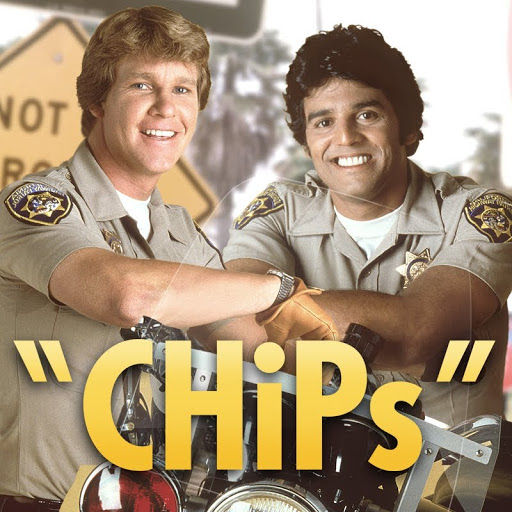
This week, CHiPs deals with the oil crisis!

Episode 3.4 “High Octane”

(Dir by John Florea, originally aired on October 6th, 1979)

Tonight’s episode of CHiPs is a real history lesson.

The episode was aired at a time when the U.S. was suffering from a shortage of gasoline.  Conflict in Iran had led to both the Shah fleeing the country and Americans being taken hostage.  Oil production fell, OPEC raised its prices, and people panicked and started to hoard gasoline.  Many states instituted odd-even gas rationing, which meant that only people with an odd-numbered license plate could purchase gas on an odd-numbered day and only people with an even-numbered license plate could purchase gas on an even-numbered day.  As so often happens when the government attempts to micromanage a crisis, this only made things worse as there were soon long lines at the pump and reports of fights breaking out between people at gas stations.  Even with the rationing, many gas stations ran out of gasoline before they could serve every customer.  If you didn’t arrive early enough, chances were that you would not be able to put gas in your car,

California was one of the many states to institute odd-even rationing and this episode of CHiPs is all about the battle over gasoline.  Two crooks are siphoning gas from independent gas stations and then reselling it to other stations.  (Their biggest customer is played by veteran screen tough guy, Aldo Ray.)  Getraer is injured when he crashes his bike while chasing the two crooks, which makes this case personal for Ponch and Baker.  Meanwhile, Ponch and Baker have to break up fights at the gas station, chase yet another guy who was caught siphoning gas from a car, and save yet another motorist who passes out from the fumes of all the gas cans that he had in the backset of his car.  Ponch even starts to date Beth (Ellen Bry), because she works at a gas station and can tell him the best time to show up to make sure that he and Baker are able to fill up their bikes.  Meanwhile, at headquarters, Harlan is giving lessons on the best way to keep unused fuel from evaporating.

Of course, it wouldn’t be CHiPs if there wasn’t also a light-hearted sports angle.  This week, everyone’s into roller hockey.  Ponch serves as the referee for the CHP-sponsored kids’ roller hockey game and everyone agrees that he’s the best referee that they’ve ever seen.  And why not?  He’s Ponch and, by the time the third season rolled around, CHiPs was definitely The Ponch Show.  Later, the adult officer play roller hockey as well.  It’s the show’s way of saying, “California’s still fun, even with the gas rationing!”

I enjoyed this episode because I’m a history nerd and it was interesting to see how the show dealt with the 1979 oil crisis while it was occurring.  It’s interesting that this episode was a bit cynical about rationing, as CHiPs was usually a show that portrayed the government and its policies as positively as possible.  In 1979, even the audiences of CHiPs was fed up with having to pay — let me check my notes to make sure I have this right — nearly a dollar a gallon for gas.

Really?  Just 90 cents for a gallon gas?  Get me a time machine.  I’m going to 1979!

Horror Film Review: The Astral Factor (dir by John Florea)


Filmed in 1978 but not released until 1984, The Astral Factor tells the story of Roger Sands (Frank Ashmore).

Known as the Celebrity Killer, Roger is a serial killer who murdered women who reminded him of his famous mother.  It may seem like Roger is destined to spend the rest of his life in prison but what the legal system didn’t consider is that Roger has the ability to not only move things with his mind but to also turn himself invisible.  How did Roger get those powers?  Who knows?  At one point, Roger’s psychiatrist mentions that Roger was a student of the paranormal.  Later, it’s revealed that he had several books about the supernatural in his bedroom.  Apparently, Roger figured out how to do it himself.

Anyway, Roger is now invisible and soon, he has escaped from prison.  He is determined to kill the five women who testified against him at his trial, both because they remind him of his mother and also because he blames them for sending him to prison.  Roger strangles his victims, which in this case means that the actresses playing them have to pretend like they’re struggling with someone who can’t be seen.  In fact, Roger spends almost the entire film in a state of invisibility.

How do you catch a killer who can’t be seen?  It’s a fair question but police Lt. Charles Barnett (Robert Foxworth) might have the answer.  Barnett’s solution involves grabbing a gun and keep firing it until you hit something.  That’s a straight-forward solution but The Astral Factor is a pretty straight forward film.  The film begins with Roger turning invisible and, to its credit, it doesn’t spend too much time trying to justify or explain Roger’s magical powers.  The film understands that all the audience really needs to know is that Roger can’t be seen and that it’s up to Lt. Burnett to find a way to stop his killing spree.

The Astral Factor is a low-budget film, one that is full of formerly prominent performers who obviously showed up to get a quick paycheck.  Sue Lyon, Marianne Hill, Leslie Parrish, and Elke Sommer all play potential victims and all of them look like they would rather be doing anything other than appearing in The Astral Factor.  Robert Foxworth, to his credit, does his best to give a convincing performance as a level-headed cop who is forced to accept the reality of the paranormal.  Not only is he having to investigate a series of murders but he’s having to do it on his birthday.  Stefanie Powers plays his girlfriend, Candy.  Candy often refers to herself in the third person whenever she’s having a conversation with her boyfriend.  I tend to do the same thing so at least there was a character in this movie to whom I could relate.  Knowing the rules of the genre, I spent the entire movie expecting Candy to be put in danger and I was actually impressed when my expectations were subverted and that didn’t happen.

With the exception of a few atmospheric scenes and an entertainingly garish and tacky dance number, the film itself has the rather flat look of a made-for-TV movie, though the occasional hint of nudity indicates that it was meant to be a theatrical release.  As I mentioned at the start of this review, The Astral Factor was originally filmed in 1978 but it sat on the shelf until 1984.  That’s when a slightly shortened version was released under the title The Invisible Strangler.  Today, the film is available in countless Mill Creek Box Sets, under its original title and with its original run time restored.