Artwork of the Day: Marilyn Monroe


mm

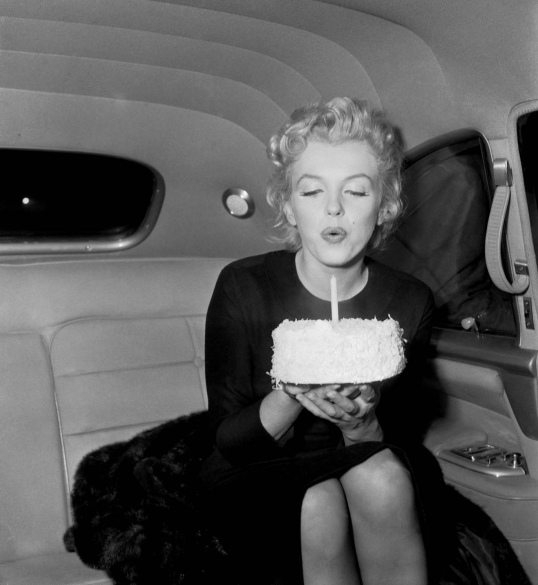
Tomorrow, Erin will be back and running this feature so I’m going to share one final image.

I’m not sure who took the picture above.  A lot of sites incorrectly credit Otto Bettmann.  I nearly made the mistake of crediting old Otto myself.  However, Otto was not a photographer.  Otto was an archivist and the picture above was a part of his collection.  But regardless of who took the picture, it’s an iconic image.

Two more things to say:

First off, I have to say thank you to Erin for trusting me with Artwork of the Day.  When I first told her that I’d be willing to fill in for her while she spent this week cataloging our mom’s doll collection, I’m sure that there was a part of her that worried I’d use it as an excuse to spend the whole week posting Degrassi screenshots.  I’ve seen firsthand the amount of time and thought that Erin puts into finding and selecting each day’s image.  But she took a chance on me and I had a lot of fun doing it!

Secondly, from me and everyone else here at the Shattered Lens: HAPPY BIRTHDAY, ARLEIGH!


What Lisa Marie Watched Last Night #126: The Secret Life of Marilyn Monroe, Part 2 (dir by Laurie Collyer)


On Sunday night, I watched Part 2 of Lifetime’s The Secret Life of Marilyn Monroe.

The Secret Life of Marilyn MonroeWhy Was I Watching It?

I was watching it because I watched Part One on Saturday and I absolutely loved it!  I wanted to see how Part Two would deal with the second half of Marilyn’s life.  Would it explore the mysteries that still surround her death?  Would the Kennedys make an appearance?  Who would come off worse — Joe DiMaggio or Arthur Miller?

What Was It About?

Part Two of The Secret Life of Marilyn Monroe deals with her life after she became a star.  We watch as the increasingly fragile Marilyn marries the physically abusive Joe DiMaggio (Jeffrey Dean Morgan) and the mentally abusive Arthur Miller (Stephen Bogaert).  (Seriously, neither Joe nor Arthur comes across positively in this film.)  Marilyn continues to deal with her own fears that she’ll go crazy like her mother (Susan Sarandon).  She has a brief moment of hope when she meets John F. Kennedy, though the film is deliberately vague about the details of their relationship.  Ultimately, she ends up having a breakdown and is hospitalized against her will.  By the end of the film, it seems like she’s found some hope for the future but then, we see her tossing and turning in bed and clumsily reaching for a bottle of pills…

What Worked?

Kelli Garner’s performance as Marilyn was just impressive here as it was during the first part of the film.

What Did Not Work?

Sadly, Part Two just wasn’t as good as Part One.  To a large extent, Part One worked because of the emphasis on Marilyn’s relationships with her mom (Susan Sarandon) and her adopted aunt Grace (Emily Watson).  In Part Two, those relationships were overshadowed by Marilyn’s unhappy marriages to DiMaggio and Miller.  As a result, the film lost some of its focus and it often seemed to be meandering from one unhappy scene to another until Marilyn’s final night.

Also, I was disappointed that the film was so vague in its approach to Marilyn’s relationship with the Kennedys.  Listen, everyone knows that Marilyn had an affair with both Jack and Bobby Kennedy.  The film tried to create some ambiguity about this point, never actually showing either Kennedy brother on screen and instead, just having Marilyn talk about them.  Rather unfairly, this created the impression that both affairs could have been another one of Marilyn’s delusions.  Quite frankly, Marilyn Monroe deserves better than that.

“Oh My God!  Just like me!” Moments

Just as with Part One, there were several.  Kelli Garner humanized her iconic role to such an extent that I think everyone watching could relate to her.  I’ll just say that I’ve known my DiMaggios and my Millers and leave it at that.

Lessons Learned

Fame does not equal happiness.

In the end, Part Two was not as good as Part One but, overall, The Secret Life of Marilyn Monroe was worth the 4 hours it took to watch it.  It did a great job of recreating the Hollywood of the past and Kelli Garner gave a great performance.  Since this is Lifetime that we’re talking about, I imagine both parts will be rerun frequently.  If you missed them the first time, don’t make the same mistake twice!

What Lisa Marie Watched Last Night #125: The Secret Life of Marilyn Monroe, Part I (dir by Laurie Collyer)


Earlier tonight, I watched Part One of the latest Lifetime original movie, The Secret Life of Marilyn Monroe.

The Secret Life of Marilyn Monroe

Why Was I Watching It?

Lifetime has been advertising The Secret Life of Marilyn Monroe for about two months now.  From the first commercial, I knew that this was something that I was going to have to watch.  After all, a movie about a famous and tragic actress on the always melodramatic Lifetime network?  How could I not watch?

What Was It About?

It’s right there in the title.  The Secret Life of Marilyn Monroe tells the story of how poor country girl Norma Jean Baker became the iconic Marilyn Monroe.  The first part of this two-part film dealt with Marilyn’s early years.  We watched as Marilyn (played by Kelli Garner) made her way out to Hollywood and appeared in her first few films, all the while dealing with her mentally unstable mother, Grace (Susan Sarandon).  Part One ended with Marilyn on the verge of becoming the world’s biggest star.  It was a happy ending for Marilyn but not so much for the audience because we know what’s going to happen to her during Part II.

What Worked?

The first part of The Secret Life of Marilyn Monroe was everything that you could possibly want from a Lifetime movie.  The costumes, the production design, the cinematography — it was all properly opulent and wonderful to look at.

Even more importantly, Part One was anchored by three wonderful performances from three great actresses.  Susan Sarandon was heartbreaking and poignant as Marilyn’s unstable mother.  Emily Watson brought a quiet strength to the role of Marilyn’s surrogate mother, Grace.  And finally, there’s Kelli Garner in the title role.  After years of doing good work in small roles (Bully, Lars and The Real Girl), The Secret Life of Marilyn Monroe finally gives Kelli Garner a chance to show what she’s capable of doing as an actress.  In part one, Garner gave a performance that both humanized an icon while also suggesting the legend that she would eventually become.

What Did Not Work?

The film’s framing device, in which Marilyn told her story to a psychologist played by Jack Noseworthy, occasionally felt a bit awkward.  Otherwise, as far as the first half of The Secret Life of Marilyn Monroe was concerned, it all worked.

“Oh my God!  Just like me!” Moments

Obviously, I don’t want to sit here and compare myself to Marilyn Monroe.  I’ll leave that for others to do.  However, I do have to say that there were quite a few “Oh my God!  Just like me!” moments in the first part of The Secret Life Of Marilyn Monroe.  That was one reason why the film worked so well — it took an iconic figure and humanized her to the extent that anyone viewing could relate to her.

There were many moments that I related to during part one, particularly when it came to Marilyn’s emotional vulnerability and her desire to be seen as something more than just another pretty face.  In fact, there were more than a few times that I had to look away from the screen because, often, Marilyn’s pain was my pain.

Ultimately, though, the biggest “OMG!  Just like me!” moment came at the start of the film when Marilyn spent over an hour trying on different outfits before greeting the psychologist waiting in the next room.  I’m just as obsessive, especially when it comes to picking the right clothes for a doctor’s appointment.

(Seriously, I once spent an entire day putting together the perfect outfit for seeing the allergist.)

Lessons Learned

Fame can’t buy happiness but it can come awfully close.  (Of course, I have a feeling that lesson will be invalidated once I watch the second part of The Secret Life of Marilyn Monroe.)
Embracing the Melodrama #11: All About Eve (dir by Joseph L. Mankiewicz)


Bette Davis

“Fasten your seat belts, it’s gonna be a bumpy night!” — Margo Channing (Bette Davis) in All About Eve (1950)

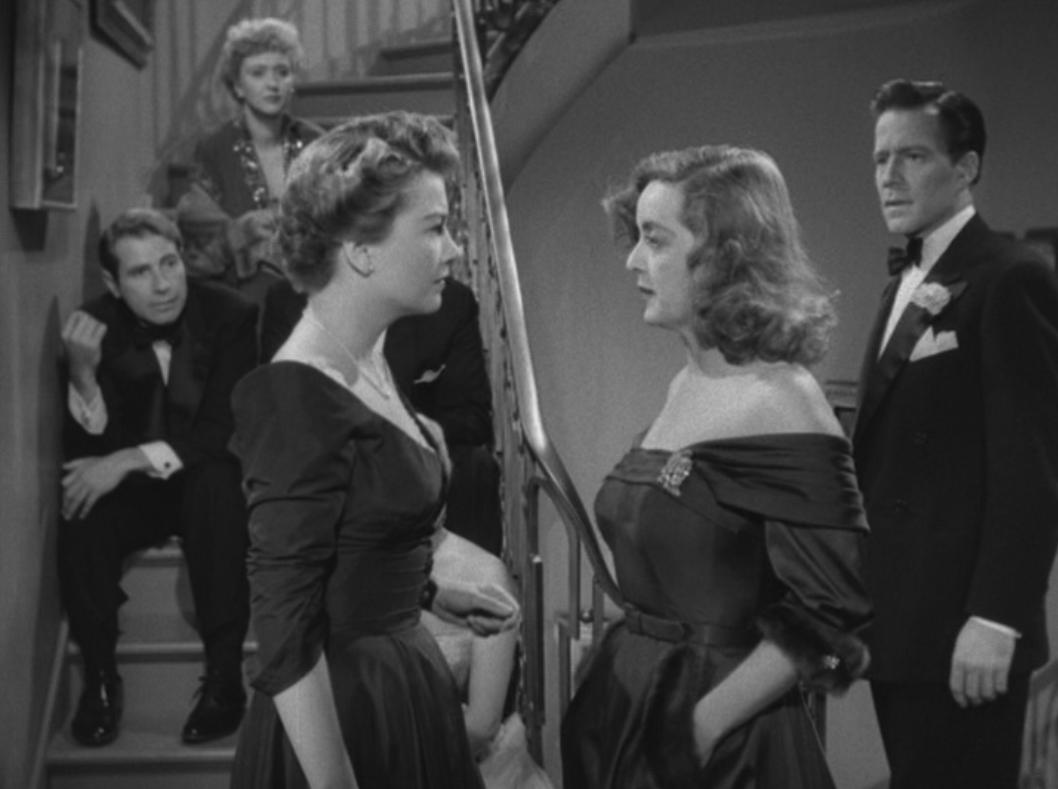
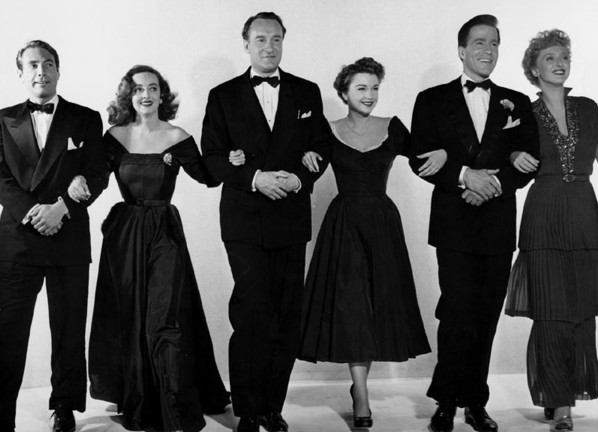
If you’re a lover of classic films or even if you’re just someone who occasionally watches TCM, chances are that you already know All About Eve.  It’s one of those films that is endlessly quoted and it features at least two performances — Bette Davis’s turn as aging Broadway diva Margo Channing and George Sanders’ acidic theater critic Addison DeWitt — that serve as frequent inspiration for professional impersonators.  It’s the film that was named best picture of 1950 and it continues to hold the record for both the most Oscar nominations overall and it’s the only film in Oscar history to receive four female acting nominations.

Even more importantly, it’s a film that everyone already knows it great.

So, that brings up the question that every film blogger dreads: how do you review a classic film that everyone already knows about?  I’ve often said that it’s easier to review a bad film than a great one.  It’s easy to pinpoint why a film fails but when it comes time to explain why a film is great, it’s often difficult to put to words the intangible qualities that elevate it.

Eve and Margo

For instance, I could tell you that the film has a fascinating plot but that barely only begins to scratch the surface of everything that’s going on underneath the glossy and melodramatic surface of All About Eve.  The movie tells the story of how scheming young actress Eve Harrington (Anne Baxter) becomes a star with the help of Addison DeWitt and at the expense of the talented but aging Margo Channing.  In telling Eve and Margo’s stories, All About Eve explores issues of female friendship and competition, sexuality, and why older men are celebrated while older women are constantly at risk of being pushed to the side for a newer model.  The complexity and power of All About Eve’s storyline can be summed up by the fact that right now, when I watch the film, I relate to Eve but I imagine that  twenty years from now, I’ll rewatch and I’ll relate to Margo.

I could tell you that this is a film that is full of bigger-than-life characters and iconic performances but that doesn’t even begin to scratch at the surface of how well-acted and perfectly cast this film is.  Even boring old Hugh Marlowe is a perfect choice for playing boring old playwright Lloyd Richards.  (His wife is played by Celeste Holm.  Reportedly Bette Davis hated working with Celeste Holm but onscreen, their friendship feels very real and poignant and leads to some of the best scenes in the entire film.)  Gary Merrill, who later married Bette Davis, is likable as Margo’s boyfriend and Thelma Ritter is great as Margo’s outspoken assistant, largely because she’s Thelma Ritter and she was always great.  Marilyn Monroe famously makes the most of her minor role in All About Eve, playing an aspiring actress who has a very good reason for calling the butler a waiter.  And then there’s Bette Davis and George Sanders, both of whom are simply brilliant.

My favorite scene from All About Eve

My favorite scene from All About Eve

But to me, the best performance in All About Eve comes from Anne Baxter.  Baxter plays Eve as a perpetually smiling schemer and one of the great pleasures of the film is watching as Eve wrecks passive-aggressive havoc through Margo’s circle of friends.  Just watch the scenes where she deftly manipulates Celeste Holm.  All About Eve is usually referred to as being a vehicle for Bette Davis but if you actually watch the film, you see that the title is absolutely appropriate.  The film really is all about Eve.

And I could always tell you about how wonderfully sardonic the dialogue is but you already know that.  There’s a reason why even people who have never seen the film still quote Margo’s suggestion that everyone fasten their seat belts!

Bette Davis 2

So, in the end, what can I tell you about All About Eve?  Well, all I can really tell you is that it’s a great film and, if you haven’t seen it, you need to make time to learn all about Eve.

AllAboutEvecastpromo

A Quickie With Lisa Marie: My Week With Marilyn (dir. by Simon Curtis)


My Week With Marilyn is apparently based on a true story. 

We know this because the film not only uses the opening title card to tell us that the story is true but the movie itself is narrated by Colin Clark (played by Eddie Redmayne) and Colin tells us pretty much the same thing, over and over again. (Seriously, this film reminded me of why I usually don’t care much for first person narration.)  Anyway, the film takes place in the late 1957.  Colin is the 3rd Assistant Director, working with Laurence Olivier (a haughty and pompous yet oddly touching performance from Kenneth Branagh) on a film called The Prince and the Showgirl.  The film stars Marilyn Monroe (Michelle Williams) who quickly starts to annoy Olivier when it becomes obvious that she’s painfully insecure, self-destructive, and dominated by her agent, acting coach, and cold husband.  Colin, however, is smitten with Marilyn and, despite the ominous warnings delivered by everyone else in the film, he soon finds himself falling in love with her and giving this film a title by spending a week with Marilyn.

My Week With Marilyn has been getting a lot of attention lately because many Oscar watchers are expecting to see Michelle Williams receive a Best Actress nomination for her performance as Marilyn Monroe.  Lately, Kenneth Branagh has become something of a dark horse for a best supporting actor nomination and personally, I would say that Julia Ormond (as a paranoid Vivien Leigh) and Judi Dench (as a supportive actress) both deserve some consideration as well. 

The film is ultimately dominated by Michelle Williams and it works whenever she’s on-screen. (And, unfortunately, it pretty much falls apart whenever she’s not.)  Williams has the daunting job of playing an icon here and she manages to be both believable as an icon and as a very fragile and poignant human being.  The script, to be honest, doesn’t give her much help.  As written, Marilyn is alternatively presented as being a helpless damsel in need of a white knight, a calculating seductress who threatens to lead Colin off of the straight and narrow path (represented here by Emma Watson as the girl that Colin treats quite badly)  and a convenient symbol of a lost age.  The brilliance of Michelle Williams is in how she manages to use these three conflicting characterizations to create one very believable Marilyn Monroe.

The main problem with this film is that it’s not called Marilyn.  Instead, it’s My Week With Marilyn and, as a result, the film is actually about the male gaze of the “My” of the title.  As good a performance as Williams gives, it’s hard to avoid the fact that, as far as this film is concerned, Marilyn ultimately exists just to teach Colin a few life lessons.  Unfortunately, as a character, Colin Clark is so thinly written that he’s never all that compelling and, as the film progresses, it’s hard not to feel that he’s ultimately using Marilyn just as surely as everyone else is. 

(In all honestly, however, I have to admit that one of my issues with Colin is that he’s played by Eddie Redmayne.  Don’t get me wrong, Redmayne is a good actor and he manages to make Colin almost likable but I simply cannot look at him without flashing back to Redmayne’s performance in Savage Grace.  That’s the movie where he plays a schizophrenic who has an incestuous relationship with his mother (Julianne Moore) before murdering her.  Redmayne was so effectively creepy in that film that, as unprofessional as it may be for a film critic, I had a hard time accepting him in the role of white knight.)  

I’ve read a lot of reviews that have complained that this film is basically just a big budget Lifetime Movie and, in many ways, it is.  Director Simon Curtis is a veteran of television and the film has the crisp but flat look of a tv show.  But even more than just the cinematography, My Week With Marilyn feels like a TV movie because its script hesitates to raise any issues that can’t be resolved in two hours.  That said, it’s really not sordid or silly enough to be a great Lifetime movie and it’s far too well acted to be a waste-of-time.  Ultimately, this is a flawed film that deserves to be seen for its performances.  If only the entire film was as compelling and interesting as the performances of Kenneth Branagh, Julia Ormond, and especially Michelle Williams.