Film Review: The Conjuring 2 (dir by James Wan)


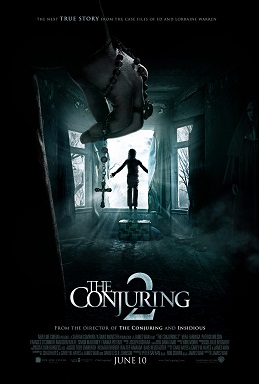
Conjuring_2

The Conjuring 2 will scare the Hell out of you.

Seriously, I’ve seen a lot of horror films, including the first Conjuring (which I absolutely loved).  I’ve seen ghosts, vampires, demons, werewolves, psycho killers, and threats in the shadows.  I’ve seen cats jump out of closets.  I’ve seen ghostly faces suddenly appear in the darkness.  I’ve heard screams and chants and howls.  I’ve seen limbs severed in every possible way.  I’ve seen a lot of cinematic horror and, as a result, I tend to feel that there is nothing that can scare me.

Well, it turns out that’s not true because The Conjuring 2 scared the Hell out of me.

In many ways, The Conjuring 2 tells a familiar story.  Once again, the film begins with an opening crawl that informs us that what we’re about to see is based on a true story.  Once again, a loving but chaotic family is being haunted by evil spirits and the Church has asked paranormal investigators Ed and Lorraine Warren to investigate.

The setup may sound familiar but director James Wan manages to keep the scares compelling.  Over the past few years, Wan has emerged as one of our greatest genre filmmakers.  Whether he’s directing an Insidious film or the latest Fast & Furious installment, James Wan knows how to hold an audience’s attention and how to make the potentially predictable compelling.  In The Conjuring 2, Wan creates and maintains such an atmosphere of dread that even the expected scares (bumps in the dark, voices in the shadows, slamming doors, and faces suddenly appearing in the background) take on an ominous intensity.  From the very first shot, Wan leaves the audience with a profound feeling of unease.  I was not alone in covering my eyes during a few scenes.  I was also not alone is occasionally looking around the darkened theater, just to make sure that there weren’t any ghosts creeping up on me.

That said, we all already know that James Wan is a master of horror.  We know that he can tell a ghost story and, from the minute we saw the first trailer, we all knew that The Conjuring 2 was going to be scary.  What sets The Conjuring 2 apart is the same thing that made the first Conjuring so special.  (For that matter, it’s the same thing that made Wan’s Furious 7 so special.)  Wan fills the screen with horror and spectacle but he also finds the time to celebrate his character’s humanity.

There’s a scene that occurs about 90 minutes into The Conjuring 2.  Ed (Patrick Wilson) and Lorraine (Vera Farmiga) are visiting with the haunted family.  The family has been shaken by both the supernatural and the fact that so many people refuse to believe that they are actually being haunted.  Ed spies a guitar sitting in the corner of the room.  He grabs it and, with the haunted children gathered around them, he launches into a surprisingly good Elvis impersonation.  He sings I Can’t Help Falling In Love With You, all the while glancing over at Lorraine standing in the doorway.

(What makes this especially touching is that Lorraine has been having premonitions of Ed’s violent death and is terrified that she’s going to lose him before they finish investigating this case.)

It’s a totally unexpected scene and yet it works perfectly.  Some of it is because Patrick Wilson and Vera Farmiga have this great chemistry that makes you believe that they actually have been married for years.  But it’s also because the scene reminds us that The Conjuring 2 is about more than just ghosts and scares.  It’s also about love and family.  The haunting is threatening to end Ed and Lorraine’s love story.  The haunting is threatening to destroy a loving family.  Ed and Lorraine aren’t just investigating a ghost but they’re also saving a family.  They’re not just fighting against the supernatural.  They’re fighting for love.

And, in our cynical times, that may sound corny or silly or old-fashioned.  Well. you know what?  The Conjuring was an old-fashioned film and, in a way, so is The Conjuring 2.  But who cares?  Horror works best when it’s mixed with humanity.  The Conjuring 2 may be a horror film but it’s also a celebration of humanity, love, and family.

You may have noticed that I haven’t go into many specifics about the plot of The Conjuring 2.  I don’t want to spoil it for you.  This is a film that you should experience with fresh eyes.  I could tell you about the scariest scene in this film but, if I did, you would not get the full experience.  I’ll just say that I’ve seen a lot of scary movie nuns but none of them can compare to The Conjuring 2.

The Conjuring 2 is the best supernatural horror film that I’ve seen this year so far.  It will scare you and it will touch your heart.  See it.

Also, be sure to stay for the end credits, which feature a lot of genuinely creepy snapshots of the actual locations where the film’s haunting is said to have occurred.  Not only are the pictures scary but they also show the care with which The Conjuring 2 recreated 1970s London.  Is the picture below a scene from the film or is it a picture that was taken during the actual haunting?  You’ll have to see The Conjuring 2 to find out!

the-conjuring-2-1


Film Review: Joy (dir by David O. Russell)


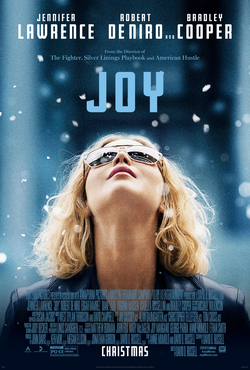
Joyfilmposter

Hi there and welcome to 2016!

Today was the first day of a new year so, of course, I had to go down to the Alamo Drafthouse and see a movie.  What was the title of the first movie that I saw in a theater in 2016?

Joy.

Despite the fact that Joy has gotten some seriously mixed reviews, I had high hopes when I sat down in the Alamo.  After all, Joy represents the third collaboration between director David O. Russell and one of my favorite actresses, Jennifer Lawrence.  (Their previous collaborations — Silver Linings Playbook and American Hustle — happen to be two of my favorite films of the past 5 years.)  Add to that, Joy has been advertised as being a tribute to a real-life, strong-willed woman and I figured that, at the very least, it would provide a nice alternative to the testosterone-crazed movies that I’ve recently sat through.  And finally, Joy had a great trailer!

Sure, there were a few less than positive signs about Joy.  As I mentioned before, the majority of the reviews had been mixed and the word of mouth was even worse.  (My friend, the sportswriter Jason Tarwater, used one word to describe the film to me: “Meh.”)  But what truly worried me was that Sasha Stone of AwardsDaily absolutely raved about the film on her site and that’s usually a bad sign.  Let’s not forget that this is the same Sasha Stone who claimed that Maps To The Stars was one of the best films ever made about Hollywood.

And, to be honest, I had much the same reaction to Joy that I had to Map To The Stars.  I really wanted to love Joy and, occasionally, there would be a clever bit of dialogue or an unexpected directorial choice and I would briefly perk up in my seat and think to myself, “Okay, this is the film that I wanted to see!”  But, for the most part, Joy is a disappointment.  It’s not so much that it’s bad as it’s just not particularly great.  For the most part, it’s just meh.

But let’s talk about what worked.  Overall, this may be one of Jennifer Lawrence’s lesser films but she gives a great performance, one that reminds us that she truly is one of the best actresses working today.  I’ve read some complaints that Lawrence was too young for the title role and, to be absolutely honest, she probably is.  She looks like she could easily go undercover at a high school and help Jonah Hill and Channing Tatum bust drug dealers.  But, at the same time, she projects the inner weariness of a survivor.  For lack of a better term, she has an old soul and it comes across in her films.

In Joy, she plays Joy Mangano, a divorced mother of two who lives in upstate New York.  Her mother (Virginia Madsen) lives with Joy and spends all of her time watching soap operas.  Joy ex-husband, a lounge singer named Tony (Edgar Ramirez), lives in the basement.  Meanwhile, her grandmother (Diane Ladd, who narrates the film) is always hovering in the background, offering Joy encouragement and optimism.  At the start of the film, Joy’s cantankerous father (Robert De Niro) has also moved into the house.  Joy, who was the valedictorian of her high school, has got a demeaning job working as a flight booker at the airport.

(“What’s your name?” one rude customer asks, “Joy?  You don’t seem very joyful to me…”)

How stressful is Joy’s life?  It’s so stressful that she has a reoccurring nightmare in which she’s trapped in her mother’s favorite soap opera and Susan Lucci (cleverly playing herself) tells her that she should just give up.

However, as difficult as life may get, Joy refuses to take Susan Lucci’s advise.  She invents a miraculous mop known as the miracle mop and eventually becomes a highly successful businesswoman.  Along the way, she makes her television debut on QVC and becomes a minor celebrity herself…

The film’s best scenes are the ones that deal with Joy and QVC.  These scenes, in which the inexperienced Joy proves herself to be a natural saleswoman, are the best in the film.  These scenes are filled with the spark that I was hoping would be present throughout the entire film.  Of course, it helps that these scenes also feature Bradley Cooper as a sympathetic television executive.  This is the third time that Bradley Cooper and Jennifer Lawrence have acted opposite each other and there’s an immediate chemistry between them.  In this case, it’s not a romantic chemistry (and one of the things that I did appreciate about Joy was that it didn’t try to force a predictable romance on the title character).  Instead, it’s the type of mutual respect that you rarely see between male and female characters in the movies.  It’s a lot of fun to watch, precisely because it is so real and unexpected.

But sadly, the QVC scenes only make up a relatively small part of Joy.  The rest of the film is something of a mess, with David O. Russell never settling on a consistent tone.  At times, Joy feels like a disorganized collection of themes from his previous films.  Just as in The Fighter and Silver Linings Playbook, we get the quirky and dysfunctional family.  Just as in American Hustle, we get the period detail, the Scorsese-lite soundtrack, and the moments of cynical humor.  There’s a lot going on in Joy and, at time, it doesn’t seem that Russell really knows what to do with all the theme and characters that he’s mixed into the movie.  I found myself wondering if he truly understood the story that he was trying to tell.

Finally, at the end of the film, Joy visits a business rival in Dallas, Texas.  Let’s just say that the film’s version of Dallas looks nothing like the city that I know.  (The minute that the scene cut from her ex-husband discovering that Joy had left to a close-up of a Bar-B-Q sign, I let out an exasperated, “Oh, come on!”)  I suppose I should be happy that Russell didn’t have huge mountains in the background of the Dallas scenes but seriously, would it have killed anyone to do a little research or maybe hop on a plane and spend a day or two filming on location?

(After all, if Richard Linklater or Wes Anderson decided to set a movie in David O. Russell’s home state of Massachusetts, I doubt that they would film the Boston scenes in El Paso….)

Joy features great work from Jennifer Lawrence and Bradley Cooper and it tells a story that has the potential to be very empowering.  But, when it comes to the overall film … meh.

Sorry Jen