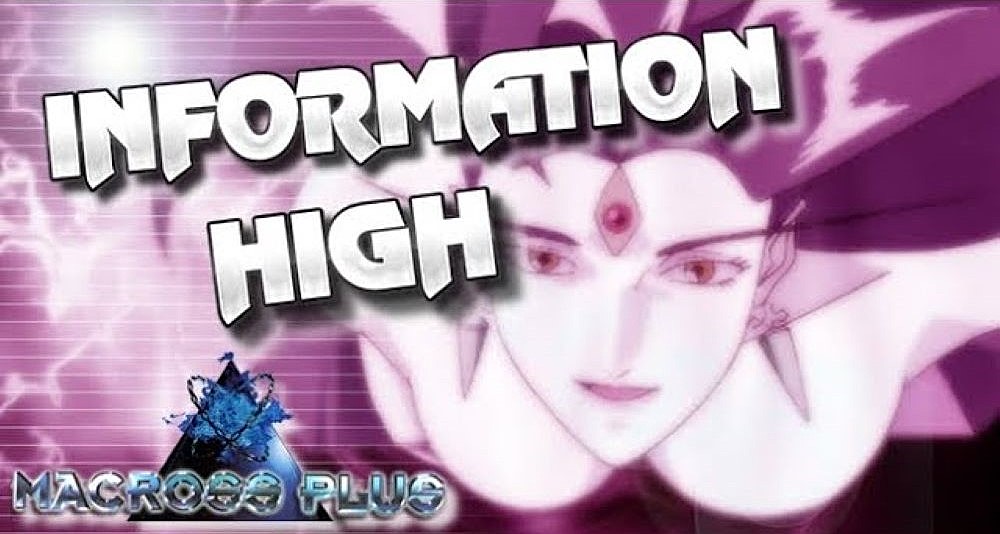
“Information High,” by Yoko Kanno for Macross Plus, is a track that’s as electrifying as it is fitting for the anime’s sleek, futuristic vibe. From the moment it kicks in, you get caught up in its propulsive beat and layered electronic sounds that perfectly capture the sense of speed and technological buzz that define the series. It doesn’t just sit in the background but actively drives the energy forward, mirroring the fast-paced aerial dogfights and the intense emotions swirling underneath the sci-fi setting. There’s a hypnotic quality to it — like the perfect soundtrack for a world where human experience and digital overload collide.
What really strikes about “Information High” is how it balances mechanical precision with a playful, almost funky undertone. It’s not simply cold or robotic; Kanno brings in just enough warmth and groove to humanize the electronic pulse, making the song feel alive and vibrant rather than sterile. This duality works beautifully with Macross Plus’s themes—characters caught between their human desires and the artificial worlds they navigate. The track feels like a bridge between those realities, capturing both the exhilaration and the subtle unease of living in an over-connected, data-saturated future.
Beyond its role as a background piece, “Information High” stands on its own as a distinctive expression of Kanno’s genius. It’s got that catchy, infectious energy that sticks with you, yet never feels repetitive or shallow. It’s clear that Kanno tailored this song to complement not just the visuals but the emotional currents of the show, subtly enhancing moments without overpowering them. For anyone familiar with Kanno’s work, this track is a perfect example of her skill in blending genres and moods into a cohesive whole that elevates the experience of the anime itself.
Information High
You know how to get eternal life In the center of the lightning-speed waltz Feel your soul cut by a rusty knife As you head down for the self-destructive edge
Our satori is just floating in the core Where we can spiritually go through the door We’ll know how to get eternal life While we catch the pulse from unknown satellites
If we get the transient facts Then we’ll feel the info high If we get the transient facts Then we are really free To fly high In space
We know how to get eternal high In the center of the lightning-speed waltz See our soul struggling to survive As we head down for the self-destructive edge
Sayonara to intrusive noise No more childish play and no more toys We know how to get eternal life While we feel and sense mother nature’s strong might
If we get the transient facts Then we’ll feel the info high If we get the transient facts Then we’ll feel the info high If we get the transient facts Then we’ll feel the info high If we get the transient facts Then we are really free To fly high In space
If we get the transient facts Then we’ll feel the info high If we get the transient facts Then we’ll feel the info high If we get the transient facts Then we’ll feel the info high If we get the transient facts Then we’ll feel the info high If we get the transient facts Then we’ll feel the info high If we get the transient facts Then we’ll feel the info high If we get the transient facts Then we’ll feel the info high If we get the transient facts Then we are really free To fly high In space
“Life without pain isn’t real life!” — Isamu Dyson
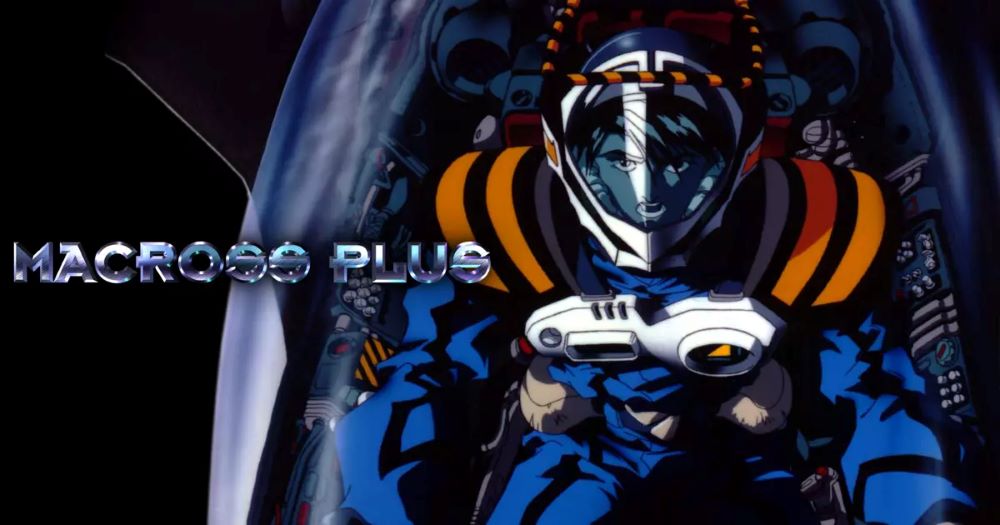
Macross Plus is a landmark anime OVA series from 1994 that continues to resonate with both newcomers and longtime fans of the genre. It stands out within the larger Macross franchise—one of the most influential in anime history—that includes various series beginning with the original Super Dimension Fortress Macross in the early 1980s. While Macross Plus is just one of several entries under this umbrella, it serves as a crucial bridge between the earlier incarnation of the series produced during the 1980s and the more modern take that the franchise would eventually develop in the late 1990s and into the 2000s. This OVA represents a stylistic and thematic evolution that helped transition the series from its original space opera roots into a more mature, complex narrative form that appeals to contemporary audiences.
Set decades after the destructive war between humanity and the alien Zentradi featured in the original series, Macross Plus takes place in the year 2040 where the UN Spacy conducts flight trials on a remote planet to select the next generation of Variable Fighters. The story revolves around Isamu Dyson, a cocky and passionate pilot; Guld Goa Bowman, his calm and talented rival who is revealed to be a Zentradi/human hybrid; and Myung Fang Lone, a woman emotionally entangled with both men and managing the artificially intelligent holographic idol Sharon Apple. The narrative explores themes of rivalry, friendship, human connection, and emotional tension with nuance and depth, distinguishing it within the franchise and offering a compelling experience for both newcomers and longtime fans.
Viewers can experience Macross Plus either as a four-episode OVA or through the re-edited movie version titled Macross Plus: Movie Edition. The movie version condenses the original four episodes into a much shorter runtime, around 115 minutes, with certain scenes expanded, some new scenes added, and others shortened or removed entirely. While the movie includes roughly 20 minutes of new or alternate footage, it retains much of the OVA’s original material. The film format emphasizes a more cinematic presentation and features a widescreen format, contrasting the original OVA’s 1.37 aspect ratio. However, while the movie streamlines some narrative aspects and adds a few striking sequences, some fans feel the OVA’s longer runtime allows for richer character development and storytelling depth. Both versions have their merits, with many recommending watching the OVA first to appreciate the fuller experience before exploring the movie edition.
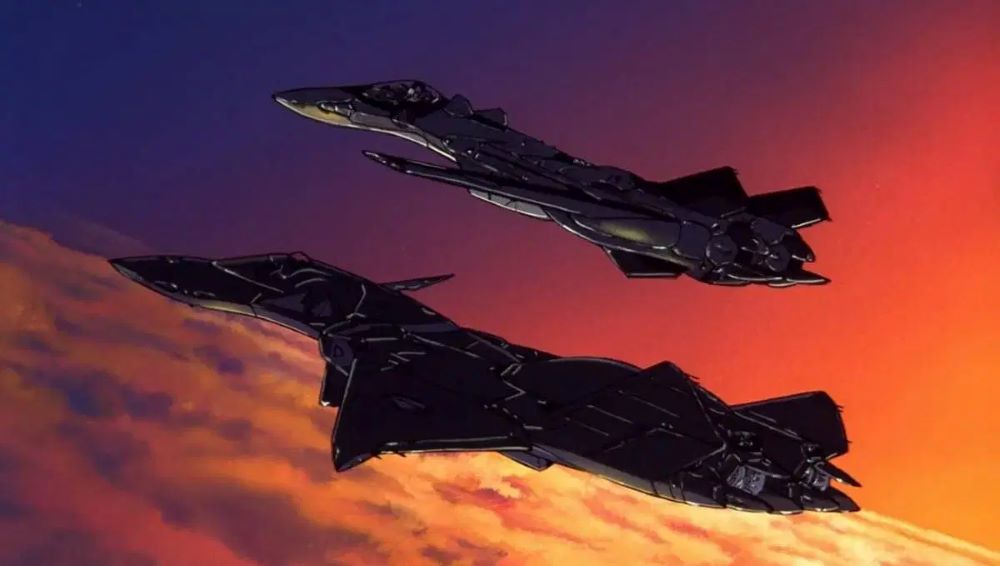
One of Macross Plus’s standout features is its animation quality, especially remarkable for a mid-1990s production. The series blends traditional hand-drawn artistry with pioneering computer graphics, particularly in its spectacular aerial dogfight sequences featuring transforming fighter jets. These dynamic battle scenes convey a vivid sense of speed and intensity, demonstrating a level of technical sophistication that remains impressive today. Though some fans note minor differences in character design from Haruhiko Mikimoto’s original work, the visual impact overall is striking and immersive, providing a thrilling experience for newcomers and a nostalgic appreciation for veteran viewers.
Integral to the anime’s atmosphere is its unforgettable soundtrack, composed by the legendary Yoko Kanno. Her wide-ranging score—from haunting melodies to energetic action themes—perfectly complements the show’s tonal shifts. While “Voices,” performed by Akino Arai, is the song most fans distinctly remember and cherish for encapsulating the emotional core of the series, the rest of the soundtrack stands out as excellent in its own right. Notably, the tracks tied to the Sharon Apple AI subplot add an additional layer of mood and narrative depth. The song “Information High,” performed by Sharon Apple, is particularly praised for its ethereal, electronic style that perfectly captures the AI’s hypnotic and otherworldly presence in the story. This track complements the themes of technology, identity, and artificial emotion explored through Sharon Apple’s character, enhancing the viewer’s immersion in the high-tech world of Macross Plus.
Another rarity in the anime world that Macross Plus represents is its highly regarded English-language dub. Unlike many anime dubs that face criticism, the Macross Plus English dub is considered excellent by fans and critics alike. One notable factor is the casting of a younger Bryan Cranston (before his Breaking Bad fame) as the voice of Isamu Dyson. His performance brings genuine energy and nuance to the role, contributing to the dub’s reputation as a quality adaptation worthy of both newcomers who prefer English audio and longtime fans who appreciate a well-executed dub.
A core thematic insight in Macross Plus lies in its exploration of technology, especially artificial intelligence, highlighting how even advanced AI must learn from humans as templates, inevitably influencing its behavior. Sharon Apple, the AI pop star and central figure of the subplot, cannot authentically generate emotion on her own. Instead, she relies on the emotional input provided by Myung Fang Lone, her producer and the emotional source behind Sharon’s performances. This dependency underlines a profound implication: true sentience and emotional authenticity in AI require imitation and absorption of human feelings, experience, and behavior. Consequently, Sharon’s increasingly autonomous actions become shaped by the complex and sometimes conflicted emotional landscape of the humans around her, illustrating how AI, while synthetic, is ultimately tied to the human condition and its imperfections. The series presents this relationship critically, showing both the potential and danger of AI learning and evolving from human templates, culminating in Sharon’s struggle to assert an identity that is both alien and deeply rooted in human emotions.
Importantly, Macross Plus is recognized as the first official sequel to the original Macross series by its creator Shoji Kawamori. The earlier Macross II was later retconned by Kawamori as an alternate reality or parallel world separate from the main timeline. This status cements Macross Plus as the canonical continuation of the original saga, reinforcing its significance within the franchise and its role in guiding Macross’s future directions.
The narrative structure—whether experienced as the OVA’s four episodes or the condensed movie version—strikes a balance between introspective character moments and exhilarating mech combat, keeping viewers engaged while allowing emotional depth to unfold. Though some supporting characters receive limited development and the antagonist can seem somewhat one-dimensional, these elements do not detract significantly from the memorable storytelling, animation, and thematic richness.
For newcomers, Macross Plus serves as a powerful introduction to anime that blends sophisticated storytelling, technical artistry, and philosophical inquiry. For veterans, it offers a compelling revisit to a milestone work that elegantly bridges the franchise’s classic roots and modern evolution.
Macross Plus holds a revered place within the Macross franchise and the wider anime landscape for several reasons. It was pioneering in its integration of traditional cel animation with early computer-generated imagery (CGI), setting a precedent for the increasing use of digital effects in anime. This blend allowed for its visually stunning aerial combat sequences which remain influential in mecha animation.
The series also marked the start of a significant collaboration between director Shinichirō Watanabe and composer Yoko Kanno, whose work on Macross Plus would lead to iconic projects such as Cowboy Bebop. The soundtrack’s genre-spanning style influenced how music could serve as a narrative force in anime, intertwining with story and character development rather than merely accompanying visuals.
Narratively, Macross Plus helped reaffirm the franchise’s thematic core—the interplay of love, war, and music—while pushing it toward more mature and psychological storytelling, expanding the appeal beyond traditional mecha fans. Its exploration of AI and human emotion was ahead of its time, posing philosophical questions still relevant in today’s discussions about technology and identity.
The excellent English dub, featuring talents like Bryan Cranston, contributed to its international acclaim, helping it become a gateway series for many Western viewers into the Macross universe and anime more broadly.
Its legacy continues not only through ongoing Macross installments but also in manga adaptations and video game tie-ins, as well as in inspiring countless mecha and sci-fi creators. To this day, Macross Plus is frequently cited as a high watermark of 1990s anime, a timeless fusion of innovative animation, memorable music, and complex, emotionally resonant storytelling that helped shape the trajectory of anime as a global medium.
Mecha: The name derives from a shortening of the English words “mechanism” or “mechanical” into the Japanese “mecha”
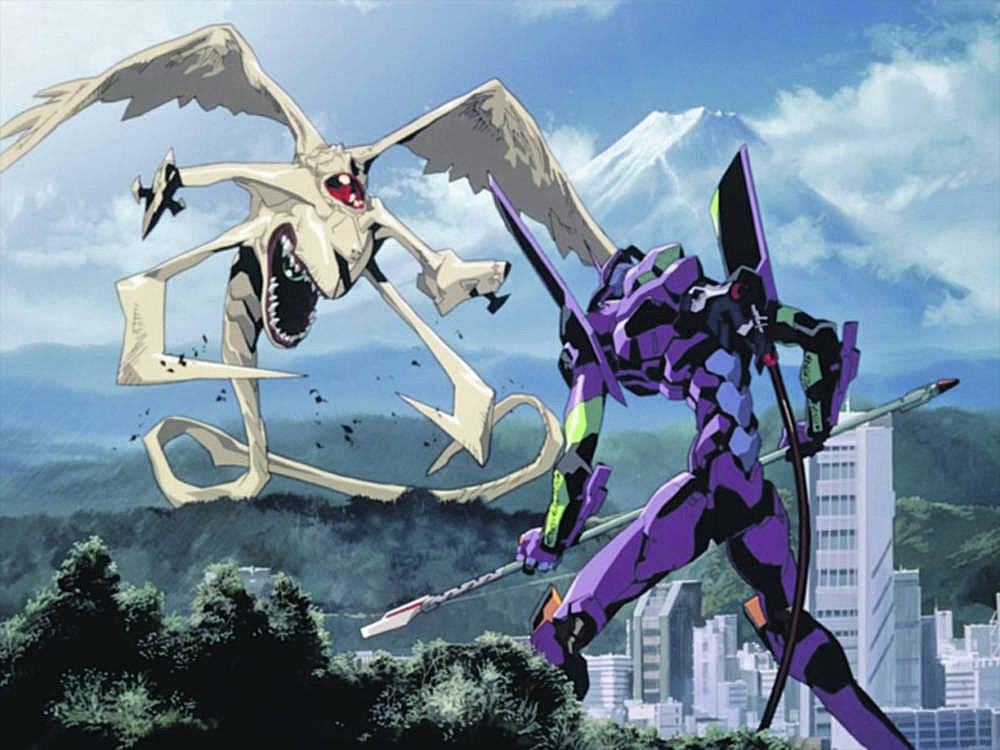
Last time I chose 4 shots from some chosen anime I went the isekai route. This time around I have chosen four shots from some of the more popular and well-received anime of the mecha variety.
This genre of anime has been around as far back as the 1940’s with earliest known mecha-related work being the 1940 manga “Electric Octopus” (Denki Dako). Yet, the subgenre of mecha as we we know of it today as the “super robot” was with the landmark anime from 1972 with Go Nagai’s “Mazinger Z.” This series would establish the many tropes and baseline rules of what mecha has become and will continue to be.
So, here are four shots from four very good to great mecha anime that fans new and old has watched at least once.
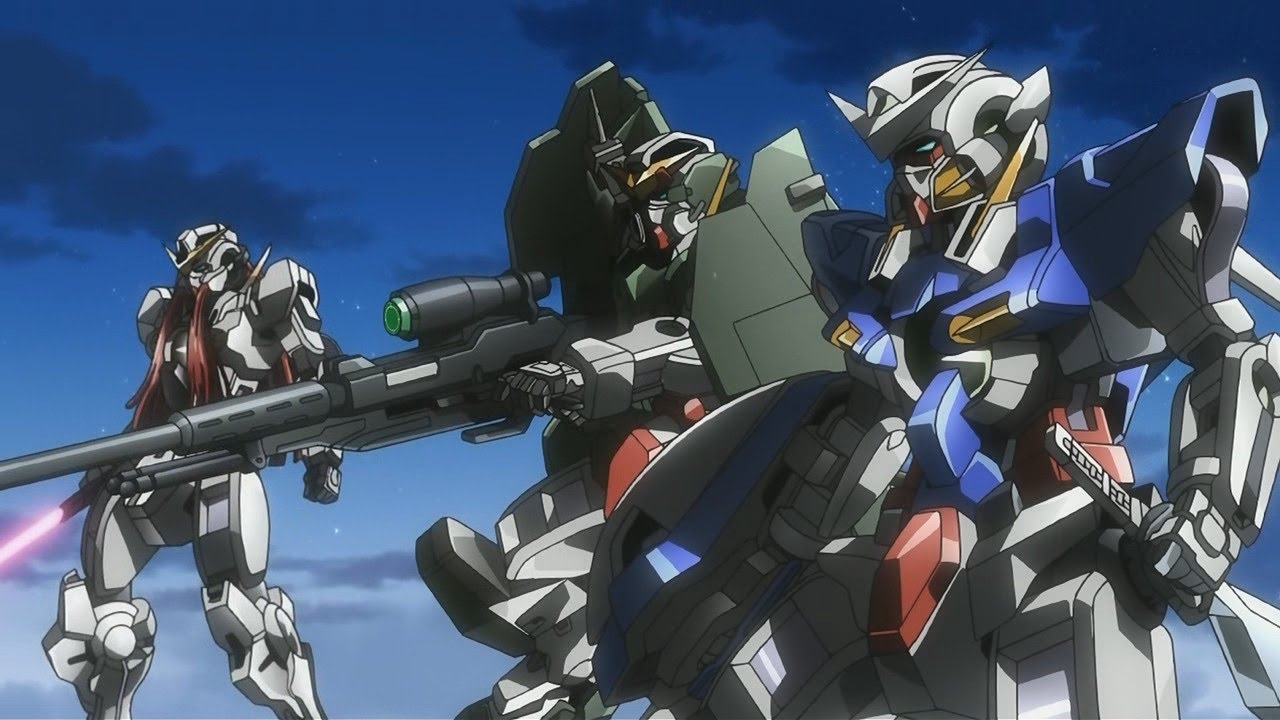
Mobile Suit Gundam 00 (dir. by Seiji Mizushima)
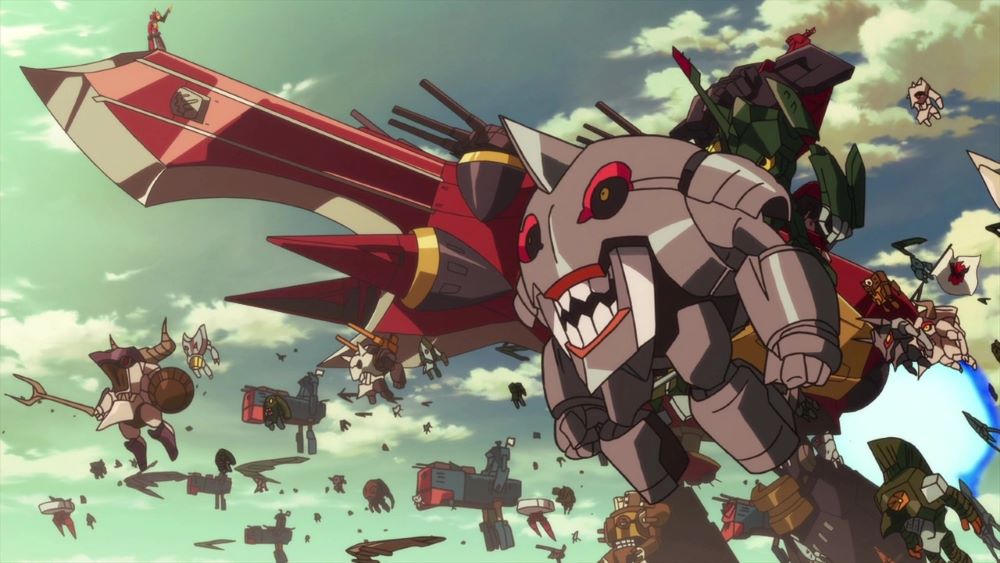
Tengen Toppa Gurren Lagann (dir. by Hiroyuki Imaishi)
So, another day of resting up after a wickedly long weekend of doing nothing but working I came across this little video that brought back memories of not just my youth during the 80’s but also fond ones of discovering one of my favorite anime of all-time.
The latest “AMV of the Day” comes courtesy of TrepidationsFall and it’s combines that 80’s blockbuster of blockbusters in Top Gun and one of the best anime of all-time in Macross Plus. The video is simply called “Danger Zone” and the use of the iconic Kenny Loggins track for the Bruckheimer fighter-jock extravaganza fits the mecha anime to a “T”.
The song of the day is one which I consider one of my favorite pieces of music ever composed and played. I speak of “Voices” from the Japanese OVA/film Macross Plus. The song was composed by Japanese composer Yoko Kanno and originally sung by singer-musician Akino Arai.
Anime has become of one my major hobbies and interests and during the early 90’s Macross Plus dominated my viewing rotation and it was partly due to this song. The moment I started the VHS tape (yes that’s how far this song goes back) and heard the very first verse of this song and the techno-tinged Japanese sound of the song I was hooked. I listen to it almost as much as I did when I first heard it 16 years back.
One of the best memories of this song just happened recently as Yoko Kanno made a surprise appearance at this past Anime Expo 2010 in Los Angeles. While sitting in the Nokia Theater for the May’n and Megumi Nakajima concert Ms. Kanno appeared on-stage to play the grand piano and started playing this particular song w/ J-pop singer and seiyuu Megumi Nakajima performing the lyrics. To say that this was the highlight of the Expo for me would be a huge understatement. Listening to the song done live showed me why I love this song and why it’s my pick for song of the day.
Acoustic Ver.
Cello Instrumental
Voices (Japanese)
Hitotsume no kotoba wa yume
Nemuri no naka kara
Mune no oku no kurayami wo
Sotto tsuredasu no
Futatsume no kotoba wa kaze
Yukute wo oshiete
Kamisama no ude no naka e
Tsubasa wo aoru no
Tokete itta kanashii koto wo
Kazoeru you ni
Kin’iro no ringo ga
Mata hitotsu ochiru
Mita koto mo nai fuukei
Soko ga kaeru basho
Tatta hitotsu no inochi ni
Tadoritsuku basho
Furui
Maho no hon
Tsuki no
Shizuku yoru no
Tobari itsuka
Aeru yokan
Dake…
We can fly…
We have wings…
We can touch…
Floating dreams…
Call me from…
So far…
Through the wind…
In the light…
Mittsume no kotoba wa “hum”
Mimi wo sumashitara
Anata no fureru ude wo
Sotto tokihanatsu
Voices (English)
The first word in my dreams
I could clearly see
Planet Eden high beyond the skies
Beautiful and sad
is this story I’ll tell
of the winged travellers eager
’twas one day
the wind guided him where to go
like an eagle high above he flew
Waving from down below
he flew out of sight
into the mystical darkness
Neither a smile nor a cry
I gave when he left
feeling my spleen decline
And hoping
one day we’d fly over
back to the places we once shared
Where vessels glide
in silky waves and of gold
deep in the gulf such planet lies
Surrounded by this universe
of love and hate
confusion breaks through and dwells
Cast a spell
from the old magic book
set a path
in the black magic box
something strange will happen
it will take you so far
So try…
We can fly
We have wings
We can touch floating dreams
Call me from
so far
Through the wind
And the light…
Someone came from the dark
over from the stars
protecting my heart from crying
Taken back by surprise
my traveller returned
What went wrong? Why did he change.
 Through the Shattered Lens