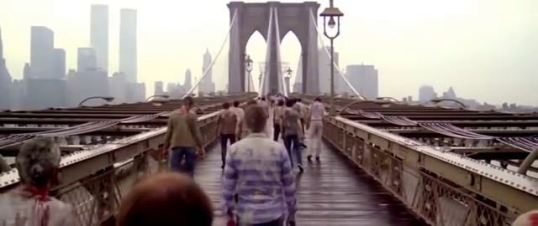
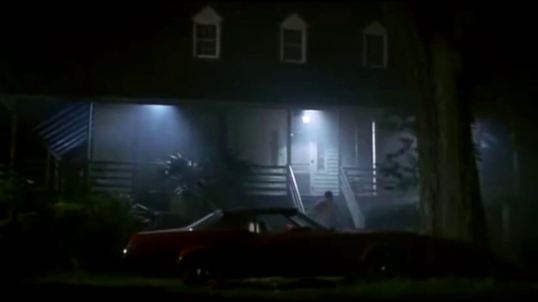
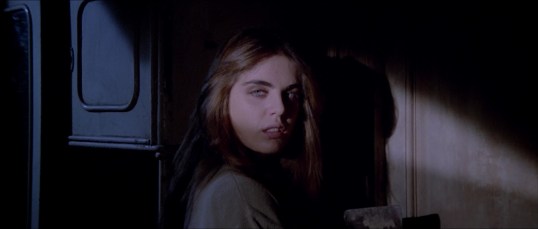
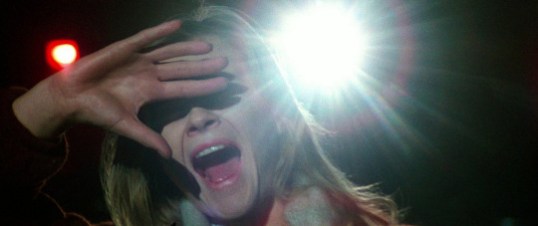
International Horror Film Review: Conquest (dir by Lucio Fulci)


First released in 1983, Conquest takes place in a mystical land, one where humans, dolphins, and sheep live alongside witches, werewolves, and zombies.  It’s a place of magic, evil, and multiple decapitations.  As the film begins, a young man named Ilias (played by Andrea Occhipanti, who also appeared in Lucio Fulci’s The New York Ripper) has just turned 18 and is heading out on his first quest.  His father gives him a magic bow, which shoots laser-like arrows.  Illias boards a raft and sails off to do whatever people do on quests.  To be honest, it’s always strange to me that people in films like this always want to go on quests.  I mean, it never turns out well.

Ilias finds himself in a land that is ruled by Ocron (Sabrina Sian), a naked witch who spends her time fondling a snake and snorting what appears to be cocaine.  During one of her drug binges, Ocron has a vision of a faceless man who carries a magic bow.  She realizes that the man could potentially destroy her and end her reign of evil.  She orders her werewolf soldiers to take a break from their usual routine of killing cave people so that they can scour the land and destroy the man with the bow.

Fortunately, Ilias has made a new friend!  Mace (Jorge Rivero) is a wandering outlaw who claims that he doesn’t care about anyone but who takes an instant liking to Ilias.  Soon, Mace and Ilias are inseparable as they walk through the countryside together, stopping only to kill a hunter and steal his food …. wait, that doesn’t sound very heroic.  Mace’s argument is that hunters themselves are not heroic but still, it really does seem more like cold-blooded murder than anything else.  It’s a weird scene but, then again, this Italian film is a weird movie.

Eventually, Ilias decides that his destiny is to destroy Orcan.  Though Mace doesn’t think that it’s a good idea to cross the most powerful witch in this strange world, he does agree to escort Ilias to the seashore.  (One gets the feeling that if Conquest had been released more recently, as opposed to 1983, Ilias and Mace would have launched a thousand ships.)  But things get complicated on the way, with both Ilias and Mace going through several different changes of heart.  Of course, they also run into zombies, underground monsters, and super-intelligent dolphins….

Conquest was directed by Lucio Fulci, the Italian filmmaker who was responsible for some of the most visually striking and narratively incoherent horror films ever made.  With Zombi 2, Fulci launched the Italian zombie boom.  With The Beyond trilogy, Fulci directed three of the most intriguingly surreal horror films ever made.  With The New York Ripper and Don’t Torture A Duckling, Fulci took the giallo genre to its logical and most disturbing conclusion.  Fulci made blood-filled films, ones in which the overall plot was never as important as the set pieces.  That’s certainly the case of Conquest, which pays homage to the old sword-and-sorcery films while also including zombies and a few rather graphic torture scenes.  (The scene in which one person is literally split in half is shocking, even by the standards of Fulci.)  And yet there’s an odd earnestness to Conquest, as both Ilias and eventually Mace are horrified by Ocran’s cruelty and willing to risk their lives to put an end to it.  The friendship between Ilias and Mace comes out of nowhere but the film takes it seriously and, as a result, the final scenes are far more emotional than you might expect from a director of Fulci’s reputation.  It’s tempting to consider Conquest as a bit of a prequel to The Beyond trilogy.  Perhaps we’re looking into the Beyond itself and discovering that, even in that disturbing world, there are people who are willing to risk their lives to battle evil.

Conquest was not one Fulci’s box office successes, which is a bit of a shame as it really does seem to be a film that he put his heart into.  Unfortunately, Conquest was followed by the controversy surrounding The New York Ripper and the critical failure of Manhattan Baby.  Fulci’s career went into decline and he soon found himself directing stuff like Aenigma.  It’s a shame but I think many of Fulci’s so-called failures are ready to be rediscovered and reappraised.  That’s certainly the case with Conquest.

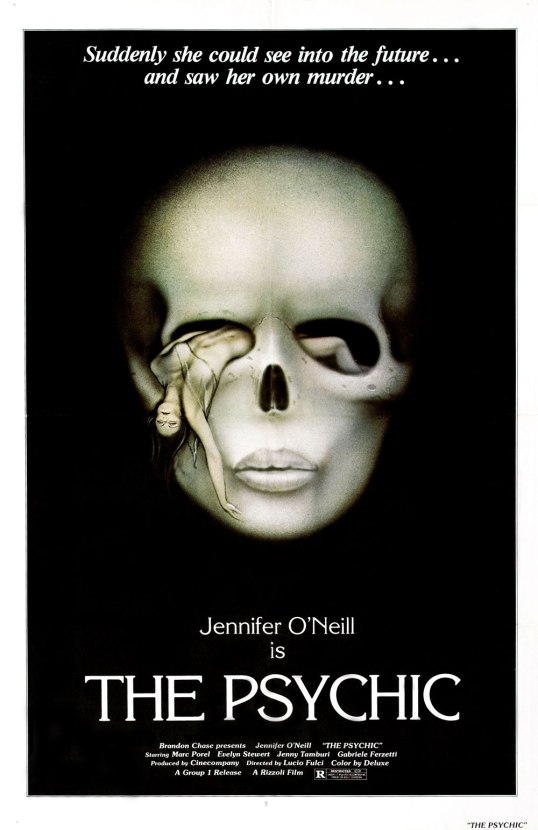
International Horror Film Review: The Psychic (a.k.a. Seven Notes In Black) (dir by Lucio Fulci)


Also known as Seven Notes In Black, The Psychic is an Italian paranormal thriller that was made and released in 1977, shortly before the film’s director, Lucio Fulci, reinvented Italian horror with Zombi 2.

For years, Virginia (Jennier O’Neill) has been haunted by visions.  When she was a child, she saw a vision of her mother jumping off a cliff.  It turned out that, at the same time Virginia had her vision, her mother was doing exactly that.  18 years later, Virginia is living in Rome and she’s married to a wealthy businessman named Francesco Ducci (Gianni Garko, who also starred in several Spaghetti westerns).  Virginia would seem to have the perfect life but she’s still haunted by disturbing visions.  She sees an old woman murdered.  She sees a wall being ripped apart.  She sees a discarded letter.  Is she seeing the past, the present, or the future?  She does not know.  Ducci insists that her visions mean nothing but Virginia is convinced that something is reaching out to her.

While Ducci is away on business, Virginia visits an abandoned house that her husband has recently bought.  Virginia wants to renovate it but, as soon as she sees it, she realizes that the house previously appeared in her visions.  When she investigates, she discovers a skeleton in one of the walls.  With the police now convinced that Ducci is a murderer, Virginia tries to figure out the meaning behind her visions and looks for a way to clear Ducci’s name.  Strangely, Ducci still doesn’t seem to be that concerned about any of it….

Along with Lizard In A Woman’s Skin and Don’t Torture A Duckling, The Psychic is a film that gets a lot of attention as an example of Fulci’s pre-Zombi 2 horror output.  After Zombi 2, Fucli would become best known for making films that were full of gore and that often seemed to be deeply angry with the world.  The fact that Fulci was also a brilliant stylist who created some of the most dream-like images ever to be captured on film would often be overlooked in all the controversy over the often violent content of his movies.  One thing that makes The Psychic interesting is that, visually, it’s clearly a Fulci film.  The cinematography is lush and vibrant.  The visions are surreal and disturbing.  However, there’s very little of the gore that came to define Fulci’s later films.  Instead, the emphasis is on the atmosphere and the mystery.  This is one of the few Fulci films that you could safely show an older relative.

Fulci was often (a bit unfairly, in my opinon) portrayed as being a cinematic misanthrope, as a director who little use for the characters that populated his films.  That’s certainly not the case with The Psychic, though.  Virginia is probably one of the most sympathetic characters to ever appear in a Fulci film and Jennifer O’Neill does a good job in the lead role.  Even more importantly, Fulci seems to like her and, from the start, it’s clear that the film is fully on her side.  The entire story is told through her eyes and she’s a character who you immediately root for.  Like Fulci himself, she’s a visionary whose visions are often underappreciated until it’s too late.  Though the film ends on a characteristically downbeat note (happy endings were rare even in Fulci’s pre-Zombi 2 films), Virginia is still allowed her triumph with one final and rather clever little twist.

The Pyschic is a bit slowly-paced but it’s still a far better film that many Fulci critics seem to be willing to acknowledge.  (One gets the feeling that many critics resent any film that indicates that there was more to Fulci than eye damage and zombies.)  It’s an entertaining and intriguing latter-era giallo and proof that there was more to Fulci than just blood.

Book Review: Spaghetti Nightmares, edited by Luca M. Palmerini and Gaetano Mistretta


Do you love Italian horror?

If you answered yes, Spaghetti Nightmares is a book that you simply must own.  Actually, you probably already do own it.  You’re probably looking at it sitting on your book shelf right now.  And you’re thinking, “Gee, thanks Lisa.  Maybe next you’ll tell me that giallo is named after the cheap yellow paper that thriller novels were published on in Italy and then you’ll really blow my mind!”

Okay, well fine.  Make me feel bad.  That’s okay.  I hope you’re proud of yourself.  It’s a pretty good thing that we both love Italian horror because, if we didn’t, I’d probably never speak to you again….

Anyway, just in case you don’t own this book, you really should.  First published in 1996, Spaghetti Nightmares is a collection of interviews with some of the top figures in Italian horror.  Michele Soavi, Dario Argento, Ruggero Deodato, David Warbeck, Umberto Lenzi, Lamberto Bava, Luigi Cozzi. Antonio Margheriti, and many more answer questions about their careers, their artistic visions, and their feelings about the future and the past of the Italian film industry.  What makes this volume special is that it was written at a time when Italian horror was just starting to be appreciated.  So, the questions and the answers are a bit more honest than they probably would be now that everyone is a confirmed Italian horror fan.

This book also features what I believe was Lucio Fulci’s final interview before he passed away.  He describes himself as being Italian cinema’s “last zombie” and displays a strong knowledge of cinematic history.  Unlike some of the directors interviewed, who come across as being competent (if charming) craftsmen, Fulci comes across as being a true artist.  The interview with Michele Soavi is also poignant as he would soon abandon filmmaking to take care of his son.  (Fortunately, he has since returned.)

So, if you don’t own this book, get it!

International Horror Film Review: Manhattan Baby (dir by Lucio Fulci)


“Manhattan, baby!”

That’s what a friend of mine yelled a few years ago.  Jack was a choreographer who had just received a call from someone in New York City, offering him the chance to come work on an off-Broadway show.  He accepted, of course and then he hugged everyone who had been standing nearby, listening to the call.

“Manhattan, baby!” he shouted.

Now, the show itself didn’t really work out but Jack did get a trip to Manhattan out of it and really, I think that’s what everyone was excited about.  No matter how many bad things you may hear about New York City, it’s hard not to get excited when you hear the word Manhattan.  For many, Manhattan represents culture, sophistication, and wealth.  For others, Manhattan represents crime, inequity, and alienation.  Across the world, Manhattan stands for everything that is both good and bad about America.  Just the word Manhattan carries a power to it.  You would never get excited if someone announced that they had gotten a job in Minnesota, for instance.  If Jack had shouted, “Minnesota, baby!,” we all would have been concerned about him.  Minnesota?  Who gives a fuck?  But Manhattan …. Manhattan has power, baby!

Manhattan also lent its name to one of Lucio Fulci’s post-Zombi films and the title just happened to duplicate Jack’s proclomation, Manhattan Baby.  Released in 1982, Manhattan Baby is often cited as being the last of Fulci’s “major” productions.  While his career was reinvigorated by the success of the films he made with producer Fabrizio De Angelis (including Zombi 2 and the Beyond trilogy), Fulci and De Angelis had a falling out over Manhattan Baby.  Fulci claimed that De Angelis essentially forced him to make the movie, despite the fact that Fulci himself did not have much interest in the script.  Initially, the film was to be a special effects spectacluar with a large budget but, after the controversy surrounding Fulci’s The New York Ripper, the budget was drastically scaled back and the special effects were done on the cheap.  Fulci later said that he felt the movie was terrible and that it set back his career.

As for what the film is actually about, Manhattan Baby deals with …. well, the plot is not easy to describe.  Fulci’s films were always better known for their surreal imagery than their tight plots and, even by his standards, Manhattan Baby is all over the place.  The film opens in Egypt, where archeologist George Hacker (Christopher Connelly) is struck blind when he enters a previously unexplored tomb. Meanwhile, his daughter, Susie (Brigitta Boccoli), is given an amulet by another blind woman.

Back in Manhattan, George waits for his sight to return and Susie and her little brother, Tommy (Giovanni Frezza, who played Bob In The House By The Cemetery) start to act weird.  It turns out that their bedroom is now some sort of demensional gateway, from which snakes sometimes emerge.  At the same time, the gateway occasionally sucks people through and they end up stranded in the Egyptian desert.  Why?  Who knows?  Is Susie possessed or does the gateway operate independently from her?  Why does she occasionally glow a weird blue color?  Why do she and her brother suddenly seem to hate their nannny (played by Cinzia De Ponti, who was also in The New York Ripper)?  It all has something to do with the amulet but the exact details of how it all works seems to change from scene-to-scene.  Eventually, it turns out that the owner of the local antique shop knows about the amulet and its evil designs.  Unfortunately, all of his stuffed birds come to life and peck his eyes out.  Meanwhile, Susie’s parents and her doctors wonder why her latest x-ray seems to indicate that Susie has a cobra living inside of her and….

Like I said, it doesn’t really make any sense and, despite the power of the name, the meaning behind Manhattan Baby as a title is never really explained.  In fact, more time is probably spent in Egypt than in Manhattan.  It’s easy to assume that the film was called Manhattan Baby because it was felt that the title would appeal to American audiences but, when then the film was released in the U.S., it was actually retitled Eye of the Evil Dead in an attempt to disguise it as being a sequel to Sam Raimi’s classic shocker.  (This was actually a common practice as far as the Italian film industry was concerned.  Many films were retitled to disguise them as being a sequel.  Fulci’s Zombi 2, for instance, recieved that title because, in Europe, Dawn of the Dead was released under the title Zombi.)

One can understand Fulci’s frustration with Manhattan Baby but, at the same time, is it really as bad as he often said it was?  Yes, the plot is incoherent but that’s to be expected with a Fulci film.  Yes, the special effects are cheap but again, that’s kind of part of the charm when it comes to Italian exploitation films.  While Manhattan Baby never duplicates the ominous atmosphere of Zombi 2 or achieves the same sort of surreal grandeur as The Byond trilgoy, there are still enough memorable, if confusing, moments to make it watchable.  The sequece where a shot of a man standing in a doorway cuts to a shot of him lying dead in the desert works surprisingly well.  The scene where the shop owner is attacked by reanimated birds is both ludiscrous and scary, in the grand Fulci tradition.  With their emphasis on foolhardy explorers ignoring curses, the Egyptian scenes feel almost as if they could have been lifted from one of the Hammer mummy films.   Manhattan Baby may not be Fulci’s best but it’s hardly his worst.

In fact, with its obsession with blindness, Manhttan Baby is actually one of Fulci’s more personal films.  Fulci was diabetic and reportedly lived in fear that he would someday lose his eyesight.  Many critics, including me, have suggested that he dealt with this fear by having people lose their eyesight in his movies, often in the most violent ways possible.  Manhattan Baby is full of people losing the ability to see.  George Hacker is rendered blind in Egypt.  The mysterious Egyptain woman hands out amulets to people who she cannot see.  The store owner loses his eyes.  One of George’s colleagues falls on a bed of spikers and, of course, one spike goes straight through an eye.  Manhattan Baby is all about blindness and only be getting rid of the amulet can George hope to once again truly see the world and the people that he loves.  If only illness could be tossed away as easily as an amulet.

Despite Fulci’s disdain for the final result, Manhattan Baby is hardly the disaster that it’s often made out to be.  Those who aren’t familiar with Fulci’s unique aesthetic will undoubtedly confused by the film but, for those of us who know the man’s work, Manhattan Baby may be a minor Fulci film but it’s still an occasionally intriguing one.

4 Shots From 4 Catriona MacColl Films


4 (or more) Shots From 4 (or more) Films is just what it says it is, 4 (or more) shots from 4 (or more) of our favorite films. As opposed to the reviews and recaps that we usually post, 4 (or more) Shots From 4 (or more) Films lets the visuals do the talking.

This October, we’re using this feature to highlight some of our favorite actors and directors, all of whom have made invaluable contributions to the horror genre!  Today, we both pay tribute to and wish a happy birthday to the British actress, Catriona MacColl, with….

4 Shots From 4 Catriona MacColl Films

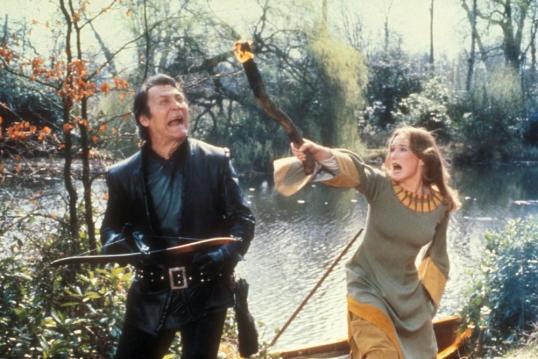
Hawk The Slayer (1980, dir by Terry Marcel, DP: Paul Beeson)

City of the Living Dead (1980, dir by Lucio Fulci, DP: Sergio Salvati)

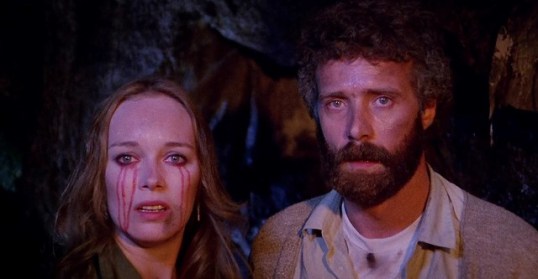
The Beyond (1981, dir by Lucio Fulci, DP: Sergio Salvati)

The House by The Cemetery (1981, dir by Lucio Fulci, DP: Sergio Salvati)


12 Shots From 12 Films: Special Lucio Fulci Edition


4 (or more) Shots From 4 (or more) Films is just what it says it is, 4 (or more) shots from 4 (or more) of our favorite films. As opposed to the reviews and recaps that we usually post, 4 (or more) Shots From 4 (or more) Films lets the visuals do the talking.

94 years ago today, Lucio Fulci — the maestro of Italian genre filmmaking — was born in Rome.  Fulci would go on to direct some of the most visually stunning (and, occasionally, most narratively incoherent) films ever made.  Fulci worked in all genres but he’ll probably always be best remembered for launching the Italian zombie boom with Zombi 2.  His subsequent Beyond trilogy continues to fascinate and delight lovers of both horror and grindhouse filmmaking.

Lucio Fulci, needless to say, is a pretty popular figure here at the TSL.  In honor of the date of his birth, it’s time for….

12 Shots From 12 Lucio Fulci Films

Don’t Torture A Duckling (1972, dir by Lucio Fulci, DP: Sergio D’Offizi)

Four of the Apocalypse (1975, dir by Lucio Fulci, DP: Sergio Salvati)

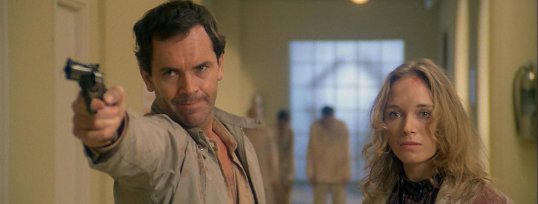
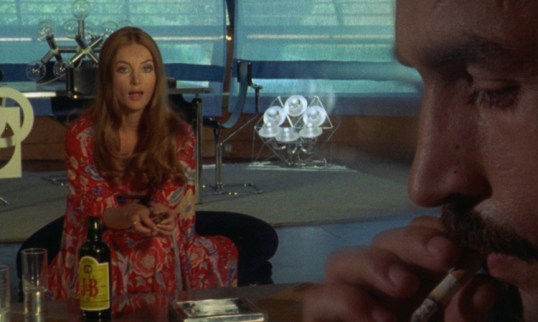
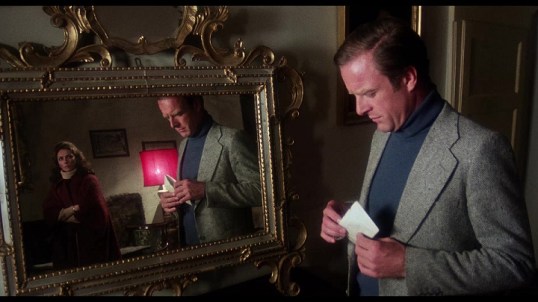
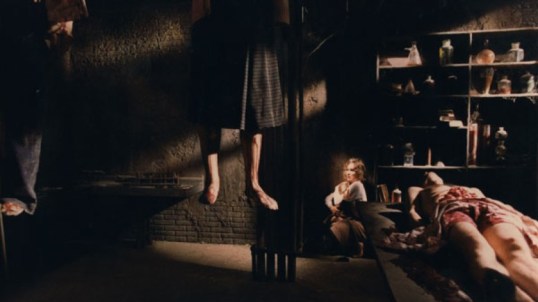
The Psychic (1977, dir by Lucio Fulci, DP: Sergio Salvati)

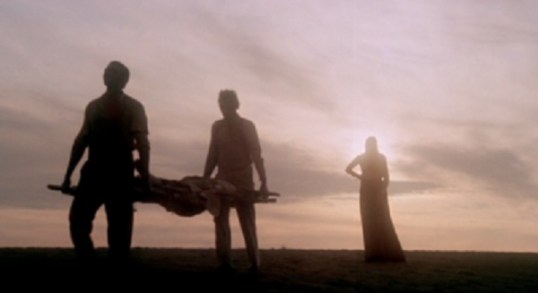
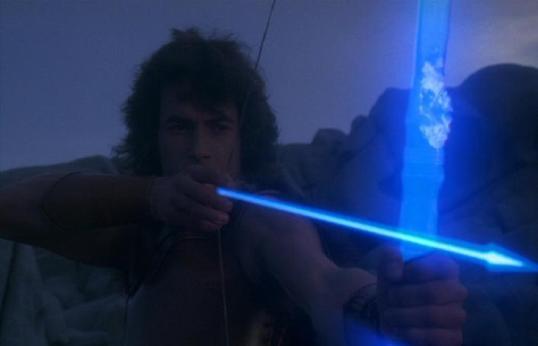
Conquest (1983, dir by Lucio Fulci, DP: Alejandro Ulloa)

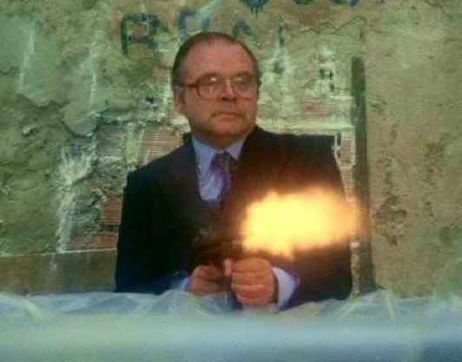
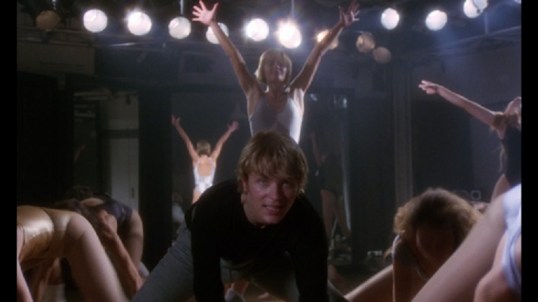
Murder Rock (1984, dir by Lucio Fulci, DP: Giuseppe Pinori)

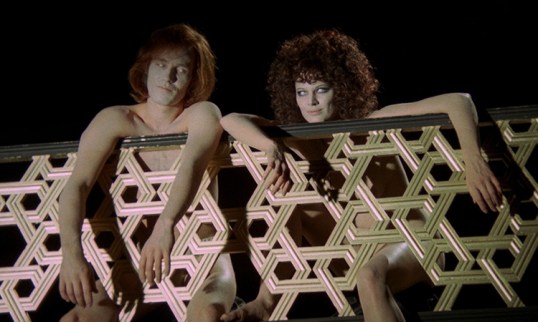
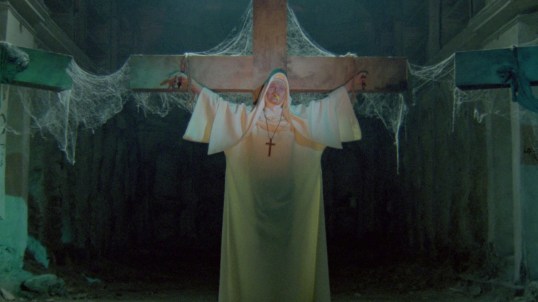
Demonia (1990, dir by Lucio Fulci, DP: Luigi Ciccarese)

6 Trailers For October 30th


Halloween comes closer and that means that it’s time for another holiday edition of Lisa Marie’s Favorite Grindhouse and Exploitation Film Trailers.  Today, we have 6 of my favorite Italian horror trailers!

  1. The Beyond (1981)

I’ve always liked the trailer for Lucio Fulci’s The Beyond.  It does a good job of capturing the dream-like amtosphere of Fulci’s classic film.

2. Raiders of Atlantis (1983)

Raiders of Atlantis is hardly my favorite Ruggero Deodato film but I do really like the trailer.  Add to that, I think this might be the only Deodato trailer that’s actually safe for work.  The trailer for Cannibal Holocaust features that body being found with the stake driven through it.  The House on the Edge of the Park trailer features the scene with straight razor.  Meanwhile, the trailer for Raiders of Atlantis has fun music and a laser-shooting statue!  It also has Tony King shouting, “Come on, come on, come on!”

3. Zombie 5: Killing Birds (1987)

This movie sucks but, for some reason, I’ve always found the trailer to be very effective.  I think it’s the scene with the woman smiling despite being pinned to the wall and apparently dead.  That’s pure nightmare fuel.

4. Spasmo (1974)

This is from director Umberto Lenzi.  I sometimes feel as if I’m the only person in the world who likes this film.  As for the trailer, I just enjoy the anguished cries of “Spasmo!  Spasmo!”

5. Lisa and the Devil (1973) 

This is one of my favorite Mario Bava films.  Yes, some of it is because the lead character is named Lisa.  I’ll admit it, I like my name.  However, it’s a really good film as well!

6. Tenebrae (1982)

And finally, here is the trailer for Dario Argento’s brilliant, Tenebrae!

Seriously, if you want to have a truly wonderful Halloween, watch some Italian horror!  If you haven’t already discovered Bava, Fulci, Argento, Lenzi, Soavi, D’Amato, and all the rest, now is the perfect time to do so!  Do it now before their work gets canceled by the online puritan mob.

(Always remember: invest in physical media.)

4 Shots From 4 Lucio Fulci Films: Zombi 2, City of the Living Dead, The House By The Cemetery, The New York Ripper


4 Shots From 4 Films is just what it says it is, 4 shots from 4 of our favorite films. As opposed to the reviews and recaps that we usually post, 4 Shots From 4 Films lets the visuals do the talking.

This October, we’ve been using 4 Shots from 4 Films to pay tribute to some of our favorite horror filmmakers!  Today, we honor the one and only Lucio Fulci!

4 Shots From 4 Lucio Fulci Films

Zombi 2 (1979, dir. Lucio Fulci)

City of the Living Dead (1980, dir by Lucio Fulci)

The House By The Cemetery (1981, dir by Lucio Fulci)

The New York Ripper (1982, dir by Lucio Fulci)

Song of the Day: La Lucertola by Ennio Morricone


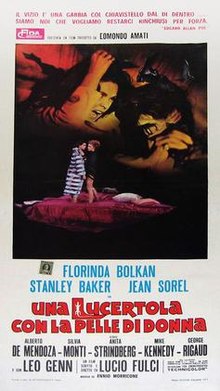
Today’s song of the day comes form Ennio Morricone’s score for Lucio Fulci’s 1971 giallo, A Lizard In A Woman’s Skin!  This may not be one of Morricone’s best-known scores but it’s still one of my favorites.  It perfectly captures the feel of Fulci’s psychedelic thriller.

From Ennio Morricone, here is La Lucertola.

Previous Entries In Our Tribute To Morricone:

  1. Deborah’s Theme (Once Upon A Time In America)
  2. Violaznioe Violenza (Hitch-Hike)
  3. Come Un Madrigale (Four Flies on Grey Velvet)
  4. Il Grande Silenzio (The Great Silence)
  5. The Strength of the Righteous (The Untouchables)
  6. So Alone (What Have You Done To Solange?)
  7. The Main Theme From The Mission (The Mission)
  8. The Return (Days of Heaven)
  9. Man With A Harmonic (Once Upon A Time In The West)
  10. The Ecstasy of Gold (The Good, The Bad, and the Ugly)
  11. The Main Theme From The Good, The Bad, and the Ugly (The Good, The Bad, and the Ugly)
  12. Regan’s Theme (The Exorcist II: The Heretic)
  13. Desolation (The Thing)
  14. The Legend of the Pianist (The Legend of 1900)
  15. Theme From Frantic (Frantic)