ALFRED HITCHCOCK PRESENTS (TV Series) – S7, E18: “The Woman Who Wanted to Live,” starring Charles Bronson and Lola Albright!


Charles Bronson appeared in three episodes of the ALFRED HITCHCOCK PRESENTS T.V. series. His first two appearances came in the first season in early 1956 when Bronson was still in the early stages of his career. When “The Woman Who Wanted to Live” aired on February 6th, 1962, Bronson’s standing in the film and television community had risen dramatically. Since those first two appearances, he had headlined several low budget films (MACHINE GUN KELLY and SHOWDOWN AT BOOT HILL), starred in his own television series (MAN WITH A CAMERA), and even co-starred as one of the seven gunmen in the western classic, THE MAGNIFICENT SEVEN! As opposed to those two early appearances, Bronson was a well known commodity to audiences in 1962, and he was on the precipice of breaking out in even bigger roles, as THE GREAT ESCAPE and THE DIRTY DOZEN were just over the horizon!

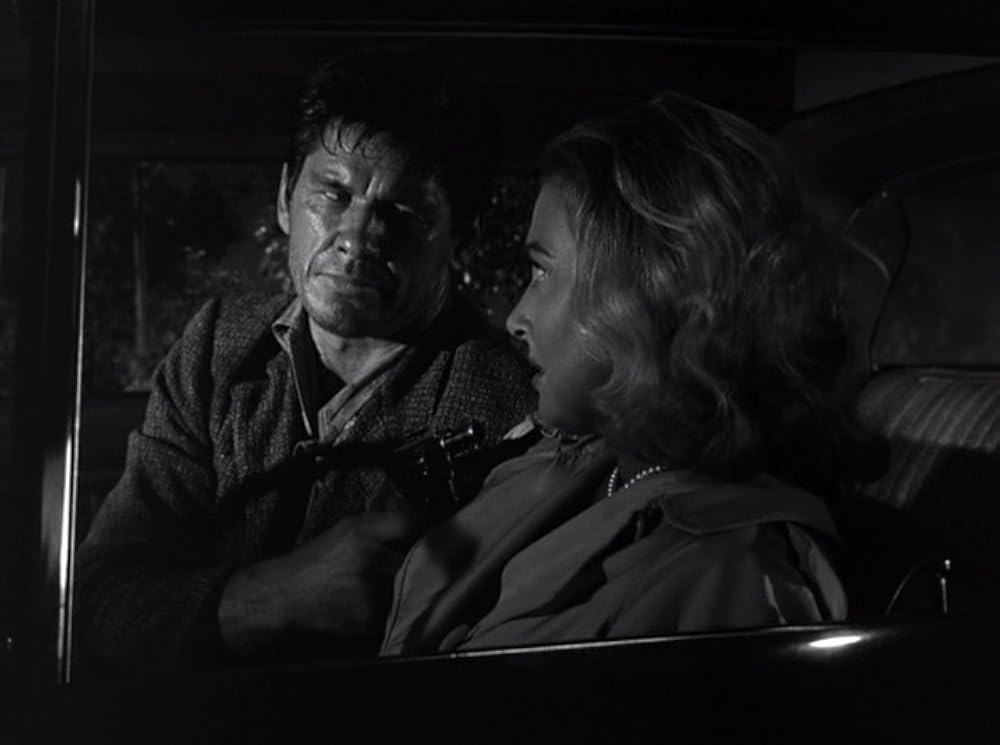
In “The Woman Who Wanted To Live,” we meet escaped convict Ray Bardon (Charles Bronson), a hardened criminal who was shot in the arm when busting out of prison. In serious pain and in need of some quick cash and a getaway vehicle, Bardon robs a remote gas station, even killing the attendant when he makes a move for his gun. Soon a beautiful young woman named Lisa (Lola Albright) drives up to the station. Bardon wants to steal her car and take off, but surprisingly Lisa, who sees his wounds, convinces him to let her drive him wherever he wants to go. As Bardon wonders why she’s willing to help him, Lisa assures him that she will do whatever he wants her to do as she just wants to stay alive. As they flee into the night, they have to deal with a flat tire and a gang of dangerous thugs, but Lisa continues to help Bardon and even passes up a couple of opportunities to take off to safety. Why is Lisa so invested in Bardon’s survival? If you’re guessing there’s more to the story, you would definitely be right! 

After watching all three of Charles Bronson’s episodes of ALFRED HITCHCOCK PRESENTS, I believe that “The Woman Who Wanted To Live” just may be the best of the bunch. It’s not as creepy as “And So Died Riabouchinska,” and it certainly doesn’t play up the black comedy like “There Was An Old Woman,” but it does pack quite the emotional punch. First, the story is very effective, as we watch the bond that seems to be developing between the escaped criminal and his captive. You can’t help but wonder if we may be watching two twisted souls who may actually need each other. Hitchcock was always good at throwing people into desperate situations together, and script definitely goes that route here. In the short 25 minutes contained in this episode, each character is given the opportunity to truly help the other, as she helps mend his wounds and he protects her from roadside thugs with bad intentions. Even as the two help each other, as the story plays on, a tightening grip seems to take hold on the audience as to why Lisa hasn’t escaped when she’s had her chances. The strength of the episode just may be the fact that when the big reveal happens, it’s as plain as the nose on your face even though I never considered it a single time, something I have in common with our criminal, Frank Bardon. Second, this episode features two excellent performances from the stars. Interestingly, Charles Bronson and Lola Albright would appear together in the Elvis movie, KID GALAHAD, later this same year. As usual, Bronson brings a real world intensity to the role of the wounded and desperate criminal. With his lived in features, Bronson is incapable of presenting himself in a way that doesn’t seem true and authentic, whether he’s playing a cop or a killer, and his presence here is a clear indicator of his impending stardom. In a tribute to Albright’s performance, the two stars have quite a nice chemistry together, and she steals the final scenes as her character transforms right in front of our eyes and we understand why she’s refused to run away.

With its strong script and the excellent lead performances from Bronson and Albright, I easily recommend “The Woman Who Wanted To Live” as a superior episode of ALFRED HITCHCOCK PRESENTS. This episode truly surprised me and has lingered with me since I first watched it a few days ago. 
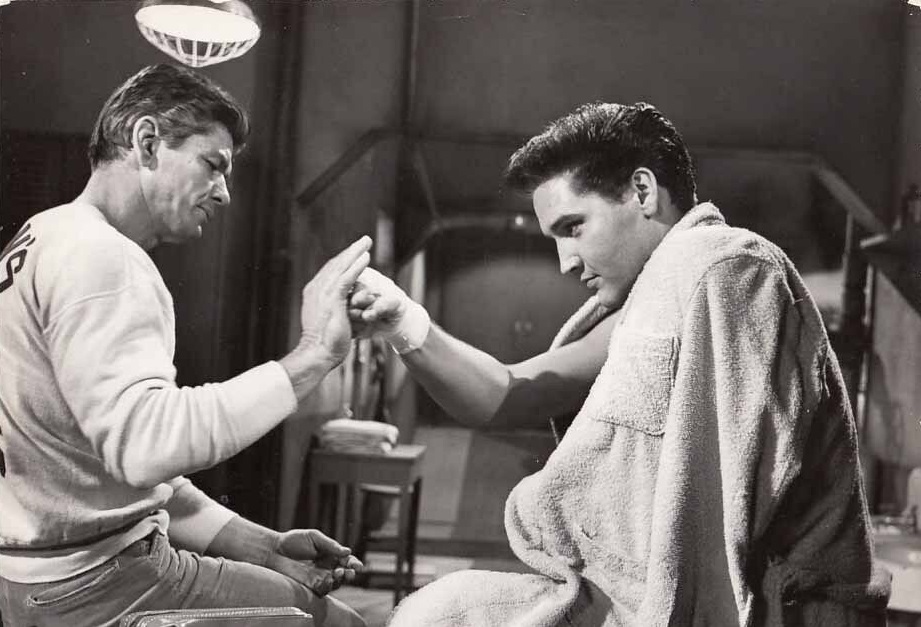
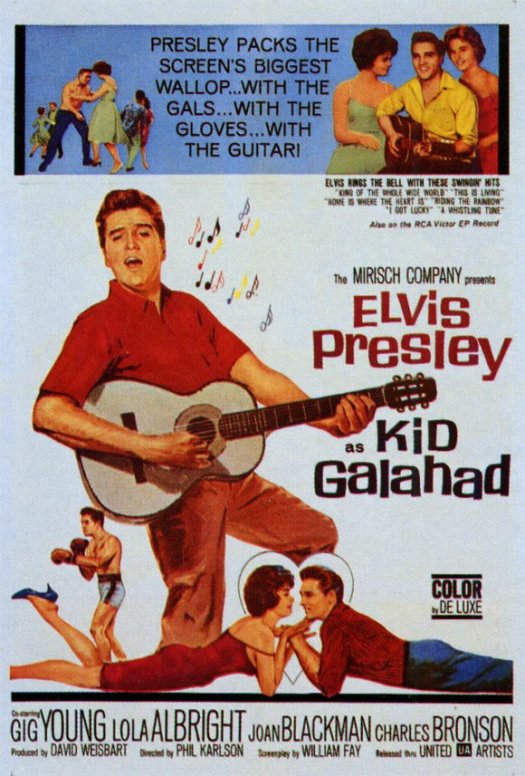
KID GALAHAD (1962) – Charles Bronson teaches Elvis how to box! Happy Birthday to the King!


In celebration of the January 8th birthday of the great Elvis Presley, I decided to watch his 1962 film KID GALAHAD, the only film where he co-stars with my movie hero Charles Bronson. I’ve always been a fan of Elvis Presley and seeing him on-screen with Bronson is a real treat for me.

KID GALAHAD opens with Walter Gulick (Elvis Presley) returning to his hometown in upstate New York. Recently discharged from the army, and in the need of money, the aspiring mechanic finds his way to Willy Grogan’s (Gig Young) boxing camp and agrees to spar with one of his up-and-coming young boxers. Walter doesn’t have much boxing skill, but he ends up having one hell of a right hook and knocks the young boxer flat on his ass. Seeing this, Willy Grogan, who has all sorts of personal and financial problems, thinks Walter might be the answer to getting out of debt to his bookie. Willy asks his trainer Lew (Charles Bronson) to work with the young, strong Walter, who’s now been dubbed “Galahad” by Willy’s girlfriend Dolly (Lola Albright) after he had protected her honor from a “man who doesn’t know how to behave around a lady.” Pretty soon, Willy has fights arranged for Walter under the name of “Kid Galahad.” The first fight begins with Galahad getting his faced being punched repeatedly until he gets one opening and then knocks the other fighter out with one punch. After that, with Lew’s help, Galahad’s skills start showing definite improvement. When he’s not working with Lew at the gym, Galahad finds time to romance and propose to Willy’s sister, Rose (Joan Blackman). This causes problems with the troubled Willy who doesn’t want his sister married to some “meatball” or “grease monkey.” Even worse, smelling money, gangster Otto Danzig (David Lewis) and his henchmen start putting pressure on the financially troubled Willy to force Galahad to take a dive in his big fight with “Sugar Boy” Romero so they can clean up on the fix, going so far as breaking Lew’s hands. Will Willy get the balls to say no to the gangsters? Will Galahad be able to beat Sugar Boy Romero and then retire to open his garage with Rose by his side? You probably already know, but you’ll just have to watch and see!

1962’s KID GALAHAD is a remake of a 1937 movie of the same name directed by Michael Curtiz, and starring cinematic legends Edward G. Robinson, Bette Davis, and Humphrey Bogart. I’ve never seen the earlier version, so I will not compare the two in any way. And to be completely honest, I haven’t watched very many Elvis Presley movies either. As I type this, I can’t think of a single moment I remember in his filmography not included in KID GALAHAD, and I wouldn’t have watched this one without the presence of Charles Bronson. With that said, I think Elvis gives a good performance in KID GALAHAD. He’s very likable, with his character having an old-fashioned chivalry towards women, a friendly, open way with men, and an appreciation for a strong work ethic. I think Elvis handles each of these parts of his character in a way to that makes me want to root for him. As good as Elvis is as Kid Galahad, Gig Young does most of the heavy lifting as the story really revolves around his character’s troubles even more than it does around Galahad. I think he does a pretty good job of taking a character who’s a pretty sorry guy, and by the end of the movie we actually find ourselves starting to like him. Even though he’s in a true supporting role, Charles Bronson is excellent as the trainer who teaches Galahad how to box. Every scene Bronson’s in is elevated by his enormous screen presence and authority. With Bronson in his corner, you feel Galahad is capable of anything. The most powerful scene in the entire film is when the gangsters try to buy his character off under the threat of violence, and he refuses, leading to his hands being broken. After becoming one of the biggest stars on the planet a number of years later, it’s easy to look back at these moments and wonder how in the hell was he not already a huge star in 1962.

Of course, this being an Elvis Presley movie, there are several musical numbers spread throughout the movie. While I don’t remember too much about the songs themselves, they didn’t really take me out of the drama of the movie either. I actually enjoyed seeing Elvis perform, with the people around him clapping along and enjoying themselves. I do remember a specific scene where Elvis is singing as he’s driving down the road, and Bronson’s sitting in the back seat with a big smile on his face like he’s having a great time. That’s my favorite moment of all the songs.  

Although I haven’t watched many of his movies, I’ve been an appreciative fan of Elvis Presley all my life. I can’t tell you how many times I heard his Christmas album in my younger years, as my mom would play it almost on repeat once we got to November. He was a talented, versatile singer whose charisma and stage presence have never been matched, and whose influence on music and entertainment is immeasurable. The fact that Elvis Presley and Charles Bronson made KID GALAHAD together means something to me, and I had a great time revisiting the film on his birthday!

See the Original Trailer for KID GALAHAD below.

Rockin’ in the Film World #13: Elvis Presley in KID GALAHAD (United Artists 1962)


gary loggins's avatarcracked rear viewer

Let’s face it – with a handful of exceptions, most of Elvis Presley’s  post-Army 1960’s movies are awful. They follow a tried-and-true formula that has The King in some colorful location torn between two (or more!) girls, some kind of vocational gimmick (race car driver, scuba diver), and a handful of forgettable songs. KID GALAHAD is one of those exceptions; although it does follow the formula, it’s redeemed by a stellar supporting cast, a fair plot lifted from an old Warner Brothers film, and a well choreographed and edited final boxing match.

The movie’s very loosely based on 1937’s KID GALAHAD, a boxing/gangster yarn that starred Edward G. Robinson, Bette Davis, Humphrey Bogart, and Wayne Morris in the role now played by and tailored for Presley. He’s a young man fresh out of the Army (how’s that for typecasting?) who returns to his upstate New York hometown of Cream Valley…

View original post 557 more words

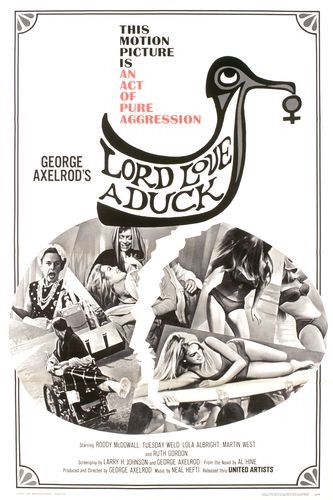
Back To School Part II #3: Lord Love A Duck (dir by George Axelrod)


Lordloveaduck

For my third Back to School review, I watched the 1966 satire, Lord Love A Duck!

Hey hey hey!

I have to admit that, because I’m writing this review in a hurry and because the D and the F key are located right next to each other, I keep accidentally calling this film Lord Love A Fuck.  Somehow, that seems appropriate because Lord Love A Duck is a very odd and subversive little movie that deals with people who are largely motivated by lust and I’m pretty sure that, at one point, Roddy McDowall is seen saying, “Fuck off!” but, of course, we don’t actually hear him say it.  But seriously, Lord Love A Duck is a weird movie.

Hey hey hey!

Roddy McDowall plays Alan Musgrave, a student at a “progressive” high school in California.  Roddy was about 37 years old when he played a high school senior and he doesn’t look like a teenager at all but somehow, it’s appropriate.  After all, Alan is no ordinary teenager!  He’s smarter than everyone else.  He’s wittier than everyone else.  He’s more clever than everyone else.  He’s also totally obsessive and willing to do just about anything to get what he wants.  And you can be sure of one thing: whenever Alan does something borderline insane, you’ll hear a group of singers harmonizing, “Hey hey hey!” in the background.

Hey hey hey!

See, it’s happening already.  It doesn’t matter what Alan’s doing.  He could be kicking a skateboard in the way of a romantic rival.  He could be interrupting the graduation ceremony with a tractor.  He could be going to prison for life.  No matter what it is, it will always be accompanied by:

Hey hey hey!

Anyway, Alan is in love with the innocent, sweet, and constantly flirtatious Barbara Anne Greene (Tuesday Weld).  In fact, almost everyone in the film is in love with (or, at the very least, turned on by) Barbara.  The only person who doesn’t seem to be in love with Barbara is her mother (Lola Albright), a former-beauty-turned-cocktail-waitress whose world-weary cynicism seems to offer a depressing hint of what’s in store for Barbara once she gets older.

Hey hey hey!

But everyone else loves Barbara.  Especially Alan!  In fact, Alan is so in love with her that he swears that he’s going to make sure that she gets everything that she wants.  When she needs 12 cashmere sweaters so that she can join an exclusive girl’s club, Alan helps her to convince her father (Max Showalter) to pay for them.  When Barbara needs a job after dropping out of school, Alan helps her get one as a secretary for the high school’s progressive principal (Harvey Korman).  When Barbara decides she wants to marry the boring but respectable Christian youth leader, Bob (Martin West), Alan keeps Bob’s mother (Ruth Gordon) so drunk that she doesn’t get a chance to reprimand her son for falling in love with a girl from a divorced family.  (As Bob’s mother explains it, she doesn’t believe in divorce.  “We don’t leave our husbands.  We bury them.”)  Eventually, a movie producer decides that he wants Barbara to star in his beach films but Bob says no.  No wife of his is going to be a movie star!  So, of course, Alan decides to murder Bob so that Barbara can again have what she wants…

Hey hey hey!

Lord Love A Duck is a manic comedy that satirizes everything that mainstream audiences in 1966 would have held sacred.  Teenagers, conservatives, liberals, love, hate, murder, justice, marriage, divorce, morality, sex, religion, television, movies — it’s all thoroughly ridiculed in this film.  (It’s not surprising that the film’s director also wrote the script for The Manchurian Candidate, a satire disguised as a thriller.)  To be honest, it’s probably a little bit too manic for its own good.  At times, the film run the risk of becoming exhausting.  But then there’s even more times when the film is absolutely brilliant.

Hey hey hey!

Speaking of absolutely brilliant, Lord Love A Duck makes brilliant use of Roddy McDowall’s eccentric screen presence but, even better, it features one of Tuesday Weld’s best performances.  Weld was a talented actress whose performances often revealed that a fragile soul is often the price that is payed for great beauty.  (There’s no greater insecurity than wondering whether people are responding to who you are or to how you look.  Would you still care if I was ugly is not a question we’re supposed to ask but it’s one that we’ve all wondered.)  It would have been far too easy to make Barbara either totally innocent or totally manipulative.  Wisely, the film does neither.  Barbara may occasionally be manipulative but she always means well.  It’s not her fault that everyone around her is either idiotic or insane.

Hey hey hey!

Though Lord Love A Duck is obviously a time capsule of the culture of mid-60s, it’s also a film that remains relevant even today.  Culturally, we’re still obsessed with fame, youth, and beauty.  In many ways, the satire of Lord Love A Duck still feels more extreme that anything that any contemporary filmmaker would dare to attempt.  I can only imagine what audiences in 1966 thought as they watched this subversive teen film.

Hey hey hey!