Lisa Reviews An Oscar Winner: You Can’t Take It With You (dir by Frank Capra)


(With the Oscars scheduled to be awarded on March 4th, I have decided to review at least one Oscar-nominated film a day.  These films could be nominees or they could be winners.  They could be from this year’s Oscars or they could be a previous year’s nominee!  We’ll see how things play out.  Today, I take a look at the 1938 best picture winner, You Can’t Take It With You!)
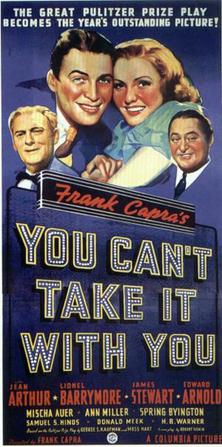
“You can’t take it with you.”

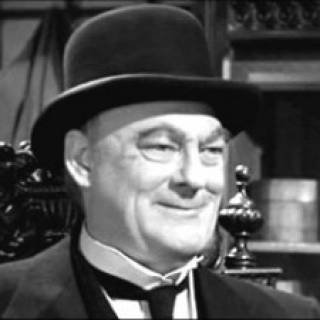
If there’s any one belief that defines the worldview of Martin Vanderhof (Lionel Barrymore), it’s this.  It doesn’t matter how much money you make in your life.  It doesn’t matter how successful you are at business or anything else.  The fact of the matter is that, when your time is up, you won’t be able to take any of that stuff with you.  Instead, Grandpa Vanderhof (as he’s called by his large family) believes that the most important thing to do during your lifetime is to make friends and pursue what you’re truly interested in.

Vanderhof has another belief, one that particularly appealed to be me.  He has never paid income tax.  He doesn’t see the point of giving money to the government when he doesn’t feel that they’ll make good use of it.  When an outraged IRS agent (Charles Lane) stops by Vanderhof’s sprawling house and demands that Vanderhof pay his taxes, Vanderhof refuses.  When the IRS man argues that the income tax is necessary to pay for the Presidency, the Congress, and the Supreme Court, Vanderhof offers to give him five dollars.  “Hell yeah!” I shouted at the TV.  With an attitude like that, Vanderhof should have moved down here to Texas.  We would have elected him governor.

Grandpa Vanderhof is the head of a large and cheerfully eccentric family, all of whom live together under the same roof.  Penny (Spring Byington) writes novels because, years ago, a typewriter was accidentally delivered to the house.  Her husband, Paul (Samuel S. Hinds), has a basement full of fireworks.  Essie (Ann Miller) loves to dance and spends almost the entire movie twirling from room to room.  Her husband, Ed (Dub Taylor), is a xylophone player.

Of course, it’s not just family living in the Vanderhof House.  There’s also Potap Kolenkhov (Mischa Auer), a Russian who is “teaching” Essie how to dance.  There’s Rheba the maid (Lillian Yarbo) and Donald (Eddie Anderson) the handyman.  Actually, the house appears to be open to just about anyone who wants to stay.

And then there’s Penny’s daughter, Alice (Jean Arthur).  Alice is the most “normal” member of the family.  She has just become engaged to Tony Kirby (James Stewart) and she is still trying to figure out how to introduce Tony’s stuffy parents (Edward Arnold and Mary Forbes) to her eccentric family.  What she and Tony don’t know is that Mr. Kirby is currently trying to buy up all the houses that are near a competitor’s factory.  Only one homeowner has refused to sell.  The name of that homeowner?  Martin “Grandpa” Vanderhof.

It all leads, of course, to one chaotic dinner party, one lively night in jail, and a huge fireworks display.  It also leads to true love, which is nice.  Jimmy Stewart and Jean Arthur are even more adorable here than they were in Mr. Smith Goes To Washington.

Based on a Pulitzer-winning play by George S. Kaufman, You Can’t Take It With You was the second comedy to win the Oscar for Best Picture.  The first comedy to win was 1934’s It Happened One Night.  It’s probably not coincidence that both of these films were directed by Frank Capra.

Seen today, You Can’t Take It With You seems a bit slight for an Oscar winner.  Grandpa Vanerhof is a lovable eccentric.  Tony’s father is a stuffy businessman.  Hmmm … I wonder whose philosophy is going to be victorious at the end of the movie?  Still, predictability aside, it’s a delightfully enjoyable film.  While it never quite escape its stage origins, it features wonderful performances from all the usual members of the Capra stock company.  James Stewart and Jean Arthur are a charming couple while Lionel Barrymore gives a performance that is so warmly likable that it’s hard to imagine that, just 9 years later, he would be so perfectly cast as the heartless Mr. Potter in It’s A Wonderful Life.  Of course, my favorite member of the member was Essie, mostly because I also like to dance from room to room.  While it’s hard to justify awarding it Best Picture over The Adventures of Robin Hood and Grand Illusion, You Can’t Take It With You is still a wonderfully fun movie.

It’ll make you smile and laugh.  Who can’t appreciate that?
http://www.youtube.com/watch?v=0WY9RAroTS0


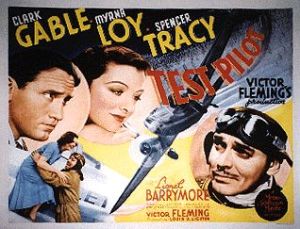
Lisa Reviews An Oscar Nominee: Test Pilot (dir by Victor Fleming)


(With the Oscars scheduled to be awarded on March 4th, I have decided to review at least one Oscar-nominated film a day.  These films could be nominees or they could be winners.  They could be from this year’s Oscars or or they could be a previous year’s nominee!  We’ll see how things play out.  Today, I take a look at the 1938 best picture nominee, Test Pilot!)

Test Pilot is all about charisma.

It tells a fairly simple story.  I imagine that the plot seemed just as familiar in 1938 as it does in 2018.  Jim Lane (Clark Gable) is a test pilot.  In the early days of aviation, long before people took the idea of flight for granted, Jim Lane is a hero and celebrity.  Whenever a new aviation technique is developed, Jim is the one who tests it.  He’s the one who makes sure that it’s safe.  Every day, when Jim goes to work for Mr. Drake (Lionel Barrymore), there’s a chance that he might not make it home.  Not surprisingly, he’s cocky, reckless, and not prone to commitment.  He’s also handsome, charming, manly, and quick with a quip.  In short, he’s Clark Gable.

When the movie starts, Jim has only one real friend.  Gunner (Spencer Tracy) is his mechanic.  Gunner is a by-the-book, no-nonsense professional.  He might enjoy a drink every now and then but Gunner knows his job and he knows his planes and, even more importantly, he knows Jim.  Gunner’s a man of unimpeachable integrity, the type who will always call things as he sees them.  In short, he’s Spencer Tracy.

One day, while on a test flight, Jim is forced to make an emergency landing on a farm in Kansas.  That’s where he meets Ann Barton (Myrna Loy).  Ann is beautiful and outspoken.  She quickly proves that she can keep up with Jim, quip-for-quip.  In short, she’s Myrna Loy and, before you know it, she and Jim are in love.  Just as quickly, Jim and Ann are married.

The movie starts out as a bit of domestic comedy.  Jim may know how to fly a plane but it quickly becomes obvious that he doesn’t know much about commitment or being a husband.  When Jim attempts to buy his wife a nightgown, he doesn’t even know how to pronounce the word lingerie.  (He asks a store clerk for help in finding the “lonjur department.”)  However, Jim soon starts to find that married life agrees with him.

Of course, that’s a problem when your job requires you to defy death on a daily basis.  Ann worries that Jim is going to go to work and never come home, fears that are intensified after a race with another airplane ends in a terrible and (for the other pilot) fatal crash.  Gunner, meanwhile, starts to fear that there’s only so many times that Jim can cheat fate.  Both Ann and Gunner promise that they will never leave Jim’s side.

Well, you can probably already guess everything that’s going to happen.  Test Pilot is not exactly the most narratively adventurous movie ever made but, when you’ve got Gable, Tracy, Loy, and Barrymore all in the same film, you don’t really need to break any new ground, storywise.  Test Pilot is an example of the power of pure movie star charisma.  It’s watchable because the performances are just as entertaining today as they were in 1938.  The film features Gable doing what he did best and Tracy doing what he did best and Loy and Barrymore all doing what they did best.  In this case, that’s more than enough.

When it comes to the film’s numerous flight sequences, it’s perhaps best to try to put yourself in the shoes of someone seeing the film in 1938.  Today, of course, we’ve been spoiled by CGI.  We tend to assume that literally anything can happen in a movie.  In the 30s, however, people couldn’t take special effects for granted.  When they watched the flight footage in Test Pilot, they did it with the knowledge that it was filmed by people who actually were putting their lives at risk to get it.  At a time when commercial aviation was considered to be a luxury, Test Pilot provided audiences with a view of the world in the sky and of the world below, a view that they probably wouldn’t have gotten a chance to see otherwise.

A huge box office success, Test Pilot was nominated for best picture but lost to another film featuring Lionel Barrymore, Frank Capra’s You Can’t Take It With You.

Halloween Havoc!: THE DEVIL DOLL (MGM 1936)


gary loggins's avatarcracked rear viewer

Producer/director Tod Browning’s THE DEVIL DOLL is a film reminiscent of his silent efforts with the great Lon Chaney Sr. This bizarre little movie doesn’t get the attention of Browning’s DRACULA or FREAKS ,  and the ending’s a bit on the sappy side, but on the plus side it features Lionel Barrymore dressed in drag for most of the time, some neat early special effects work, and a weird premise based on a novel by science fiction writer A. Merritt, adapted for the screen by Guy Endore, Garrett Ford,  and Erich von Stroheim (!!).

Barrymore stars as Devil’s Island escapee Paul Lavond, and he pretty much carries the picture. Lavond and fellow con Marcel (Henry B. Walthall ) make it to Marcel’s home, where wife Melita (a pop-eyed Rafaela Ottiano) has been keeping the faith on her hubby’s experimental work… turning animals miniature, to solve the coming food shortage…

View original post 396 more words

Holiday Scenes That I Love: The Ending of It’s A Wonderful Life


At this very moment, NBC is broadcasting the classic 1946 film, It’s A Wonderful Life!  They show it every Christmas Eve and every year, I watch.

Why?

Because I love this movie so much that I could watch it a million times and then a million times more!  There is no movie that makes me happier than It’s A Wonderful Life.  There is no movie that brings tears to my mismatched eyes as quickly as It’s A Wonderful Life.  I love this film so much that I even watch it outside of December.  If I’m depressed, this is the movie that I’m going to watch.

And who can blame me?  The scene below is one that I love but, to be honest, there’s not a single scene in It’s A Wonderful Life that I don’t love.  I even love those scenes with old Sam Wainwright going, “Hee haw!”  Sam may have been a jackass but he was a good guy underneath it all.

(Plus, he made a fortune in plastics!  Money can excuse all sorts of obnoxious behavior!)

As for the scene below, it’s the final ten minutes of It’s A Wonderful Life.  To me, nothing exemplifies the joy of the holidays better than Jimmy Stewart running down the snow-filled streets of Bedford Falls and shouting “Merry Christmas” to everyone, even mean old Mr. Potter.  (“And a happy new year to you — IN JAIL!”)  This is a great scene and wonderfully acted by James Stewart, Donna Reed, Lionel Barrymore, Ward Bond, and everyone else in the film!

And here it is!

(For an alternative take on whether or not Bedford Falls would have been better off if George Bailey had never been born, check out this interview with Mr. Potter himself!)


It’s A Wonderful Pottersville!


1775489-banker

It’s that time of year where I share with my loyal readers a hidden treasure! For years, we were kept in the dark of parallel dimension! A Better World! A Brighter World! A world where Mr. Potter prevailed against the forces of evil that sought to undermine good itself! After Good prevailed, David Brinkley interviewed the Great Mr. Potter!!

The following is a re-broadcast of the 1955 interview with David Brinkley and Mayor Potter of the eponymous Pottersville.

David Brinkley:  Ladies and Gentlemen this is a portrait of a town that came back.  The best example of which is the bustling Boffo town of Pottersville.   I am interviewing the man who brought this town back after a factory closing and 1920s financial collapse:  Mr… I mean Mayor Potter.

Mayor Potter:  Thank you, David.

David Brinkley:  Mr. Mayor, your town is synonymous with nightlife and culture.  Now, it is hosting it’s fourth International Film Festival.  It seems to stand out among so many New York factory towns.  What happened?

Mayor Potter:  HRHHPFM! It was a near run thing.

David: How so?

Mayor Potter: We had this flirtation with communism in the 19 teens and 20s.

David: *Gasps*

Mayor Potter:  It’s true.  We had this Bolshevik style building and loan.

David: A building and what?

Mayor Potter:  It was a bank … of sorts.  This guy “Pa” Bailey *Uses air quotes with an eye-roll*  would talk rubes into giving him money to build people homes who were too broke to pay their mortgages.

David: Come again?

Mayor Potter: Get this, when you wanted to make a withdrawal you’d either have to wait 60 days or some jackass would use his personal savings to “loan” you money.

David: *Eyes Widen*

Mayor Potter:  Oh yeah Dave, This commie bank was always screwing with people’s money.  The owner hired his brother Billy – he was this unreformed drunkard and he had a menagerie of unvaccinated feral animals in his office. And, when this Building and Loan would really squander their funds and bills would come due, Billy would knock on people’s doors holding a wicker basket begging for donations all over town.

David: Wicker? What kinds of animals? What?!

Mayor Potter:  UGGHH, Bailey had everything in there… crows, squirrels, probably had a damn bobcat for all we knew.  Bailey’s in a mental ward now.  But, he wasn’t even the worst…

David: Come on..

Mayor Potter:  Try getting a prescription filled back in those days. We had a homicidal druggist poisoning people … Bowser or something or other.  He got locked up and’s he’s dead now …. good riddance.

David: Weren’t there two Bailey sons?

Mayor Potter: The younger Brother was a war hero and now works for DuPont and designed some weed killer Agent Purple or something.

David: Not to turn this into a History of the Baileys.

Mayor Potter: No big deal. George went off to college and married a local girl…Mary. He designs pipelines in Venezuela for Shell Oil. He calls me every now and again. He just got back from Europe with Mary- He goes at least once a year. Could you imagine if George had tried to keep his Dad’s commie bank going? He would’ve wished he’d never been born!

David: Back to the town, what changed?

Mayor Potter: Well, Pa Bailey died and then the Crash.

David: How did your recover from the crash?

Mayor Potter: Recover?!  The Crash helped us! I bought up the failing businesses and turned this town around.  We needed new revenue from new sources.

David: About that, after the war, Pottersville was criticized for what some called a seamy downtown.

Mayor Potter:  *Shrugs* You’re a veteran.  After the war, people wanted to blow off some steam and that means dancing, music, and booze.  Our downtown is different now.  Even then, it was still better than the boring Bedford Falls anytown USA….Bleh! We’re the only Right To Work county in New York!  What did that bring? Headquarters and more business than Buffalo or Detroit combined!  We have 12 museums, 200 restaurants, a financial center, a subway, and a Theater district second only to New York City!  Besides, nightlife and culture is what brings people to cities.  “Honey, let’s splurge and visit Des Moines… Said no one ever!”

David: You have a point.  This is truly a magnificent achievement.

Mayor Potter:  Thank you.

David: That’s all.  Good luck and good night.

Pottersville Circa: 1947

3660685485_e6d23a1166.jpg

Pottersville: Current Day

874f422901ebda09c258f1d6d8fec211

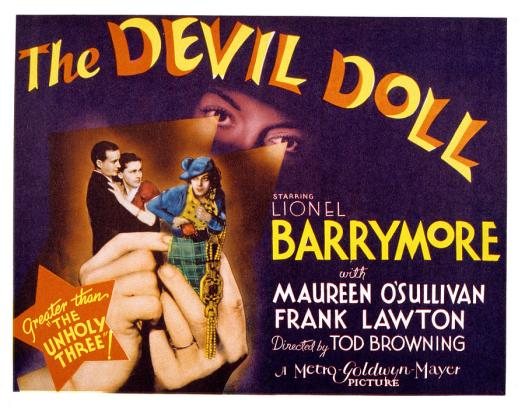
Horror Film Review: The Devil-Doll (dir by Tod Browning)


devil_dollposter

Paul Lavond (Lionel Barrymore) was just your ordinary Parisian bank owner until he was wrongly convicted of robbery and murder.  Sentenced to Devil’s Island and estranged from his beloved daughter, Lorraine (Maureen O’Sullivan), Paul spends 16 years plotting how to clear his name and progressively growing more bitter and angry.

He also befriends a scientist named Marcel (Henry B. Walthall).  Marcel has figured out the formula for shrinking people.  He’s convinced that shrunken people will eat less, use less fossil fuels, and take up a lot less space on the planet.  They’ll probably also be less likely to wage war on each other.  That’s right — the secret to world peace is shrinking the population.

However, Paul has other plans for that shrinking formula!  What better way to clear his name and seek revenge than by using a shrunken army of henchmen?

Uhmmm — okay, it sounds a little bit overcomplicated to me but who am I to doubt the wisdom of Lionel Barrymore?

(Yes, I know he’s Paul Lavond but, honestly, Lionel Barrymore is Lionel Barrymore regardless of who he’s playing.)

Anyway, Paul and Marcel escape from Devil’s Island but Marcel dies shortly afterward.  Paul, however, forms a partnership with Marcel’s widow, Maleta (Rafaela Ottiano).  Disguising himself as an elderly woman, Paul returns to Paris.  Not only does he use his disguise to watch over his daughter (who doesn’t realize that the kindly old woman is actually her father) but he also starts to develop quite a reputation for selling incredibly realistic dolls…

The Devil-Doll is an odd little mix of comedy and melodrama and, to be honest, it’s a bit too uneven to really work.  That said, the film is definitely worth watching just for the sight of Lionel Barrymore playing an elderly woman.  (Classic film lovers will immediately notice that, when in disguise, Lionel greatly resembles his sister, Ethel.)  This Christmas, when I’m watching It’s A Wonderful Life for the 100th time and Mr. Potter is cackling and plotting to put the Bailey Building and Loan out of business, I’ll have a hard time not thinking about The Devil-Doll.

The Devil-Doll was one of the final films to be directed by the legendary horror specialist, Tod Browning.  I’ve read that Browning’s later films suffered because Browning plunged into depression after the death of Lon Chaney, Sr. and he never quite recovered.  And, really, The Devil-Doll feels like a film that would have been perfect for Chaney’s unique talent.

But, that said, Lionel Barrymore appears to be having a lot of fun as Paul and his performance is the main reason to watch the film today.

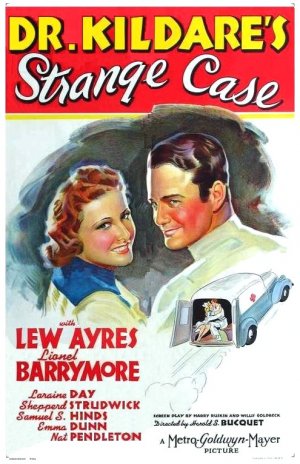
The Fabulous Forties #16: Dr. Kildare’s Strange Case (dir by Harold S. Bucquet)


Dr._Kildare's_Strange_Case_FilmPoster

The 16th film in Mill Creek’s Fabulous Forties box set was 1940’s Dr. Kildare’s Strange Case.  It’s about a doctor who investigates a medical case and wow, is it ever a strange case.

Apparently, there was a whole series of Dr. Kildare films that were released in the 30s and 40s.  I guess the films were the cinematic equivalent of a TV show like Grey’s Anatomy or ER or Children’s Hospital or… well, every medical show that’s ever shown up on TV since the beginning of time.  Dr. James Kildare (Lew Ayres) is a passionate young doctor who may break the rules but he gets results!  His mentor is Dr. Gillipsie.  Gillipsie is played by Lionel Barrymore and since the character is cranky and confined to a wheelchair, it was impossible for me to watch him without thinking about Mr. Potter from It’s A Wonderful Life.  Whenever Kildare went to him for advise, I kept expecting Gillipsie to glare at him and say, “You once called me a warped old man…”

Anyway, Dr. Kildare works in a hospital and, when he’s not silently judging everyone else that he works with, he’s busy silently judging the wealthy Dr. Lane (Sheppard Strudwick), a brain surgeon whose patients keep dying.  Kildare and Lane are also both in love with the same nurse, Mary Lamont (Laraine Day).  Mary wants to marry Kildare but Kildare would rather be poor and single than compromise his medical principles.  Lane, on the other hand, sends her a box full of silk stockings.  Plus, he’s rich!

Seriously, how is this even a competition?  Forget Kildare and marry Lane!

Except, as I mentioned earlier, all of Lane’s patients keep dying.  Is Lane incompetent or, as Kildare suggests, is it possible that brain surgery is just really, really hard?  I imagine it was even harder in 1940, when this movie was being made.  While Kildare and Lane are operating on brains, Dr. Gillipsie is still using leeches to suck sickness out of the poorer patients.

(You don’t actually see it happen in the movie but Gillipsie comes across as being a leech man.)

Anyway, eventually, Kildare has to cure a schizophrenic and it turns out that he can do this by putting the man into an insulin coma.  As is explained in great detail, forcibly putting a patient in a coma will cause that patient’s mind to go back to a reset point.  It’s kind of like how Windows sets up a restore point before doing a major update.

And that therapy sounds so crazy that you just know it had to be based in an actual practice.  I checked with Wikipedia and I was not shocked to discover that apparently Insulin Shock Therapy used to be a thing!

Anyway, Kildare’s gets into a lot of trouble for putting his patient into a coma and attempting to erase a huge part of his mind.  Will Kildare’s results vindicate his methods or will Gillipsie have to use leeches to suck the crazy out of the patient’s brain?

Watch the film to find out!  Or don’t.  Dr. Kildare’s Strange Case was directed by Harold S. Bucquet, who did a pretty good job with The Adventures of Tartu.  His direction here is flat and uninspired, which only serves to make this entire film feel like an old TV show.  I’m tempted to recommend the movie just because of the scene where it’s explained that insulin shock therapy causes patients to devolve so that they can re-evolve but otherwise, Dr. Kildare’s Strange Case is forgettable.

If you want to see it, you can watch it below!

http://www.youtube.com/watch?v=8UPFyrlNiGM

Or you can just watch this classic episode of Children’s Hospital!

http://www.youtube.com/watch?v=dpBjqgVaEbk

Cleaning Out The DVR #1: Captains Courageous (dir by Victor Fleming)


Captains_Courageous_poster

For the last few days, I’ve been desperately trying to clean out my DVR.  Ever since this year began, I have been obsessively recording movies and now, I suddenly find myself with just a few hours of space left!  Now, I know that the simple solution would be to just start erasing stuff but that’s just not the way I do things.  I recorded that stuff so you better believe I’m going to watch and review every single minute of it!

Last night, I did a quick count and discovered that I have 38 movies to watch before I can officially declare the DVR to have been “cleaned out.”  While that may sound like a lot, it’s not if you consider that — by watching and reviewing 4 movies a day — I can have the whole job done by the end of the next week!  That’s my plan and my challenge to myself.  Can I watch and review 38 movies in 10 days?

Let’s find out!

So, I started things out by watching the 1937 film, Captains Courageous.  Captains Courageous was aired on TCM as a part of their 31 Days of Oscar.  Not only was Captains Courageous nominated for best picture but it won Spencer Tracy his first Oscar.  Tracy was one of the quintessential American actors so it’s interesting to note that he won his first Oscar for playing a Portuguese fisherman who speaks in exaggeratedly broken English.

Spencer Tracy may have won the Oscar for Best Actor but his role is really a supporting one.  Instead, Captains Courageous is about an extremely spoiled, obnoxious, and annoying 15 year-old named Harvey Cheyne (Freddie Bartholomew).  From the minute that Harvey first appears on screen, it’s difficult to like him.  The son of a rich businessman (Melvyn Douglas), Harvey is hated by everyone.  His family’s butler rolls his eyes whenever Harvey calls for him.  His classmates (and, of course, Harvey attends a snooty private school) want nothing to do with him.  When his father takes him on a trans-Atlantic cruise, even the sailors seem like they want to toss him overboard.

However, before they get a chance to give him one quick shove over the railing, Harvey does their job for them.  He falls overboard and he nearly drowns before being rescued by a fisherman named Manuel (Spencer Tracy).  Manuel takes him back to the fishing schooner, where that ship’s captain (Lionel Barrymore) refuses to believe that Harvey is rich.  Since the rest of the crew quickly decides that they dislike Harvey as much as everyone else does, the captain saves Harvey from being thrown back overboard by “hiring” him as a fisherman.  And, of course, the captain makes Manuel responsible for him.

Though initially hostile, Harvey and Manuel slowly start to bond.  Harvey learns about the importance of hard work and starts to grow up.  And, eventually, it all leads to tragedy.  That’s just how things work in the movies.

As you can probably guess from the plot description above, there’s not a subtle moment to be found in Captains Courageous but, as is so often the case with 1930s Hollywood, that’s actually what makes the film appealing.  Captains Courageous wears its sentiment on its sleeve and it makes for an interesting contrast to the more cynical films of today.  While it takes a while to get used to seeing Spencer Tracy giving such a theatrical performance, he does eventually win you over.  Freddie Bartholomew is vulnerable enough to you can forgive his character for being so obnoxious.  Meanwhile, Lionel Barrymore and Mevlyn Douglas are well-cast in their supporting roles and, if you keep an eye open, you’ll see everyone from John Carradine to a young Mickey Rooney working on the schooner.  Ultimately, Captains Courageous is a well-made and likable coming-of-age film that still holds up today.

The Seventh Annual Academy Awards: 1920


Over on Through the Shattered Lens Presents the Oscars, we are reimagining Oscar history, one year at a time. Today, we take a look at 1920. Prohibition goes into effect, women finally get the right to vote, Harding is elected President, D.W. Griffith finally gets some recognition, and Fatty Arbuckle is the most popular man in Hollywood!

Lisa Marie Bowman's avatarThrough the Shattered Lens Presents The Oscars

William S. Hart, the Third President of AMPAS William S. Hart, the Third President of AMPAS

1920 was a year of many changes.

On January 16th, the 18th Amendment went into effect and prohibition became the law of the land.  Suddenly, it was illegal to transport and sell alcohol in the United States.  As social reformers rejoiced, the government grew and ordinary citizens started to hoard whatever liquor they had.  (Selling alcohol was illegal but drinking it was not.)  Perhaps the people happiest about prohibition were the gangsters who now had a totally new market to exploit.

On August 26th, the 19th amendment to the U.S. Constitution passed and, finally, all women were granted the right to vote.  And it came not a minute too late because it was time for the United States to elect a new president.  Weary after the nonstop drama of  8 years of Woodrow Wilson, the American electorate turned to Warren…

View original post 1,342 more words

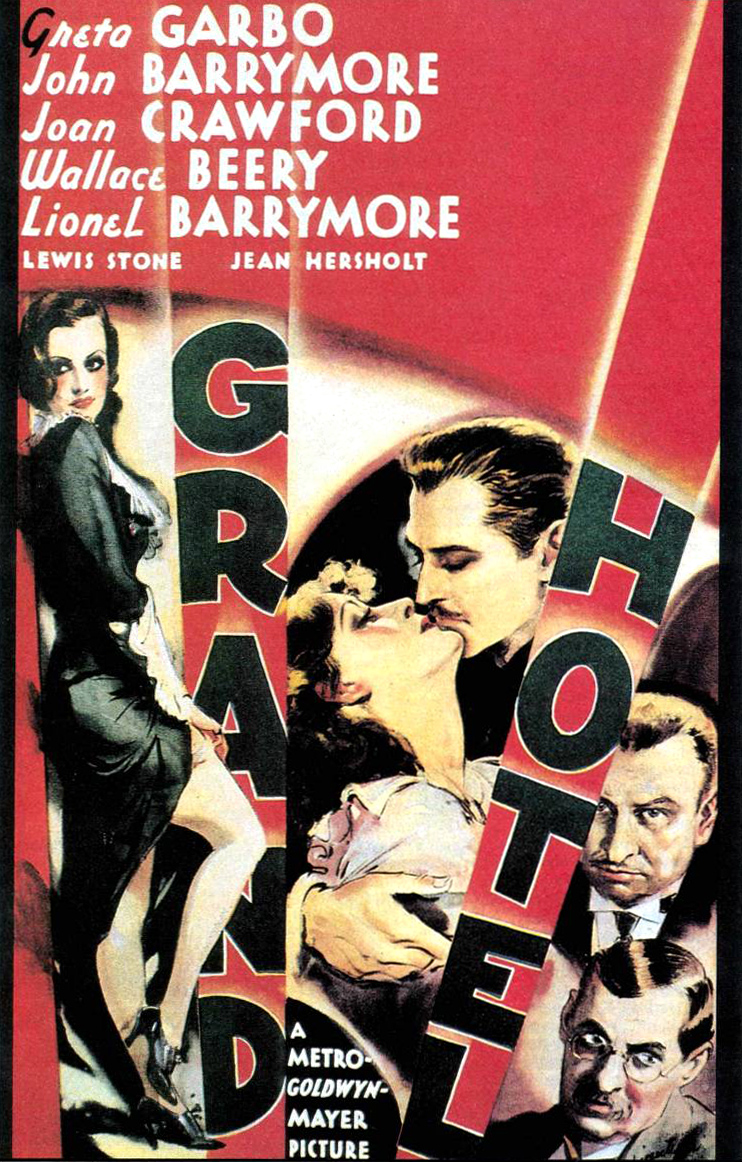
Embracing the Melodrama #6: Grand Hotel (dir by Edmund Goulding)


Poster - Grand Hotel_03

Today, we continue to chronologically embrace the melodrama by taking a look at one of the earliest examples of what would become a Hollywood mainstay, the big budget, all-start soap opera.  Today, we start things off by considering the 1932 best picture winner, Grand Hotel.

Grand Hotel follows five separate people as they all check into Berlin’s Grand Hotel.  They all have their own lives, their own secrets, and their own dreams.  As the film plays out, these five people will wander in and out of each other’s stories.  Seeing as how this was an MGM film and MGM always promoted itself as being the most glamorous studio in 1930s Hollywood, it’s not surprising that these five characters are played by five of the biggest stars that the studio had under contract.

There’s Flaemmchen (played by Joan Crawford), an aspiring actress who, when we first meet her, appears to be willing to do anything in order to advance her career.  Whenever I watch Grand Hotel, I’m also surprised by how good Joan Crawford is here.  Crawford has become such an iconic character of camp that we tend to forget that she actually was a pretty good actress.  In Grand Hotel, she is perfectly cast as someone who is not quite as amoral as she wants the world to believe.

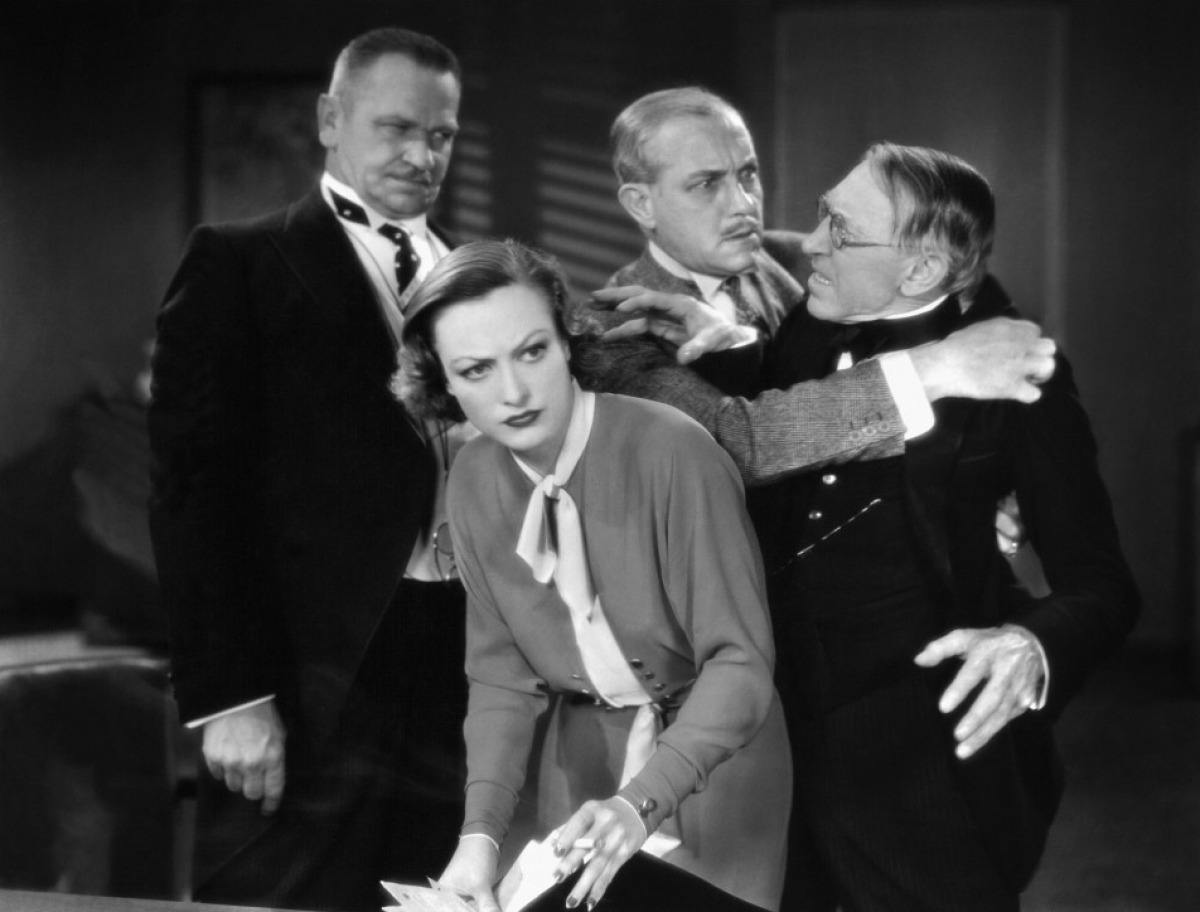
There’s Preysing (played by Wallace Beery), a greedy industrialist who hires Flaemmchen to be both his administrative assistant and his mistress as well.  Considering that the film is set in Germany, its’ easy to view Preysing as a symbol of the fascism that was sweeping across Europe in the 30s.  I don’t know if that was the intention of the filmmakers but it’s impossible to deny that Preysing is a pretty unlikable character, the type of greedy brute who inspires otherwise intelligent people to do things like run off and join Occupy Wall Street.

Crawford and Beery

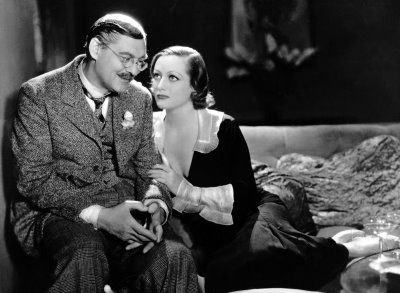
Far more likable is Otto Kringelein (Lionel Barrymore), a meek accountant who used to work for Preysing.  Kringelein is terminally ill and has basically come to the Grand Hotel so that he can at least enjoy a little bit of luxury before he dies.  At the hotel, he meets and falls in love with Flaemmchen.  Lionel Barrymore is so likable here that it’s hard to believe that he would later be best known for playing evil Mr. Potter in It’s A Wonderful Life. 

Barrymore and Crawford

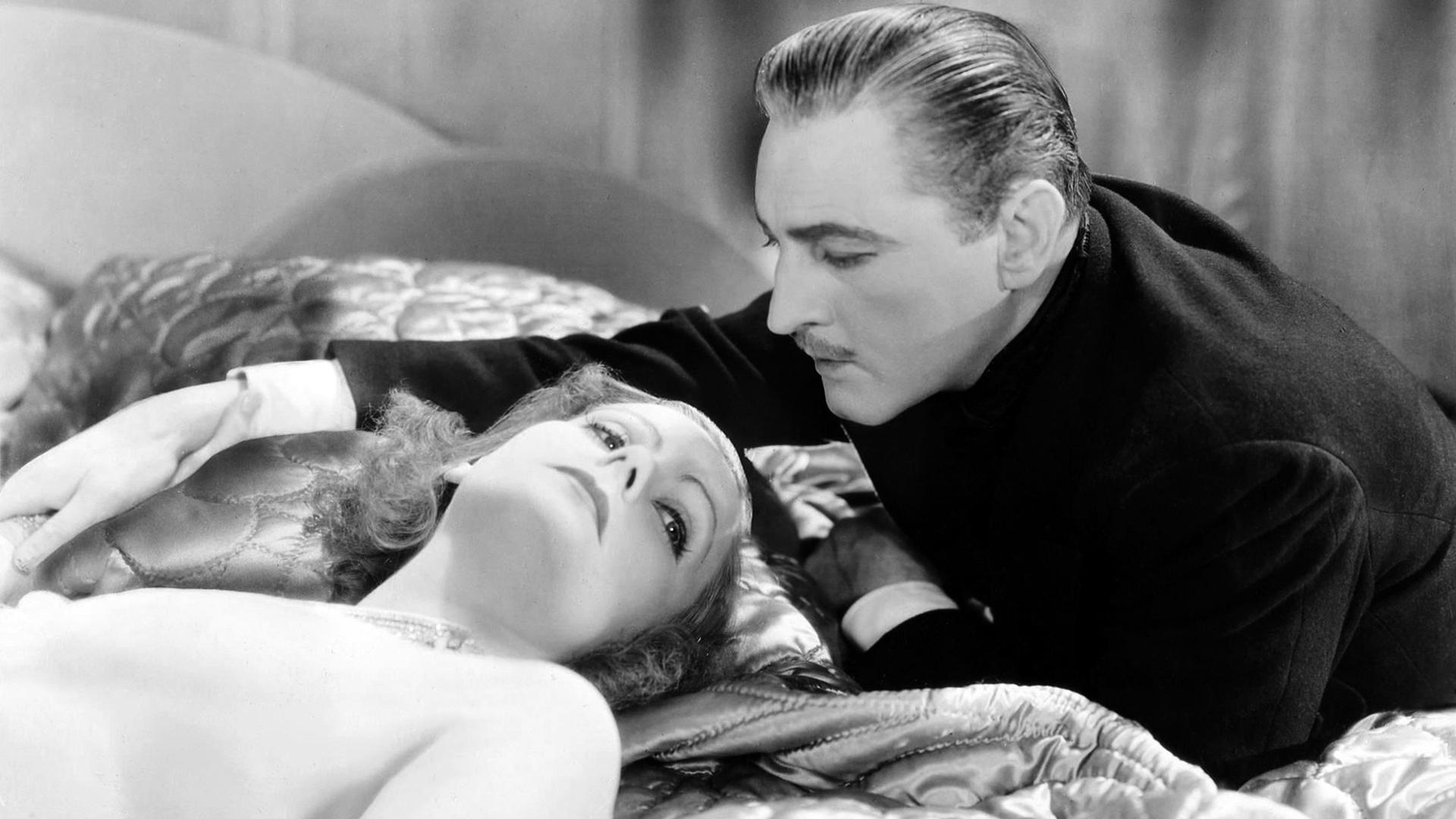
Otto also meets Baron von Giegern (John Barrymore), a penniless nobleman who supports himself as a gambler and an occasional jewel thief.  If you needed proof that this film was made before the enforcement of the strict Production Code began, just consider that the Baron, despite being a criminal, is also the moral center of the film.  John Barrymore gives a charismatic and wonderfully theatrical performance.  The scenes where he and his brother Lionel play off of each other are some of the best in Grand Hotel.

And finally, there’s my favorite of all the characters — Grusinskaya (Greta Garbo), the Russian ballerina who famously says, “I want to be alone.”  She checks into the hotel to try to escape the world and during her stay, she meets and falls in love with the Baron.  Grusinskaya is the character that I most related to, because we’re both dancers and I sometimes want to be left alone as well.

Barrymore and Garbo

I love Grand Hotel!  How couldn’t I?  The costumes, the sets, the actors, the glamour, the melodrama … what’s not to love!?  Incidentally, compared to a lot of other film melodramas from the early 30s, Grand Hotel actually holds up as pure entertainment.  The film moves quickly, much of the dialogue is still sharp and witty, and all of the actors are perfectly cast.  Curiously, Grand Hotel only received one Oscar nomination, for best picture.  However, it’s not surprising that it also won the only award that it was nominated for.

Grand Hotel has been described as being the first ensemble film.  I don’t quite agree with that because, even though it features a large cast and several intersecting storylines, you never forget the fact that you’re essentially watching a bunch of film stars sharing scenes with other film stars.  Eight decades after the film was made, the star power of Garbo, the Barrymores, Joan Crawford, and even Wallace Beery still continues to shine through and, to a large extent, your reaction to the film’s characters is pretty much the same reaction that audiences in the 1930s had to the public personas of the actors playing them.  But, and here’s the thing — it doesn’t really matter.  MGM made Grand Hotel to celebrate star power and, when you’ve got stars like these, can you blame them?

Grand-Hotel-4