Horror Film Review: The Vampire’s Ghost (dir by Lesley Selander)


1945’s The Vampire’s Ghost takes place in the African port of Bakunda.  It’s the colonial period and the port is full of not just adventurers and local plantation owners but also all sorts of disreputable people who are looking to disappear from civilization for a while.  A series of murders have recently rocked the port.  Victims, almost all of them women, have been discovered drained of blood.  The natives claim that it is the work of vampire but the colonialists dismiss that as superstition.  Plantation owner Thomas Vance (Emmett Vogan) says that there is no such things are vampires.  Thomas’s daughter, Julie (Peggy Stewart), says that there is no such things as vampires.  Julie’s boyfriend, Roy (Charles Gordon), says that there is no such thing as vampires.  Mysterious casino owner Webb Fallon (John Abbott) says that …. well, actually, Webb’s thoughts on the subject are a bit less certain.

Webb Fallon is known to be an expert on the occult and voodoo.  The natives consider him to be a vampire and it turns out that they’re right!  After he is wounded in an assassination attempt, Fallon is forced to reveal the truth of his existence to Roy.  He also puts Roy under his psychic command, forcing him to serve as Fallon’s servant while Fallon proceeds to kill several people.  Can Father Gilchrest (Grant Withers) save Roy from Fallon’s control and also prevent Fallon from turning Julie into his eternal vampire bride?  And why exactly did Thomas think it was a good idea to buy a plantation next to the infamous Temple of Death in the first place?

It may not sound like it from the plot description but The Vampire’s Ghost is actually a fairly interesting take on the traditional vampire story.  The film was made by Republic Studios and, as was so often the case with Republic, the budget was noticeably low and the film’s African locations were obviously just sets on a Hollywood soundstage.  The film was apparently shot in ten days, which was considered to be a long shoot by Republic standards.  And yet, despite the low budget, director Lesley Selander does a good job of creating a properly eerie atmosphere, opening with a POV shot of the vampire stalking a native woman and filling the soundtrack with the sound of beating drums in the distance.  The beautiful Adela Mara appears as a dancer in Abbott’s casino and her dance scene is definitely one of the film’s highlights, a sudden burst of energy that fills the screen with life.  With his somewhat wan appearance, John Abbott may not immediately strike most viewers as the most intimidating of vampires but, as the film progresses, Abbott’s performance win us over.  He plays Webb Fallon as being a calculating villain who suffers from just a touch of ennui.  He’s grown weary of his existence but he’s still driven by his vampiric urges.

This film was an early credit for screenwriter Leigh Brackett.  Apparently, Howard Hawks hired her to adapt The Big Sleep after seeing this film.  Brackett would go on to work on the scripts for Rio Lobo, El Dorado, The Long Goodbye, and The Empire Strikes Back.  And it all started with a vampire named Webb.
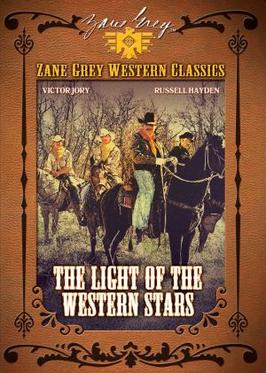
The Light of Western Stars (1940, directed by Lesley Selander)


In the dead of night, a train stops in an isolated western town.  Only one passenger disembarks.  Majesty Hammond (Jo Ann Sayers) is a wealthy Bostonian, who has traveled all the way to the town to try to prevent her bother from marrying a local woman.  Majesty takes a seat in the station and waits for someone to come get her.

After a few minutes, a drunken ranch foreman named Gene Stewart (Victor Jory) enters the station.  He has made a bet with the local sheriff (Tom Tyler) that he can convince the first new woman to arrive in town to marry him.  Stewart’s friends find a priest but before Gene can force the priest to marry them, a local girl named Bonita (Esther Estrella) rides up and tells Gene that one of the ranch hands, Danny (Alan Ladd, the future Shane in one of his earliest roles), has been forced to flee town after getting into a fight with the sheriff.

As if that’s not bad enough, Gene then discovers that Majesty’s brother is going to marry Flo Kingsley (Ruth Rogers), who happens to be Gene’s employer!  Ashamed of his behavior, Gene leads Majesty to Flo’s ranch.

After some initial weariness, Majesty is convinced that Flo and her brother really are in love.  Flo explains to Majesty how life works out in the frontier and Majesty is even able to forgive Gene for his drunken antics.  Majesty decides to buy a ranch in town but what she doesn’t know is that corrupt businessman Hayworth (Morris Ankrum) is using the ranch to smuggle weapons to the Mexican army and that he’s working with the sheriff!  Majesty is going to need Gene’s help to run the ranch but, after getting into another fighting with the sheriff, Gene goes into hiding.  Can Majesty find Gene and convince him to return to town?

Based on a novel by Western specialist Zane Grey, The Light of Western Stars is only 65 minutes long but it packs a lot of plot and a lot of action into those sixty minutes.  Of course, the plot is pretty standard stuff but, for B-movie fans, it’s a chance to see Victor Jory in a rare leading role and also a chance to see what Alan Ladd was doing before he became a noir mainstay.  Hard-drinking and occasionally irresponsible, Gene is an interesting hero and Jory does a good job playing him.  Alan Ladd doesn’t make a huge impression as Danny but he looks convincing fleeing town on horseback and that’s all the role really requires.

For many viewers, though, the main appeal of Light of Western Stars will be the beautiful Jo Ann Sayers as Majesty.  Primarily a stage actress, Sayers only appeared in 16 films before she got married and semi-retired but she made an impression in every one of them.  That’s certainly the case here, where her beauty makes it very plausible that even a wanted man would return to town just to be with her.

Now Showing On The Shattered Lens: Flight to Mars (dir by Lesley Selander)


Flight_to_mars

Are you lucky enough to have an extra 70 minutes free today?  Why not spend them watching an entertaining little B-movie called Flight to Mars?

First released in 1951, Flight to Mars is reportedly the first American film to ever be made about traveling to the red planet.  At the start of the film, a rather phallic spaceship is launched into space.  Aboard the ship are cynical reporter Steve (Cameron Mitchell), brilliant scientist Jim (Arthur Franz), token female scientist Carol (Virginia Huston), and a few other scientists who all kind of blend together.  Steve is attracted to Carol but Carol is more interested in Jim.  However, Jim isn’t interested in anything other than his work.  When the spaceship does reach Mars, it turns out that Mars is a lot like Earth and the Martians are a lot like us.  The main difference between humans and Martians appears to be that Martian women wear miniskirts.  Among those Martian women is Alita (Marguerite Chapman), who falls in love with Jim.  The rest of Mars, however, is not quite as infatuated with their intergalactic visitors…

Flight to Mars is definitely a product of its time.  This is one of those films where the men are all blatantly sexist and the women are usually just happy to be noticed.  Carol, for instance, is overjoyed to discover that they have kitchens on Mars and, while the men spend all of their time making plans, Carol usually just stands in the background, eating Martian snacks and pining for Jim.  Of course, Jim only has eyes for Alita, who, upon meeting the virile males of Earth, has absolutely no problem betraying her entire planet.  Beyond the sexist attitudes, Flight to Mars is also distinguished by presenting space travel as being the equivalent of a long flight on a small airplane.  This is definitely a low-budget B-movie that has absolutely no relation to science fact (or, for that matter, any other type of fact).

And, to be honest, that’s why I like the film.  It truly is such a time capsule that just watching it will make you wonder if Eisenhower is still in the White House.  I’ve always felt that the best way to learn about history is to experience it personally and one of the best ways to do that is to watch a movie that could only have been made during a certain period of time.  And trust me, Flight to Mars is pure 1951.  As for the film’s low budget — well, this film proves that you don’t need CGI to create an alien world.  Sometimes, cardboard and colorful costumes work just as well.  And, as for the film’s science — well, facts are boring.  That’s one reason why good people have often turned to science fiction.

So, if you’ve got 70 minutes to kill, why not experience Flight to Mars?

Enjoy!

http://www.youtube.com/watch?v=N18m1uoA8Ts