Retro Television Review: Decoy 1.25 “High Swing”


Welcome to Retro Television Reviews, a feature where we review some of our favorite and least favorite shows of the past!  On Thursdays, I will be reviewing Decoy, which aired in Syndication in 1957 and 1958.  The show can be viewed on Tubi!
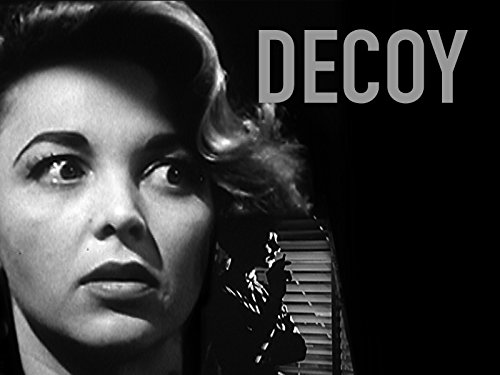
This week, Casey investigates an elderly crime lord.

Episode 1.25 “High Swing”

(Dir by David Alexander, originally aired on March 31st, 1958)

Casey rides to the hospital with a young woman named Anne (Zohra Lampert).  Anne has overdosed on heroin.  Before she dies, Anne tells that Casey that she was poisoned by an old man named Otto Flagler (Albert Dekker).  After learning that Anne was a pickpocket, Casey goes undercover as a thief until Otto Flagler approaches her and invites her to come live and work with him and his wife, Lily (Edith Atwater).

Casey is shocked to discover that Lily is in a wheelchair, the result of an accident that occurred when Lily was a trapeze artist.  Otto is a mugger because he needs the money to take care of his wife.  Casey even starts to feel sorry for Oto and Lily.  That said, Casey is still a cop and she has a job to do.  When Otto realizes that he and his wife are about to be arrested, he slips heroin into their coffee.  By the time the police arrive, both Otto and Lily are dead.

Casey is upset.  One of the other cops offers to buy her a cup of coffee.  Casey says that she won’t be drinking coffee for a while.

This was a sad episode.  Casey didn’t really have to do much to solve the mystery.  The whole point of the episode was that Otto and Lily were not master criminals.  They were two people who loved each other and found themselves in a desperate situation.  That said, Otto did murder Anne so let’s not feel too sorry for him.

Albert Dekker and Edith Atwater both gave good performances and, as always, Beverly Garland was excellent in the role of Casey.  This was a good episode.

14 Days of Paranoia #3: The Lincoln Conspiracy (dir by James L. Conway)


When it comes to conspiracy theories involving presidential assassinations, the theories surrounding JFK may get all the attention but it’s the theories surrounding the death of Abraham Lincoln are usually far more plausible.

Unless, of course, it’s the theories that are pushed in the 1977 docudrama, The Lincoln Conspiracy.

A mix of documentary-style narration and really cheap-looking historical reenactments, The Lincoln Conspiracy essentially indicts almost everyone who was alive in 1865 as being a part of either the conspiracy or the subsequent cover-up.  Really, it’s remarkable how many historical figures are implicated in this film.

With the Civil War coming to a close, President Lincoln (John Anderson) hopes to pursue a generous reconstruction policy for the former Confederate States.  Secretary of War Edwin Stanton (Robert Middleton), Senator Ben Wade (Dick Callinan), and a host of other are all opposed to this plan, both because they want vengeance and they also want to make as much money as possible off of the Southern cotton fields.  They come up with a plan to impeach Lincoln but, in order to draw up the articles, they have to make sure that Lincoln is not seen for a few days.  When Col. Lafayette Baker (John Dehner) discovers that an actor named John Wilkes Booth (Bradford Dillman) is planning on kidnapping Lincoln, Stanton and his conspirators decide to give Booth their unofficial support.  However, when the plan changes at the last minute and Stanton decides that it would actually be a bad idea to kidnap Lincoln, an angry Booth decides to just kill Lincoln, Andrew Johnson, and William Seward.

Booth succeeds in shooting Lincoln and making his escape.  The other members of Booth’s group all fail in their assignments.  Andrew Johnson becomes president.  Though grievously wounded, William Seward survives.  Booth flees to Canada and …. oh, you thought Booth died?  No, that was just a look alike who was shot by a bizarre soldier named Boston Corbett.  By allowing everyone to believe that Booth was killed, Stanton is able to cover up any role he and his allies played in inspiring the assassination.  Unfortunately, Col. Baker keeps a diary and it seems like he might be planning on revealing the truth but he dies mysteriously before he can.

(And, to give the film some credit, Col. Baker’s sudden death at 41 was an odd one.  And, though it’s not really explored in the film, Boston Corbett, the man who shoot Booth, really was a weirdo who was described by contemporaries as being a religious fanatic who castrated himself and claimed to hear the voice of God.)

It’s a big conspiracy theory that is presented in The Lincoln Conspiracy.  In fact, it’s a bit too big to really be taken seriously.  The film pretty much accuses everyone in Washington of having a part in the assassination.  The film itself has the cheap look of a community theater production and the use of Dr. Samuel Mudd as a narrator only adds to the film’s silliness.  If you’re a fan of gigantic and thoroughly implausible conspiracy theories, as I am, the film is entertaining in its way.  If nothing else, Bradford Dillman certainly looks like how most people probably imagine John Wilkes Booth to have looked.  Otherwise, The Lincoln Conspiracy is far-fetched and not at all realistic, which is why I assume that a lot of people in 1977 probably believed every word of it.

Previous entries in 2025’s 14 Days Of Paranoia:

  1. The Fourth Wall (1969)
  2. Extreme Justice (1993)