Legend has it that, when John Carpenter originally offered the role of Dr. Sam Loomis to Donald Pleasence, Pleasence was reluctant to accept it. To Pleasence, Halloween sounded like it would just be another forgettable horror film.
However, when Donald mentioned to his daughter, actress Angela Pleasence, that he had been offered a role in a film by a young director named John Carpenter, Angela immediately told him to accept. She assured him that it would turn out to be a great film. When Donald asked her why she was so sure about this, Angela replied that she had seen Assault on Precinct 13 at the Cannes Film Festival.
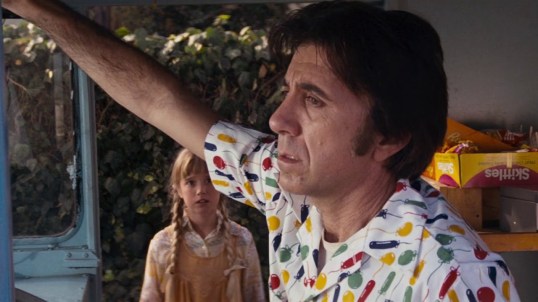
1976’s Assault on Precinct 13 was John Carpenter’s second feature film. (The first was Dark Star, which started out as a student film and, even after being extended to feature length, still ended up feeling very much like a student film.) The film takes place in Los Angeles, at an isolated police precinct house that is scheduled to be abandonedd. When the father (Martin Lawson) of a girl (Kim Richards) who was murdered earlier in the day seeks refuge at the precinct, a Che Guevara-influenced street gang launches a relentless late night attack on the building. (Frank Doubleday, who later played Romero in Escape From New York, appears as a member of the gang.) Lt. Ethan Bishop (Austin Stoker) is forced to work with criminal Napoleon Wilson (Darwin Joston) to defeat the gang.
Assault on Precinct 13 (1976, dir by John Carpenter. DP: Douglas Knapp)
John Carpenter later said that Assault of Precinct 13 was his attempt to make a Howard Hawks-style western and, despite taking place in the modern era, it is very much a western. Ethan Bishop is the strong and moral lawman who refuses to allow the untamed land around him to change who he is and what he believes. Napoleon Wilson is the outlaw who finds redemption. In most westerns, the attackers would represent the last gasp of the lawless frontier fighting against encroaching civilization. In the case of Assault on Precinct 13, the opposite is true. The attackers represent the collapse of society and the people in the precinct find themselves fighting not only for their lives but also the ideals of modern civilization. With their relentless drive to attack, the members of the street gang resemble the zombies from George Romero’s Night of the Living Dead. They’re so nihilistic and destructive that even a hardened criminal like Napoleon Wilson knows that they have to be stopped. The film’s ultimate message seems to be that, even if Bishop and Wilson and Leigh (Laurie Zimmer) survive the night, the assault on Precinct 13 will never truly end. In a way, we’re all trapped in that abandoned precinct house.
Wow, that sounds pretty grim! And really, it is a grim film. This, after all, is the film in which little Kim Richards is graphically shot in the chest while trying to buy ice cream. (From the start, Carpenter understood the importance of shocking the audience.) That said, there are unexpected moments of dark humor to be found in the film. (Even Kim Richards’s indignation over being given the wrong flavor ice cream is rather humorous, up until she asks for a replacement and gets shot as a result.) Both Bishop and Wilson make for compelling heroes. As Angela Pleasence realized when she saw the movie at Cannes, John Carpenter was and is a natural-born storyteller. Assault on Precinct 13 is a film that wastes no time in getting started and is relentless in both its suspense and its action.
Assault on Precinct 13 has been overshadowed by Carpenter’s subsequent successes but it’s still one of Carpenter’s best films. Without Assault on Precinct 13, we would never have gotten Donald Pleasence as Dr. Sam Loomis. That alone is reason enough to celebrate the film.
 Through the Shattered Lens