In 1983, a one-eyed, illiterate drifter named Henry Lee Lucas was arrested by the Texas Rangers. Lucas was arrested for unlawful possession of a firearm but, once in custody, he confessed to murdering 82 year-old Kate Rich and his 15 year-old girlfriend, Becky Powell. Upon being transferred to the Williamson County Jail, Henry Lee Lucas confessed to one murder and then another and then another and then …. well, soon, ol’ Henry Lee Lucas had confessed to over 300 murders. According to Lucas, he had spent the past decade traveling the country with his friend and lover, Ottis Toole, and killing just about everyone they met. (Ottis, who was already in prison in Florida, was Becky’s uncle.) He claimed that he was a member of a nationwide Satanic Cult. At one point, he even confessed to killing Jimmy Hoffa.
Soon, cops from across the county were traveling down to Texas and asking Lucas if he had killed anyone in their state. Lucas’s confessed to almost every murder that he was asked about and often times, he provided details that were considered to be close enough to what happened that his confessions were considered to be credible. The police were happy because they got to take a lot of unsolved murders off the books. Lucas was happy because he was getting to travel the country, he was getting a lot of media attention, and he was being kept out of the general prison population. Indeed, many of the Texas Rangers who escorted Lucas from crime scene to crime scene would testify that, the murders aside, Henry Lee Lucas was usually polite, soft-spoken, and genial company. They would buy him a milkshake. He would confess to a murder.
It was only after Lucas had confessed to so many murderers that he had gained a reputation for being the most prolific serial killer in history that people started to take a good look at all of Lucas’s confessions. What quickly became apparent was that it would have been next to impossible for Lucas to have been everywhere that he claimed to be when he claimed to be there. Many of Lucas’s confessions fell apart under closer investigation. Lucas may have dropped out of the sixth grade but he was very good at picking up on details and manipulating people. He told the police what they wanted to hear. Even worse, it soon turned out that some of the cops were letting him look at their case files before getting his formal confession, allowing Lucas to learn details that only the killer would know. When confronted with this, Lucas recanted all of his confessions.
How many people did Lucas kill? It’s know that he killed his abusive mother when he was a teenager. And, even after he recanted, most legal observers agreed that he killed Kate Rich and Becky Powell. While some continue to insist that Lucas killed hundreds, it’s actually more probable that Lucas, as sick as he was, only killed three people. That didn’t stop Henry Lee Lucas and his confessions from serving as the basis of John McNaughton’s terrifying classic, Henry: Portrait of a Serial Killer.
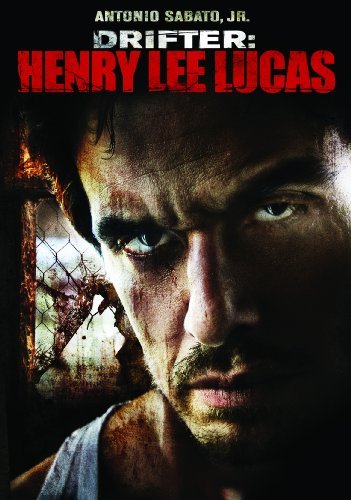
2009 saw the release of another film loosely based on the confessions of Henry Lee Lucas. Drifter: Henry Lee Lucas opens with Lucas (played by Antonio Sabato, Jr.) being interrogated as to why he confessed to so many murders that he didn’t commit. The movie then flashes back to Lucas killing Becky Powell (Kelly Curran) before then flashing forward to Lucas confessing to a murder and asking for a milkshake in return and then, once again, it flashes back to Lucas’s Hellish childhood in West Virginia. That’s a lot of time jumps for just the start of the movie and it’s an early indication of just how jumbled the narrative of Drifter turns out to be. To a certain extent, the jumbled narrative is appropriate. It captures the feeling that, in many ways, Lucas is simply making up his life story as he goes along.
Physically, Henry Lee Lucas and Ottis Toole were two incredibly ugly people. Drifter casts Antonio Sabato as Henry and Kostas Sommer as Ottis, both of whom are notably better-looking than the two men that they’re playing. Sommer, in particular, is a hundred-time more handsome that Ottis Toole. (The real Toole looked like one of the toothless hillbillies from Deliverance.) Even if one overlooks their looks, both Sabato and Sommer are a bit too articulate to be believable as two backwoods murderers. Sabato does a good job of capturing Lucas’s one-eyed squint but never once do you buy that he’s someone who grew up in the backwoods of West Virginia. Meanwhile, as Becky, Kelly Curran is shrill and a bit annoying. A lot of that is due to how Becky is written but still, it doesn’t make any easier to deal with her character.
Narratively, the film avoids taking a firm position on whether or not Lucas was lying. We do see Lucas commit a few murders but they’re all told as a part of his narration, leaving open the possibility that Lucas could be lying. Unfortunately, Henry’s stories aren’t that interesting. What was interesting was that so many people chose to believe his stories, despite the fact that the majority of them fell apart under even the slightest amount of scrutiny.
In the end, Drifter reminded me that Henry Lee Lucas is far less interesting than how people reacted to Henry Lee Lucas and his willingness to confess to every crime that he was asked about. There’s a great film to be made about the people who enabled Henry Lee Lucas’s lies. Henry, himself, was far less interesting.

 Through the Shattered Lens