Doctor Who — The Three Doctors (1972-1973, directed by Lennie Manye)


For the tenth season of Doctor Who, the BBC knew that they needed to start things off with a bang.  The first serial of season ten, The Three Doctors, brought together the first three actors who had played the Doctor.

A crisis was needed to explain why the Time Lords would decide to break their owns laws by bringing the Second Doctor and then the First Doctor out of their respective time zones.  Writers Dave Martin and Bob Baker came up with a story about the Doctor’s homeworld having its energy drained through a black hole.  If Gallifrey is destroyed then all of time and space will unravel.  (Everyone who has seen an episode of the original Doctor Who knows the drill.)  The villain is Omega (Stephen Thorne, who also played Azal in The Daemons), the first Time Lord, who has never forgiven his fellow Time Lords for abandoning him in an anti-matter universe that looks like a quarry.  The story is silly in the way that Doctor Who often could be but I think anyone watching will understand that the story is not that important.  Omega, the black hole, the energy blob that is sent to Earth to capture the Third Doctor, all of it was really just an excuse to bring back Patrick Troughton and William Hartnell.

Hartnell does not get to do much.  He was in increasingly poor health when he returned as the First Doctor and was also suffering from memory problems.  Sadly, this prevented him from sharing the same physical space as Troughton and Jon Pertwee.  Instead, it’s explained that the First Doctor is caught in a time eddy and can only communicate via the TARDIS’s viewscreen.  Even if he isn’t physically present, the First Doctor reveals himself to be the smartest of the three Doctors.  When he isn’t scolding the Second and Third Doctors, he’s figuring out how to enter Omega’s universe.  It’s not always easy to watch Hartnell looking frail and clearly reading some of his lines from cue cards but, even when ill, he still had the natural authority that he brought to the first two and a half  seasons of Doctor Who.

Patrick Troughton and Jon Pertwee are a delight to watch.  Their bickering is one of the highlights of the serial and both Troughton and Pertwee appear to have really enjoyed their scenes together.  The show also gets mileage from including the Brigadier (Nicholas Courtney) and Sgt. Benton (John Levene) along with the three Doctors.  I’ve always enjoyed how both of them come to accept the strangest of things with barely a shrug.  This is the episode where Benton enters the TARDIS and, when the Third Doctor asks if Benton’s going to point out that it’s bigger on the inside than the outside, replies, “It’s pretty obvious, isn’t it?”

The Three Doctors is hardly a perfect Doctor Who adventure.  (If any adventure needed the presence of the The Master, it was this one.)  It is, however, a tribute to the men who played the first three Doctors and the role they all played in making the show an institution.  The Three Doctors was also the final acting role of William Hartnell, who passed away two years after the serial was broadcast.

Doctor Who — The Sea Devils (1972, directed by Michael Briant)


Having been captured by UNIT at the end of The Daemons, the Master (Roger Delgado) is now a imprisoned on a small island in the English channel.  He claims that he is reformed and he now spends most of his days watching the BBC.  (Has he not been punished enough?)

When the Doctor (Jon Pertwee) and Jo Grant (Katy Manning) visit the Master to try to learn the location of his TARDIS, they come up empty.  They do, however, learn that several ships have gone missing and, understandably, they suspect that the Master is involved.

They’re correct.  The Master has duped his warden, Trenchard (Clive Morton), into helping him steal electrical equipment so that he can contact The Sea Devils, a race of bipedal reptiles the live under the sea.  The Sea Devils, much like their cousins, the Silurians, were the original inhabitants of Earth.  They’ve now woken from hibernation to discover that mankind — who they last knew to be a collection of barely evolved monkeys — have taken over the planet.  And they’re not happy about it.

The Silurians and the Sea Devils appeared in three serials during the original run of Doctor Who and all of them followed the same basic plot.  The Silurians or the Sea Devils woke up from their hibernation.  The Doctor tried to broker a peace with humanity.  Humanity reacted by blowing them up.  The Sea Devils were usually more reluctant to make peace than the Silurians.  In The Sea Devils, the Doctor himself is forced to sabotage their base to keep them from attacking humanity but that’s nothing compared to the atomic bomb that the British government wanted to drop on them.  Whenever a Silurian or a Sea Devil shows up, it means that the Doctor is going to disappointed in humanity once again.

The Sea Devils is a serial of which I have fond memories because Malcolm Hulke’s novelization was the first Doctor Who book that I ever read.  (Malcolm Hulke also wrote the serial itself.)  I read the book before I even saw the show.  The novelization was my introduction to the Doctor, UNIT, and especially the Master.  Hulke was one of the best writers of the Doctor Who novelizations, taking the time to add depth to the characters.  This was especially true of Trenchard, who is portrayed far more sympathetically in the novel than he was on the show.

The Sea Devils also features one of Roger Delgado’s finest turns as the Master.  This was the Master’s first appearance during the ninth season of Doctor Who and Delgado shows that, even when imprisoned, the Master never stops manipulating and scheming.  This episode shows why Delgado’s Master was such a classic villain and truly a worthy opponent of the Doctor.  Delgado does such a good job in the scenes where The Master pretends to be reformed that it’s easy to understand how he managed to trick Trenchard.  At the end of the serial, The Master makes another escape, again by fooling the humans around him.  Delgado made The Master into a magnetic and compelling villain.

Roger Delgado appeared twice more as the Master before his untimely death in an auto accident.  Jon Pertwee later said that Delgado’s death was one of the reasons that he decided to step away from the role of the Doctor.  The Master would eventually return and he would be played by several different actors.  For me, the true Master will always be Roger Delgado.

Doctor Who — The Daemons (1971, directed by Christopher Barry)


When I was growing up and watching Doctor Who on PBS, I had a friend whose mother forbid him from watching the show because she thought that it promoted Satanism.

Her opinion was almost totally based on the cover of the novelization of one of the Third Doctor’s most popular adventures.

She took one look at that cover and decided that both the book and the show were promoting Satan.  I warned him that would happen when he first bought the book but, back in the day, it was nearly impossible to resist the temptation of the shelf of Doctor Who novels at Walden Books.  It was almost as if the books had been put there by you know who.

If my friend’s mother had read the book or even watched the serial when it eventually aired on PBS, she would have discovered that The Daemons did not feature the Devil.  Instead, it features Azal (Stephen Thorne), an evil horned alien who had spent centuries experimenting on humans and who had inspired many ancient myths and religions.  If my friend’s mother had watched the show, she would have seen that, rather than celebrate Satan, the show instead suggested that there was no Satan and that all of mankind’s Gods were actually visiting aliens.  She would have also seen that while The Master (played by Roger Delgado) disguised himself as a vicar, it fell to a local white witch to warn everyone in a quaint British village that the local archeological dig was a mistake.  Because of the Master’s religious disguise, everyone followed him when they should have been listening to the pagan…

In hindsight, it’s probably a good thing my friend’s mother never watched the show.

The Daemons has a reputation for being one of the best of the Third Doctor’s adventures and I’m inclined to agree.  The Doctor (Jon Pertwee) and his latest companion, Jo Grant (Katy Manning), try to stop the dig and instead find themselves trapped by a heat shield that has suddenly sprung  up over the village.  One of the defining images of this episode was a helicopter busting into flame when it hit the invisible barrier.  With the Brigadier and the majority of UNIT outside of the village, The Doctor, Jo, Sgt. Benton (John Levene), and Captain Yates (Richard Franklin) try to stop the plans of The Master and Azal.  Unfortunately, the villagers themselves have fallen under the sway of evil and are planning a special maypole sacrifice.


So many different actors have played The Master (and the character has become so overused) that it is easy to forget just how good Roger Delgado, the first Master, was in the role.  Delgado played the Master as being incredibly evil but he also played him as having a sense of humor and style about his evil, which is something that subsequent Masters have often failed to do.  Delgado’s Master appeared in every serial of the eighth series and he proved to be more than a worthy opponent for Pertwee’s Doctor.  Off-screen, Pertwee and Delgado were close friends and Pertwee later said that Delgado’s death in a traffic accident was one of the factors in Petwee’s decision to step away from the show.  The Daemons featured Delgado at his best as the Master did his worst and tried to claim the powers of someone who humans considered to be Satan.

The Daemons is also remembered for one of the best lines in the history of Doctor Who.  When confronted by Azal’s gargoyle servant, the Brigadier calls over a UNIT solider and orders, “Chap with wings there, five rounds rapid.”  I can only imagine how tired Nicholas Courtney got of having that line repeated to him over the years but his delivery of it is perfect.  The Brigadier was such a uniquely English character, imbued with the unflappable attitude of a country that had survived the collapse of an Empire, the Blitz, and the Suez Crisis.  Nicholas Courtney took a line that sounds like something Graham Chapman would have said on Monty Python and instead made it into an iconic piece of dialogue that reminded those of us American watching on PBS that, in Doctor Who, the entire universe was British.

Though it led to the show being forever banned in my friend’s house, The Daemons is a Doctor Who classic.

Great Moments In Television History: The Autons Terrify The UK


In 1971, for the entire month of January, children across the UK were terrified of the Autons.

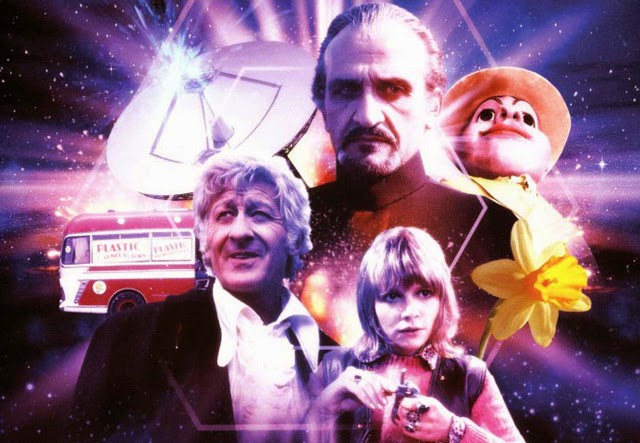
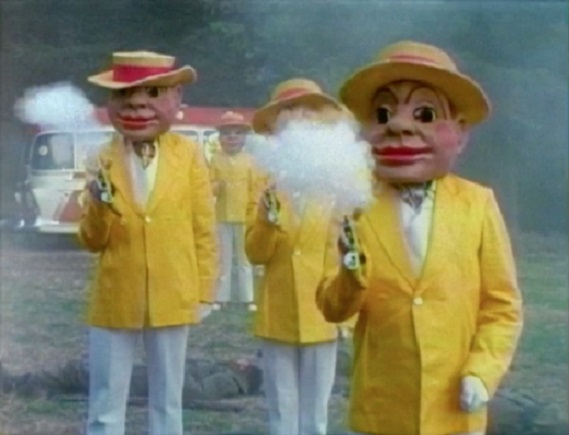
That was because Doctor Who began its eighth season with a four-part story called The Terror of the Autons.  Previously seen in Spearhead From Space, the Autons were plastic aliens who could disguise themselves as anything.  That mannequin in the store?  It might be an Auton.  That strange looking man handing out flowers?  Might be an Auton.  Your favorite plastic doll?  It might be an Auton waiting to kill you in your sleep.

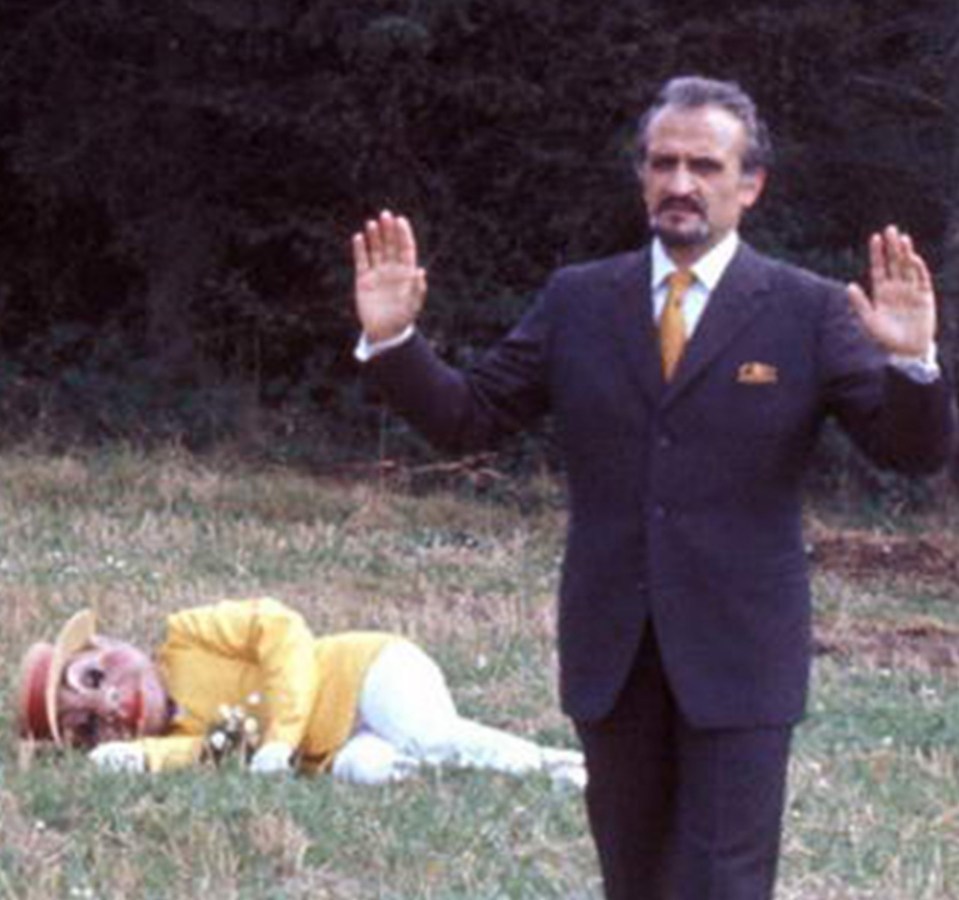
In this case, the Autons had returned to Earth because of the machinations of the Doctor’s greatest foe, The Master.  This serial featured the first appearance of The Master, with the Roger Delgado playing the role and becoming the series’s most popular villain since the Daleks.  (This serial also featured the first appearance of Katy Manning as Jo Grant, who went on to become popular for entirely different reasons.) But as evil as The Master was, it was the Autons who reportedly kept viewers awake at night.  Even after The Doctor (played, at that time, by Jon Pertwee) defeated them for a second time, you could never be sure whether that mannequin was harmless or if it was an Auton stalking you whenever your back was turned.

For modern viewers, it can seem strange to hear that people were ever scared by Doctor Who.  But the Autons are an exception.  The Autons are actually creepy.

The Master doesn’t seem to be too scared of them, though.

The Terror of the Autons would go on to be the first episode of Doctor Who to be cited in the House of Lords, when it was listed as a recent programme that might have a dangerous effect on the minds of the people watching.  But who knows?  Was that Lord Beaverbrook or was it…?

Previous Great Moments In Television History:

  1. Planet of the Apes The TV Series
  2. Lonely Water
  3. Ghostwatch Traumatizes The UK
  4. Frasier Meets The Candidate