Horror Film Review: Ghost Story (dir by John Irvin)


ghoststory

A Fred Astaire horror movie!?

Yes, indeed.  Ghost Story is a horror movie and it does indeed star Fred Astaire.  However, Fred doesn’t dance or anything like that in Ghost Story.  This movie was made in 1981 and Fred was 82 years old when he appeared in it.  Fred still gave an energetic and likable performance and, in fact, his performance is one of the few things that really does work in Ghost Story.

Fred Astaire isn’t the only veteran of Hollywood’s Golden Age to appear in Ghost Story.  Melvyn Douglas, John Houseman, and Douglas Fairbanks, Jr. all appear in the movie as well.  They play four lifelong friends, wealthy men who have formed an informal little club called The Chowder Society.  They gather one a week and tell ghost stories.  Myself, I’m wondering why these four intelligent and accomplished men (one is a lawyer, another a doctor, another a politician, and another is Fred Astaire) couldn’t come up with a better name than Chowder Society.

(But I guess that’s something that people do up north.  Harvard has something called the Hasty Pudding Club, which just sounds amazingly annoying.)

Unfortunately, the members of the Chowder Society have a deep, dark secret.  Way back in the 1930s, the boys listening to too much jazz and they all ended up lusting after the mysterious and beautiful Eva Galli (Alice Krige).  As Astaire explains it, “We killed her, the Chowder Society.”

(Of course, there’s more to the story.  It was more manslaughter than murder but either way, it was pretty much the fault of the Chowder Society.)

And now, decades later, a woman named Alma (Alica Krige, again) has mysteriously appeared.  When she sleeps with David (Craig Wasson), the son of a member of the Chowder Society, David falls out of a window and ends up splattered on the ground below.  David’s twin brother, Don (also played by Craig Wasson), returns to their childhood home and attempts to make peace with his estranged father.

However, now the member of the Chowder Society are starting to die.  One falls off a bridge.  Another has a heart attack in the middle of the night.  Fred Astaire thinks that Eva has come back for revenge.  John Houseman is a little more skeptical…

I pretty much went into Ghost Story with next to no knowledge concerning what the film was about.  I thought the plot desription sounded intriguing.  As a classic film lover, I appreciated that Ghost Story was not only Fred Astaire’s final film but the final film of Douglas and Fairbanks as well.  Before he deleted his account, I had some pleasant interactions with Craig Wasson on Facebook.   I was really hoping that Ghost Story would be a horror classic.

Bleh.

Considering all the talent involved, Ghost Story should have been great but instead, it just fell flat.  Alice Krige is properly enigmatic as both Alma and Galli and really, the entire cast does a pretty good job.  But, with the exception of exactly three scenes, the film itself is never that scary.  (Two of those scary scenes involve a decaying corpse and it’s not that hard to make decay scary.  The other is a fairly intense nightmare sequence.)  Largely due to John Irvin’s detached direction, you never really feel any type of connection with the characters.  I mean, obviously, you don’t want to see the star of Top Hat die a terrible death but that has more to do with the eternal charm of Fred Astaire than anything that happens in Ghost Story.

Add to that, Ghost Story‘s special effects have aged terribly.  There are two scenes in which we watch different characters fall to their death and both times, you can see that little green outline that always used to appear whenever one image was super imposed on another.  It makes it a little hard to take the movie seriously.

Sadly, Ghost Story did not live up to my expectations.  At least Fred Astaire was good…
Embracing the Melodrama Part II #80: Bright Lights, Big City (dir by James Bridges)


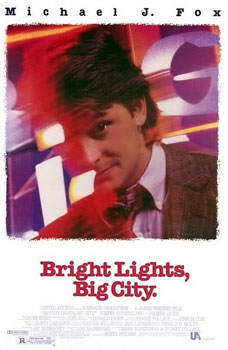
Bright_Lights_Big_CityThe 1988 film Bright Lights, Big City is one of the many films from the late 80s in which Kiefer Sutherland plays a demonic character.  In this case, his character is so demonic that his name is — seriously, check this shit out — Tad Allagash.  Nobody named Tad Allagash has ever been a good guy!

Tad is the best friend of Jamie Conway (Michael J. Fox), an aspiring writer who has moved to New York City from some middle-America farm state and who now has a job as a fact checker at the New Yorker.  Jamie is still struggling to deal with both the death of his mother (played in flashbacks by Dianne Wiest) and the collapse of his marriage to Amanda (Phoebe Cates).  Tad helps out his depressed little friend by taking him out to the clubs and supplying him with so much cocaine that Jamie literally spends the entire film on the verge of having a geyser of blood shoot out from his powder-coated nostrils.

And the thing is, Tad knows that he’s not a good influence on Jamie’s life but he doesn’t care.  Whenever Jamie starts to get a little bit too wrapped up in his self-pity, Tad is there to make a tasteless joke.  Whenever Jamie tries to argue that he and Amanda aren’t really broken up, Tad is there to remind him that Amanda wants nothing to do with him.  Whenever Jamie starts to think that doing all of this cocaine is potentially ruining his life, Tad is there to cheerfully cut another line.  Tad makes no apologies for being Tad Allagash.  He’s too busy having a good time and it’s obvious that Sutherland’s having an even better time playing Tad.  As a result, Tad Allagash becomes the perfect antihero, the bad guy that you like despite yourself.

Unfortunately, Bright Lights, Big City isn’t about Tad Allagash.  You’re happy whenever Kiefer shows up but he doesn’t show up enough to actually save the film.  No, Bright Lights, Big City is the story of Jamie Conway and that’s why the film is a bit of a pain to sit through.  Despite having a great Irish name, Jamie Conway is one of the whiniest characters that I have ever seen in a film.  From the minute he first appears on screen and starts complaining about the failure of his marriage, you want someone to just tell him to shut up.  When he tells an alcoholic editor (Jason Robards) that his latest short story was autobiographical, you nod and think, “So, that’s why it hasn’t been published.”

Of course, since Jamie is the main character, everyone in the film feels sorry for him but he really is just insufferable.  There’s a lengthy scene where Jamie delivers a drunken monologue to a sympathetic coworker, Megan (played by Swoosie Kurtz).  And while Jamie goes on and on about how he first met Amanda and how their marriage fell apart (and how it was all her fault), poor Megan has to sit there and try to look sympathetic.  Personally, I would have kicked Jamie out of my apartment after the first minute of that whiny diatribe.  Megan has the patience of a saint.

There is some curiosity value to watching Michael J. Fox snort cocaine.  (I wonder if contemporary audiences shouted, “McFly!” as they watched Fox sniffing up the devil’s dandruff.)  But otherwise, Bright Lights, Big City is a relic of 80s cinema that can be safely forgotten.

44 Days of Paranoia #8: Three Days of the Condor (dir by Sydney Pollack)


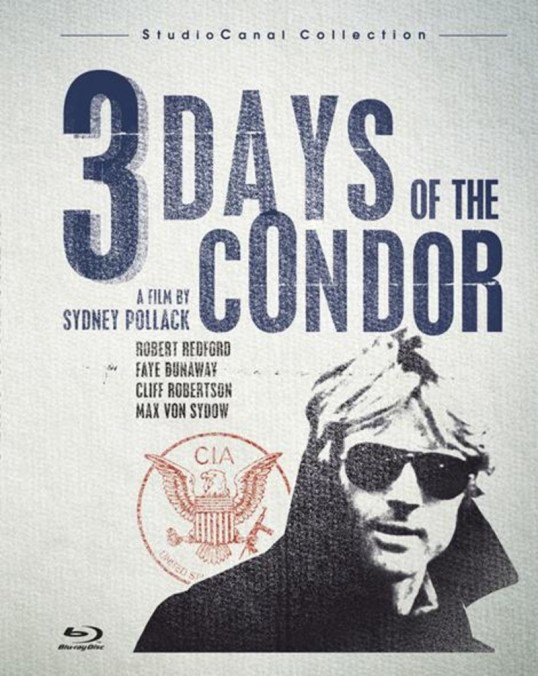
3DaysofTheCondor

When I first decided that I wanted to do the 44 Days of Paranoia, I went on Facebook and I asked my movie-loving friends to name some of their favorite conspiracy-themed films.  As the replies came flooding in, one thing that I quickly noticed was that a lot of them were naming films that had been made in the 1970s.

Usually, when I think about the 70s, I tend to assume that everyone in Texas was smoking weed in a high school parking lot, everyone in New York was snorting cocaine in Studio 54, and everyone in America was dancing nonstop.  And, to be honest, that doesn’t sound too bad to me.  If the 70s were just ten years straight of Dazed and Confused and Saturday Night Fever, then I would be the first one to hook up with anyone who could build a time machine.

However, the 70s were apparently also a very paranoid time.  When one looks over the most acclaimed and best-remembered films of the 70s, one is struck by the feeling that nobody trusted anyone and all official institutions were suspect.

Case in point: 1975’s Three Days of the Condor.

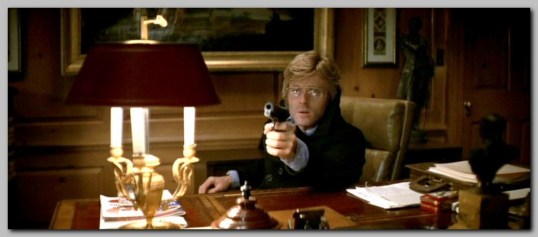
Robert Redford plays Joe Turner, a mild-mannered guy who works for the American Literary Historical Society in New York City.  The Society, however, is a CIA front and Turner’s job is to read cheap spy novels and analyze them to see if any real intelligence leaks might be found between the lines.  As the film opens, Turner arrives late for work.  He jokes with the chain-smoking secretary, shares a few curt words with his superior Martin, and flirts with fellow researcher Janice.  Then, Joe goes to lunch and, while he’s gone, Max Von Sydow shows up with a bunch of killers and guns down everyone else at the safe house.

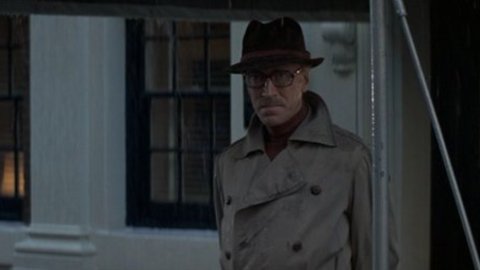
Max Von Sydow's courtly killer

Max Von Sydow’s courtly killer

The scene in which Von Sydow calmly kills all of Joe’s co-workers is one of the most disturbing that I’ve ever seen.  As directed by Sydney Pollack, the film’s violence comes in short, brutal bursts that are all the more nightmarish for lacking any of the flashy choreography that we, as viewers, have been conditioned to expect whenever we’re confronted by violent death on-screen.  Pollack also makes good use of Von Sydow’s kindly eyes and courtly manner, letting us know that, for him, murder is just a job.  Even though we’ve only spent a few minutes with Joe’s co-workers, we’ve still grown to like them and that makes Von Sydow’s matter-of-fact attitude all the more disturbing.

(It’s been a few days since I saw the film and I have to admit that I’m still haunted by the close-up of the burning cigarette still held in the dead secretary’s hand or the way that Martin’s toupee falls off his head after he’s shot.  Small as these details may seem, they stick in the mind and create a sickening feeling of life interrupted.)

When Joe returns from lunch, he finds all of his co-workers dead.  Fleeing the safe house, Joe calls the New York regional director of the CIA, Higgins (Cliff Robertson).  Higgins arranges for Joe to meet up with another agent and to be taken to safety.  However, when Joe arrives for the meeting, the other agent attempts to kill him.

Realizing now that the CIA specifically hit its own safe house and is now looking to kill him, Joe ends up kidnapping Kathy Hale (Faye Dunaway), a neurotic photographer, and forcing her to hide him while he desperately tries to figure out why he’s been targeted.

Thanks largely to Sydney Pollack’s thoughtful direction, Three Days of the Condor is an excellent, exciting, and thought-provoking thriller and, despite having been released close to 40 years ago, it features one major plot that’s probably even more relevant today than when the film was first released.  Redford and Dunaway both give excellent performances but the film really belongs to Max Von Sydow’s menacing and charming assassin.  Most of today’s “action” filmmakers could learn a lot from watching Three Days of the Condor.

end_office