Late Night Retro Television Review: CHiPs 2.13 “Down Time”


Welcome to Late Night Retro Television Reviews, a feature where we review some of our favorite and least favorite shows of the past!  On Mondays, I will be reviewing CHiPs, which ran on NBC from 1977 to 1983.  The entire show is currently streaming on Freevee!
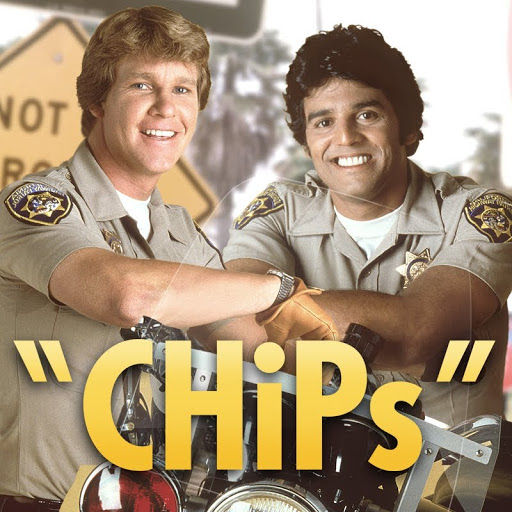
This week, Ponch loses his car and Baker loses his wallet.

Episode 2.13 “Down Time”

(Dir by John Florea, aired on December 16th, 1978)

While chasing two female car thieves, Ponch crashes his motorcycle and sprains his finger.  Getraer is overjoyed because he can now require Ponch to take a few days off work.  Ponch is happy because he’s just moved into a new apartment and he wants to get to know his neighbor, Kim Balford (Randi Oakes).

Kim says she’s an aspiring actress but actually she’s the head of a ring of car thieves.  In fact, by an amazing coincidence, they’re the same car thieves that Ponch was chasing when he injured himself!  Kim sees that Ponch has a new car, a brown Firebird.  Ponch really loves that car.  Well, too bad!  Kim and her associates steal his car.

To Getraer’s disappointment, Ponch is soon spending his entire vacation at headquarters, pressuring people like Detective Bill Ross (Burr DeBenning) to find his car.  Detective Ross informs Ponch that he’ll probably never see his car again but Ponch is determined to get it back.

Baker, meanwhile, just want to find his wallet.  His misplaced it and he has no idea where it is.  Ponch is upset that Baker is more upset over losing all of his money and his ID than over Ponch losing his car.  Baker, realizing that this is CHiPs and Ponch therefore always comes first, apologizes to Ponch and agrees to set aside his own problems to help Ponch out.

Fortunately, Ponch and Baker do figure out that Kim is the one behind the car thefts.  It all leads to a chase through the streets of Los Angeles.  Kim and her two partners-in-crime are in one of those big trucks that are used to transports cars from one place to another.  (I can’t imagine driving one of those things.)  Since they’re off duty, Baker and Ponch have to make due with Baker’s pickup truck.  (Fortunately, Grossman shows up on a motorcycle so this episode doesn’t turn out like that weird season one episode where Baker and Ponch spent the entire episode in a patrol car.)  Kim is caught but, of course, Ponch’s beloved firebird is destroyed in the chase.

Good news, though!  Baker finds his wallet in his jacket.  Yay!  YOU GO, BAKER!

This episode was actually a lot of fun.  Watching it, you could just hear people in 1978 saying, “They steal cars? …. But, they’re women!”  Randi Oakes, who would later be a regular on the show as a member of the Highway Patrol, gives a wonderfully over-the-top performance as Kim.  As well, anyone watching should be able to relate to Getraer’s annoyance as he discovers that there’s no way get Ponch to stay home.  Best of all, with so much of the action taking place in Ponch’s swinging bachelor pad, this episode was pretty much a museum-quality exhibit of the late 70s.  Watching this episode was like stepping into a time machine.

It was fun!

The TSL Horror Grindhouse: Blackenstein (dir by William A. Levey)


1973’s Blackenstein tells the story of Eddie Turner (Joe De Sue), a black man who served in Vietnam.  Unfortunately, while serving his country, Eddie stepped on a landmine and lost his arms and his legs.  Now back in Los Angeles, Eddie spends his days laying in a bed in a VA hospital, where he’s taunted by an orderly who, it turns out, is actually just upset because he wanted to join the army but he failed his physical.  Because this film was made on the cheap, Eddie’s limbless state is represented by continually having the covers of his bed drawn up to his neck.

Eddie’s girlfriend, Dr. Winifred Walker (Ivory Stone), is upset because Eddie is having a hard time adjusting to life in the States and, having lost the lower half of his body, Eddie has been rendered impotent.  She gets a job working with Dr. Stein (John Hart), a doctor who has down amazing things with DNA and RNA.  He lives in a castle-like mansion and he has a laboratory that is full of lasers and beakers that are labeled “DNA.”  Apparently, Dr. Stein can inject people with DNA …. don’t look at me like that, I didn’t write this movie …. and not only reverse the aging process but also help people regrow limbs.

Eddie is brought to the mansion to be Dr. Stein’s latest patient.  Unfortunately, Dr. Stein’s assistant, Malcomb (Roosevelt Jackson), has fallen in love with Winifred and is stung when she tells him that her heart belongs to Eddie.  Malcomb sabotages Eddie’s DNA injections so that Eddie, along with growing back his arms and his legs, also transforms into a turtleneck-wearing monster with a flattop.  Eddie spends his days in a coma and his nights stalking Los Angeles.

Blackenstein was released at the height of the blaxploitation boom, when filmmakers were reinterpreting classic genres with black actors.  Some of these films, like Shaft and Superfly, hold up very well and remain a part of the pop cultural landscape.  And others, like Blackenstein, would be largely forgotten if not for the strangeness of their title.  Blackenstein was clearly inspired by the success of Blacula, though it comes nowhere close to being as compelling as that film.

Blackenstein has more than a few problems.  The pacing is abysmal.  The plot requires a lot of smart people to do a lot of dumb things.  As opposed to other films based on Mary Shelley’s novel, the Monster is neither scary nor sympathetic.  Eddie Turner was played by a non-actor named Joe de Sue, who was hired because he was a client of the Frank Salteri, the criminal lawyer-turned-filmmaker who produced the film.  Joe de Sue rarely speaks and when he does, he turns his face away from the camera and it is fairly obvious that his dialogue was dubbed in after the scene was shot.  Ivory Stone and Roosevelt Jackson awkwardly deliver their lines about DNA and RNA in a tone that suggests that neither they nor the filmmakers were exactly sure what either one of those were.  John Hart is perhaps the most mild mad scientist in the history of horror cinema.

One could argue that there’s an interesting subtext to this film, with its scenes of a white scientist conducting a dangerous medical experiment on a black man who is not in a position to refuse.  But let’s not fool ourselves.  This film is not Blacula, with its title character being transformed into a vampire as punishment for standing up to Dracula’s racism.  Blackenstein had very little on its mind, beyond cashing in on the then-blaxploitation boom.  The title promises a certain over-the-top silliness but, ultimately, this film is way too boring for something called Blackenstein.

Cleaning Out The DVR: Riot on Sunset Strip (dir Arthur Dreifuss)


(Hi there!  So, as you may know because I’ve been talking about it on this site all year, I have got way too much stuff on my DVR.  Seriously, I currently have 180 things recorded!  I’ve decided that, on February 1st, I am going to erase everything on the DVR, regardless of whether I’ve watched it or not.  So, that means that I’ve now have only have a month to clean out the DVR!  Will I make it?  Keep checking this site to find out!  I recorded the 1967 film, Riot on Sunset Strip, off of TCM on September 28th, 2017!)

“Dig that scene!”

That’s a line that’s heard more than once in Riot on Sunset Strip, a film that’s all about digging that scene.

In this case, the scene is Hollywood’s Sunset Strip in 1966.  All the kids are going to the clubs and dancing to that strange rock and roll music.  Protesters are walking up and down the sidewalk, carrying signs that carry radical messages like: “Be Nice” and “Make Peace.”  (As far as I could tell, no one had a “Join the Conversation” sign.)  Some of the so-called “long hairs” are wearing red armbands to show that they are a member of the counter-culture police force, determined to keep peace on the Strip.  Meanwhile, the real police are a constant presence.  There’s a 10 o’clock curfew for anyone under the age of 18 and if the cops catch you, you’re going to the station where your parents will be called and your mom will probably freak out over the length of your skirt.  The kids want the police to change their attitude.  The local business owners — the ones who don’t own a club and who all look like they might be related to Dwight Eisenhower — want the police to get even more aggressive.

Stuck in the middle of it all is the local police captain, Walt Lormier (Aldo Ray).  Sure, Walt might be a member of the establishment, with his neckties and his J. Edgar Hoover haircut.  But Walt knows that the kids aren’t all bad.  Sure, their music sounds like noise to him.  And some of the boys may wear their hair a little bit longer than Walt thinks they should.  (In some scenes, it’s easy to imagine Walt thinking, “That haircut would have gotten you shot if you’d been in my unit in Korea…”)  But mostly, Walt wants to keep peace.  He’s even willing to meet with one of the protesters and listen to his concerns.

“Are you in college?” Walt asks the protester.

“Third year,” the protester replies, “Straight A’s.”

Of course, what Walt doesn’t realize is that his own daughter, Andy (Mismy Farmer, before she relocated to Italy), is one of the kids who is hanging out on the strip!  Of course, it’s been a while since he’s seen Andy.  Walt is divorced from Andy’s mother and says he really isn’t even sure where either Andy or his ex-wife lives now.  Of course, we know that they’re living in a shack, one that has only one room and where wet clothes are hung from the ceiling so that they can dry.  Andy’s mom is always drunk.  Can you blame Andy for wanting to spend all of her time on the Strip?

Of course, not everyone on the Strip is as reasonable as a third year college student.  Some of the kids actually are bad.  One of them slips Andy LSD, which leads to Andy staring at her hand and then doing an interpretive dance at a house party.  After discovering that his drugged daughter has been raped, Walt attacks her three rapists, which leads to the riot promised by the title.  Being a good middle-of-the-road liberal, Walt realizes that he now has to make amends with the good kids but can he stop things before they get out of control?  After all, those protesters are already passing out signs…

Based on an actual event. Riot on Sunset Strip is a real time capsule of a film.  Regardless of whether the film itself is any good or not, it’s worth watching as just a reflection of the time in which it was made.  Like a lot of the “social problem” films made in the mid-60s, it deals with a very real issue and then resolutely refuses to come down on either side.  Older viewers could watch Mimsy Farmer freaking out on LSD and say, “See, that’s why we need a curfew!”  Younger viewers could look at Andy’s drunk mother and the parents picking up their children at the station and say, “See, that’s why we need to burn down the establishment and move to Cuba!”  In the end, the film declares that the kids are all right except for the ones that aren’t.  Ultimately, it’s all the parents’ fault except for the parents who aren’t at fault.

(That said, I imagine that any truly committed 60s revolutionary would have rolled their eyes at the way they were portrayed in the film.  The protesters and their signs automatically made me think about the infamous Kendall Jenner Pepsi commercial.)

Seen today, the main thing that I noticed about Riot on Sunset Strip is that all of the wild kids on the Strip looked more like missionaries than revolutionaries.  One of Andy’s friend’s did occasionally let his hair fall in his eyes but otherwise, they were an amazingly clean-cut group of delinquents, the type who, today, would probably get blocked by every member of Resistance Twitter because everyone would assume that they were actually undercover Russian bots.

(At the end of the film, a narrators informs us, “Soon, half the world’s population will be under 25 years of age.  What will happen to them?  Where will they go?”  The answer, of course, is that most of them will go to the suburbs.)

Today, it’s easy to roll your eyes at something like Riot on the Sunset Strip.  Our modern culture of snark almost demands that you do.  But, honestly, I enjoyed this film.  Watching it was like having my own little time machine.

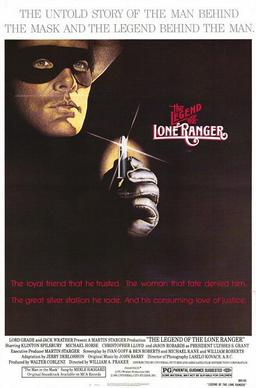
A Movie A Day #107: The Legend of the Lone Ranger (1981, directed by William A. Fraker)


Long before he found fame playing Deputy Hawk on Twin Peaks, Michael Horse made his film debut in one of the most notorious box office flops of all time, The Legend of the Lone Ranger.  

Michael Horse played Tonto, the young Comanche who rescues his childhood friend, John Reid (Klinton Spilsbury), and nurses him back to health after Reid has been attacked and left for dead by the notorious outlaw, Butch Cavendish (Christopher Lloyd).  Reid was a civilian, accompanying a group of Texas Rangers led by his older brother, Dan (John Bennett Perry).  When Cavendish attacked, John was the only survivor.  John wants to avenge his brother’s death but first, Tonto is going to have to teach him how to shoot a six-shooter and how to ride his new horse, Silver.  Finally, John is ready to don the mask and becomes the Lone Ranger.  It’s just in time, because Cavendish has kidnapped President Grant (Jason Robards).

An even bigger flop than the more recent Lone Ranger film starring Armie Hammer and Johnny Depp, The Legend of the Lone Ranger failed for several reasons.  For one thing, the film has a major identity crisis.  The violence is not for kids but most of the dialogue and the performances are.  For another thing, it takes forever for John Reid to actually put on the mask and become the Lone Ranger.  By the time the William Tell Overture is heard, the movie is nearly over.

It was made to capitalize on the same type of nostalgia that previously made Superman a hit and, just as Superman introduced the world to Christopher Reeve, The Legend of the Lone Ranger introduced the world to a football player turned actor, named Klinton Spilsbury.  Unfortunately, the world did not want to meet Klinton Spilsbury, whose blank-faced performance was so bad that James Keach was brought in to dub over all of his dialogue.   Spilsbury did not help himself by reportedly acting like a diva during the shooting, demanding constant rewrites, and getting into bar brawls offset.  Of the two actors who made their screen debuts in The Legend of the Lone Ranger, Michael Horse has worked again.  Klinton Spilsbury has not.

When The Legend of the Lone Ranger went into production, the film’s producers made the incredibly boneheaded move of getting a court injunction barring Clayton Moore (who had played the role on TV) from wearing his Lone Ranger uniform is public.  Since the semi-retired Moore was living off of the money that he made appearing as the Lone Ranger at country fairs and children’s hospitals, this move was a public relations disaster.  (For his part, Moore filed a counter suit and continued to make appearances, now wearing wrap-around sunglasses instead of his mask.)  Moore refused to appear in a cameo and spent much of 1981 speaking out against the film.

Finally, the main reason that Legend of The Lone Ranger flopped was because it opened on the same Friday as a little film called Raiders of the Lost Ark.

The rest is history.

The Holy Grail of Bad Cinema: THE PHYNX (Warner Brothers 1970)


gary loggins's avatarcracked rear viewer

phynx1

(WARNING: The movie I’m about to review is so bad, I can’t even find a proper poster for it. Beware… )

I was so excited when I  found out TCM was airing THE PHYNX at 4:00am!  I’d heard about how bad it for years now, and couldn’t wait to view it for myself today on my trusty DVR. I wasn’t disappointed, for THE PHYNX is a truly inept movie, so out of touch with its audience… and just what is its audience? We’ve got a Pre-Fab rock band, spy spoof shenanigans, wretched “comedy”, and cameos from movie stars twenty years past their prime. Just who was this movie made for, anyway?

The film defies description, but I’ll give it a whirl because, well because that’s what I do! We begin as a secret agent attempts to crash into Communist Albania in unsuccessful and unfunny ways, then segue into some psychedelic cartoons…

View original post 1,064 more words