All Hail Slade Craven! A Look At Turbulence 3: Heavy Metal


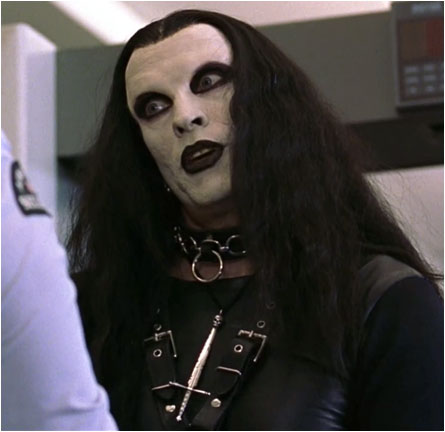
Slade Craven, the hero of Turbulence 3

Slade Craven, the hero of Turbulence 3

The first Turbulence was a 1997 box office flop that starred Lauren Holly as a flight attendant who must defeat Ray Liotta and land an airplane.  Turbulence 2 was a 1999 direct-to-video release that starred Craig Sheffer as an engineer who must defeat a terrorist and land an airplane.  2001’s Turbulence 3 reuses the special effects footage from the first Turbulence and features Craig Sheffer in a different role but otherwise, it is a completely unrelated to the first two films.  This time, John Mann plays a rock star who must defeat a terrorist and land an airplane.

Slade Craven is a death rocker who, with his white makeup and his long black hair, is an obvious stand-in for Marilyn Manson.  Like Marilyn in his prime, Slade Craven is a controversial artist whose music is critical of religion.  Unlike Marilyn Manson (whose video for Sweet Things Are Made Of This still has the power to shock), the one Slade Craven music video that we see mostly features Slade stumbling around a high school basement and petting a dog.  Marilyn Manson sang about the beautiful people.  Slade Craven’s biggest hit is Love Gun.

Slade Craven has announced his retirement.  His final concert, complete with pyrotechnics and a working electric chair, will be held on an airplane, while the plane is flying from California to Canada.  Only 40 of his most devoted fans will be allowed on the plane but “10 million people” will be watching via the miracle of the Internet.  (Everything about the internet was still exotic in 2001.)
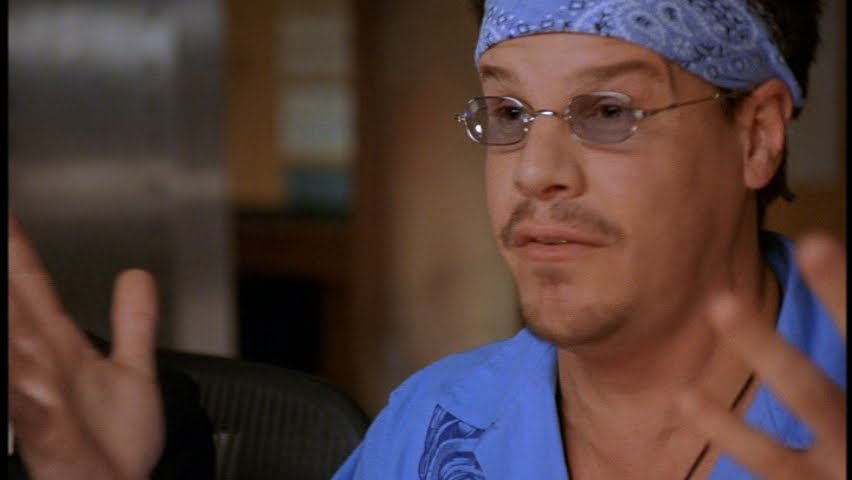
This is what a hacker looked like in 2001.

This is what a hacker looked like in 2001.

On the ground, hacker Nick Watts (Craig Sheffer) is illegally watching the concert when FBI agent Kate Hayden (Gabriella Anwar) shows up to arrest him.  However, before Kate can put on the handcuffs, they notice that something strange is happening on the plane.  Someone has just murdered the band’s manager and has locked Slade in the first class restroom.  A man disguised to look like Slade shoots a co-pilot and announces that he’s going to crash the plane into a cursed cemetery in an area of East Kansas that is so unholy that “even the pope refuses to fly over it.”  The crash will not only be seen by the 10 million people watching on the internet but it will also unleash Satan into the world.

With the help of Nick and Kate, Slade frees himself from his restraints and becomes a hilariously unlikely action hero.  Not only does Slade have to defeat his doppelgänger and the other Satanists on the plane but, after the remaining pilot (Rutger Hauer!) is revealed to be a part of the conspiracy, Slade has to land the plane on his own.  Luckily, Nick has an old NES flight simulator that he can use to help talk Slade down.  “We’re all going to rock and roll!” Slade tells the passengers as he pulls on the throttle.  Meanwhile, on the ground, Kate rewards Nick by handcuffing him and then walking towards the bedroom while unbuttoning her blouse.  Nick hops after her.

Also, on the ground, Joe Mantegna plays an FBI agent.  All of the scenes with Mantegna take place in two locations, suggesting that Mantegna filmed all of his scenes in a day or two.  Turbulence 3 proves that it is impossible to hear Mantegna’s voice without picturing Fat Tony.

Of all the films about heavy metal singers fighting terrorists and landing airplanes, Turbulence 3 might be the best.  All credit belongs to John Mann’s Slade Craven who rocks every day, parties every night, and beats up terrorists all of the time.  Slade Craven proves the nobody saved the world like a shock rocker.  Sadly, there has never been a Turbulence 4.  I would love to see the further adventures of Slade Craven.
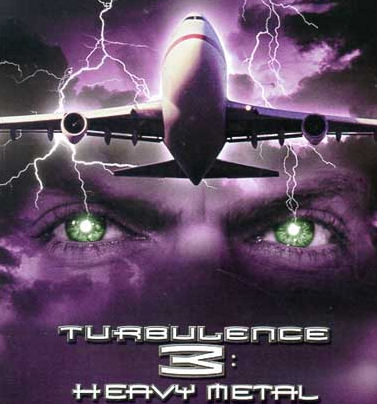
turbulence-3-poster

Shattered Politics #53: The Godfather Part III (dir by Francis Ford Coppola)


GodfatherIII2

Well, it’s come to this.

First released in 1990, The Godfather Part III was nominated for best picture (it lost to Goodfellas Dances With Wolves) but it’s got a terrible reputation.  Over the past two weeks, whenever I’ve mentioned that I was planning on reviewing The Godfather and The Godfather Part II for this series of reviews, everyone who I talked to mentioned that they loved the first two Godfather films and that they hated the third one.  Quite a few, in fact, suggested that I shouldn’t even bother reviewing the third one.  In their eyes, The Godfather Part III was like that one cousin who you know exists but, because he got caught cashing your grandma’s social security check, you never send a Christmas card.

But you know what?

It was never even an option for me to skip reviewing The Godfather, Part III.  First off, I’m a completist.  It’s long been my goal to review every single best picture nominee and, regardless of how much some people may dislike it, that’s exactly what The Godfather Part III is.

Plus, I love the Godfather movies.  I’m a fourth Italian (and, much like the Corleones, my Italian side comes from Southern Italy) and I was raised Catholic.  Let’s face it — The Godfather movies were made for me.  Even Part III.

So, with all that in mind, I recently sat down and rewatched The Godfather Part III.  And I’m not saying that it was an easy film to watch.  It’s a flawed film and those flaws are made even more obvious when you compare it to the previous two Godfathers.  It’s hard to follow up on perfection.  And I have to admit that, even though I had seen Part III before, I was still expecting it to be better than it actually was.  I had forgotten just how many slow spots there were.  I had forgotten how confusing the plot could get.  I had forgotten….

Okay, I’m really starting to sound negative here and I don’t want to sound negative.  Because I like The Godfather, Part III.  I think it’s a good but uneven film.  Some of my favorite films are good but uneven…

But this is a Godfather film that we’re talking about here!

The Godfather Part III opens in 1979, 20+ years since the end of the second film.  Tom Hagen has died off-screen (booo!) and Michael (Al Pacino) is nearly 60 and looking forward to retirement.  He’s handed the Corleone criminal empire over to the flamboyant Joey Zasa (Joe Mantegna).  Michael has finally become a legitimate businessman but he’s lost everyone that he loved.  Kay (Diane Keaton) has divorced him.  His son, Anthony (Franco D’Ambrosio), knows that Michael was responsible for killing Uncle Fredo and wants nothing to do with the family business.  Instead, Anthony wants to be an opera singer.  Meanwhile, his daughter Mary (Sofia Coppola) is headstrong and rebellious.  (Or, at least, she’s supposed to be.  That’s what the audience is told, anyway.  None of that really comes across on the screen.)

Now, the first two Godfather films featured their share of melodrama but neither one of them comes close to matching all of the schemes, betrayals, and plots that play out over the course of Godfather, Part III.  Let’s see if I can keep all of this straight:

As the film opens, Michael is receiving an award from the Vatican.  Kay, who is now married to a judge, shows up with Mary and Anthony.  Michael is obviously happy to see her.  Kay glares at him and says, “That ceremony was disgusting!”  (Damn, I thought, Kay’s suddenly being kind of a bitch.  Fortunately, later on in the movie, Kay’s dialogue was both better written and delivered.)

Then, Vincent (Andy Garcia) shows up!  Vincent is one of those handsome, sexy gangsters whose every action is followed by an exclamation point!  Vincent is Sonny’s illegitimate son!  He wears a cool leather jacket!  He openly flirts with his cousin Mary!  He has sex with Bridget Fonda!  He kills Joey Zasa’s thugs!  He convinces Michael to mentor him!

And, as soon as Vincent enters the film, suddenly every scene starts to end with an exclamation point!

And then, Michael goes to Sicily!  He gets swindled by the corrupt Archbishop Gilday (Donal Donnelly)!  He gets targeted by a corrupt Italian politician!  He confesses his sins to Cardinal Lamberto (Raf Vallone)!  Lamberto later becomes Pope!

Meanwhile, Don Altobello (Eli Wallach) is conspiring to kill Michael!  Because that’s what elderly Mafia dons do!  And then Kay, Anthony, and Mary all come to Sicily!  Anthony is going to be making his opera debut!  And soon Vincent is sleeping with Mary, even though they’re first cousins!

And even more people want Michael dead and I’m not really sure why!  Everyone goes to the opera!  We sit through the entire opera!  Meanwhile, enemies of the Corleones are killed!  And some Corleones are killed!  And it all ends tragically!

Okay, I’m starting to get snarky here and it’s probably getting a little bit hard to believe that I actually do like The Godfather, Part III.  And, as much as I hate to do it, there are a few more flaws that I do need to point out.  Sofia Coppola is one of my favorite directors and she has really pretty hair and we both have similar noses but …. well, let’s just say that it’s probably a good thing that Sofia pursued a career as a director and not as an actress.  Reportedly, Sofia was a last minute pick for the role, cast after Winona Ryder suddenly dropped out of the production.  It’s not so much that her performance is terrible as much as it’s not up to the level of the rest of the cast.  Watching this Godfather, you’re acutely aware of how much of what you’re seeing on screen was determined by Sofia’s inexperience as an actress.

And then there’s that opera.  Now, I know that I’m supposed to love opera because I’m a girl and I’m a fourth Italian.  And I do love big emotions and big drama and all the rest.  But oh my God, the opera at the end of the movie went on and on.  There’s only so much entertainment you can get out of watching actors watch other actors.

But, at the same time, for every flaw, there’s a part of the film that does work.  First off, the film itself is gorgeous to look at, with a lot of wonderfully baroque sets and scenes taking place against the beautiful Italian landscape.  Al Pacino brings a very real gravity to the role of Michael and it’s fun to watch him trying to win back Diane Keaton.  (In those brief scenes, The Godfather Part III almost becomes a romantic comedy.)  Talia Shire is obviously having a lot of fun playing Connie as being a Lady MacBeth-type of character.  (In fact, they needed to give Connie a film of her own where she could poison anyone who get on her nerves.)  And Andy Garcia does a great job as Vincent.  You watch him and you never have any doubt that he could be Sonny’s son.

The Godfather Part III may not live up to the first two Godfather films but what film could?

Embracing the Melodrama #40: Bugsy (dir by Barry Levinson)


Bugsy5lrg

Let’s continue to embrace the melodrama with the 1991 best picture nominee Bugsy.

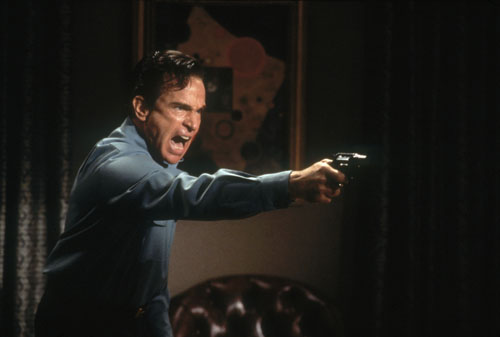
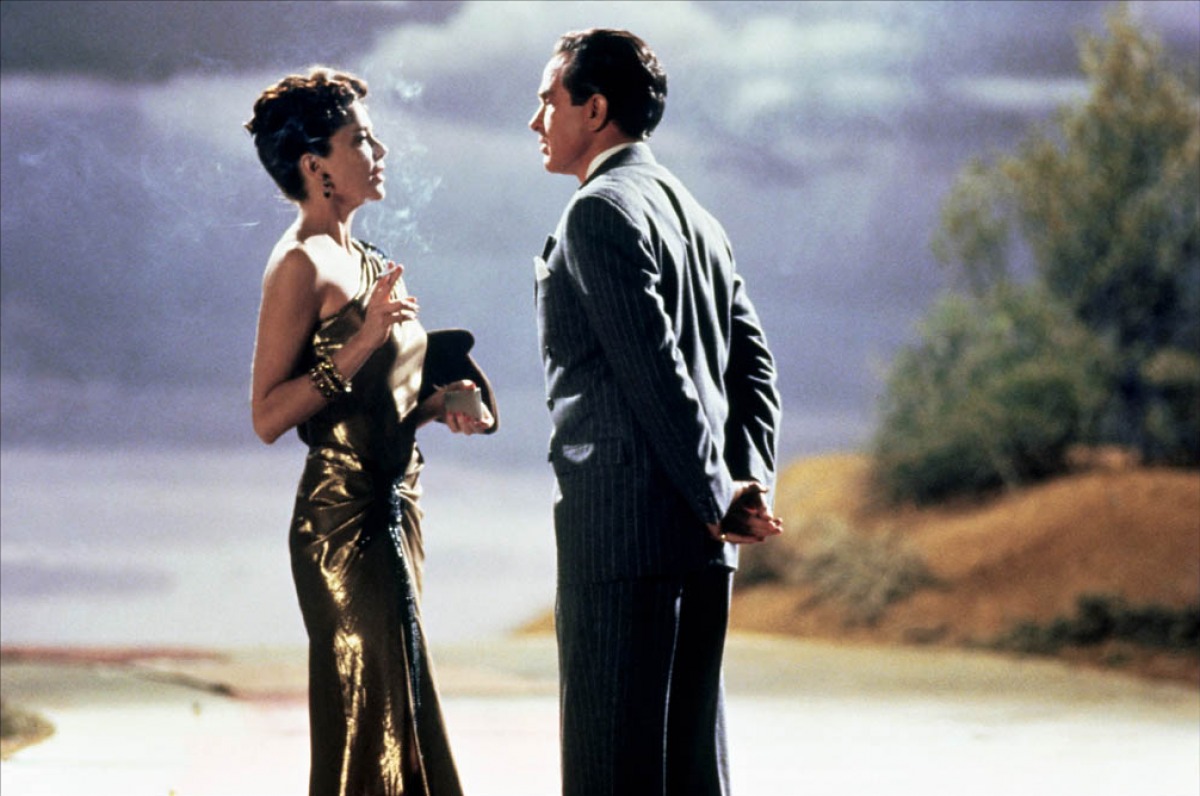
Gangster Benjamin Siegel (Warren Beatty) may be known as Bugsy but nobody dares call him that to his face.  Siegel may be best known for his quick temper and his willingness to murder anyone who gets in his way, but Ben insists that he’s not as crazy as everyone considers him to be.  Instead, Ben knows that he’s a very special person, a visionary businessman whose business just happens to be organized crime.  Along with his childhood friends Lucky Luciano (Bill Graham) and Meyer Lansky (Ben Kingsley), Siegel is one of the founders of the modern American crime syndicate.  Unlike his more practical-minded partners, Siegel revels in being a public figure.  Bugsy examines how Siegel became a celebrity gangster and how that celebrity eventually led to his downfall.

As the film opens, Luciano and Lansky send Siegel out to Los Angeles, specifically to look after their west coast business operations.  Before Siegel leaves, he is specifically told to keep a low profile.  So, of course, as soon as Siegel arrives in Los Angeles, he starts hanging out with actor George Raft (Joe Mantegna) and having a very public affair with actress Virginia Hill (Annette Bening).  Siegel quickly falls in love with the glamour and glitz of Hollywood and starts to think of himself as being a movie star.  When he’s not working with violent gangster Mickey Cohen (Harvey Keitel) to control the Los Angeles underworld, Siegel is attending film premieres and even shooting a Hollywood screen test.  Back in New York, Luciano and Lansky can only watch as their childhood friend goes out of his way to defy their instructions and become the most famous gangster in America.

Eventually, Siegel goes on a gambling trip to Nevada and comes up with an idea that is destined to change America forever.  With funding from Lansky and Luciano, Siegel begins construction on the Flamingo Hotel and Casino in Las Vegas, Nevada.  However, Siegel’s plans are so extravagant and, in many ways, impractical that the budget soon soars out of control.  Not helping matters is the fact that Virginia is embezzling money from the casino’s budget.  Even after Siegel finds out, he can’t bring himself to be angry at her.  He understand that he and Virginia are essentially cut from the same cloth.

However, back in New York, Luciano grows more and more frustrated with Siegel’s wasteful ways and Lansky comes to realize that he can only protect his friend for so long…

Bugsy is a big, extravagant movie that tries to be a few too many things at once.  Over the course of two and a half hours, it attempts to be a love story, a biopic, a classic gangster film, an allegory for the American dream, a history lesson, a period piece, and finally, a metaphor for the act of filmmaking itself.  (When Siegel complains that Luciano and Lansky don’t understand why the Flamingo has to be huge, it’s hard not to feel that he’s meant to be a stand in for every director who has ever had his budget cut by a meddling studio executive.)  When a film tries to be so many different things all at once, you can’t be surprised when the end result is a little uneven.  Bugsy starts out slowly but gradually picks up speed and the final part of the movie is everything that one could hope for from an epic gangster film.

The film works best as a character study of a man who, in the best American tradition, attempts to reinvent himself by moving out west.  Back in New York, Ben is known as a cold-blooded and dangerous killer.  However, once he arrives in Los Angeles, Ben attempts to recreate himself as a celebrity and then as a visionary.  For him, the Flamingo is about more than money.  The Flamingo is about being remembered for something other than his nickname.  The Flamingo is his way to escape from his past.  However, as Bugsy makes clear, the past can be ignored but it never goes away.

bugsy-1991-09-g