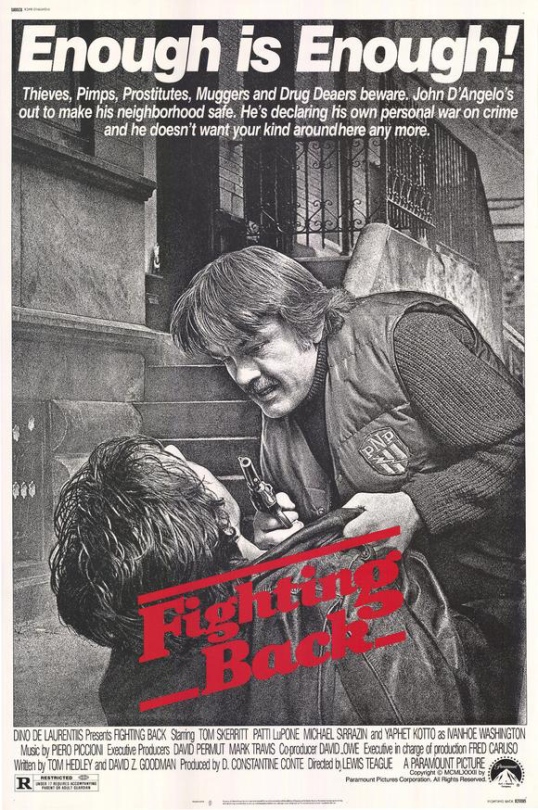
A Movie A Day #38: Fighting Back (1982, directed by Lewis Teague)


fightingbackpost

The time is 1982.  The place is Hell on Earth, also known as Philadelphia.  Crime is out of control and the police are powerless to stop it.  When deli owner John D’Angelo (Tom Skerritt) and his wife, Lisa (Patti LuPone), confront a pimp named Eldorado (Pete Richardson), he rams his car into the back of their car, causing the pregnant Lisa to lose her unborn child.  At almost the exact same time, John’s mother (Gina DeAngles) is mugged by two thugs who chop off her ring finger.

In the grand tradition of Charles Bronson, John decides to fight back.  But he doesn’t go it alone.  With his best friend, a police officer named Vince (Michael Sarrazin), John starts the People’s Neighborhood Patrol.  The PNP is going to clean up Philadelphia, one street at a time.  The media (represented by David Rasche) make John into a celebrity.  The black community (represented by Yaphet Kotto) suspect that John and the PNP are guilty of racial discrimination.  The Mafia wants to bring John over to their side.  John runs for city council but he still has time to drop a grenade in a pimp’s car.

Fighting Back was one of the many urban vigiliante films to come out after the success of Death Wish.  Fighting Back‘s producer, Dino De Laurentiis, also produced Death Wish but made the mistake of later selling the rights to Cannon.  Fighting Back was not the box office success that either Death Wish or its sequels were, even though Fighting Back is actually the better movie.  That’s because Fighting Back was directed by the underrated Lewis Teague.  Teague does a good job of making Philadelphia look like a war zone and the scenes of vigilante justice are enjoyable but, overall, Teague takes a far more ambiguous approach to vigilantism than Michael Winner did when he directed Death Wish.  As vile as Philadelphia criminals may be, John D’Angelo isn’t always that likable himself.  When Kotto accuses John and the all-white PNP of being racially prejudiced, Teague suggests that he has a point.  Tom Skerritt gives a good performance, playing John as a proud, blue collar guy who wants to do the right thing but gets seduced by his newfound celebrity.

Better acted than Death Wish and smarter than The Exterminator, Fighting Back is an underrated vigilante gem.
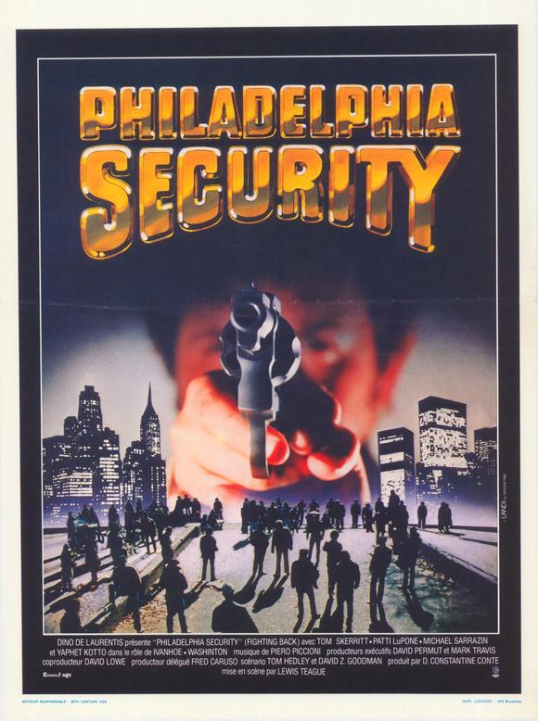
Fighting Back is also known as Philadelphia Security and Death Vengeance.
Fighting Back is also known as Philadelphia Security and Death Vengeance.

Embracing the Melodrama Part II #69: Bad Boys (dir by Rick Rosenthal)


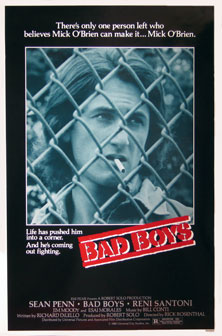
Bad_Boys_(1983_film_poster)First off, I am not about to review the Michael Bay film where Will Smith and Martin Lawrence shoot people and blow things up.  Instead, this Bad Boys is a film from 1983 where Sean Penn doesn’t shoot anyone but that’s mostly because he can’t get his hands on a gun.  And, at one point, a radio does blow up.  So, perhaps this Bad Boys has more in common with the Michael Bay Bad Boys than I originally realized.

Anyway, Bad Boys is about Mick O’Brien (Sean Penn), who is a 16 year-old criminal from Chicago.  One night, when one of his crimes goes wrong, Mick’s best friend (Alan Ruck) is killed and Mick accidentally runs over the brother of rival gang leader, Paco (Esai Morales).  Mick is sent to juvenile detention where he and his sociopathic cellmate, Horowitz (Eric Gurry), team up to overthrow the two “leaders” of their block, Viking (Clancy Brown, with scary blonde hair) and Tweety (Robert Lee Rush).  Meanwhile, Paco is arrested for raping Mick’s girlfriend, JC (Ally Sheedy), and soon finds himself living on the same cell block as Mick.

And it all leads to … violence!

(In the movies, everything leads to violence.)

Bad Boys is one of those films that seems to show up on cable at the most random of times.  I’ve never quite understood why because it’s not like Bad Boys is a particularly great film.  It’s hard to see anything about this film that would lead a programmer to say, “Let’s schedule 100 airings of Bad Boys!”  If anything, it’s the epitome of a good but not that good film.  On the one hand, you have to appreciate a film that attempts to take a serious look at both juvenile crime and the true life consequences of tossing every “lawbreaker” into a cell and locking the door.  People fetishize the idea of punishing criminals but they rarely consider whether those punishments actually accomplish anything beyond satisfying society’s obsessive need for revenge.  (And it’s interesting to note that the problems of 1983 are not that much different from the problems of 2015.)  On the other hand, Bad Boys is way too long, heavy-handed, and repetitive.  This was one of Sean Penn’s first roles and, much like the film itself, he’s good without being that good.  Watching his performance, you get the feeling that James Dean would say, “Nice try.”

However, the film is saved by two actor.  First off, there’s Clancy Brown as the stupid but intimidating Viking.  With his bad skin, blonde hair, and a permanent snarl on his face, Brown makes Viking into a character who is both ludicrous and scary.  And then there’s Eric Gurry as the small and demonic Horowitz.  According to his imdb page, Gurry long ago retired from acting but anybody who sees Bad Boys will never forget him.

Back to School #23: Fame (dir by Alan Parker)


Fameposter

“Fuck it, if I can’t dance I’ll change to the drama department.” — Lisa (Laura Dean) in Fame (1980)

For nearly a week now, we’ve been taking a chronological look at some of the best and some of the worst films ever made about teenagers and high school.  Yesterday, we finished off the 70s with Rock ‘n’ Roll High School.  Today, we start the 80s by looking at yet another musical set in a high school.  That musical is 1980’s Fame.

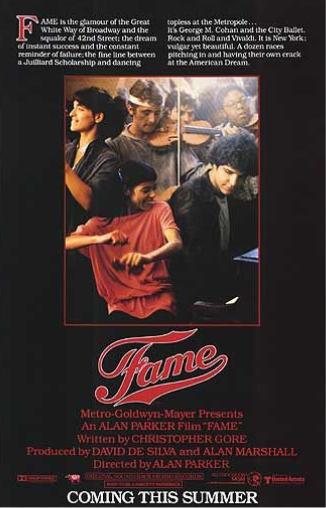
Taking place at the High School For Performing Arts in New York City, Fame follows a group of students from the beginning of their freshman year to graduation four years later.  Among those students are Bruno (Lee Curreri), a musical prodigy, Coco (Irene Cara), who thinks that she’s the most talented student at the school, insecure Doris (Maureen Teefy), gay actor  Montgomery (Paul McCrane), talented but functionally illiterate dancer Leroy (Gene Anthony Ray), and self-destructive comedian Ralph Garcia (Barry Miller, giving the best performance in the film).  Over the course of four years, they fight, love, sing, and dance.  They especially do a lot of dancing, which is basically the main reason why I enjoyed the film.

Fame is the perfect film to transition into the 80s with because, in many ways, it’s a perfect combination of the 70s and the 80s.  In its use of ensemble and its emphasis on the gritty lives that the kids live outside of the school, the film is truly product of the 70s.  However, whenever the film follows the students inside of the school, it becomes very much an 80s film, the type where the emphasis is on stylistically hyper editing and emotions are just as likely to be expressed through a musical montage as through dialogue.  With its combination of the kids dreaming in the school and then facing the harsh realities outside, Fame feels like a collision of 70s pessimism and 80s optimism.

(Needless to say, pessimism usually makes for a more realistic film but optimism is a lot more fun to watch.)

Not surprisingly, for a film that made and released 34 years ago, a lot of Fame feels very dated.  (What is surprising is that the 2009 remake feels even more dated.)  It’s difficult not to cringe at the sight of all the leg warmers and big hair on display.  The same can be said for the synthesizer-heavy soundtrack but, to be honest, I like 80s music.  It may be cheesy but you can dance to it and really, what more can you ask from music?  If nothing else, Fame serves as a valuable time capsule of the time that it was made and yes, I know that I’ve been saying that about a lot of movies lately but hey, it’s true!  And I happen to love time capsules.  So there.

And besides, dated as the film may be, Fame does get the big things right.  It captures that feeling that we all had in high school, that feeling that you are destined for greater things and that, as long as you believe in yourself, good things will automatically happen to you.  It captures the wonderful feeling of not only being creative and talented but also knowing that you are talented and creative..

The film is full of hints that the majority of the students at the high school will probably eventually be forced to give up on their dreams.  A popular and handsome student is first seen graduating and full of confidence, just to pop up again an hour later, working as a waiter and looking desperate.  Haughty Coco goes to an audition and ends up in tears after a sleazy producer tells her to undress.  Ralph performs his stand-up comedy and, exhausted after going for days without sleep, ends up bombing.  Leroy is offered a chance to dance professionally but first he has to try to talk his English teacher into giving him a passing grade while she mourns for her husband, who died just a few hours earlier.  It’s actually a pretty dark movie but it’s hopeful too because, by the end of it, you realize that not all of the characters are going to make it but at least they’re going to have a chance to try.