Review: The Manipulated


“Truth is whatever I say it is. You can scream innocence all you want, but in my world, your words are just noise.” — An Yo-han

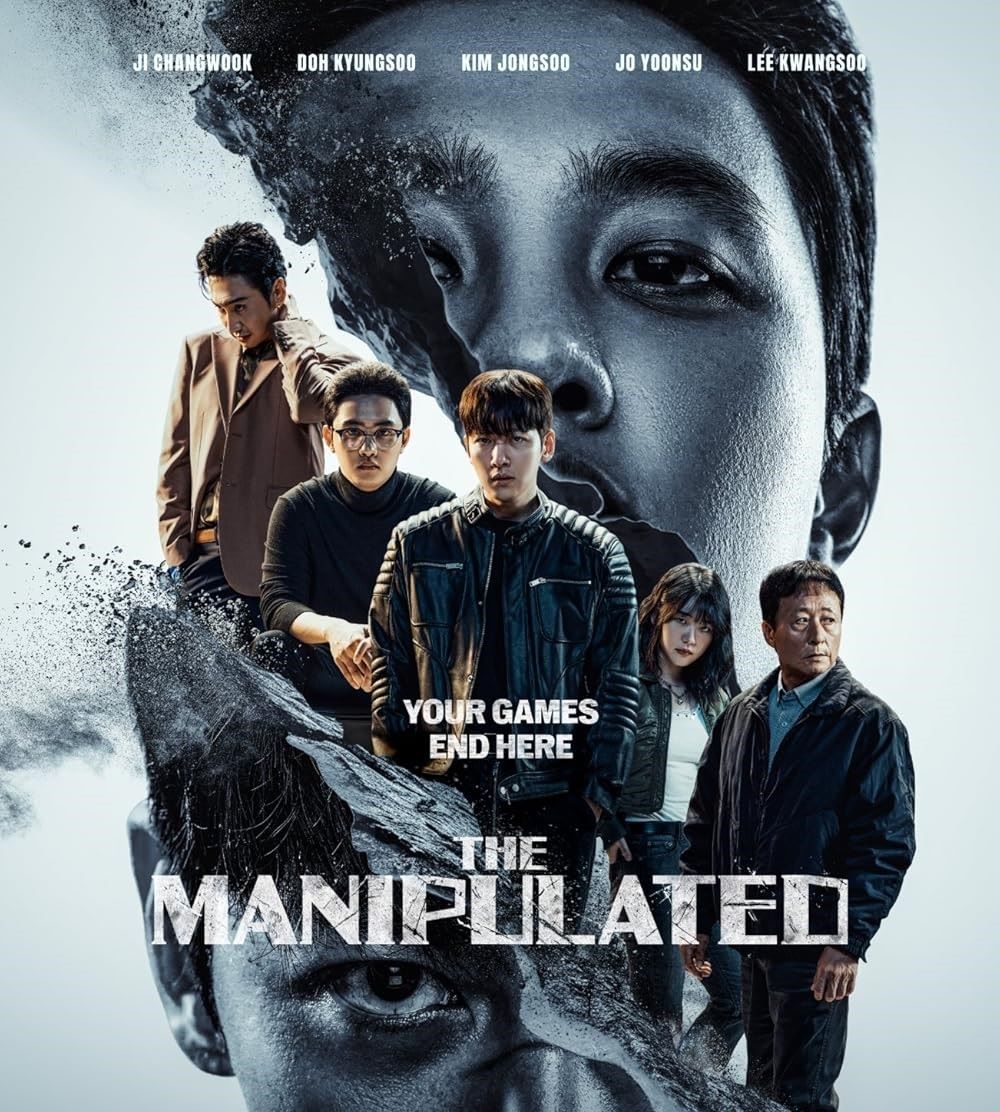
The Manipulated is a Korean revenge thriller that successfully combines familiar genre elements with a fresh sense of intensity and emotional depth, making it a standout in the crowded field of dark legal dramas. The series centers on Park Tae-jung (played by Ji Chang-wook), a seemingly ordinary delivery driver whose life is shattered when he is wrongfully accused and framed for a horrific crime. Overnight, he transitions from a hardworking, everyday man to a desperate prisoner, and eventually, to a determined figure plotting revenge against those who manipulated his fate—most notably, the cold, calculating antagonist An Yo-han (Do Kyung-soo). The show delivers a layered narrative that explores not just personal vengeance but the broader ramifications of power, control, and corruption within societal institutions.

The heart of the story revolves around the idea of manipulation itself—who pulls the strings, who is controlled, and what lengths are necessary to reclaim agency when everything has been taken away. Tae-jung is depicted as a relatable character: a caring older brother, a man running a humble flower café, and someone leading an ordinary life with steady relationships. The show effectively uses this normalcy to heighten the emotional impact when his world falls apart. The transformation from this everyday existence to being cast into the brutal prison environment is stark and compelling. It’s not subtle, but this unrelenting descent works well to justify the fierce anger and resolve that Tae-jung ultimately channels toward his quest for justice. For viewers who appreciate stories where an underdog is pushed to their limits and beyond, this setup resonates and provides an accessible entry point.

The series’ portrayal of prison life is integral to its gripping atmosphere. Tae-jung’s time behind bars is fraught with constant threats, both physical and psychological. The squalid environment where gang hierarchies dominate adds a layer of tension and realism. The prison gang leader, Deok-su, represents the harsh realities of this closed world, embodying a constant source of danger and oppression for Tae-jung. This portrayal forces the protagonist to quickly learn the unspoken rules of survival. Alongside the violence, the show introduces layered secondary characters such as Kim Sang-rak, Tae-jung’s public defender, and volunteer No Yong-sik, which deepens the emotional dimension of the story. These figures help flesh out the narrative, showing the human cost behind the legal system’s failures and the recurring motif of false accusations beyond just the main plotline.

What sets The Manipulated apart is the growing psychological duel between Tae-jung and the enigmatic antagonist An Yo-han. The series takes its time introducing Yo-han—creating an anticipation that pays off as the character’s cold, detached cruelty reveals itself. Do Kyung-soo brings a chilling, almost theatrical presence to the role, portraying Yo-han as masterful in manipulation and strategic cruelty. His actions throughout the series reflect a bored yet brutal puppeteer’s mindset, someone who views others’ lives as mere pawns in a twisted game. This stark contrast with Tae-jung’s raw, increasingly calculated rage adds a heavy psychological layer to the narrative, enriching what might otherwise have been a more straightforward revenge story.

The Manipulated manages pacing impressively well. The tension is maintained through effective plot twists and steadily unfolding backstory without excessive filler or drawn-out sequences. While some plot elements do follow recognizable thriller tropes—such as coincidental rescues or dramatic last-minute revelations—the show executes them with enough style and emotional weight to prevent these from feeling clichéd. Instead, the narrative leans into moral ambiguity rather than offering a simplistic “hero gets revenge” conclusion. This adds complexity and invites viewers to question the true cost of revenge and justice in a corrupt system.

Visually and technically, the series is polished and cohesive. The direction uses tight framing and muted colors to underscore the claustrophobia and hopelessness Tae-jung experiences, both inside prison walls and within the wider society controlled by manipulative elites. Cinematography favors shadows and long corridor shots, mirroring the themes of entrapment and surveillance woven through the plot. The editing is sharp and intelligent, with effective use of flashbacks and visual clues to assist storytelling without losing narrative momentum. Complementing this is a subtle but atmospheric sound design, featuring a restrained score that amplifies suspense without overstepping into melodrama. Additionally, the quiet moments stripped of music—such as tense interrogations or confrontations—allow the powerful performances to carry emotional weight.

As the series progresses, it becomes clear that The Manipulated attempts to comment on deeper societal issues. It highlights the fragility of truth and the ways in which legal and political institutions can be systematically weaponized to protect the powerful while crushing the vulnerable. The manipulation extends beyond a single framed protagonist to suggest a broader pattern of societal decay and complicity. However, compared to a show like Squid Game, which powerfully and provocatively portrayed the rich and powerful as architecting deadly games to maintain control and stay above the law, The Manipulated’s treatment of these issues feels less nuanced and less impactful. Squid Game uses vivid symbolism, sharp social critique, and a global cultural resonance to expose how elites manipulate systems to preserve their power, whereas The Manipulated deals with similar themes in a more subdued and conventional manner, making its social commentary less striking and memorable.

However, the show is not without its flaws. Despite solid performances and sharp writing for the lead characters, some secondary roles feel underdeveloped. The wider cast representing institutional forces and corrupt entities often serve more as plot devices than fully realized individuals. A deeper exploration of these characters’ motivations would have enriched the story’s critique of systemic injustice and added emotional heft. Additionally, certain plot coincidences and rapid character shifts—while not uncommon in the genre—sometimes strain credibility, potentially pulling viewers out of the experience. These issues are minor but noticeable, especially in a series that otherwise invests heavily in creating a believable psychological and social landscape.

The completed season also confirms the show’s willingness to embrace a darker tone, with unflinching depictions of violence, mental torment, and systemic abuse. This brutal realism distinguishes The Manipulated from softer or more melodramatic legal dramas, catering to viewers who appreciate gritty and hard-edged storytelling. At the same time, this can be emotionally demanding, with some sequences feeling excessively harsh, particularly when multiple intense scenes are stacked together without relief. This makes the series less accessible for viewers sensitive to graphic content or those preferring more hopeful narratives.

The performances of Ji Chang-wook and Do Kyung-soo are central to the show’s success. Ji brings charisma and intense emotional range to Tae-jung, portraying his shift from vulnerable victim to ruthlessly driven avenger with nuance and depth. His portrayal steers clear of caricature, allowing audiences to empathize with Tae-jung’s pain and determination. Do Kyung-soo’s portrayal of Yo-han is equally compelling, embodying the detached menace and intricate mind games of a master manipulator. Their dynamic elevates the series, creating a tense, compelling interplay that holds viewers’ attention even through moments anchored in procedural details or legal maneuvering.

The Manipulated is a strong addition to the landscape of Korean crime thrillers, marked by solid performances, sharp production, and a thematically rich narrative. It successfully balances the emotional core of its protagonist’s journey with a wider critique of institutional corruption and manipulation, providing more than just surface thrills. While it plays safely within the revenge thriller template and occasionally leans on genre conventions, it executes these elements with enough skill and emotional intelligence to maintain engagement across its full season. However, while it raises potent societal questions, its critique of how the rich and powerful manipulate the world around them to stay above the law is less impactful and vivid than the powerful, globally resonant portrayal found in Squid Game. Fans of dark, intense psychological dramas with complex characters will find much to appreciate here. Be prepared for a brutal, sometimes exhausting ride into the gritty realities of power and vengeance—but one that delivers a satisfying and thought-provoking experience in return. This series is highly recommended for those who enjoy charged atmospheres, moral ambiguity, and slow-burning tension wrapped in polished storytelling.
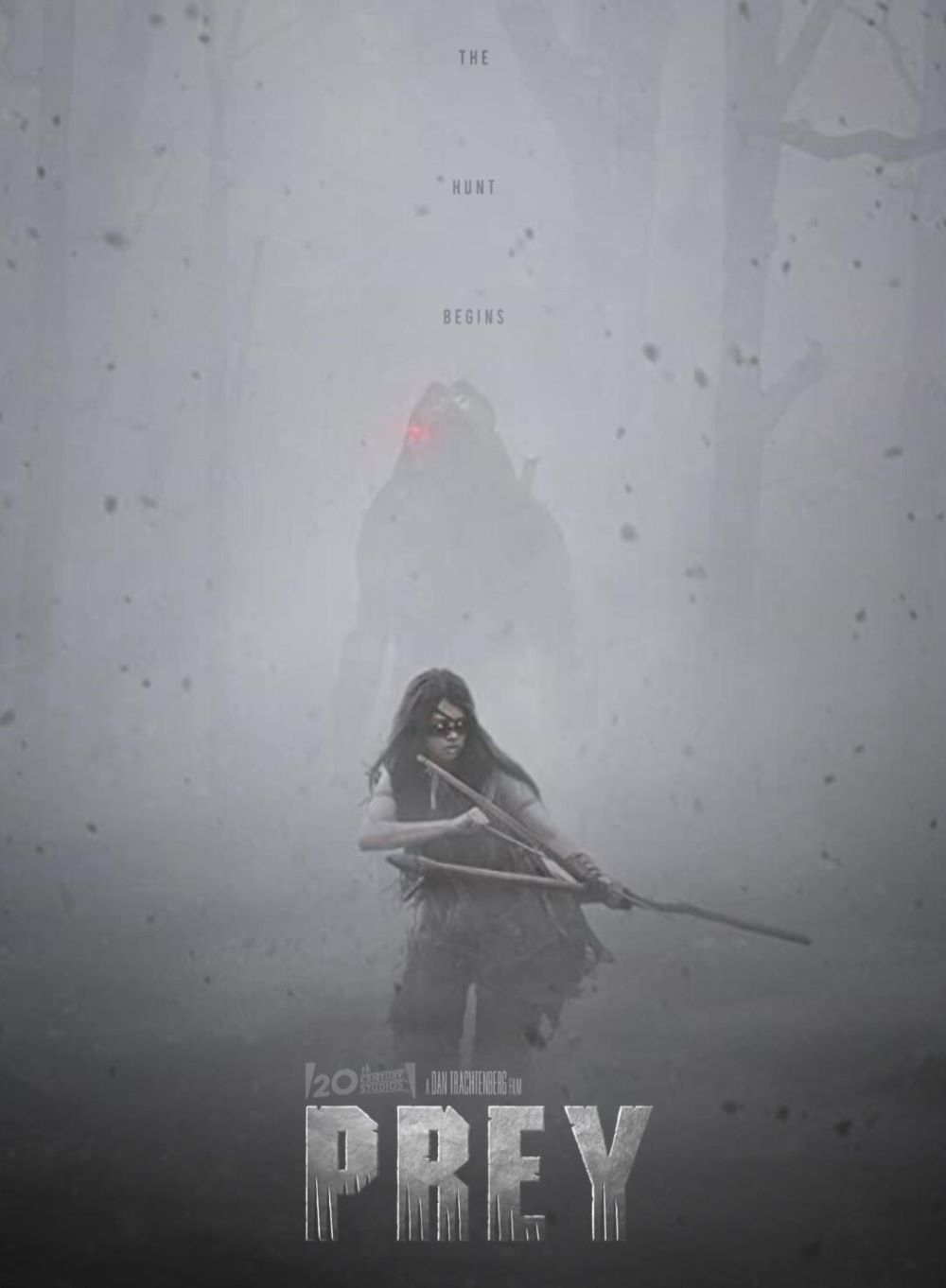
Review: Prey (dir. by Dan Trachtenberg)


“It knows how to hunt, but I know how to survive.” — Naru

Dan Trachtenberg’s Prey is honestly a breath of fresh air for the Predator series. It takes us way back to the early 18th century, deep in the Comanche Nation, ditching the usual sci-fi city jungle for actual wide-open plains and a history-rich vibe. The story follows Naru, a young Comanche woman who’s determined to prove she can hunt just as well as the men in her tribe. Amber Midthunder totally nails it as Naru, giving a performance that’s both vulnerable and tough without trying too hard. Her journey isn’t just about hunting the Predator; it’s also about breaking free from the limits her tribe has set for her as a woman, and that makes the story hit a lot deeper than your typical monster flick.

Speaking of the monster, Prey strips away the Predator’s fancy gadgets and drops it into a more primal, back-to-basics showdown. This Predator isn’t rocking all the high-tech gear we usually see—it’s raw and brutal, with stuff that fits the time period, which makes the whole hunter vs. hunter dynamic feel way more grounded and tense. The movie smartly uses survival skills and brains over flashy tech, and that makes the hunt way more interesting because it’s about anticipation and smarts, not lasers and gadgets.

One of the coolest behind-the-scenes moves with Prey was the filmmakers’ emphasis on cultural authenticity, especially with language. While most of the film is in English, they also made a full Comanche language dub, which is huge because Comanche is a nearly lost language with very few fluent speakers. The cast went back and recorded the whole movie in Comanche, making it the first feature to do so. Originally, they intended to shoot the whole film in Comanche, which would have been even more impressive, but having this dub option available on streaming platforms gives viewers an immersive way to connect with the culture in an authentic way. This shows a real commitment to uplifting Indigenous voices while still making the film accessible.

Trachtenberg did a great job balancing the suspense with action. The Predator’s scenes are super intense and keep you on edge without going overboard. One of the coolest parts is when the Predator takes down a bear—it’s done so cleverly that even though the creature is rarely fully seen, the splashes of its green blood make the moment feel really eerie and unforgettable. The film really puts you in Naru’s shoes, making you feel her fear and determination as she tries to outsmart this deadly creature.

Now, even though the Predator is the main beast to watch out for, the behavior of the French fur trappers is actually more disturbing in many ways. These guys aren’t just out there trying to survive—they’re slaughtering entire herds of bison en masse, skinning the animals and leaving huge carcasses to rot. It’s a brutal, wasteful approach to hunting that contrasts starkly with the Predator, who hunts singularly and with purpose, never wasting what it kills. The trappers’ wanton destruction of the environment and disregard for the land and its creatures makes them a reprehensible presence in the film. They’re essentially invaders who exploit the natural resources with no respect, creating a real commentary on colonial greed. So while the Predator is the alien menace, the human antagonists serve as a grim reminder of real historical violence and environmental exploitation faced by Indigenous peoples. It’s a powerful layer in the story that adds depth to the conflict.

Besides Naru, the rest of the characters feel real and fleshed out. Her brother Taabe adds a nice sibling angle—there’s a good mix of support and conflict that makes their relationship believable and keeps the story grounded. The French fur trappers act as another layer of conflict, showing that not all dangers come from the Predator. Their ruthless ways make you think about the real threats to the Comanche people, adding depth to the narrative beyond just monster vs. human.

Visually, the film is gorgeous. The cinematographer Jeff Cutter captures the sweeping plains and natural beauty in a way that really draws you in, and the natural lighting, weather, and shadows all add to the mood perfectly. The music supports this vibe, mixing suspense with subtle tribal influences that really tie the whole atmosphere together. This combo of visuals and sound creates an immersive world you just want to get lost in.

The themes in Prey are surprisingly meaty. It challenges old-school gender roles, shines a light on indigenous culture with respect, and subtly touches on colonialism through its human villains. Naru’s fight to prove herself becomes more than just physical—it’s a stance against tradition that resonates on a broader level. This isn’t your usual throw-everything-at-the-wall action flick; it’s thoughtful and makes you care about the characters.

Sure, the movie’s pacing slows down a bit toward the end, stretching out the finale more than necessary, and a few moments lean on familiar action tropes, but these are small grumbles in an otherwise tight and exciting film. Practical effects—especially in how the Predator moves and attacks—bring a rawness that CGI-heavy movies often miss, making the battles feel grounded and visceral.

All in all, Prey stands out as probably the best Predator movie since the original. It respects the classic elements fans love but brings fresh ideas and a ton of heart. Amber Midthunder steals the show with her performance, and Dan Trachtenberg’s direction keeps things suspenseful and sharp. The cultural respect and social layers make it more than just another monster movie—it’s a rare example of blockbuster cinema that gets representation right.

If you’re into smart, intense action movies with a meaningful story and some cultural depth, you really shouldn’t miss Prey. It strips things down to the essentials—survival, smarts, and heart—and the result is a movie that sticks with you long after the credits roll. It’s about more than just hunting a monster; it’s about standing your ground, breaking through barriers, and owning your strength. Definitely worth checking out if you haven’t already.

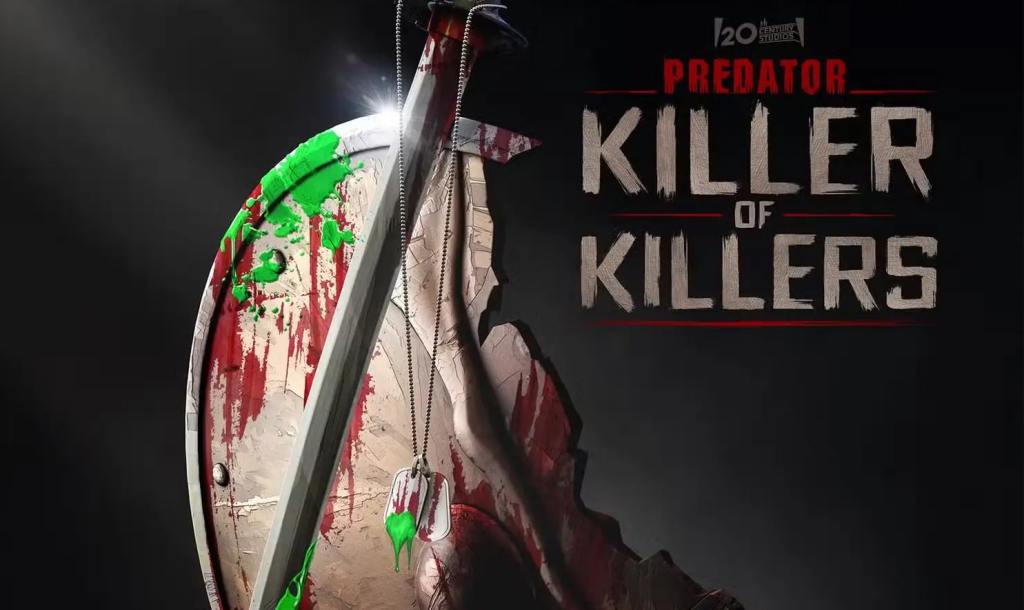
Double Feature Trailers for Predator: Badlands and Predator: Killer of Killers


When Prey was released straight to streaming on Hulu in 2022, there were many who thought that the film was going to be another Predator franchise entry that would lead to major disappointment. I mean, if it was good, it would’ve had a theatrical release. So, it was a pleasant surprise when it was well-received by most critics and audiences, alike.

Director Dan Trachtenberg had earned much goodwill from those same people as with the executives who ran 20th Century for Disney. That goodwill has allowed Trachtenberg to work on two projects for the House of Mouse both of which are two different ideas to expand the Predator franchise.

The two projects in question are the 3-part animated series for Hulu, Predator: Killer of Killers and the one set for a full theatrical release this November, Predator: Badlands.

The animated series will be about following the stories of the titular hunter set in three different eras (Viking era, Feudal Japan and World War 2). Predator: Killer of Killers may be animated but from the trailer it doesn’t skimp on the gore and violence. The series is set to premiere on Hulu on June 6, 2025.

The feature film Predator: Badlands is set for a November 7, 2025 release and will take a coming-of-age route but from the point of view of a young Predator seen as an outcast from his clan and teaming up with an unlikely ally played by Elle Fanning.

Predator: Killer of Killers Trailer

Predator: Badlands Trailer

Miniseries Review: Mike (dir by Craig Gillespie, Tiffany Johnson, and Director X)


“Who is Mike Tyson?” is question that’s asked by the new Hulu miniseries, Mike.

The answer to that question is that he’s a boring guy who did some interesting things.

For instance, he became a boxer and was briefly the world champion before he was brought down by his own hubris.  That’s interesting, largely because it’s something that seems to happen to quite a few people who suddenly find themselves on top of the world but don’t have the maturity necessary to handle it.  However, that, in itself, does not Mike Tyson an interesting human being.  It just makes him an example of how history repeats itself.

He bit off an opponent’s ear during a boxing match.  That’s interesting because it was such a savage act and it scandalized people who otherwise have no problem watching two men beat each other until one loses consciousness.  Causing brain damage is okay but God forbid you bite off a piece of someone’s ear.  But the fact that Mike bit off the guy’s ear does not, in itself, make Mike Tyson interesting.  It just makes him a jerk.

Mike Tyson has a facial tattoo that doesn’t really mean anything.  A lot of people have stupid tattoos.

Mike Tyson has a distinctive way of speaking.  So do a lot of other people.

Mike Tyson spent three years in prison after being convicted of raping a contestant in a beauty pageant.  Tyson was and is certainly more famous than the typical convict and, somehow, that conviction has not prevented him from becoming a beloved cultural institution in the United States.  The hypocrisy is interesting.  Mike Tyson is not.

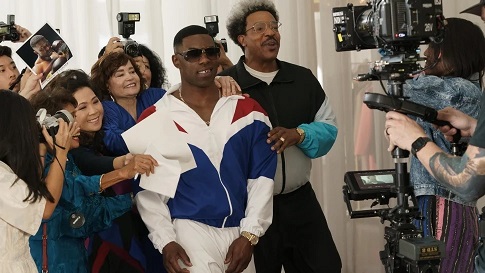
At least, that’s the impression that I got from this 8-episode miniseries.  Seven of the episodes feature Tyson (played by Trevante Rhodes) performing a one-man show in front of an audience in Indiana.  Believe it or not, this is based on fact.  Apparently, Mike Tyson did have a one-man show, in which he would discuss his career and his life.  (Jeff even wrote a review of it for this very site!)  We watch flashbacks as the show’s version of Tyson provides a self-serving narration and, to be honest, it seems like it would be the most boring one-man show ever.  Tyson talks about growing up poor and with a mother who alternated between hating and loving him.  He talks about his first trainer (played by Harvey Keitel, who often seems to be channeling Jonathan Banks) and his first marriage.  Mostly he talks about how he feels that almost everyone in his life betrayed him.  The first two episodes, which deal with Tyson’s youth, are effective because they examine how a childhood of mental and physical abuse can set the course of someone’s entire life.  However, once adult Tyson shows up, Mike becomes far less compelling.  It’s hard not to get tired of listening to him blame everyone else for his own increasingly poor decisions.

The one exception to the show’s format is episode 5, which is told from the point of view of Desiree Washington (Li Eubanks), the woman who Tyson was convicted of raping.  This is a powerful stand-alone episode, both because of Eubanks’s performance and because it’s the only episode to not be seen through Tyson’s eyes.  It’s the episode that allows the viewer to see Tyson the way the rest of the world saw Tyson.  And yet it’s difficult to feel that, when viewed in the context of the entire miniseries, this episode is a bit of a cop-out.  It’s the only episode to focus on someone who was hurt by Tyson but it’s surrounded by episodes that once again portray Tyson as being a victim of his managers, his fans, and society at large.  Desiree is given one episode and then disappears from the narrative whereas the show’s version of Tyson is given seven episodes to justify himself.  One gets the feeling that the show’s producers knew that they had to include Desiree but they also knew that revealing Tyson’s version of the events would have also meant revealing that he continues to insist that he was the victim and that would have totally messed up the show’s final redemption arc.  And so, the narrative burden is temporarily placed on Desiree and Tyson only returns once it is time to discuss what it was like being in prison.

Mike was produced by Craig Gillespie, who also directed I, Tonya.  Like I, Tonya, Mike features characters frequently breaking the fourth wall and talking directly to the audience.  In fact, it happens so frequently that it gets to be kind of annoying.  Breaking the fourth wall really wasn’t even that original when it happened in I, Tonya.  In Mike, it becomes a trick that’s used to try to make Mike Tyson into a more interesting character than he is.  But it feels empty, largely because it doesn’t tell us anything that we don’t already know or couldn’t have guessed on our own.

The miniseries itself was made without the participation of the real-life Mike Tyson.  Tyson condemned the show as being an attempt to make money off of his life and he actually does have a point.  Unfortunately, the miniseries itself doesn’t have anything new to add to the story of Tyson.  It’s an 8 episode Wikipedia entry.  At some point, the streaming services may need to realize that not every celeb needs to be the subject of a miniseries.  Simply being famous does not always make for a compelling story.

Miniseries Review: Candy


It’s strange how things work out.

In 1980, something terrible occurred in the town of Wylie, Texas.  Candy Montgomery, who was a Sunday School teacher and who had what seemed like the ideal life, killed Betty Gore.  Betty was reportedly one of Candy’s closest friends but Candy still ended up striking her 41 times with an axe.  After Candy was arrested, she revealed that she had cheated with Betty’s husband.  She also said that she attacked Betty in self-defense.  At her trial, she was ultimately found not guilty.

It was one of those small town scandals that the media tends to love and, 42 years after it all happened, it’s still spoken of down here in Texas.  Every five years or so, there’s a big “where are they now?” article in the Dallas Morning News.  Betty’s widowed husband married a woman that he started dating a few weeks after Betty’s death.  Candy’s lawyer, Don Crowder, tried to launch a political career and, when that failed, got addicted to cocaine and ended up committing suicide.  As for Candy, she divorced the husband who stood with her through the trial and apparently now lives, under a new name, in another town.

Still, despite the case’s continuing notoriety in Texas, I was recently a bit surprised to learn that there was not one but two Candy Montgomery miniseries in development.  HBO has Love and Death, which stars Elizabeth Olsen as Candy.  Love and Death is scheduled to come out later this year and it’ll probably suck because it’s written by David E. Kelley and this is exactly the type of story that’s going to bring out all of his worst instincts.  Meanwhile, Hulu produced Candy, starring Jessica Biel as Candy and Melanie Lynesky as Betty Gore.

Candy aired, over five nights, last week and I have to say that Hulu did a good job of presenting the story.  I’m usually a bit cynical about true crime miniseries (especially ones that are set in small town Texas in the late 70s) but Candy was actually really good.  The first episode featured a somewhat frazzled but always smiling Candy as she tried to balance a day that included swim lessons, bible school, taking the kids to see The Empire Strikes Back, and, of course, killing her best friend.  The final episode featured the courtroom drama, in which the ghost of Betty Gore could only watch as Candy Montgomery made herself the center of the tragedy.  In between, Candy provided a portrait of small-town life, church gossip, a mid-life crisis, and a lot of shag carpeting and wood paneling.  The miniseries balanced melodrama with satire but it also worked as a portrait of a group of people who all realized that their lives hadn’t turned out the way that they wanted them too.  Both Candy and Betty are portrayed as being frustrated and dissatisfied with what the world has to offer them.  The difference is that, while Betty wears her pain for all to see, Candy hides everything behind a quick smile and a superficially friendly manner.  In the end, one gets the feeling that Candy was acquitted because no one wanted to believe that someone who seemed so perfect could do something so horrific.

Candy is also well-served by its cast.  Melanie Lynesky is often heart-breaking as Betty Gore, while also still playing her with just enough anger that Candy’s story of being attacked is not easy to dismiss.  Jessica Biel keeps you guessing as Candy, playing her as someone who you would probably want to be friends with, even though you can’t help but suspect that she would also probably gossip about you behind your back.  Timothy Simons and Pablo Schrieber are well-cast as Candy and Betty’s clueless husbands.  Simons especially deserves some credit for generating sympathy for a character who, as written, could have been portrayed as just being a caricature.  And yes, Justin Timberlake does show up as the deputy who investigated the crime.  While it does feel a bit like stunt casting, Timberlake is convincing once you get used to the 70s porn mustache.

Though it aired without the fanfare that greeted other Hulu miniseries like Dopesick, Pam & Tommy, and The Girl From Plainville, Candy is a compulsively watchable and, at times, even thought-provoking work of true crime.  Without any of the slow spots that marred The Girl From Plainville or Dopesick‘s preachiness, Candy is definitely one that will benefit from being binged.  Check it out the next time you have five hours to kill.


TV Review: The Girl From Plainville 1.4 “Can’t Fight This Feeling Anymore” (dir by Pippa Bianco)


Last week, when the first three episodes of The Girl From Plainville dropped on Hulu, my main concern was that, regardless of how well-acted the show may be or how tragic the true life story might be, there really wasn’t much left to be said about Michelle Carter and Conrad “Coco” Roy.   

Having watch the fourth and latest episode last night, I have to say that I think my concerns were justified.  I mean, don’t get me wrong.  The fourth episode was fairly well-directed.  It was definitely well-acted.  There was a scene where Elle Fanning and Colton Ryan start singing Can’t Stop This Feeling that I’m sure will be a favorite amongst many viewers.  But, in the end, it’s hard to see why eight hours are going to be required to tell this story.  There was really nothing in the fourth episode that couldn’t have been communicated in a two-minute montage.

The fourth episode continued the show’s distracting habit of jumping back and forth in time.  The main problem with this is that, unless Colton Ryan is in the scene, it’s often difficult to keep track of whether we’re seeing the past or the show’s “present.”  There’s not much different between past Michelle and present Michelle.  For that matter, Coco’s parents appear to have been just as miserable in the past as they were in the present.  There was a scene where Coco’s father and his grandfather got into an argument about whether or not they should sell Coco’s truck and it took me a few minutes to understand that the scene was supposed to be taking place in 2014 and not 2012.  To be honest, there’s really no reason for the show’s jumbled timeline, other than the fact that it’s currently what all the Emmy-winning miniseries are doing.  But since we all already know how the story began and how the story is going to end, we don’t really get much out of the show’s mix of flashbacks and flashforwards.

The show seem to be trying to generate some suspense over whether Michelle will actually go on trial over her part in Coco’s death but again, what’s the point?  We all know that she went on trial.  The publicity of the trial is the whole reason why most people are going to be watching this show in the first place.  In fact, all of the legal maneuvering is probably the least interesting part of the story.  So far, both the prosecutor and Michelle’s attorney are coming across as being one-note characters.  That may be a reflection of reality because real-life lawyers are rarely as interesting as their television counterparts but that still doesn’t make for compelling viewing.

What does make for compelling viewing is the show’s suggestion that this was all because of Glee.  Michelle’s obsession with Finn and Rachel, in particular, seems to have been her main motivation for pursuing a relationship with Coco in the first place.  And, of course, Finn died when his actor died so perhaps Coco had to die as well.  (On the bright side, at least Michelle wasn’t obsessed with Puck and Quinn.)  While the rest of the world is trying to understand why Coco killed himself and why Michelle apparently ordered him to get back in the truck, Michelle is imagining herself in an episode of Glee.  As I mentioned earlier, the Can’t Fight This Feeling scene was probably the episode’s highlight, if just because it revealed how fragile Michelle’s concept of reality truly was.

If the fourth episode of The Dropout was where that show justified its existence, the fourth episode of The Girl From Plainville feels like it has more in common with the fourth episode of Pam & Tommy.  The Girl From Plainville works as a showcase for Elle Fanning and, occasionally, Colton Ryan but the show itself still hasn’t quite convinced me that it needs to exist.

TV Review: The Girl From Plainville Episodes 1-3 (dir by Lisa Cholodenko and Zetna Fuentes)


With The Dropout scheduled to air its final episode next week, Hulu is moving on to another 8-hour miniseries about another young blonde woman who was at the center of a media firestorm.  The Girl From Plainville stars Elle Fannie as Michelle Carter, a teenager who was convicted of more or less goading her “boyfriend,” Conrad Roy (played by Colton Ryan, who was one of the few good things about Dear Evan Hansen) into killing himself.

It was a case that got a lot of attention and Michelle was, for a few months, everyone’s favorite heartless villain.  She was eventually convicted of manslaughter and, after several appeals, was eventually sentenced to 15 months in prison.  She served 11 and is currently free.  She’s 25 years old and has already experienced not only prison but also being briefly the most hated person in the country.  And yet, for all the attention that she received, no one has ever been able to determine just why exactly she told Conrad Roy that he should kill himself or why she went as far as to order him to do so, even after he said he had changed his mind.  There was a lot of speculation that Conrad perhaps thought that he and Michelle had a suicide pact, one that Michelle didn’t follow through on.  It’s also undeniable that, after Conrad’s suicide, Michelle made herself the center of attention.  Before her final text messages to Conrad were discovered, Michelle organized a charity softball game in his memory.  Of course, she held the game in her hometown instead of Conrad’s and apparently, she went out of her way not to involve any of Conrad’s friends or family in her efforts.  Could Michelle have pressured Conrad to kill himself just so she could use his death to be the center of everyone’s attention?

The first three episodes of The Girl From Plainville dropped on Hulu earlier this week and they certainly suggest that Michelle could be capable of doing it all for the attention.  At the same time, they also suggest that Michelle herself probably didn’t truly understand what she did or why she did it.  As played by Elle Fanning and Colton Ryan, both Michelle Carter and Conrad Roy come across as two people who didn’t have much of a connection with reality.  Conrad, or Coco as his friends and family call him, wants to escape a home life that is dominated by the constant bickering between his divorced parents.  He’s at his happiest when he gets a summer job working on a fishing boat and he’s miserable when he has to return to the “real” world, where he’s anxious around people his own age and he’s constantly being used as a pawn in his mother and father’s never ending battles.  Meanwhile, Michelle is so detached that she has to watch an episode of Glee in order to come up with something to say after Conrad’s suicide.  Conrad’s family is earthy, loud, and working class while Michelle’s family is reserved and wealthy but both families have raised children who feel like permanent outsiders.  Indeed, it seems almost preordained that they would eventually find each other and both Colton Ryan and Elle Fanning do a good job of bringing Conrad and Michelle to life.

That said, as I watched the first three episodes of The Girl from Plainville, I did find myself wondering if there was anything more to say about this case.  After the endless news coverage, one Lifetime movie, one HBO special, and countless “ripped from the headlines” episodes of Law & Order: SVU, are there any new insights left to be gleaned from the story of Michelle and Conrad?  With a story this terrible, one’s natural tendency is to search for a deeper meaning but is there really one there?  What if, for all the speculation, Michelle really was just a heartless monster who manipulated Conrad into suicide because she knew she could?  In short, is there enough here to really justify spending 8 hours with someone like Michelle Carter?

I guess we’ll find out over the upcoming few weeks.

TV Review: The Dropout 1.7 “Heroes” (dir by Erica Watson)


This week’s episode of The Dropout was the most emotionally satisfying yet.

Seriously, after six episodes of Elizabeth and Sunny walking over their employees, lying to their investors, and basically getting away with all of it, it was deeply satisfying to watch everything start to unravel in episode 7.  Not only did Elizabeth and Sunny fail to kill the Wall Street Journal story about their fraud but, for once, their heavy-handed attempts at suppression made the situation worse for them.  Tyler Schultz refused to sign the new NDA.  Even if George Schultz is still too stubborn to admit that he was wrong about Elizabeth, he at least seems to suspect that he’s been played.  Even David Boies seems to be at the end of his limit as far as defending Theranos is concerned.  Perhaps that explains why he didn’t seem to be too upset when one of his associates made a very basic mistake that gave John Carreyou (well-played by Ebon Moss-Bachrach) the information he needed to keep his WSJ story alive.  Perhaps most satisfying of all was the scene where Phyllis Gardner finally got a chance to tell Elizabeth off to her face.  It was a stand up and cheer moment in a miniseries that, up until this point, has portrayed the world as being a very dark place.

This week’s episode also deserves a lot of credit for the perfect use of David Bowie’ “Heroes” over the opening montage.  Even when the proverbial walls closing on her and Sunny, Elizabeth still convinced a lot of people that she was a hero, a college dropout who has somehow managed to revolutionize the way that blood is tested.  To be honest, it was always too good to be true but, for many years, Elizabeth Holmes pulled it off.  Not only did she present herself as being a hero but she allowed her investors to feel that they were also heroes for supporting her.  As the song says, “We can be heroes …. if just for one day.”

This episode of features several clip of Elizabeth Holmes being fawned over by the members of the political and media establishment.  Cleverly, the show digitally inserted Amanda Seyfried into actual footage of Holmes being interviewed and praised by old men like Bill Clinton, Joe Biden, and Charlie Rose.  As the miniseries has made clear, Elizabeth Holmes’s biggest boosters were all older men.  Women easily saw through her but men like George Schultz, Ian Gibbons, and others took on an almost fatherly role with her.  When Tyler asked George if he secretly wished that Elizabeth was related to him instead of Tyler, George didn’t answer.  He didn’t have to.

On one final note, I do hope that this episode will be viewed by the people responsible for Inventing Anna because this episode’s portrayal of journalism and a working newsroom feels exciting authentic in a way that Inventing Anna doesn’t.  Unlike the neurotic and needy characters at the center of Inventing Anna, John Carreyou gets the story through his own hard work and he fights for the story because he knows that it’s true.  LisaGay Hamilton’s performance as Carreyou’s editor was one of the highlights of the episode and her scenes with both Moss-Bachrach and Kurtwood Smith were fun to watch.  They left the viewer wanting to know more about the character.  Indeed, one of the things that The Dropout does so well is that it creates the impression that everyone on the show is worthy of their own miniseries.  I would happily watch a show about Carreyou and his editor.

The Dropout finishes up next week as Elizabeth and Sunny finally face the consequences of their own bad actions.  I can’t wait!

TV Review: The Dropout 1.5 “Flower of Life” (dir by Francesca Gregorini)


Who was Elizabeth Holmes?

Was she an idealist who got in over her head and ended up cutting corners with the best of intentions?

Was she a con artist who simply lied for the money?

Was she the abused and manipulated partner in a crime that masterminded by Sunny Balwani?

Or was she a sociopath who was simply incapable of feeling any empathy for the people that she manipulated and, in some cases, destroyed?

That’s the question that’s been at the heart of the first five episodes of The Dropout.  It’s also a question that the show’s version of Elizabeth Holmes (played, brilliantly, by Amanda Seyfried) is struggling with.  One gets the feeling that she herself doesn’t full understand what’s going on inside of her head.  For the first half of the episode 5, Holmes is an almost sympathetic character.  Still desperate for Sunny’s approval and seemingly convinced that Theranos can come up with some magic spell that will actually make the Edison work, Elizabeth comes across as being more self-delusional than malicious.  For the first half of the episode, it’s like we’re watching the socially awkward but earnest Elizabeth who we first met at the beginning of the series.  At her uncle’s funeral, she asks her mother if she ever had any hobbies when she was younger and her mom can only list several competitive activities that Elizabeth took part in.  But, as becomes clear, Elizabeth never did anything just for fun or just for enjoyment.  Instead, everything the she’s always done has been a part of an obsessive need to not only prove her own abilities but to also prove that she’s superior to other people.

Perhaps this strange mix of a grandiose self-image and gnawing insecurity is why she simply cannot bring herself to settle the lawsuit that’s been brought against her by Richard Fuisz (William H. Macy).  Instead, with the help of her newest mentor, George Shultz (Sam Waterston), Elizabeth brings in David Boies (Kurtwood Smith).  Boies is one of the leading lawyers in the United States.  Before getting involved with Theranos, Boies tried to put Al Gore in the White House.  After his involvement with Theranos, Boies tried to keep Harvey Weinstein out of jail.  Boies failed on both accounts but he was far more successful when it came to battling Fuisz’s lawsuit.  One of the key scenes in the episode comes when Schultz mentions that he and Boies are on different sides politically but that they’re willing to come together to protect Theranos.  It doesn’t matter that Schultz is a Republican and Boies is a Democrat.  What matters is that they’re both a member of the elite and Theranos, with its prestigious board of directors, is now a part of the elite as well.  Richard Fuisz, with his terrible haircut and his excitable manner, is far too gauche to be allowed to defeat Theranos.

Indeed, Elizabeth spends most of this episode worrying about the lawsuit and also what might happen if Ian Gibbons (Stephen Fry) is called to testify.  Gibbons’s name is on all of Theranos’s patents, along with Elizabeth’s.  Gibbons is perhaps the one person who can testify that Elizabeth had nothing to do with designing any of Theranos’s equipment.  When we first see Theranos’s legal team pressuring Ian to sign a statement saying that, as an alcoholic, he can’t testify, we’re left to wonder whether the team is working at the direction of Sunny, Boies, or Elizabeth.  When Ian points out that signing such a statement will end his career, no one seems to care.  Ian Gibbons goes home, plays with his dogs, listens to his favorite opera, says goodnight to his wife, and then kills himself.

Elizabeth’s reaction to Ian’s death tells us all we need to know about her and it pretty much erases whatever sympathy we may have had for her.  She’s a bit like a robot, trying to generate the “right” emotions but not quite sure the proper way to do it.  When told that Ian is dead and that the lawsuit is apparently dead as well, Elizabeth focuses on the finger puppets that she wants to stock in the Theranos Wellness Centers.  The puppets are for children to wear after getting their finger pricked but they’re also a part of Elizabeth’s fantasy world, a world where Theranos will be fine and she’ll be as famous and beloved as Steve Jobs.  And if that means that the Edison had to be built with technology with Sunny stole from another company, so be it.

The episode ends with Brendan (Bashir Salahuddin) quitting the company and George Schultz’s nephew, Tyler (Dylan Minnette), starting his first day.  Using her fake voice, Elizabeth gives a speech to her cult-like employees.  She talks about her uncle’s death and how it effected her and we know that it’s all a lie but Elizabeth sells it.  The only disconcerting note comes from Sunny, who can’t stop himself from casually threatening to fire anyone who doesn’t share Elizabeth’s version.  They’re a team.  Elizabeth knows how to sell Theranos.  Sunny knows how to terrify anyone who asks too many questions.

This was the first episode of the series to not be directed by Michael Showalter.  Instead, it was directed by Francesca Gregorini and there are a few scenes where you really do miss Showalter’s ability to balance the absurd with the dramatic.  That said, this episode worked due to the performances of not only Seyfriend and Naveen Andrews but also William H. Macy, Kurtwood Smith, and especially Stephen Fry.  Fry especially broke my heart, even though I knew enough about the real story of Theranos that I already knew that Gibbons was going to take his own life.  Still, Fry plays the role with such a wounded dignity that you are left with no doubt that Gibbons was the last of the true believers.  He gave his life for Theranos and, in the end, Theranos gave him nothing in return.

The episode ends with Richard calling Phyllis Gardner (Laurie Metcalf), who was last seen telling a very young Elizabeth that there was no way to make the idea behind Theranos a reality.  Phyllis tells Richard that Elizabeth is a fraud.  And I have to admit that, as a viewer who had just spent 50 minutes with Elizabeth Holes and Sunny Balwani and David Boies, it was nice to hear someone come straight out and say it.

Next week, Tyler Schultz starts working at Theranos and he discovers that everything is not as it seems!  It’s the beginning of the end for Theranos and I’m looking forward to watching it all come down.