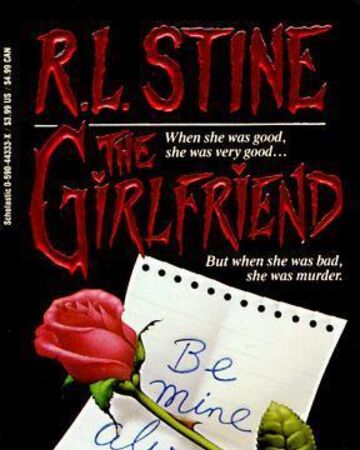
Book Review: The Girlfriend by R.L. Stine


Oh Scotty, baby, baby, baby, you idiot….

That’s what I found myself thinking as I read R.L. Stine’s 1991 YA suspense thriller, The Girlfriend.  Scotty is the book’s main character.  He’s got a great life ahead of him, despite the fact that he’s an idiot.  Scotty has been accepted to Princeton.  He’s the quarterback of high school’s football team.  His family is rich.  He’s dating Lora, the head cheerleader.  He and Lora have just been elected homecoming king and queen.  However, Lora and her family are going on vacation to Paris and that means that she’ll miss the homecoming dance!  Scotty will be a king without a queen!  Scotty is so upset over this that he makes out with Shannon.  Shannon has just moved to town and no one knows anything about her.  Scotty certainly knows little, beyond the fact that she claims to have three overprotective older brothers and that one of them is former wrestler.  Oh, and Shannon’s in love with Scotty.  She likes to call him “baby.”

Now, when I say that she likes to call him “baby,” what I mean is that the word “baby” appears close to a million times in this book.  I didn’t actually sit down and count all of the times that the word appeared, of course, but I am a fairly observant reader and it seems like a million is close to the right number.

Of course, overusing the word “baby” is not the only thing that Shannon does.  Shannon turns out to be a bit unstable and more than a little possessive.  She sets out to make Scotty and Lora’s life as miserable as possible but you know what?  Good for her!  Seriously, Scotty is a jerk and Lora’s incredibly bland for someone who can go to Paris whenever she feels like it.  Shannon provides the book with what life it has.  She’s a jolt of pure energy, forcing all of the dull people around her out of their complacency.  Though it may or may not have been Stine’s intention, it’s impossible to read The Girlfriend without spending the whole time looking forward to what Shannon is going to do next.  Unfortunately, she does kill two pets and, as a result, I can’t really be on Team Shannon but, even after that, she’s still more interesting to read about than either Scotty and Lora.

Anyway, The Girlfriend is an entertaining work of Stine fiction.  Scotty is a uniquely unlikable lead character but Shannon brings a much-needed jolt of life to the proceedings.  It’s too bad that she never returned for a sequel.  Of course, it’s not too late.  Scotty’s probably still working at his Dad’s architectural firm.  Maybe it’s time for Shannon to stop by for a visit.

What do you think about that, baby?
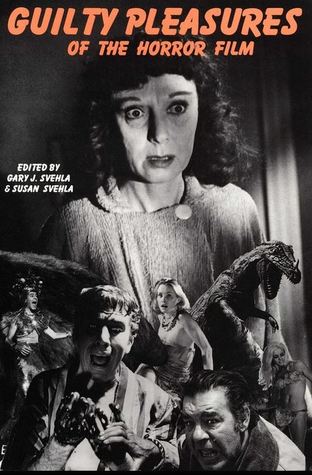
Horror Book Review: Guilty Pleasure of the Horror Film, edited by Gary J. and Susan Svehla


The back cover of this book announces, “THE CHARGE: Bad filmaking!”

It then offers up a list of 12 films (most of which are horror films, though a few are not) that were dismissed by the critics.  The book features 12 essays, each providing a defense of one of the films in question.  Those 12 films are:

  1. Maniac (1934), which is defended by Bret Wood
  2. Sh!  The Octopus (1937), defended by John Soister
  3. Voodoo Man (1944), defended by Gary Don Rhodes
  4. Unknown Island (1948), defended by John Parnum
  5. Scared Stiff (1953), defended by Ted Okunda and James L. Neibaur
  6. Indestructible Man (1956), defended by Don Leifert
  7. Rodan (1957), defended by Don G. Smth
  8. The Tingler (1959), defended by Tom Weaver
  9. The Flesh Eaters (1964), defended by David J. Hogan
  10. When Dinosaurs Ruled The Earth (1970), defended by Mark A. Miller
  11. King Kong (1976), defended by Robert A. Crick
  12. Dune (1984), defended by Susan Svedha

There’s a few things that you’ll notice about this list.  First off, you’ll notice that — as I already pointed out — not all of these films are horror films.  Dune, in particular, is a surreal science fiction epic.  Like all of David Lynch’s films, there are elements of horror but the film itself isn’t actually a part of the genre.  Secondly, I was surprised to discover that Rodan and The Tingler apparently needed to be defended.  Finally, just by looking at the release dates of the film included in the book, you’ll probably be able to guess that Guilty Pleasures of the Horror Film has been around for a while.  The book was first published in 1996.  I picked up my copy at Recycled Books of Denton, Texas, way back in 2006.  And finally, in 2021, I got around to reading the entire thing.  It’s funny how that works out some times.

With all that in mind, though, it’s an enjoyable book and each essayist does a good job of making their case.  (The fact that it took me so long to get around to reading it has everything to do with me having ADHD and nothing to do with the quality of the book itself.  My office is currently full of very good books that I need to get around to reading.  And I will!)  While I think the natural instinct of most readers will be to automatically jump ahead to see what the essayists has to say about David Lynch’s version of Dune (and perhaps the 70s version of King Kong), my favorite essays dealt with Indestructible Man and Flesh Eaters.  While I was already familiar with the surprisingly grim and violent Indestructible Man, reading David J. Hogan’s thoughts on Flesh Eaters inspired me to make a commitment to watch and review the movie sometime this October.  Really, what more can you ask for from a book like this?

Despite the fact that they’re not all horror films and I’ve never really been comfortable with the term “guilty pleasure,” (despite the fact that I’ve used it more than a few times), Guilty Pleasures of the Horror Film is an enjoyable book for those of us who love the genre and who are always willing to defend an unfairly maligned film.

International Horror: The Case of the Bloody Iris (dir by Giuliano Carnimeo)


Luna, a blonde wearing a miniskirt, walks down a city street. She goes to a high-rise apartment building and is buzzed in. She doesn’t live in the building but someone who is expecting her does. She gets on an elevator, one that is full of people. One person in the elevator obviously notices when she enters. Eventually, everyone gets off the elevator, except for Luna and that one person. As the elevator approaches the top floor, Luna is suddenly stabbed to death. The murderer flees. When the elevator reaches the top floor, three residents discover Luna’s dead body….

And none of them seem to care!

Professor Isaacs (George Riguad) stares at the body, unconcerned. Miss Moss (Maria Tedeschi) makes a few judgmental comments about the victim. Mizar (Carla Brait) does, at least, scream when she finds the dead body but, ultimately, she’s more worried about how she’s going to get downstairs so that she can get to her job as a stripper/performance artist in a sleazy club.

Yes, we’ve entered giallo territory! The Italian giallo films are known for their brutal murders, stylish visuals, convoluted plots, and their black-gloved killers. However, what I always find to be most disturbing about them is that it’s rare that anyone really cares about all of the murders or the victims. Instead, giallo films are often full of bystanders who, at the most, get mildly annoyed at the idea of their day being interrupted by someone else’s murder. The typical giallo takes place in a heartless world, one where even the most grotesque scenes are often viewed with a disturbing nonchalance. That’s certainly the case with the opening of the 1972 Italian film, The Case of the Bloody Iris.

The rest of the film centers on Jennifer Langsbury (Edwige Fenech) and Marilyn (Paola Quattrini), two models who have recently been hired to star in a series of print ads for the building. They also live in the building, which would seem convenient if not for the fact that there’s also a killer on the loose who is only targeting young, single women. Even without the murders occurrin around her, Jennifer is struggling a bit getting adjusted to the world. Before becoming a model, she was a member of hippie sex cult and the cult’s leader, Adam (Ben Carra), has a bad habit of randomly showing up and demanding that she return to him. However, Jennifer is far more interested in Andrea Anitnori (giallo mainstay George Hilton), the handsome architect who built the building and who has an obsessive phobia about blood, which is going to be a bit of a problem because a lot of blood is about to be spilt.

Got all that?

The Case of the Bloody Iris is a typical, if entertaining, giallo, which means there’s a lot of sex, a lot of blood, a lot of bizarre suspects, and a few incredibly incompetent police detectives. It’s also pretty damn enjoyable, even if it doesn’t exactly break a lot of new ground as far as the genre is concerned. While director Giuliano Carnimeo never matches the visual heights of an Argento, a Bava, a Martino, or even a Lenzi, he still does a good job keeping the action moving and he shows just enough of a flair for capturing stylistic violence to make his film worthy of the genre. While the mystery itself doesn’t always make a lot of sense (which is actually to be expected when it comes to the giallo genra), The Case of the Bloody Iris features Edwige Fenech and George Hilton, two mainstays of the genre, at their best and (even though dubbed) most charismatic. It’s an enjoyable little thriller, one that’s worth the 90 minutes that it takes to watch it.

Lisa Marie’s Grindhouse Trailers: The First Sunday In October Edition


It’s the holiday season and you know what that means!

Or maybe you don’t.  Sometimes, I forget that not everyone can read my mind.  Anyway, I used to do a weekly post of my favorite grindhouse trailers.  Eventually, it went from being a weekly thing to being an occasional thing, largely due to the fact that there’s only so many trailers available on YouTube.  Now, Lisa Marie’s Favorite Grindhouse and Exploitation Film Trailers is something that I usually only bring out on a holiday.

Like Halloween!

So, with that in mind, here are 6 trailers for the first Sunday of October!  By the way, these trailers might contain some material that some viewers might find objectionable.  To be honest, if you’re reading this site in October, you’re probably used to horrific imagery and there’s nothing here that will really upset you.  But, y’know …. better to pretend to care than to not care at all!

  1. I Dismember Mama (1972)

This is probably one of the best known of the classic grindhouse trailers.  It features very little footage from the film (which, despite the title, is apparently fairly tame) but it does feature interviews with actors playing the people who supposedly watched it.  Interestingly enough, the recent film version of Dear Evan Hansen did the same thing.

2. A Night to Dismember (1984)

Oh, Doris!  This trailer for Doris Wishman’s A Night To Dismember goes on for a bit but that’s kind of the key to it’s charm.

3. Blood Cult (1985)

Blood Cult is often cited as being the first direct-to-video film.  And the film definitely has a home movie feel to it …. as does the trailer!

4. Blood Beach (1981)

If Blood Cult is not your thing, how about Blood Beach?  This film has the grainy aesthetic of the best low-budget grindhouse trailers.

5. Blood Feast (1963)

Since we’ve already got a blood theme going here, this seems like an appropriate place for the trailer for the first gore film, Herschell Gordon Lewis’s Blood Feast!  Have you ever had an Egyptian feast?

6. 2,000 Maniacs (1964)

And finally, let’s wrap up today’s edition with another blood-soaked trailer from Herschell Gordon Lewis. 2,000 Maniacs is Lewis’s take on Brigadoon. Not surprisingly, this trailer features almost as much music as the trailer for Dear Evan Hansen.

Lisa Marie’s Grindhouse Trailers will return next week, with more trailer that may or may not be connected to Dear Evan Hansen!

4 Shots From 4 Catriona MacColl Films


4 (or more) Shots From 4 (or more) Films is just what it says it is, 4 (or more) shots from 4 (or more) of our favorite films. As opposed to the reviews and recaps that we usually post, 4 (or more) Shots From 4 (or more) Films lets the visuals do the talking.

This October, we’re using this feature to highlight some of our favorite actors and directors, all of whom have made invaluable contributions to the horror genre!  Today, we both pay tribute to and wish a happy birthday to the British actress, Catriona MacColl, with….

4 Shots From 4 Catriona MacColl Films

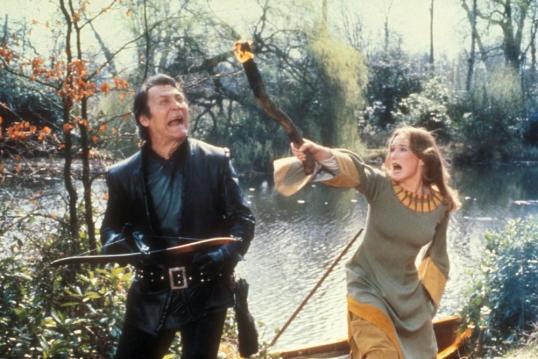
Hawk The Slayer (1980, dir by Terry Marcel, DP: Paul Beeson)

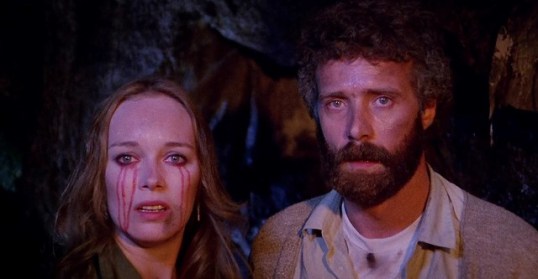
City of the Living Dead (1980, dir by Lucio Fulci, DP: Sergio Salvati)

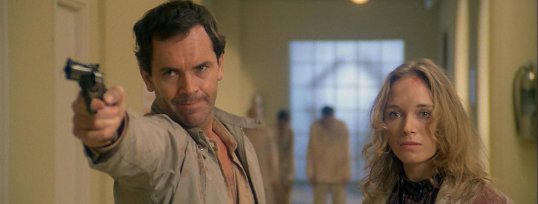
The Beyond (1981, dir by Lucio Fulci, DP: Sergio Salvati)

The House by The Cemetery (1981, dir by Lucio Fulci, DP: Sergio Salvati)


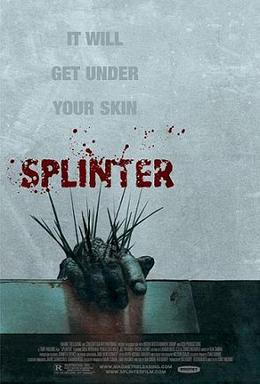
Horror Film Review: Splinter (dir by Toby Wilkins)


Seth (Paulo Costanzo) and Polly (Jill Wagner) thought they were going to enjoy a nice weekend camping in Oklahoma.  Unfortunately, as they drove out to the campsite, two unexpected things occurred.

First off, they got carjacked by Dennis (Shea Whigham) and his drug addict girlfriend, Lacey (Rachel Kerbs).  Dennis was a murderer who had just escaped from prison so, needless to say, he really needed a ride.

Secondly, after getting a flat tire, the foursome pulled their vehicle into a lonely gas station.  At first, it didn’t appear that there were any attendants at the station but that quickly proved to be incorrect.  There was an attendant at the station but, unfortunately, he had been infected by a weird space fungus that transformed him into a homicidal monster.  Soon, Dennis and his hostages are trapped as infected humans and animals laid siege to the station.

That’s the plot of the 2008 film, SplinterSplinter is a good example of a genre of horror film that’s known as the “dumbasses get trapped out in the middle of nowhere” genre.  I’ve actually driven through and occasionally even lived in Oklahoma and Arkansas and, if my memories are correct, there really aren’t as many deserted shacks and gas stations as you might think.  But, in the movies, there’s at least a dozen sitting off the side of every country road.  Inevitably, a character will make the mistake of going into that deserted building and suddenly it’s zombie apocalypse time!  Or, if the zombies are busy, aliens might land.  Or some hulking dude wearing a burlap sack and carrying an axe might show up.

It’s a popular genre, mostly because it exploits a very real fear.  Anytime you enter a previously unknown location, especially if you’re alone and it’s the middle of the night, you’re aware that anything could happen.  It’s probable that you’ll just run into someone working the night shift and he’ll make some awkward joke while you’re getting a coke out of the cooler.  But it’s also possible that you might walk in on a robbery or a murder or a zombie outbreak or an alien invasion or Kirk Cameron might be there, forcing everyone to watch Saving Christmas.  I mean, these things could happen!  And then, what can you do?  You’re stuck there, in an unfamiliar place.  The only thing you know is that something nearby is plotting to attack you.  That’s not something that we like to think about but the risk is always there.  (For the record, I don’t believe in zombies, aliens, or Kirk Cameron but still….)

Splinter does a pretty good job tapping into those very real fears.  Yes, the monsters and the deaths are memorably grotesque and there’s a lot of gore (for those of you who are into that) but the film is most effective when it concentrates on the claustrophobic atmosphere of that isolated gas station.  From the start, the film creates a feeling of unease and, once the main characters find themselves trapped in that gas station, there’s not a slow spot to be found.  Once a person or an animal is infected by the fungus, it becomes relentless in its efforts to destroy.  Finally, the film is dominated by the great Shea Whigham, who gives a ferocious but charismatic performance as Dennis.  Surely, I’m not the only viewer who watched this movie and thought Polly should dump Seth for the convict, am I?

Splinter is a good film for Halloween.  Clocking in at 82 minutes, it won’t leave you bored and it will definitely stick in your mind anytime you stop by a gas station late at night.

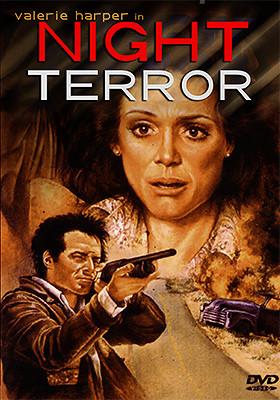
Horror On The Lens: Night Terror (dir by E.W. Swackhamer)


Today’s horror on the lens is a surprisingly violent and grim made-for-TV movie from 1977, Night Terror! 

In Night Terror, Valerie Harper plays a woman trying to drive to Denver, overnight.  Unfortunately, she catches the attention of The Killer (played by Richard Romanus), a mute psychopath who spends his time driving up and down the highway, killing random people.  This is a pretty well-done and suspenseful made-for-television movie, featuring good performances from both Harper and Romanus.  I wrote a more in-depth review of the film back in May so give it a read after you watch the movie.

(Or before you watch the movie.  I’m not going to tell you how to do things.)

Drive carefully!


Artwork of the Day: The Oracle (Artist Unknown)


Artist Unknown

This is from 1985 and I guess the lesson of this film is don’t play with cards that have “SATAN” written across the front of them.  This poster actually looks like it could just as easily be the cover of a R.L. Stine or a Christopher Pike novel.  Unfortunately, the identity of the artist responsible is unknown.

Horror on TV: Friday the 13th: The Series 1.3 “Cupid’s Quiver” (dir by Atom Egoyan)


On tonight’s episode of Friday the 13th: The Series, a cursed cupid statue is causing trouble!

Now, I’ll just be honest here.   The idea behind the cupid statue is not a bad one.  The statue causes people to fall in love with the owner of the statue, with the unfortunate twist being that the owner is then required to kill them.  However, the sight of incel Eddie Munroe (Denis Forest) carrying around that statue is often unintentionally funny.

That said, even if this isn’t necessarily the strongest episode of the series, I wanted to share it because it was directed by future Oscar nominee, Atom Egoyan.  Friday the 13th: The Series was filmed in Canada and this was an early credit for Egoyan.  Later, Egoyan would go on to direct films like The Sweet Hereafter, Exotica, and Where The Truth Lies, making him one of the most important Canadian filmmakers not named Cronenberg, Villeneuve, or Arcand.

This episode, the third of the series, originally aired on October 17th, 1987.

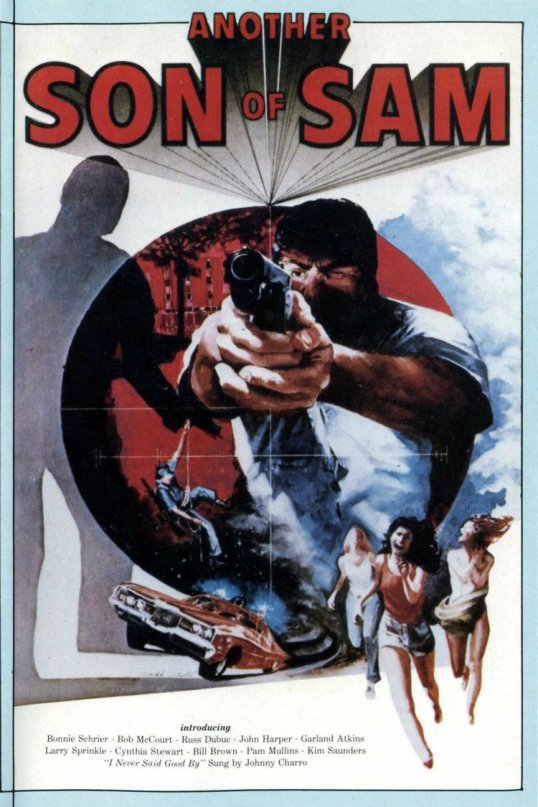
The TSL’s Grindhouse: Another Son of Sam (dir by Dave A. Adams)


Well, his friends call him Another Son of Sam

But his real name is Mister Earl….

Actually, his real name is Harvey.  Let’s make that clear right now.  Despite it’s title, Another Son of Sam has next to nothing to do with the Son of Sam.  Instead, this zero-budget, North Carolina-shot exploitation film is about a mental patient named Harvey who, having been traumatized by his mother, escapes from the hospital and goes on a rampage at a nearby college.  This film was first shot in 1975, under the name Hostages.  However, it couldn’t actually secure a release until 1977, when it was retitled Another Son of Sam.  

Another Son of Sam is difficult to summarize, not because it’s particularly complex but, instead, because close to nothing actually happens.  Even though it’s only 70 minutes long, there’s really only enough plot for about five minutes.  However, because I do like to maintain a certain minimum word count when it comes to my reviews, I guess I better find something to say about this film.

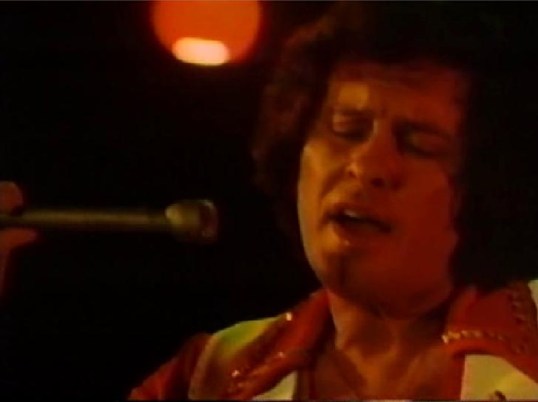
It opens with a lengthy sequence of police Lt. Setzer (Russ Dubuc) enjoying a weekend at the lake.  The lake is never really mentioned again but some of the shots of the boat skimming the water are so nicely done that you can’t help but think that the film should have dropped the whole escaped killer thing and instead just focused on Setzer’s weekend.  After leaving the lake, Lt. Setzer goes to a bar and enjoys a performance from singer Johnny Charro!  Charro, who was and is something of a local celebrity in Charlotte, North Carolina, is credited as playing himself.  He sings an endless song, one that is repeated several time throughout the film.  Whenever anyone turns on a radio, there’s Johnny Charro!

Meanwhile, crazy old Harvey kills an orderly, escapes from a mental hospital, and hides out on a college campus.  Luckily, Lt. Setzer just happens to be investigating an unrelated case at the college!  Once Setzer realizes that there’s a killer on campus, he calls out the SWAT team!  The SWAT team searches for Harvey but, because they all kind of suck at their job, Harvey kills a few of them.

And that’s pretty much the entire film.

Now, there’s a lot of negative things you can say about Another Son of Sam.  None of the characters are memorable.  The acting is risible.  The pace is so slow that 70 minutes feels more like 70 hours.  However, I would like to take a moment to focus on two things that work surprisingly well.

First off, director Dave Adams (who was apparently a stuntman making his directorial debut) purposefully avoids showing us Harvey’s face.  Instead, we see his hands when he’s committing a murder and his eyes when he’s watching a potential victim.  The many shots of Harvey’s eyes, glaring out from the darkness, are actually effectively creepy.  By not showing us his face, Adams allows Harvey to remain an unknowable force of evil.  This is not one of those films where the audience is meant to sympathize or identify with the killer and I appreciated that.

Secondly, the film does this weird thing where the scene will suddenly freeze but we’ll still hear the sounds of people talking or walking down a hallway or listening to Johnny Charro or whatever else they were doing before the scene froze.  Apparently, this is because Adam shot the film using short ends and, as a result, the camera would often run out of film in the middle of a scene.  However, even if it wasn’t deliberate on the part of the director, the freeze frames actually do improve the film.  Along with creating a properly surreal viewing experience, they also remind us of just how unpredictable life can be and how quickly it can end.  One minute, you’re taking a shower or you’re talking about your plans for Spring Break.  The next minute, you’re frozen in place as all of your plans come to a perhaps permanent halt.  The freeze frames may have been the result of incompetence but they still work.

And it’s good that something works in Another Son of Sam because this is an otherwise unfortunate film.  I say that as someone who actually has a weakness for grainy, low-budget, amateur movies.  I liked the lake, the freeze frames, the eyes, and Johnny Charro.  But once the film hit 30 minutes, my mind was wandering.

One interesting note: the film opens with a list of mass murders, starting with Jack the Ripper and ending with David Berkowitz.  It makes the point that most of the killers were never caught and, even if they were, their motivations were never understood.  One of the killers they mention as having never been caught is “Seattle Ted.”  This, of course, was a reference to Ted Bundy, who would be captured two years after the release of Another Son of Sam.

Ladies and gentleman …. JOHNNY CHARRO!