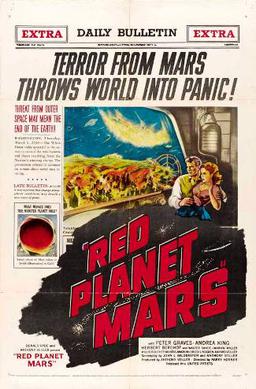
 Chris Cornyn (Peter Graves) and his wife, Linda (Andrea King) are two scientists who have spent the years since World War II listening to transmissions from Mars. The technology that they use was developed by a scientist who may have been a Nazi but the Cornyns feels that the greater good of learning about Mars outweighs the problematic background of their equipment.
One day, the transmitters pick up a message from Mars, announcing that Mars is a Socialist paradise where there is no fear of nuclear war. The Soviets are gleeful because they think the Martian messages will lead to the collapse of NATO. But then the Martians start sending out religious messages, which lead to riots in the USSR and Eastern Europe.
Are the Martians really contacting Earth? Is God really transmitting a message from Mars? Or is a more sinister figure responsible?
Red Planet Mars is one of those films that only could have been made at the height of the Cold War. Despite the title, the film is decidedly Earth-bound and full of stock footage of the nations of the world reacting to the Martians. The main theme is that, Martians or not, nothing is more important than protecting the American way of life. even if that means sacrificing your own life and misleading the world. Even if it is now impossible to listen to his dialogue without thinking about the “Do you like movies about gladiators?” conversations from Airplane!, Peter Graves was the perfect, no-nonsense messenger. An artifact of a different time, the movie’s greatest strength is that it takes its ridiculous story seriously and even today, it leaves you wonder how we would react to messages from Mars. Hopefully, we would today be more skeptical. People in 1953 would believe anything.

 Through the Shattered Lens