Late Night Retro Television Review: Pacific Blue 2.2 “Daystalker”


Welcome to Late Night Retro Television Reviews, a feature where we review some of our favorite and least favorite shows of the past! On Tuesdays, I will be reviewing Pacific Blue, a cop show that aired from 1996 to 2000 on the USA Network!  It’s currently streaming everywhere, though I’m watching it on Tubi.
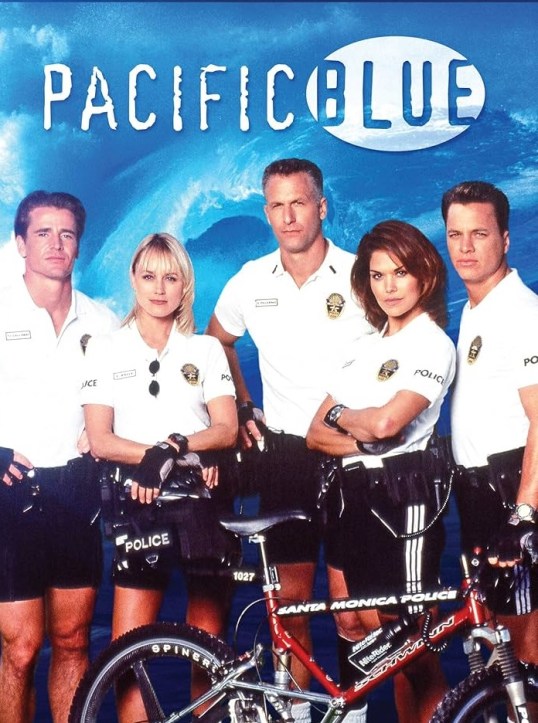
This week, the Daystalker stalks wherever it is that this show takes place.

Episode 2.2 “Daystalker”

(Dir by Don Michael Paul, originally aired on August 24th, 1996)

After his girlfriend Sandy (Cindy Ambuehl) is assaulted by a serial rapist, TC becomes obsessed with tracking the so-called Daystalker down.  Detective Bonnie Wilson (Gwen McGee), sent to the beach to head up the investigation, thinks that the Daystalker is going to eventually move on from rape to murder.  She also thinks that TC is a loose cannon who is going to spook the Daystalker into moving to another city before he can be captured and prosecuted for his crimes.  Cory is set up as a decoy and soon finds herself being followed by the Daystalker.  Meanwhile, the terribly traumatized Sandy struggles with PTSD.

And, while that’s going on, Elvis and Victor try to get a Rastafarian to take a hex off of them!

This episode epitomizes one of the things that really bugs me out Pacific Blue.  On the one hand, we have a very serious storyline about a serial rapist and one of his traumatized victims.  A scene where Sandy has to leave a self-defense class because it’s triggers a flashback is a powerful and honest moment, certainly more powerful than anything you would expect to see on a show like Pacific Blue.  On the other hand, we have this totally cartoonish subplot about a random Rastafarian putting a hex on Elvis and Victor.  At a time when the entire bike patrol is supposed to be out looking for a serial rapist who has assaulted their best friend’s girlfriend, Victor and Chris are laughing because Elvis thinks the hex is making his hair fall out.  Never mind the stupidity of the hex plot.  Tonally, the two plots don’t go together.  With this episode, Pacific Blue reveals that it still doesn’t know if it wants to be a gritty crime drama or just Baywatch on bicycles.

This could have been a very strong episodes.  There were moments and lines of dialogue that really stood out for being considerably more thoughtful than one might expect from this show.  But it was still an episode of Pacific Blue, which means that the camera still lingered on random women in bikinis and way too much time was spent on TC saying, “I have to do something!”  Only TC could make his girlfriend’s rape about himself and only Pacific Blue would let him get away with that.

Even when they’re dealing with a serious issue as they did for half of this episode, it’s hard to escape the fact that these people are bicycle cops.  The bicycles, the crisp white shirts, the shorts …. it just makes it hard to them seriously.  This was yet another episode where a lot of time was spent with Palermo and TC explaining that bike cops are real cops.  We’re at the start of the second season here.  If you’re still having to justify your existence at this point, you’re never going to do it.
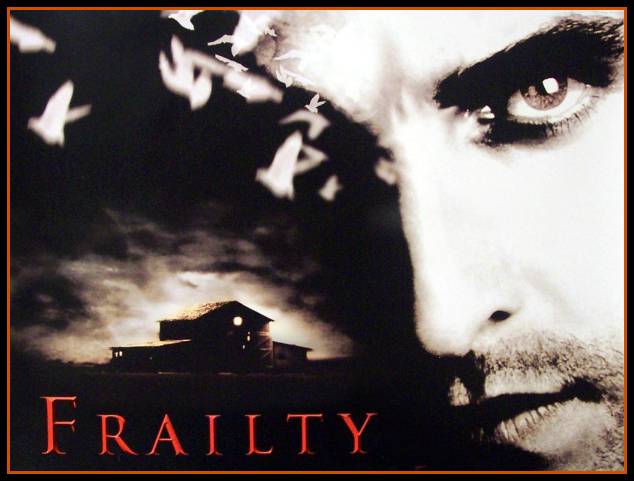
Quickie Horror Review: Frailty (dir. by Bill Paxton)


Every year there are always films of every genre and stripe which fly under the radar of most film-goers. Every film fan knows of several such films and always like to believe they were one of the few who actually saw it in the theaters when it came and went. In 2002, one such film was the psychological thriller/horror film Frailty by veteran actor Bill Paxton. This was to be his directorial debut on a feature-length film and for a first time it was a home run right from the start.

Frailty was done mostly through flashbacks as told to an FBI special agent by a man (Matthew McConaughey) and how this man knows the true identity of a particular serial killer around the Texas region who has dubbed himself the “God’s Hand”. It’s through this man’s retelling of the origins of the “God’s Hand” that we see the lives of a father raising two young boys as best he can until a sudden “vision” of divine nature changes their lives forever. The father begins to believe that he has been given a divine purpose to find and destroy demons who have taken on human form. To do this deed he has an axe he’s dubbed “Otis” to assist him. The reaction of the two young boys differ as their father goes about his new work. The older brother in Fenton Meiks believes what his father is doing to be illegal and makes him a murderer. On the other hand, the younger brother in Adam Meiks has taken on seeing their father as the hero that he sees him and supporting him in his new endeavor.

The film doesn’t inundate the viewer with much gore and violence. This is not say that the film lacked for killings. The father finds and “destroys” the demons given to him on what he calls “God’s list”, but the film doesn’t linger on these scenes of violence. It instead focuses on the reactions of the father’s two sons and the growing rift which gradually begins to grow between the three. It would be this rift which plants the seed of who would ultimately become the “God’s Hand” killer.

The film also manages to turn the theme of a father’s love for his sons and vice versa become a taut and disturbing study on the concept of faith. The film also does a great way of twisting the story in a way that we never know who the “God’s Hand” killer was until very close to the end despite everything being told by the man to the FBI pointing to specific individual. This was one of the few films which used the twist to the narrative properly and not as a crutch to make the film better than the source.

It’s this source, the screenplay in other words, which makes Frailty such an under-appreciated and great film. There’s rarely any instances where the story takes on leaps of logic that would break the audience from the world they’ve become invested in. In fact, I would say that the film was quite traditional in how it handled the story and characters. There’s wasn’t any special character and narrative quirks to make them stand out from the rest of the other roles. It’s from the performances by all involved, especially the very convincing ones from the two young actors playing the young Fenton (Matt O’Leary) and young Adam (Jeremy Sumpter), that sells the film. Matthew McConaughey as the man telling the story of the Meiks does a great job in a role that others might have gone overboard with. His restrained performance in concert with the young actors in the film would be another reason why Frailty became such a great film.

Performances, as great as they were in this film, required for a filmmaker to have a deft handle on his cast and the screenplay. This film was lucky enough to have a first-time filmmaker in Bill Paxton who played to the strength of the screenplay and trust in his actors. He didn’t try to be too cute or direct like someone with something to prove. I know that saying one directed a film with efficiency would be seen as a negative. In this instance I’d say that Paxton’s efficient direction helped the film stay focused on the story and the characters instead of trying to be flashy.

Frailty was, and still is, a film that seems to fly under most people’s radars, but it’s also a film that has gained quite a loyal following since it’s initial 2002 release. It’s a rare film that has continued to live up to it’s growing cult status not because of what people might have heard of it, but because it’s a rare film that stand on it’s quality. A film which, from top to bottom, made for a smart thriller with some horror aspects through in that didn’t try to fool it’s audience (even the twist in the story was a true genuine surprise instead of a story cop-out). If there ever was a film that needed to be seen by more people it’s definitely Frailty.