October True Crime: Murder in Coweta County (dir by Gary Nelson)


In 1948, one of the richest men in Georgia committed a murder.

John Wallace was a landowner, back when that title actually meant something.  He was known as the boss of Meriweather County.  Everyone in the county seemed to work for Wallace in one way or another.  He controlled the county officials.  The sheriff enforced the law only as far as John Wallace would allow him.  The bootleggers had to pay Wallace for protection.  When one bootlegger, a sharecropper named Wilson Turner, failed to do so, he was fired and kicked off of Wallace’s land.

Turner retaliated by stealing two of Wallace’s cows.

Wallace responded by murdering Turner.

Because Turner attempted to flee and Wallace chased after him, Wallace committed the murder not in Meriweather County but in neighboring Coweta County.  What Wallace didn’t realize was that this meant the investigation didn’t fall under the jurisdiction of his hand-picked sheriff.  Instead, Sheriff Lamar Potts of Coweta County headed up the investigation.  John Wallace was eventually arrested by Sheriff Potts and he was eventually convicted of murdering Wilson Turner.  At the time, the case drew a lot of attention both because of Wallace’s wealth but also because two of the main witnesses for the prosecution were the two black men who Wallace forced to help him dispose of Wallace’s body.

It’s an interesting story, largely because the history of America is full of men like John Wallace, people who set up their own little dictatorships.  It’s often portrayed as being a Southern phenomena but John Wallace really wasn’t that much different from the crude political bosses who, for decades, dominated politics in city like New York and Chicago, the type who held onto power through a combination of intimidation and patronage.  In my home state of Texas, George Berham Parr inherited the political machine that controlled Duval and Jim Wells County.  Parr committed numerous crimes during his time as the “Duke of Duval” but he had important friends.  He was the one who “found” the votes necessary for Lyndon Johnson to win a senate seat in 1948.  (In return, Johnson got Harry Truman to pardon Parr for failing to pay his taxes.)  Parr is also suspected of having been involved in at least one murder but it wasn’t until LBJ himself retired from politics that anyone truly investigated Parr’s activities.  In 1974, he was again convicted of failing to pay his taxes and Parr was later found dead at his ranch.  Suicide was the official police ruling.

As for the story of John Wallace, it was turned into a made-for-TV movie in 1983.  Murder in Coweta County stars Andy Griffith as John Wallace and Johnny Cash as Sheriff Potts.  Griffith, playing a soulless villain, is chilling as John Wallace.  Wallace is all-smiles and good ol’ boy charisma whenever there’s a crowd around but, once it’s just him and his cronies, a different side comes out.  Wallace thinks that he can get away with murder because he’s been able to get away with everything else.  Sheriff Potts is determined to see that justice is done.  Murder in Coweta County is an atmospheric Southern crime story, one that is so full of atmosphere that you can feel the humidity.  While Johnny Cash was definitely a better singer than an actor, Andy Griffith’s villainous turn makes the film worth watching.

Revolver (1992, directed by Gary Nelson)


In Revolver, Robert Urich plays an FBI agent who, for some reason, is not named Johnny Revolver.  Instead, his name is Nick Suster.  When a drug bust goes wrong and Nick accidentally shoots an innocent bystander in the head, he retires from the FBI and announces that his days of carrying a gun are over.  But then he’s approached by his former boss and asked to take one last special assignment.

Nick goes undercover, offering his services as a bodyguard to the head of Spanish Mafia, Aldo Testi (David Ryall).  Testi agrees to hire Nick and, to celebrate their new arrangement, they go to a strip club where the dancers dress like cowgirls and all the patrons are given small cap guns that they can fire at the stage.  (How could that possibly go wrong?)  Of course, one man has a real gun and uses it to shoot Nick.  The gunman tells Aldo that he’ll be next and then runs off.  Then Aldo runs off, leaving Nick to possibly die.  Eventually, someone calls 9-1-1 and Nick goes to the hospital.

Nick survives being shot but now he’s in a wheelchair.  After spending a month or two feeling bitter, Nick plays one game of wheelchair basketball and decides that it’s time to get on with his life.  Defying the orders of his superiors, Nick flies to Barcelona and tries to learn why he was shot and who was responsible.  After recruiting a broke college student (Jordi Molla) to serve as his legman, Nick sets out to get revenge.

It’s not a bad premise and the film benefits from being filmed on location in Barcelona, which is one of Spain’s more photogenic cities.  Unfortunately, Revolver is a good idea searching for and failing to find a compelling story.  It doesn’t take long for Nick to become not only comfortable with his wheelchair but also combat proficient with it as well.  It also defies credibility that Testi would not be suspicious of Nick still wanting to work for him even after Testi previously left him for dead.  Even when it’s revealed that Testi is dealing in something far more powerful and dangerous than just drugs, the revelation doesn’t carry any weight.  The low budget of this made for television production is obvious when one major cliffhanger is resolved off-screen and dismissed with just two lines of dialogue.

At the time of his death in 2002, Robert Urich held the record for having starred in the most primetime network television shows.  He starred in 15 shows.  Since Revolver was obviously meant to be a pilot, he could have starred in 16 if it had been better received.  In the role of Nick, Urich gives a typically workmanlike performance.  He’s credible but a little boring.  The movie does not help him by having him adopt the phrase “Wherever you go, there you are,” as a philosophy.  Urich gives a sincere reading of the line but it’s impossible to hear it without thinking of Gary Cole in The Brady Bunch Movie.

Revolver would not lead to a series.  Robert Urich would have to wait another four years before he starred in his 13th series, UPN’s Lazarus Man.

Allan Quatermain and The Lost City Of Gold (1987, directed by Gary Nelson)


Having previously discovered and escaped King Solomon’s mines, Allan Quatermain (Richard Chamberlain) and Jesse Huston (Sharon Stone) are now living in a domestic bliss in Africa.  They’re planning on eventually returning to America so that they can get married but it turns out that Allan has one more quest that he has to complete before he can truly settle down.

When Allan receives information that his long last brother is not only still alive but has also discovered a fabled Lost City of Gold, Allan sets out to discover the city for himself.  Traveling with Jesse and an old friend named Umslopogaas (James Earl Jones!), Allan makes his way across the Sahara, survives a battle with a group of native, and manages to find both the city and his brother!

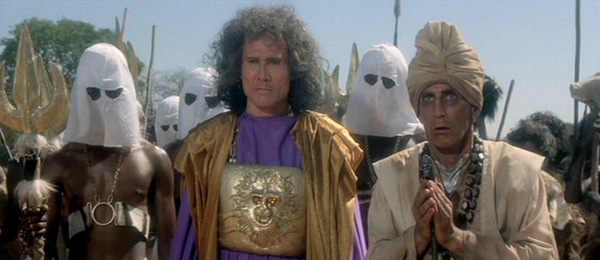
However, all is not well in the City of Gold.  Queen Nyelptha (Aileen Marson) is on the verge of going to war with Queen Sorais (Cassandra Peterson, a.k.a Elvira, Mistress of the Dark!!).  Manipulating both of the queens is the evil high priest, Agon (Henry Silva!!!!).  To save the City of Gold and his future marriage, Allan will first have to figure out a way to defeat Agon.

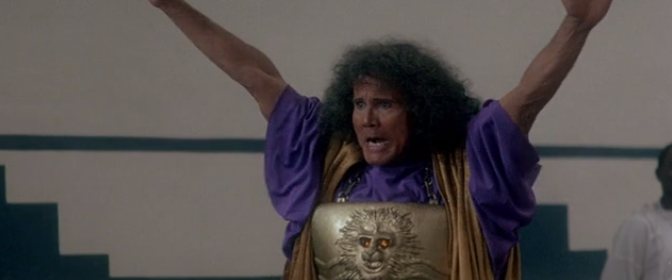
Allan Quatermain and the Lost City Of Gold was filmed back-to-back with King Solomon’s Mines.  The two films were released within a year of each other and, while King Solomon’s Mines was a minor box office success, Allan Quatermain and the Lost City of Gold was not.  I wasn’t expecting much when I watched the film but, believe it or not, Allan Quatermain and the Lost City of Gold is not that bad.  It’s a definite improvement on King Solomon’s Mines.  Richard Chamberlain is more believable as Quatermain in the sequel and he and Sharon Stone share the minimum amount of chemistry to be somewhat believable as a couple in love.  If that sounds like I’m damning with faint praise, it’s still an improvement over King Solomon’s Mines, where the two of them often seemed as if they couldn’t stand to be anywhere near each other.  Best of all, Allan Quatermain and the Lost City of Gold has Henry Silva in a ridiculous costume and that automatically makes the film worth watching.

Henry Silva, everyone.

Like King Solomon’s Mines, Allan Quatermain and The Lost City of Gold adds a large dose of intentional humor to its adventure story.  Fortunately, the comedy here is better executed than in the previous film.  There’s less mugging on Chamberlain’s part and some of the dialogue is genuinely amusing.

Of course, Allan Quatermain and The Lost City of Gold is not without its flaws.  This is a low-budget Cannon film that often tries too hard to duplicate the success of the Indiana Jones films without ever showing much understanding of what made those films successful in the first place.  Allan Quatermain and the Lost City of Gold can’t hold a candle to the classic adventure films of the past.  But, for a low-budget Cannon film starring Richard Chamberlain as a rugged, jungle explorer, it’s actually a lot of fun.

Plus, did I mention Henry Silva?

Murder Me, Murder You (1983, directed by Gary Nelson)


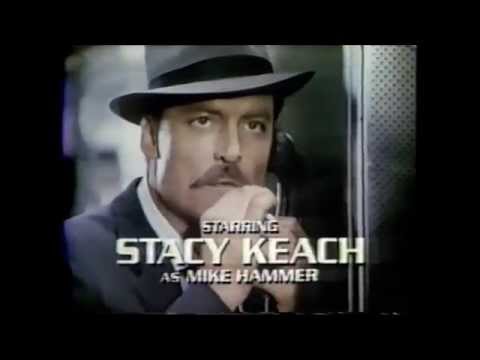
When two employees of an all-female courier service are murdered, Private Investigator Mike Hammer (Stacy Keach) is on the case.  The service was owned by his ex-girlfriend, Chris (Michelle Phillips), and she wants him to protect her while she testifies in front of a grand jury.  It turns out that her courier service has gotten involved in some shady business, transporting deliveries between a helicopter company and a South American dictator.  Chris fears that she’ll be murdered to keep her from testifying.  Hammer agrees to protect her and she tells him that he has a 19 year-old daughter who he’s never met.

While Chris is testifying, she suddenly dies on the stand.  The doctors say that it was a heart attack but Hammer knows that it was murder.  Hammer sets out to not only get revenge for Chris but also to find his daughter, who has disappeared into the world of underground pornography.  It’s all connected though, as is traditional with Mike Hammer, it can sometimes be difficult to keep up with how.

Murder Me, Murder You was a pilot film for a brief-lived but fondly-remembered Mike Hammer TV series that aired in the 80s.  Murder Me, Murder You takes Mickey Spillane’s famous detective into what was then the modern age but it allows him to remain a man of the hard-boiled noir era.  Hammer’s narration is tougher than leather, he’s more interested in listening to swing music than new wave, and he still dresses like an old-fashioned private eye, complete with a fedora on his head.  As played by Stacy Keach, he’s also just as dangerous and quick to kill as Hammer was in Spillane’s original novels.  In the novels, Hammer was an unapologetic brute who often bragged about how much he enjoyed killing criminals and communist spies and whose closest associate was his gun, which he nicknamed Betsy.  When Spillane’s novels were filmed, the violence of Hammer’s character was often downplayed.  (A notable exception was Robert Aldrich’s Kiss Me Deadly, which suggested that Hammer was such a fascist that he would eventually be responsible for the end of the world.  The Mike Hammer of Spillane’s novels would probably dismiss Kiss Me Deadly as being red propaganda and set out to deliver American justice to the Hollywood communists who wrote it.)  In Murder Me, Murder You, Mike Hammer is just as brutal an avenger as Spillane originally imagined him to be.  With his hulking frame, grim eyes, and his surly manner, Stacy Keach is the perfect Mike Hammer.

Murder Me, Murder You is a convoluted and often difficult-to-follow murder mystery but with Keach’s bravura lead performance, a strong supporting cast (including notable tough guys Tom Atkins and Jonathan Banks) and good direction from TV movie vet Gary Nelson, this movie comes about as close as any to capturing the feel of Mickey Spillane’s original novels.  Murder Me, Murder You was released on DVD fourteen years ago.  Though it is now out-of-print, copies are still available on Amazon.

The Baron and the Kid (1984, directed by Gary Nelson)


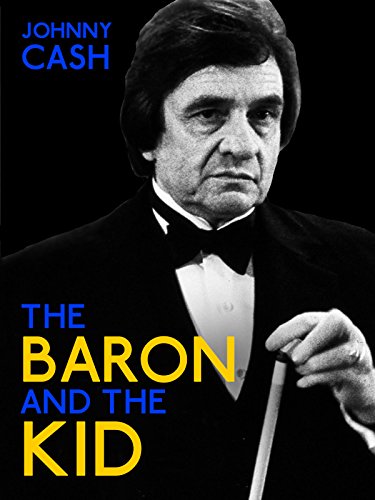
Ever wonder what The Color of Money would have been like if it starred Johnny Cash and featured less Eric Clapton but more country and western on the soundtrack?  The Baron and the Kid is here to satisfy your curiosity.

Johnny Cash is Will Addington, better known as The Baron.  Back in the day, The Baron was the meanest and the most ruthless pool hustler around.  He’d cheat people out of their money without even giving it a second thought.  He drank.  He doped.  He womanized.  He abused his wife, Dee Dee (June Carter Cash).  After the Baron became the 9-ball world champion, Dee Dee left him and the Baron changed his ways.  Now, years later, he only plays exhibition games for charity and the strongest thing that he drinks is grapefruit juice.

When a young hustler who calls himself the Cajun Kid (Greg Webb) challenges the Baron to a game, the Baron wins easily but he still recognizes that the Kid has a natural talent.  When the Cajun Kid attempts to put up his mother’s wedding ring as stakes for another game, the Baron recognizes the ring as the one that Dee Dee used to wear on her finger.  After talking to Dee Dee, the Baron discovers that the Kid is actually his son.

The Baron takes the Kid under his wing, hoping to train him to become a champion while, at the same time, getting to know his son.  The Kid proves to be a difficult student.  He’s cocky and, like the Baron did in his youth, he has a temper.  He also has a manager, a good-for-nothing con artist named Jack Steamer (Darren McGavin).  Steamer doesn’t want to lose the money that the Kid brings in and he plots to to keep him away from his father.  The Baron, though, is determined to prevent the Kid from making the same mistakes that he made.  However, when the Baron and the Kid both find themselves competing in the same championship, the Baron finds himself being tempted by his old demons.

The Baron and the Kid is okay for a made-for-tv movie.  It’s predictable but Johnny Cash has such a formidable screen presence that it doesn’t matter that he was sometimes a stiff actor.  The Baron’s past of booze and drugs mirrors Cash’s own past and when Cash, as the Baron, talks about how he’s trying to keep the Kid from making the sames mistakes, there’s little doubt that he knows what he’s talking about.  Some of the pool sequences are creatively shot and Richard Roundtree has a great cameo as a cocaine dealer named Frosty.  There’s nothing surprising about The Baron and the Kid but fans of Cash and the game of pool should enjoy it.