Call of Duty: Modern Warfare 3


So. At long last, here it is. The latest installment from the shell that remains of Infinity Ward, bringing back those endlessly popular features like sniper rifles, killstreaks that build on one another, and host migration that keeps the multiplayer modes playable!

The first reaction I’ve heard from people on the fence about this game (and, let’s be honest, there aren’t that many) is that they don’t want to pay the Madden Tax to play yet another Call of Duty that, much like any sports game, just isn’t that different from year to year. If you’re of that mindset, you’ve likely already made up your mind about this title. This review probably isn’t going to change your mind either way about this title, so I’m going to try and keep the review brief and focused upon specific observations I have about this game, the ground it breaks (or doesn’t break, as the case may be), etc.

Before I do some quick hits on the game though, it’s worth visiting the game’s new mode. The outstanding mode in Modern Warfare 3 is Survival Mode, which is an offshoot of the single/multi player Covert Ops mode from Modern Warfare 2. Like that title, Modern Warfare 3 includes a panel of special missions (based on levels that appear in the single player, of course) that you can run through that pose unique challenges. New this incarnation, however, is a wave-based horde mode that is very much in the vein of (nearly) identical modes in the last couple of Halo or Gears of War games. If you found those modes satisfying in Halo or Gears (or another title I’ve forgotten. Please forgive me?) you’ll like Modern Warfare 3’s take on it as well. The only possible downside is that, like the true PvP mode, Modern Warfare 3’s survival demands that its players level up to unlock certain equipment pieces. The problem is that the equipment curve in Survival begins with an even more boring selection of equipment. It’s worth noting that the level curve is so much lower that you should earn the equipment you really want in no-time flat, if you’re dedicated to doing so.

So, assuming you’re one of three human beings sitting on the fence today… you’re asking the question, do I want to buy this game? (Or, perhaps more probably, is this game right for X gift recipient?)

FULL DISCLOSURE: I pre-ordered and received the ‘Hardened’ Edition of Modern Warfare 3. I’ll try not to harp on pre-order features, but I’m not going to guarantee I’ve got it right. In addition, I am playing this title on the XBox 360. Addressing technical aspects of the game is pertinent only to the XBox 360 game system.

The Good!
– Multiplayer mode features more guns than ever. Not all of them seem powerful, but none of them seem un-useable (with the possible exception of the handguns, which I don’t deal in).
– Story isn’t bad, actually. It’s well-conceived, and fun to play. The variety in the level design is a nice change!
– Multiplayer mode rewards you for past service by giving you a head start if you’re achieved prestige mode in a previous title (going back to CoD 4!)
– The Prestige Mode now has its own shop that gives you a choice of rewards. Prestiging players can now keep a piece of equipment (such as a favourite gun) through the Prestige Mode. Players are, of course, free to go with more traditional benefits such as adding a custom class or gaining a bonus title and emblem set. The player is able to choose between options at each Prestige level.
– Netcode is very passable. The game will hand off host in extreme circumstances in order to improve gameplay (this was the single biggest downfall of Call of Duty: Black Ops, and no, it’s not close)
– The gun customization in this game is awesome. Adding the customize menu (including such benefits as reducing gun kick, or equipping two attachments) on top of the attachments available really makes you feel like you can get the gun you want to play with.
– New Strike Package system in multiplayer is endless fun.

The Un-Good

– Frankly, it’s Call of Duty. There’s no real innovation here, just a lot of touch-ups. It’s up to you to decide if that’s worth it!
– This game pushes the hardware limits of the console hard, and fast. I’ve noticed some weird system lag issues as a result of this, and the game frankly just doesn’t run as crisply as earlier entries (particularly, CoD 4).
– Story contains a horrifying twist… although, this can be disabled in the game options, much like the level ‘No Russian’ in Modern Warfare 2.
– Weapon balance is – as ever – questionable. Why bother including some weapons that feel utterly useless at higher difficulty levels and in multiplayer arenas? It’s worth noting that all weapons have some (read: dramatically more) use in the single player modes as opposed to the multiplayer environment, but it still feels like some weapons are universally strong, useful, and sustainable… and most others just simply aren’t. Given how many incarnations of Call of Duty we’ve suffered through now, this is the sort of thing that should have started to be fixed.
– Online players are as annoying as ever. Need proof? Take a look back at this review. I’ll see you on XBox Live. 🙂

Bastion!


A short while back, I got a message from a friend of mine. He urged me to download a game available on the XBox Live Arcade called Bastion. Actually, it was more like he demanded. Well, I acquiesced. And I could not possibly be more pleased that I did. Bastion is going to cost interested parties $14.99 (US currency) and is available for the XBox 360 and for PC gamers as well via the Steam network. I have heard no word about it being available (now or in the future) on the Playstation Network.

So what is Bastion?

Well, it’s an action RPG in the tradition of games such as Diablo. You control a character who is known only as the Kid, who makes his way through a city and world that have been ruined by an apocalyptic event referred to as the Calamity. The Calamity not only destroyed the magnificent city of Caelondia – where the Kid hails from – but also seemingly everything nearby, including the home of the Ura… a superstitious warrior tribe who had often been at odds with the Caelondians. Unfortunately for the Kid, he has no idea how this transpired, or what to do in a world where everything has been smashed to bits. Helping him on his way is a low-voiced narrator who guides the Kid – and, by extension, the player – through the game’s action. The story is told (almost) entirely through the narrator’s quips, which come one line at a time. Rather than having to read through large blocks of text, we instead are treated to a consistent flow of short quips from the narrator. He remarks on almost literally everything… from the progress of the story, to the different perks the Kid equips as he levels up, to the Kid’s choice in weapons… and, of course, on every piece of junk that the Kid finds lying around the burnt-out wreckage of their former home.

As a result of this narration, I would say the story of Bastion is considerably richer than that of many other action-style RPGs – Diablo springs prominently to mind. However, the story is also fairly simple, despite a couple of twists, and there is a dearth of developed characters. It doesn’t play with the same richness as some of the all-time greats in the genre (like some of the Legend of Zelda games). I should, however, note that the casting of newcomer Logan Cunningham as the voice of the narrator does a lot to give this game a style all of its own. Not only does he seek to bring this world alive for us, but he imparts some significant emotion into the games’ heavier moments.

Gameplay takes place over a series of beautifully rendered worlds which are restored a bit at a time (in the form of terrain pieces, both the actual surface of the world and the details accompanying it) recalled from the aether beyond. A variety of enemy types inhabit this world, each with their own quirks. The Kid equips two weapons (and while a melee and ranged weapon are strongly encouraged for ease of use, these weapons can be any pair you desire), a shield which can be used to both block and reflect enemy attacks, as well as a spell chosen from a list of at least 25 such spells (in earnest, I didn’t count. I suspect I missed a few anyway). In addition, the Kid can carry a number of health potions and black potions which restore health and power spells, respectively. Using these implements, the Kid fights his way across a dozen or more chunks of the world, interspersed with ‘Proving Grounds’ for each weapon, where the Kid is called on to complete an extraordinary task with each weapon for big rewards. Between missions, he’ll return to the last safe haven of Caelondia, called the Bastion. In the Bastion, the Kid can purchase upgrades (ten for each of the game’s 11 weapons!), equip spirits (of the 80+ proof kind) that give him significant bonuses, and select his weapon loadout. The player can also make the game more challenging by equipping idols (similar to equipping skulls in the Halo game franchise).

The single player will take perhaps 8 hours to complete (more if you’re extra thorough or big on using idols) and is followed by a New Game+ mode.

I really can’t recommend this one enough. Even at the (seemingly) hefty price tag of $15, it delivers as much content as some newer games which have the gall to charge a full $60~ retail.

Congrats to all the writers for 1000 posts!


I never figured out that this little hobby of mine to help pass the time and share my love for writing about films, books, anime, games and other forms of entertainment would last as long as it has. I’ve always thought that when I first began the site that after a couple months I would get tired and bored by it and just let it wither on the vine. But instead of withering it’s actually has grown to include not just myself as a contributor but many others.

I have to say many thanks to some old buddies of mine going as far back as the old FF Gurus stomping ground which turned into the Suikox stomping grounds. I will forever be indebted to necromoonyeti (Shad4K for those who remember him from FFG and Suikox) for not just writing about his love for all things metal, but for the other genres of metal beyond the Metallica, Slayer, Black Sabbath and Megadeth I grew up listening to. Its through his educated and passionate writing about black metal, folk metal and power metal (and many more) that I’ve grown to appreciate the finer points of music.

Sailor Sexy has been a partner-in-crime that I think we may have been twins in a previous life. He’s been the anime and manga dude who may not have been as active but has definitely expanded my own appreciation for Japanese anime and manga. He’s probably helped introduce the artform to many of the site’s readers who have never really experienced anime outside of what’s being shown on Cartoon Network’s Adult Swim. Here’s to hoping he celebrates this milestone with beer and more beer with his pals Tugger and PB at his side.

Other contributors have joined the site in just the past 6 months to help add their unique voices to the growing crew. There’s SemtexSkittle who has become the site’s gaming guru and whose love for gaming surpasses even my own.  In addition to his helping write articles and reviews for the site he has also helped me become a better Black Ops player even though I’m probably still the one guy in the team who dies most of the time.

Another contributor who has added his own unique writing style is uberthegeek who shares the same love for all things nerdy and geeky as I do. Then there’s Leonard Wilson who brings his own film reviewing style which shows not just his love for film, but also shows him growing as a writer and hopefully he will continue to write as he finds his true writer’s voice. Another film fan who has joined just recently is leonth3duke who I first met over at a film fan union over on Gamespot. He brings a cineaste‘s appreciation for film that I rarely find when talking with my contemporaries and has been a welcome addition to the site.

The site also has one-time contributors in danceonavolcano and zackthewicked1 whose lone contributions are much appreciated as the ones made by the other writers for the site.

Last, but not least, is the one person who has helped me through the growing pains of the site when it was just months old and who accepted my invitation to write for the site without questions asked on her part: Lisa Marie Bowman. She has been so active in keeping the site always with something new to check out and read that she’s become as much a founder of Through the Shattered Lens as myself. Her love for grindhouse and exploitation cinema surpasses my own. Her unique personal take on films she reviews has made her articles some of the most read one’s on the site and I hope that giving her an outlet to write without restrictions has helped her in whatever small way to open up creatively since she first joined me almost 17 months ago. She’s also the reason for bringing in her sister, Dazzling Erin, to add to the coterie of writers which will only continue to help grow the site beyond what I had first envisioned it to be.

Through the Shattered Lens has been and will continue be a place guided by no rules other than for each contributor to write what they want to write about in regards to entertainment of their choosing. I’ve wanted to keep the site as chaotic and as free of restrictive guidelines as possible. While other sites have succeeded in being more focused on a particular theme or having access to the entertainment industry for news and interviews, I’ve always thought that this site has been a success on its own right because of it’s own chaotic nature. Visitors both new and old will always come in with the expectation that something new, weird and unexpected will greet them as they enter for the first time or the umpteenth time.

Thanks for sticking by us as we reached our first 1000th post milestone. Here’s to hoping you stick around and see us through to the next 1000….

….also remember: the cake is a lie.

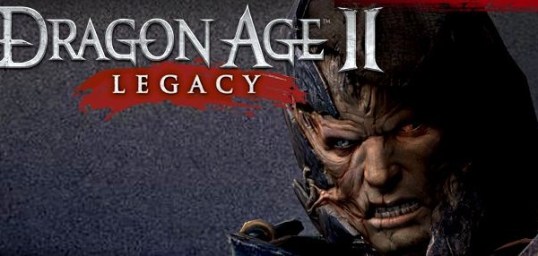
Review: Dragon Age II: Legacy


Dragon Age: Legacy is the first post-release DLC available for BioWare’s hit dark fantasy epic. Available for 800 MS Points (or $10), this DLC is launched from your in-game home (whether this is Gamlen’s House or the Hawke Estate, depending on when you launch the DLC) by interacting with a creepy statue that you’ve apparently kept as a memento. Depending on your difficulty settings, level, and party make-up, the DLC will take about 2 hours to complete. It is not noticeably more or less difficult than the primary game, but it does introduce a number of new adversary types that were not present in Dragon Age II (more on that later).

This DLC is visually impressive, using all new set pieces (including a set of desert ruins, a Carta base, and the interior of a Grey Warden fortress) and a location outside of Kirkwall or its immediate vicinity. Hawke and a chosen party of three head into the Vinmark Mountains in pursuit of a group of dwarven Carta members who have made an assassination attempt against Hawke. I have not completed the DLC with all of the different party members available, but I can safely say that there are significant (and pleasant) tie-ins for Varric, Anders, and Bethany (presumably Carver as well) as you proceed through the DLC. Although it is told largely through the prism of combat, as you would expect, there is a fairly hefty dose of story in Legacy. Several smaller stories are told through side quests, and the main plot thread takes us some place unexpected in the climactic scene as you confront the DLC’s final boss. The encounters in this DLC are a little more thought out than many of the ones in the original game, with scenarios such as enemy archers attacking from raised positions, and areas you are herded into that have been deliberately trapped (complete with activation levers! Try turning some of these traps on their owners instead!) New enemies include brontos (the large dwarven pack animals) which make charge attacks that will bowl members of the party over and have tough hides, the re-designed genlocks (who are now quite distinct from the hurlocks; especially their alphas!) and the Alpha darkspawn that were absent from Hawke’s foray into the Deep Roads in the original game. Also returning are the deep stalkers, who are in large-scale battles with spiders at several points during the DLC.

Legacy also features no fewer than three boss encounters that have some unique elements to them. The final boss uses a lot of impressive visual effects and set pieces, but quickly grows repetitive. You’ll see what I mean.

One of the selling points of this DLC will no doubt be the large amount of gold and gear that can be obtained by playing it. You should note before launching the DLC that you will find a goodly number of useful green items scattered throughout it, and the relative power of these items is determined by Hawke’s level when you enter the DLC. None of the new items improve as you level, so if you visit Legacy very early in the game (when you’re still leveling frequently and replacing gear often) you may not get the best bang for your buck. In addition, only Hawke’s new weapon is truly awesome; the other items may not be as useful later in the game when you have access to many powerful items. I personally attempted Legacy a few quests before proceeding into the Deep Roads, and then in a post-game save. Hawke’s new weapon (typed appropriately for you based on your weapon group, i.e. a dagger or a longsword) is pretty dang awesome. It will begin with a high damage for your level and add a little to a key attribute for your class. As you make your way through the Grey Warden fortress, it will gain three upgrades that you’ll select from a total pool of twelve, including an elemental damage upgrade.

Even before the sale of junk items from Legacy, you’ll have easily made 40 gold or more. In addition, your party will gain a large amount of experience in the play-through (for example, I leveled from 11-14 just through playing the DLC); especially if you complete all of the available side quests.

I genuinely enjoyed this one. It’s easily worth the $10 in my estimation, and shows the care that I thought was typical of DLC in the original

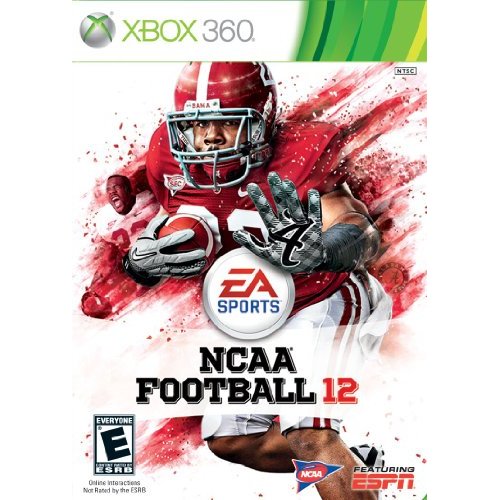
Review: NCAA Football 12


Yes, it’s that time of year everyone. Football season looms … at least, it does for the thousands of student athletes within the NCAA system. The NFL is still in limbo, even if it now appears inevitable (although either way, it won’t slow down the annual Madden release). Now, let me preface this review by saying that I don’t actually enjoy college football. I find the poor defensive play and imbalanced match-ups boring, and I hate the way that the BCS standings come together over the course of a season. The fact that the Big East has an automatic bid is a bad joke, etc. All of this is probably because I never attended a university where college football mattered. But absolutely none of that counts in the world of video games!

As a visceral experience, there’s a lot to be said for the college football style. Here, we still live in a world where running the football can be king, and a world in which the QB option (in a shocking variety of forms) can still be a primary offensive tool. Teams suffer every year from playing the service academies (who still run the triple option) because defending it is so different from the spread, or even the spread option, that most teams run. If you’re looking for a football experience where all of these systems are in play, then you should run — not walk — toward NCAA Football 12. Of course, most people are more NFL fans than NCAA fans, if the numbers are to be believed… but the one thing that the video game version will always have over Madden is that it isn’t quite so formulaic. We’re dealing with an eclectic mixture of offenses and defenses. If you care to start a dynasty (and the dynasty features are outstanding in the new version. In NCAA Football 12 we’re treated to the full coaching experience. More on that in a bit.) you have a ton of player turnover, which can make it difficult to have a consistent program. I suppose it’s probably easier if you’re a fan of Alabama or Florida. I’m not, so this title has a refreshing ‘battle uphill’ feel, especially in the Dynasty Mode.

The flagship promotion for this game has to do with the authentic recreations of the university celebrations, pre-game ceremonies, etc. It deserves to be the most outstanding feature. Granted, it has absolutely no effect on game-play, but one of the things that sets college football apart from the professional game is the sheer number of teams in play – each with their own unique celebrations, entries, and whatever else – who have their own tradition. If that kind of personalized experience doesn’t faze you, then you won’t find much of note has changed between iterations of this game. The graphics are still in the same generation, we have the same playbooks, the announcers have actually become less interesting (which may be a selling point, depending on your point of view – Lee Corso has made his departure), and there are no real innovations in game-play. The tackling feels slightly more authentic — that is, there’s less magnet tackling — and the AI that guides defensive players in zone defenses is dramatically improved over the 2011 version of this title. You can actually feel pretty confident when calling cover 3 defense… of course, this goes double for the AI player, who aggressively bats down passes (but mercifully doesn’t seem to randomly intercept any more). Still, the game emphasizes more than ever the value of lofting a pass high to avoid marauding defenders as opposed to just firing laser beam passes from point A to point B.

Outstanding features include the Dynasty mode. Returning are the online dynasty features, which were a huge improvement in last year’s title… but massively upgraded are the single player versions. You can now create your own coaching avatar who can hold the position of Offensive/Defensive Coordinator, or Head Coach, at a university of your choice – but who is held accountable for the team’s performance. The university has expectations, and you can experience first-hand being on the coaching hot seat and being fired from your job. Of course, if you’re good enough at the game, this is hardly a concern… but it does add a fascinating dynamic to the experience – a bad recruiting class could still doom you! If you are fired, you end up on the coaching carousel looking for a new job. It’s definitely a cool feature, even if you probably won’t run into it much.

The other game mode which received a significant overhaul is the Road to Glory mode. As always, you create a single player, and advance from a top-rated high school prospect through your collegiate career at whatever university. However, this time around, the experience is much more interactive. We’re treated with a game mode that allows us to fully develop a single player in a much more immersive way than in previous installments. Your created player will gain experience and skills — as always — but also adapt to (or be moved into) a specific role on the team. I imagine this is a much more authentic recreation of what going out for Div 1 sports is really like… but you tell me.

The game does take a significant step back in terms of calling audibles. I would say that the player is given more freedom than ever in terms of setting up audibles (with the addition of custom playbooks) but gone are the menus that actually tell you which button push calls what. Or, at least, they were absent for me. It seems like a senseless change, and one that left me feeling pretty bitter through my Dynasty play… when I had to frequently consult my audible chart in order to keep track of what I was calling, and when. If I could remember all of this playart, I’d probably be playing Div 1 football myself.

As always, this game will synergize with the Madden release in terms of draft classes, as the Madden schedule continues uninterrupted. Definitely worth a pick-up if you’re starved for some video game football, or if you consider yourself a college ball fan.

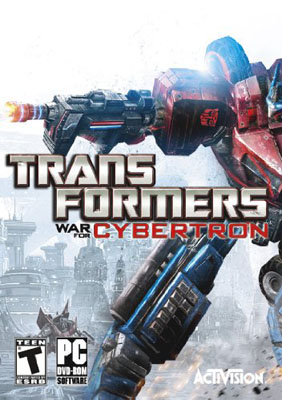
What I Played Today: Transformers: War For Cybertron


In my recent hunger for new games to play (not new to the world, just new to me, mind) I started browsing the Steam store… and playing some of the crap that was coming in off of my Gamefly subscription. In honour of the fact that I haven’t written a column in three weeks, I thought I’d throw out some quick thoughts on a game I’ve played quite a bit recently. Sadly, it’s not a new title anymore… but there it is. Maybe next time, Gamefly… maybe next time.

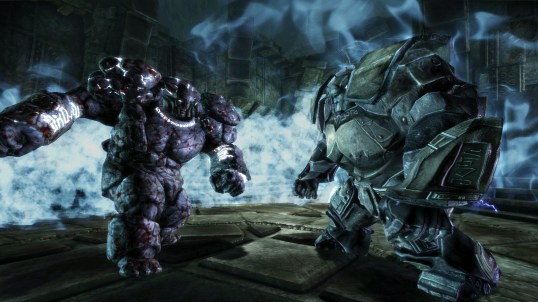
Transformers: The War for Cybertron – My most recent arrival from Gamefly. It’s a solid game. The game-play is pretty tight, and it does a pretty decent job of integrating the idea of both heavily armed and armored robots… as well as their ability to transform into things. The whole system is pretty simple – and you’ll discover over hours of game-play that it lacks a certain level of depth – but the game is certainly fun enough.

The single player mode has you taking command of a single Transformer in the service of either the Decepticons or the Autobots (both have their own full-length campaign mode, which combine together to tell a single story). We are taken far into Transformers Past and the initial battle for control of the planet Cybertron that began the million-year-long war between the two factions. Ambitious Megatron claims that he will build a galactic empire rightfully dominated by the power of the Cybertronians… while Optimus Prime and his Autobots battle based… well, mostly on principle. Honestly, we’re not given much background. Luckily, the story is simple enough; nobody is going to get lost in this narrative.

You’ll recognize the names, and the look, and even the transformations of the titular robots in disguise… but one of the game’s most disappointing features is that there isn’t the variety from Transformer to Transformer that you might be hoping for. Although each one has a unique loadout of one or two weapons, their unique transformation, and a pair of special abilities, all of these are drawn from the same pool (with the exception of the transformations… oh, and Megatron and Optimus Prime receive unique weapons… but they’re the only ones). Ultimately, you’ll probably end up fighting with whatever weapon you like best / whatever weapon you happened to find that will work for the given situation. This isn’t a terrible thing; after all, games like Halo are completely based on the concept of two weapon swaps, switching out weapons for new weapons and so on, and the model works.

Still, the game has some fun voice acting, some cool level designs… and it’s pretty fun to roll through. The levels are longer than I expected going in… which is both a plus and a minus. Since the gameplay is, on the whole, fun… it’s not debilitating… but some of the sequences definitely begin to drag before you’ll finish a given level. The sequences can be challenging, depending on your difficulty level, but there’s earnestly nothing in terms of tremendous innovation in any of the game-play sequences. Basically you’re thrust into a third-person shooter with a variety of terrain, weapons, and enemies… and you go to town. There’s nothing wrong with that, but there’s nothing to this game that really makes it feel Transformers-y… aside, again, from the transformations themselves. At times, these will help you out, and do add an element to the game.. but you’re going to want to spend most of your time in combat in your robot form, doing robot things.

Oh well.

The multiplayer component features a few modes  modes. The competitive multiplayer modes (Deathmatch, King of the Hill, etc.) bear some similarities in structure with Activision’s Modern Warfare 2, with perks and levels and so on. The co-operative multi-player is headlined with the by-now-completely-standard horde mode (called Escalation in this particular incarnation), where you face off against wave after wave of enemies. I know that there’s only so many permutations of multiplayer modes; particularly within a given genre. I accept that each game isn’t going to break new ground with its multiplayer modes or concepts. That having been freely admitted? There wasn’t much to get hooked on here.

If for some reason you haven’t been turned off by the movie franchise or the endless bastardization of the classic Transformers, and you enjoyed this game, there’s something to look forward to: A planned sequel in 2012.

April Power Poll


The rack has seen some serious action since I last addressed this topic back in March (not the smallest change has been the introduction of an entirely new physical rack. It’s more of a drawer now, but that has less torture-device correlations). As you may know, one of the most important ways in which I get access to video games over time is through my long-running subscription to Gamefly. I use the two-game package, because inevitably at least one of the two games sits around for ages while I play the other and any new releases… still, it does give me a way to play a bunch of games that I would never consider spending $60 on. In theory, GameFly will send you the games you really want at the top of your list. Of course, the reality is that when you build a queue of 40 games it’s sometimes a surprise to see what shows up in the post. Am I getting some A+ rated game I forgot I wanted to play two months ago, or something terrible that had some flashy reviews and bamboozled me? Well, if it’s the latter, at least I didn’t pay full retail.

Anyway, non-seq introductions aside, here once again is my Video Game Power Poll… in April. These are games that command significant time. If you think I have good taste in games, you may want to check some of these titles out. As always, I’ll try and give long-winded blurbs about each game as we go. And they’re still in reverse order. And no, I wouldn’t turn down sex for any of them. (Well, maybe for #1). Also, I’ve only got seven entries this month. I’m more dedicated than usual.

7. Call of Duty: Black Ops. Still standing strong months, and months, and months later. I’d actually taken a significant break from this title, but then my friend B and I played some the other night, and I was right back in. There’s something about the visceral pleasure of shooting people who think they’re doing a great job camping that never tires. Of course, when I first came back, the rust pretty much locked me up… and some of the game’s flaws have me longing for the next Modern Warfare release. When does that launch again?

6. Marvel vs. Capcom 3: Fate of Two Worlds. This one is really up and down depending on mood. I had whipped myself into a serious fighting game craze for a couple of weeks there… and it made me think harder about Mortal Kombat. I’ve had some predictable issues with the online multiplayer. I still hold strong to the belief that fighting games were meant to be played against people in the same room. You know, to avoid that whole lag issue.

5. League of Legends – It’s been suffering from some server instabilities in the last little while… but they thoughtfully gave out a pittance (and I do mean pittance) of in-game Riot Points to buy things with as compensation. I did buy some stuff from them to support disaster relief in Japan, and I saved a copy of the picture of their CEO holding up a huge cardboard check to my hard drive. This game is never going away, though, because they just keep improving it!

4. Bayonetta – This one is a GameFly rental. It’s actually kind of an old game by now, apparently. I had never even heard of it until it popped up while I was perusing GameFly’s database. It sounded worth a look, so I went for it. It’s visually stunning, but took some real getting used to after years of playing FPS, sports, and RPG games. Maybe I need to branch out more often.

3. Dragon Age II. It still won’t die. There’s a lot of permutations to this one… and I love the fact that the automatic dialogue from Hawke changes based on the responses I frequently pick in-game… I love the characters. Wait, I did a whole review on this.

2. Red Dead Redemption. Another GameFly-er… finally. I actually had wanted to play this title since its launch, and I’m just now getting to it. Definitely going to be the subject of the next ‘what I played today’ style column. This one is definitely worth checking out for anybody who hasn’t gotten around to playing it yet. It’s very much in the style of Grand Theft Auto 4, but with a lot of improvements (in my mind) to the game-play. Of course, if you don’t like westerns, it’s probably a stay-away.

1. MLB 2K11 – I’ve been trying to author a review to this game for months. Seriously. I started writing the day of its launch after I bought it and powered through a few games straight. I love it. It has some weird glitches that are kind of frustrating, but if you want to play baseball, there’s a lot to like in this release… I guess pretty much like every year. Anyway, with all of the excitement over the baseball season itself, I’ve been glued to this title a lot. I suppose it will cool off in time (just as my Madden obsession inevitably does) but then again, the baseball season is a lot longer. I particularly like the ‘My Player’ create-a-player mode in this year’s offering, which is pretty meaty. Baseball is a good sport for it.

What I Played Today: Jade Empire


Every so often – because I like old games better than I like new ones, or so I’m told – I like to revisit a classic game. I’m sure, if you read my columns often, you’ve noticed that by now. Continuing this month’s theme of BioWare inundation (spurred, of course, by the release of Dragon Age II and the Arrival DLC) today I decided once again to play a little Jade Empire. Longtime WRPG fans will remember the title from its 2005 debut. Newcomers to BioWare’s camp may have missed this jewel. In the interests of saving the integrity of the game for anyone who never played the original release, I’m going to avoid serious game spoilers here, even though the game has been out for six years now.

The first thing I’ll say is that this game holds up better than most other original XBox titles with graphics that are bearable, at least, and smooth play on the XBox 360. I never played the game when it was originally launched on XBox, and only got into it after a friend recommended that I fork over the cash to buy it on the XBox Originals in Marketplace. Smooth emulation aside, I immediately fell in love with the title. Jade Empire offers a highly interactive game-play experience (more on this later) that is settled on the solid foundation of classic BioWare RPG structure. We slowly accumulate a group of loyal followers, whose personal story develops through conversation options between major plot developments in the overall story. Although many of these characters follow what we might call the “BioWare Rules” in terms of their personality archetypes (although Dawn Star is unconventional, she still reeks of Carth Onasi, doesn’t she?) they’re predictably detailed, with a diverse set of backgrounds and motivations. In this respect, I hardly think that Jade Empire is the gold standard for WRPGs. Its relatively simple story progression doesn’t lend toward diverse side missions undertaken in far-off locales.

The game’s outstanding feature, however, is not the party members, the story, the voice acting, the graphics… or even the interesting-in-theory morality system of competing philosophies. Unfortunately, while the idea of two philosophies competing against one another (Open Palm and Closed Fist) sounds compelling, and a refreshing departure from someone merely being good or evil, light or dark side, it amounts to the same thing. The complex motivations that would drive a practitioner of the Closed Fist according to the game’s story ultimately don’t matter; points are accrued by being a jerk, just as always. Sliding scale morality systems are always going to be imperfect in general, of course, while we’re on the subject… but I almost feel as if Jade Empire could have benefitted from a dual system; having both a good vs. evil slider, as well as competing philosophies (in this scenario, we might wish for more than two that are so diametrically opposed). Oh, and why can’t we ever have a philosophy of neutrality in these games? Wouldn’t that be fun? Maybe not.

The reason I keep revisiting Jade Empire, attempting to jump off for the third time, is because of the interactive game-play system. Even Mass Effect with its shooter based game-play doesn’t explore the potential as deeply as Jade Empire, which plays successfully like some kind of action game, only with distinct RPG elements. It lacks the elaborate combos that we might see from Devil May Cry or similar games, but it interweaves level-ups and equipped items just like a more traditional RPG. Unlike latter-day BioWare offering Dragon Age, we are truly rewarded in Jade Empire for dodging, and knowing when (and from where) to use our different martial arts styles and their different unique powers. Now, of course, those who are traditionalists and would rather have the stats decide things (this also includes people who just aren’t that good at action games) I suppose this is probably frustrating. I personally think it’s mild enough that once you get the hang of it almost anyone could have fun with the system and be successful in the game. For me, this outstanding combat system makes the game incredibly easy to just drop in to and play. In fact, every time I load it up and play, I angst over how much fun it is… and how it’s the one game amongst all of BioWare’s RPGs that never got a sequel.

Oh, yeah, and as a side bonus, the game features a 2-D scroller style airplane game where you pilot your airship and fire your weapon straight up toward a variety of aerial enemies and hazards that cross the screen and generally try to ruin your day. All of these sequences but the first one are optional, but they provide a nostalgic element for me…  and completing them provides a bunch of XP within the game, too.

And hey, maybe if enough people realize what a great game Jade Empire was… we’ll get that sequel after all.

On Special: 4 DLCs


Micro-transactions… are the future. In the future, the principle game will be less important than it even now is. We’ve already learned to expect from pioneers in the DLC field like BioWare that a retail game may be half of what it ends up being… and not through the antiquated idea of a full expansion (although those are still nice and profitable too, I’m sure) but rather through add-ons. DLC. Updates. Extras. Once we’re paying for little tidbits to enhance the game we’ve already paid full retail for, we are just walking, talking wallets for the developer.

In a way? This is actually a good thing. We can expect more content to be established over time and to bridge the gap from release to release. Does this seem lazier, and a way to push retail titles out faster? Unquestionably. However, even with full eyes-wide-open knowledge that I’m being exploited somehow… I’d earnestly rather be able to download and play a few new scenarios over the course of a year that eventually complete the game I had purchased… rather than finishing a more-complete-at-retail-launch game… and having nothing to play for a year.

Unfortunately, I think the developers realized this even before I did… and it led them to release games that weren’t even ready to go, reasoning that they could be completed later. Still, the idea of rushed production isn’t new. Let’s take the example that I’m sure some of us are still angry about… Knights of the Old Republic II. Obsidian’s sequel offering to the critically acclaimed original threatened to be better than BioWare’s classic original in literally every way. We had more characters, more sophisticated interactions, a more diversified playing field in terms of character customization as well as available items. We threatened to go to more places, more diverse locales, and places not quite so stubbornly grounded in the Star Wars trilogy canon. In short, the game threatened to be an all-time great. Oh, except that a third of the content was cut before release. It was released with roughly ten trillion bugs. It was released, in short, because the producers wanted to make money for Christmas… rather than put out a game that would endure even through 2011.

But if Knights of the Old Republic II were released in 2011… we would have gotten the HK factory. It would have been a $5 (U.S.) add-on, but we would have gotten it. We would have gotten patches and updates to make the game stable and play-able so that we could have gotten the HK factory. So that we could have gotten the Sith Academy. Or whatever else cut content we found ourselves to be lacking.

Given that I was going to buy Knights of the Old Republic II either way… and given that I’m going to buy incomplete DLC-driven money-grubbing games today… I guess I’ve just accepted, at this point, the inevitability of DLC and micro-transactions in general. If I can spend $5 at a time for some cool add-on, I do it almost without thinking. At least, for my favourite games. If the retail release is garbage, I’ll never think about it again. So I suppose that’s the line that developers have to walk in this brave new world. Make it good enough that I’m willing to play it on-and-off for a year. This will keep the game always in my head, so I’m already thinking about the sequel… and it will keep me happy, so that I don’t write scathing reviews about your product.

Phew. Rant over. Alright, here’s something that might potentially become a regular feature for me. Four (or more, but this time, four) DLCs or add-ons I played recently. My impressions, whether they were worth the money I shelled out, and what they did to the overall game. These are, in this case, in no particular order, but I did include the launch DLC for Dragon Age II… just because.

Jill Valentine / Shuma Gorath – Additional Characters for Marvel vs. Capcom 3 – It’s been two weeks (or more?) and I still earnestly can’t believe what I paid for these characters. As anyone could have guessed (and, really, since these two at least were in the game files anyway, it didn’t take a savant to anticipate) the first ‘major’ DLC for MvC3 is the addition of fan-favourites from MvC2. Unfortunately for my wallet, the idea of being able to use Jill Valentine and Shuma Gorath again somehow justified the cost. Given that these add-ons were basically unlocks (costing me roughly 100 KB of space on my XBox 360’s hard drive) and not new content at all, I’m extremely unimpressed with their addition. Couldn’t I have gotten this as a bonus for pre-ordering? I already forgave developers for adding cut content on later as DLC packs, but I feel like this reaches a point where content is deliberately cut in order to make a few extra dollars. Are video games not enough of a growth industry? I’ve got an idea – make a better game. Sell me a half dozen characters as an add-on, not two individual ones each of which cost me a few bucks. As much as it pains me, I really can’t discourage this DLC enough. What a disappointment!

The Golems of Amgarrak – Add-on Scenario to Dragon Age: Origins – I reviewed this just today, so I won’t spend a ton of time on it. Considering its cost, and how much I enjoyed the original game, I can’t say that I regretted this purchase. After playing it, I’m sternly disapproving of the marketing of this DLC as some kind of super ultimate difficult challenge. I thought the Emerald and Ruby Weapons in Final Fantasy VII were harder… and they were literally just a matter of patience in game-play. And fine, say what you will, that in a game that allows tactical thinking you can’t make a challenge that is difficult for everyone yet also possible for everyone… but don’t try to tell people who really enjoyed the tactical combat of Origins and were hoping for more just how hard Golems would be. Because it wasn’t.

Arrival – Add-on Scenario to Mass Effect 2 – Very much following in the vein of the Overlord DLC, we are treated to what is ultimately an elongated single mission. For this scenario, we have Commander Shepard rolling solo, and the scenario is quite a bit more challenging than normal – mostly as a result of this solo-Shepard format. However, I can’t argue with the scenario design, which is fun to play through. The DLC is about the average BioWare-single-scenario-add-on length… but yet again, the marketing let me to expect something that I don’t feel like I got. Arrival didn’t do much to bridge ME2 and ME3 for me. Now, of course, I’ve envisioned scenarios in which it stands as a direct bridge, but the DLC still felt a little lazy to me… and not something that profoundly changes the way I felt about the setting. I was earnestly disappointed after the DLC that we’d received from the ME2 team in the past, with Shadow Broker, Kasumi’s Stolen Memory, and Project Overlord all head-and-shoulders above this offering. Still, it was fun, and if you’re hungry for a re-visit to ME2, Arrival isn’t a terrible choice.

The Black Emporium / The Exiled Prince – Launch DLC for Dragon Age IIAs a pleased pre-order customer of this game, I received both of these DLC packs via the usual unwieldy 4957 digit prize code entry which gave me permission to spend twenty minutes downloading add-on content for my launch copy of Dragon Age II. My fundamental issues with the format aside, I’m reasonably happy with the fact that I got these add-ons for free. The Black Emporium is little more than a curiousity, despite its potential. Its existence provides a solid jump to your Hawke in the early stages of the game, but you earnestly may never visit the in-game Emporium more than once… maybe twice.

As for the Exiled Prince… it was actually a very strong DLC. I may not have liked Sebastian Vael as much as I liked the game’s stock companions, but he has a very complete role in the story. He’s interwoven with elements of the plot, with events from the previous game, and with the most important underlying themes of Dragon Age II. He feels like an integral part of the story if you take the time to do each of his plot scenarios and speak with him when the opportunity is given. Of course, as is common with this game, the overall sheen of Exiled Prince is marred by the bugs it launched with. Most notable amongst them? Not being able to earn achievements from the DLC. I don’t mean to sound overly critical… but this is just unacceptable, particularly for customers who would have purchased this add-on after market, not received it for free with a pre-ordered copy.

What I Played Today: Golems of Amgarrak


I was in quite a mood after playing so much Dragon Age II, and (as that led to) another full play-through of Dragon Age: Origins. I had originally planned to continue straight on to Awakening, and just complete the whole series. But then, as I was on my roll, I remembered that I had purchased a couple of DLC packs for Dragon Age: Origins a while back on the cheap. They had some kind of sale for half price DLC, or some such. I’d taken that opportunity to pick up both Witch Hunt and The Golems of Amgarrak… but while I’d completed the former some time ago, I’d never bothered to sit down and play through Golems. I took a look at the achievements, because I’m like that, and I realized that I needed to complete the DLC on a minimum difficulty of Hard in order to receive my e-recognition for my accomplishments.

Harkening back, I recall that Golems of Amgarrak was touted as an extra-difficult bit of DLC… it was, ostensibly, much harder than the regular game, even on the Casual difficulty. In short, this DLC was not intended for the faint of heart. This did nothing but excite me, but I did go into it expecting a higher degree of difficulty, and felt that I should use some caution.  Although I might be ‘that guy’ when it comes to gaining achievements in an expedient manner, I’m strangely honourable about some of them. It seemed to me that if I were going to defeat the DLC’s final boss on a Hard or Nightmare difficulty, I might as well play the whole DLC on that difficulty. So, I set my difficulty, and I chose to import a Warden from an Origins playthrough at level 20, a Dwarven sword-and-board warrior.

The DLC took a couple of hours to play through all the way. It introduces a semi-new area (yet another re-skin of the default Dwarven Thaig that we saw four times or more between the Origins game and the various DLCs) that paves the way into a completely new area. Amgarrak itself is a completely unique area replete with colour-switch puzzles, swarms of enemies (mostly of the more difficult types. I assumed there would be Golems, but I was treated to a plethora of Revenants, Arcane Horrors, and high-ranked skeletons as well), and a bunch of loot. Most of the loot proved to be useless, but it did provide upgrades to the Golem which I picked up on my way in. As one might expect, the Golem is the key to the whole deal. It has significant healing abilities, and while it can’t always fight its way out of trouble, the Golem is tough enough to escape from danger so long as your party features some tankier types.

Ultimately, I found the DLC a little on the disappointing side. It was about as substantial as I expected (given the average length of BioWare’s DLC add-ons) with a fairly large area to run through and a whole new party. However, in lieu of adding substantially to the story (as Leliana’s Song does, and Witch Hunt debatably does) the idea behind Golems of Amgarrak was to provide a very challenging play experience within the tactical game engine of Dragon Age: Origins. Earnestly, I didn’t feel the need to adjust my tactics much from playing the original game. Tank-type characters are still able to mostly take care of themselves, and the most effective approach for me seemed to be to focus on healing. The only encounter I had to repeat was a surprisingly difficult swarm of golems which jumps out at you in an optional chamber while in the process of acquiring golem upgrades. I was not particularly impressed by the Harvester, which seemed to be mostly a matter of managing a group of enemies and keeping on top of healing.

Anyway, I think this polishes off my experience with Origins. I’m very much anticipating a DLC – any DLC add-on, really – for Dragon Age II.