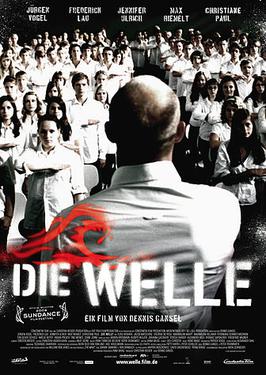
Horror Film Review: The Wave (dir by Dennis Gansel)


(Thank you shout-out to my friend Mark for recommending this film!)

The 2008 German film, The Wave, opens with history teacher and water polo coach Rainer Wenger (Jurgen Vogel), driving to class while listening to the Ramones’s Rock and Roll High School.  

Rainer may be a middle-aged authority figure who expects his water polo players to train hard and to always put winning above everything but he still considers himself to be a punk rock rebel, an anarchist who brags about all of the protests that he was involved with.  Rainer is upset when he learns that he has been assigned to teach a week-long course on “autocracy.”  He very much wanted to teach a class on “anarchy” but that class has been assigned to the most uptight and autocratic teacher in the school.  Already feeling resentful, Rainer becomes even more annoyed when it becomes clear that the majority of his students are convinced that there will never be another dictatorship in Germany.

Rainer decides to show them how easily fascism can take root by becoming a dictator in his classroom.  Rainer orders the students to call him “Mr. Wegner.”  He tells them to all wear the same uniform of jeans and a white shirt to class and when his most intelligent student shows up for class wearing a red blouse because she “doesn’t look good in white,” Rainer refuses to call on her when she raises her hand in class.  Mr. Wegner institutes assigned seating, controlling who can sit with who.  Everyone is required to stand up if they want to speak.  When one student says that he doesn’t want to do any of this, Rainer kicks him and his friends out of class.  All three of them eventually return.

Rainer’s experiment works a bit too well.  The students come to love being a part of the movement that they come to call The Wave.  The Wave ostracizes outsiders, both in school and outside.  The Wave covers the town in graffiti, announcing their presence.  The Wave doesn’t really have a set goal but the students in Rainer’s class are now obsessed and fanatically loyal to it.  One former outcast, Tim (Frederick Lau), becomes so devoted to the cause that he even starts carrying a gun to school so he can defend the other members of The Wave….

If this all sounds familiar, it’s because The Wave is based on the novelization of the American television special of the same name.  The German version of The Wave, however, is far more cynical than the American version.  Whereas the American version features Bruce Davison as a mild-mannered but always well-intentioned liberal who realizes that his classroom experiment had gone too far, the German version features a teacher who, despite his self-proclaimed radicalism, comes to enjoy the ego boost of being a dictator in the classroom.  (Rainer, of course, puts his fascism in superficial left-wing terms, railing against the corporations that make expensive clothing and the individualism that he claims was keeping his class from coming together.)  Rainer becomes willfully blind to what he has created.  And if the American version of The Wave featured students who eventually learned a lesson and voluntarily walked away from the group they had previous celebrate, the German version presents students who are not willing to abandon their cause, even when their leader tells them that it is time to move on.  If the American version featured students who were just play-acting as fascists, the German version features students who go from being blithely unconcerned with the prospect of dictatorship to being the enthusiastic foot soldiers in a cause that has no reason to exist outside of controlling the lives and thoughts of others.  If The American version ended with hope for the future, the German version ends with tragedy.

It’s a dark film.  Some might claim that The Wave is not a horror film but, by the end of the movie, Rainer’s students have become as relentless and destructive as the zombies from a Romero film or the fanatics who often showed up in Wes Craven’s pre-Scream movies.  It takes just one week to transform them from being ordinary teenagers to being the shock troops in a directionless but destructive revolution.  They are asked to surrender their individuality and their power to think for themselves and all of them do so without much hesitation, with the desire to belong suddenly superseding everything else about which they claimed to care.  Consider this well-acted and disturbing film to be an example of the horror of everyday life.
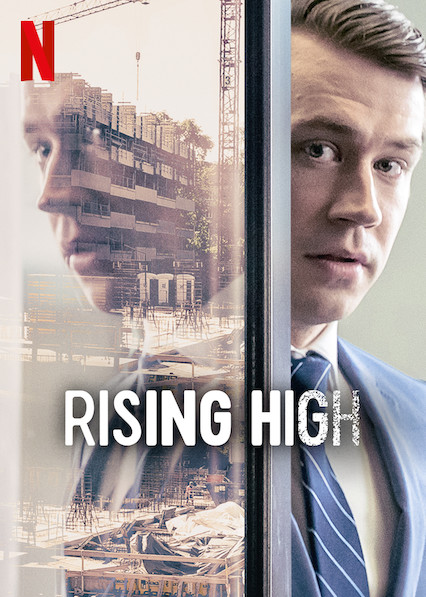
The Films of 2020: Rising High (dir by Cuneyt Kaya)


Ever since the Great Recession of 2009, films about white collar crime have been popular.  Some of them, like The Wolf of Wall Street, have been great and others, like The Big Short, have been terrible but one thing that they all have in common is that they’ve all left my very confused.

Seriously, as hard as I’ve tried, I’ve never been able to understand any of this stock market stuff.  Why do stocks go up?  Why do they go down?  Why do people sell them?  Why people buy them?  What do they get out of it?  If you buy a stock and then never sell it, did you just waste a huge chunk of cash?  What even is a stock?  How can a company have so much stock?  Can I sell stock in myself?  Seriously, how does it all work?

By that same token, how do you know how much a house is worth?  I know that it has to do with how much the house next to your house is worth but who decides how much that house is worth?  I’ve seen so many movies about people talking about real estate and insider trading and scampacs and I still don’t understand how any of it works.

Perhaps that’s why I don’t get as outraged as some people do while watching movies like The Wolf of Wall Street.  I know some people who walked out of that movie talking about how much they wanted the federal agent played by Kyle Chandler to throw Jordan Belfort (played, in the best performance of his career, by Leonardo Di Caprio) over the side of his boat.  Me, I was just happy that Jordan Belfort was able to buy himself a nice boat.  He got to hang out with his friends, he got live in a big house, and good for him.  I mean, he had fun.  We should all be so lucky.  The main reason why The Wolf of Wall Street was a thousand times better than The Big Short was because The Wolf of Wall Street was willing to admit that rich people are more fun than poor people.  The Wolf of Wall Street made its point with getting bogged down in all of the Marxist argle bargle that other white collar crime films tend to drown in.

Rising High is a German film that is superficially similar to The Wolf of Wall Street.  It follows Viktor (David Kross) and Gerry (Frederick Lau) as they make a small fortune through shady real estate deals.  Viktor is a smooth-talking salesman while Gerry is a bit rougher around the edges.  Basically, Viktor and Gerry get rich selling luxury apartments.  The only catch is that they don’t actually own the apartments that they’re selling.  Instead, they make bids with money that they don’t have and then they sell the property that they don’t own and then they use the money from the sell to purchase the property.  I guess that’s illegal.  I mean, Viktor does eventually end up getting arrested and telling the story of the shady ways that he got rich.

Anyway, Viktor’s story is typical of these type of films.  He grew up poor.  He found a way to make money and ethics be damned, he did what he had to do.  Soon, Viktor is married to Nicole (Janina Uhse) and having coke-fueled parties and listening to a lot of music.  He also spends a lot of time wondering if he’s allowed his life to get out of control.  He may be a white collar criminal but he’s a white collar criminal with a conscience.

Anyway, the main problem with Rising High is that it’s only 94 minutes, which means that the whole story feels somewhat rushed.  Viktor goes from being poor to being rich to being incarcerated in record time.  Because the film is so rushed, you never really get to explore Viktor’s life.  For all the complaints that you may have heard about The Wolf of Wall Street‘s 3-hour running time, it used those three hours to show us why Jordan Belfot and friends were willing to risk going to prison.  It showed us their lifestyle and, regardless of whether you liked any of them or not, you understood where their minds were at.  In Rising High, Viktor and Gerry are just jerks who get in over their heads.  You never really get to know them and even the decadent scenes of their wealthy lives feel as if they were all lifted from other movies.  Neither Viktor nor Gerry comes across as being a particularly interesting character so you really don’t care if they end up having to go to jail.  If anything, the main message I got from this film is that you should have as much fun as possible before the police show up.  If you spend too much time pondering the meaning of it all, you’re going to miss out on some good memories.

Anyway, as far as white collar crime films are concerned, I’m going to stick with The Wolf of Wall Street.  Seriously, that was a really nice boat….