Retro Television Review: Decoy 1.23 “Night of Fire”


Welcome to Retro Television Reviews, a feature where we review some of our favorite and least favorite shows of the past!  On Thursdays, I will be reviewing Decoy, which aired in Syndication in 1957 and 1958.  The show can be viewed on Tubi!
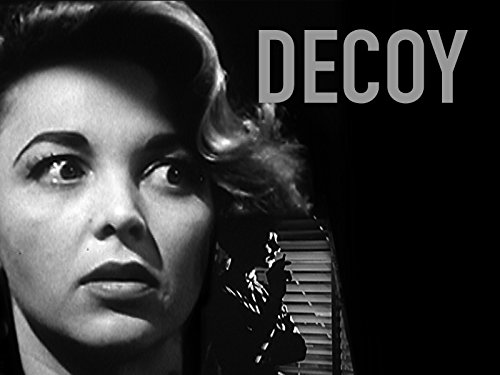
This week, Casey investigates a case of arson!

Episode 1.23 “Night of Fire”

(Dir by Don Medford, originally aired on March 17th, 1957)

This is one of those episodes that ends with Casey speaking directly to the camera.  She tells us that Michele (Betty Lou Holland) will be hitting the streets in search of a new job.  If she comes in your office, Casey says, give her a chance.

It’s a nice sentiment, especially since the viewer has just spent 30 minutes watching a number of people wrongly accuse of Michele of having set a fire at a factory.  Casey, working undercover as another secretary, knows that Michele has recently been released from a mental hospital and that she’s still haunted by a bad relationship that she had with an older man.  But Casey also understands that evidence against Michele is circumstantial.  Yes, Michele had some matches in desk.  Yes, Michele had a can of turpentine in her desk.  All the rest, though, is gossip.

And it does turn out that Michele is innocent.  Co-worker Joe (Clifford David) has an alibi for the night of the fire.  While the factory was burning, Joe was getting arrested for making a scene at the bar.  When Casey learns that Joe is diabetic, she announces that diabetics can’t drink so Joe must have been faking being drunk to give himself an alibi.  Joe confesses that he was hired by the owner of the factory to set the place on fire for the insurance money.

(And it’s a good thing that Joe confessed because I’m pretty sure Casey’s logic would not have held up in court.)

Problems with Casey’s logic aside, I did like this episode.  Betty Lou Holland gave a very good performance as Michele, as did Betty Walker as Jenny, Michele’s main tormenter.  Beverly Garland did a great job communicating Casey’s righteous fury over Jenny’s self-righteous attitude. Finally, after two stage-bound episodes, this story saw a return to the location shooting that makes Decoy such a fun show for history nerds like you and me.  1950s New York was apparently the best place in the world to go shopping with a suspect.

As this episode ended, I found myself hoping that someone did give Michele a shot.

She deserved it.
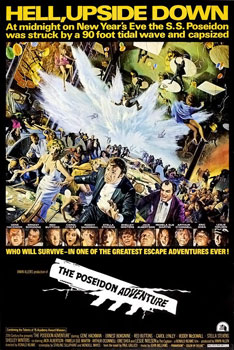
 

Embracing the Melodrama Part II #44: The Poseidon Adventure (dir by Ronald Neame)


PoseidonAdventure

A few years ago, when I first told Arleigh that I had recently watched the 1972 film The Poseidon Adventure, I remember him as being a bit shocked and amazed that I had made it through the entire film.  This was because Arleigh knows that I have a morbid obsession with drowning and that the mere sight of someone struggling underwater is enough to send me into a panic attack.

And The Poseidon Adventure is a film that is totally about drowning.  The majority of the cast drowns over the course of the film.  The few who survive spend all of their time trying not to drown.  The main villain in The Poseidon Adventure is the ocean.  The Poseidon Adventure is a film specifically designed to terrify aquaphobes like me.

And there are certain parts of The Poseidon Adventure that freaked me out when I first watched it and which continue to freak me out whenever I rewatch it.

For instance, just the film’s plot freaks me out.  On New Year’s Day, an ocean liner is capsized by a huge tidal wave.  With the boat upside down, a small group of survivors struggle to make their way up to the hull where, hopefully, they might be rescued.  That involves a lot of fighting, arguing, climbing, and drowning.

It freaks me out whenever I see the huge tidal wave crash into the bridge and drown Captain Leslie Nielsen.  That’s largely because it’s impossible for me to look at Leslie Nielsen without smiling.  (I’ve already written about my reaction to seeing him in the original Prom Night.)  When he suddenly drowns, it’s not funny at all.

It freaks me out when the boat turns over and hundred of extras are tossed around the ballroom.  I always feel especially bad for the people who vainly try to hold onto the upside down tables before eventually plunging to their deaths.  (Did I mention that I’m scared of heights as well?)

It freaks me out when Roddy McDowall plunges to his death because who wants to see Roddy McDowall die?  Whenever I see him in an old movie, he always come across as being such a super nice guy.  (Except in Cleopatra, of course…)  Plus, Roddy had an absolutely chilling death scream.  They need to replace the Wilhelm Scream with the Roddy Scream.

It freaks me out when survivor Shelley Winters has a heart attack right after swimming from one part of the ship to another.  Because seriously, Shelley totally deserved the Oscar nomination that she got for this film.

And it really freaks me out when Stella Stevens plunges to her death because I related to Stella’s character.  Stella was tough, she didn’t take any crap from anyone, and she still didn’t make it.  If Stella Stevens can’t make it, what hope would there be for me?

And yet, at the same time, The Poseidon Adventure is such an entertaining film that I’m willing to be freaked out.  The Poseidon Adventure was one of the first of the classic disaster films and it’s so well done that even the parts of the film that don’t work somehow do work.

For instance, Gene Hackman plays the Rev. Frank Scott, the leader of the group of survivors.  And Hackman, who can legitimately be called one of the best actors ever, gives an absolutely terrible performance.  His performance is amazingly shrill and totally lacking in nuance.  When, toward the end of the film, he starts to angrily yell at God, you actually feel sorry for God.  And yet, Hackman’s terrible performance somehow works perfectly for the film.  It’s such an over-the-top performance that it sets the tone for the whole film.  The Poseidon Adventure is an over-the-top film and, if Hackman had invested his character with any sort of nuance, the film would not have worked as well as it did.

And then there’s Ernest Borgnine, who plays Stella Stevens’s husband.  Borgnine spends the entire film arguing with Gene Hackman.  Whenever something bad happens, Borgnine starts acting like Edward G. Robinson in The Ten Commandments.  He never actually says, “Where is your God now!?” but it wouldn’t have been inappropriate if he had.  And yet, again, it’s exactly the type of performance that a film like this needs.

And finally, there’s that theme song.  “There has to be a morning after…”  It won an Oscar, defeating Strange Are The Ways Of Love from The Stepmother.  And is it a good song?  No, not really.  It’s incredibly vapid and, while it does get stuck in your head, you don’t necessarily want it there.  But you know what?  It’s the perfect song for this film.

The Poseidon Adventure is not a deep film, regardless of how many times Hackman and Borgnine argue about the role of God in the disaster.  It’s an amazingly shallow film about people drowning.  But it’s so well-made and so perfectly manipulative that you can’t help but be entertained.

The Poseidon Adventure totally freaks me out.  But I will probably always be willing to find time to watch it.