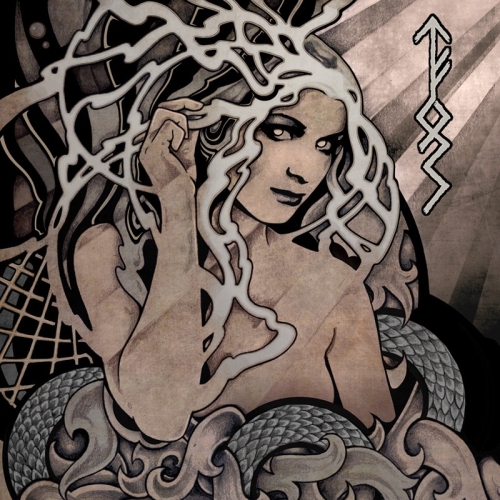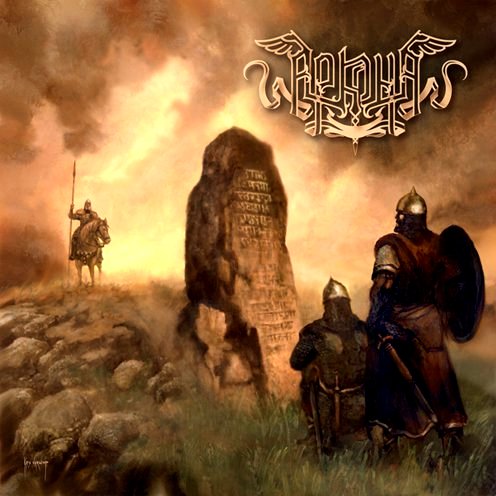
Review: Аркона – Слово (Arkona – Slovo)


I would like to believe that Аркона, or Arkona for you non-purists, is a band requiring little introduction. They did not create the Slavic brand of folk metal, nor are they necessarily the best of their kind, but I would argue that they are the most accessible. Eschewing the common pagan metal dependence on raw production, Arkona deliver directly, presenting a full sound pervaded with folk and ferocious intensity.

At least, that is how I think of them. My ability to relate to the band is a bit narrow. I have somehow only ever listened to Возрождение (Vozrozhdeniye) and От Сердца к Небу (Ot Serdtsa K Nebu), but I’ve listened to both countless times. I am in no position to describe what precisely has changed here since Гой, Роде, Гой! (Goi, Rode, Goi!), but 2007 isn’t that far removed.


Азъ/Аркаим (Az’/Arkaim)

Following their best introduction track to date, Slovo kicks off in standard Arkona form, exploding briefly and then opening up to Masha’s breathtaking vocals. The instrumentation employed differs little from the past–bagpipe and woodwinds driving over epic synths and intense pagan aggression, with slow, tense interludes setting each stage. In the details though, much has changed.

The first difference that caught my eye was the introduction of a violin to accentuate the tension. This application (not its use in general), as it turns out, is more a feature of the opening track than the album as a whole, but the mood it aims for is a recurring theme: expect softer, subtler means to distinguish Slovo’s dynamics shifts.

The other thing I immediately noticed was a diminishing in the intensity of Masha’s metal vocals, and this, unfortunately, is consistent throughout the album. Oh, she can still belt them out better than just about any female metal vocalist out there, but that Slavic shrillness behind the gutturals seems to be gone, degrading into something a bit deeper and a bit more typical to metal in general.


Никогда (Nikogda)

When I returned to a few Ot Serdtsa K Nebu tracks to confirm this latter observation, a lot of other disappointments surfaced. Masha’s mellowing out from a violent she-wolf to a standard death metal growler is only the tip of the iceberg, though her clean singing might be as good as ever. The entire album is really a step down in ferocity. Primitive folk transitions have been replaced by a more consistent reliance on synth and whispered interludes to create a sound that is perhaps fuller but not nearly as inspiring. The track at hand is a bit of a counterexample, but consider it among the heaviest Slovo has to offer, not par for the course.

Don’t get me wrong though. I consider Ot Serdtsa K Nebu one of the best albums of all time, and that’s a pretty high standard to maintain. On Slovo, Arkona continue to produce absolutely solid pagan/folk metal, they’re just complacently maintaining the genres rather than redefining them. The specifically Slavic sounds of pagan metal are here sharing the stage with a more universal approach to the genre.

The album still brings a lot of uniqueness to the table. The guitar on Nikogda manages to maintain a constant tension that never bores in spite of (or even perhaps specifically because of) its simplicity, and it pairs up with the vocals perfectly. The song Леший (Leshiy) delightfully converts a border-line cheesy, carnival accordion into convincing metal. And though no hammer dulcimer is mentioned in the album’s credits, a sound I can describe as nothing else (perhaps very convincing keyboards?) peppers many tracks like falling snow, giving them a decidedly wintery vibe. (I can’t resist pointing out, to the complete apathy of anyone potentially reading this, a peculiar reminiscence I perceive in this last feature to Midwinter Land, the Sindar Ruins theme of Suikoden III, by Michiru Yamane, Keiko Fukami, and Masahiko Kimura.)


Слово (Slovo)

As for my gripes about intensity, the title track does manage to rise to the level I’d come to expect from Ot Serdtsa K Nebu, and might bring to light the stylistic change I had in mind. What springs to life here around 3:30, THAT is what I was looking for on this album. If brief, it demonstrates the intensity hedging on insanity that Slavic folk can offer to metal. That the sort of impact I got from Ot Serdtsa K Nebu in its entirety can only be compared to a passing phrase in Slovo speaks against the album, but in all fairness, that’s a pretty high measuring stick. Slovo is a really enjoyable album throughout, and it’s taken no effort on my part to keep it on perpetual repeat these last few nights. It’s more mellow than what I’d come to expect, in its folk features even more so than in the metal, and the overuse of whispered/spoken introductions and filler tracks is a mild annoyance, but it’s still a cut above much of the competition. If you’re new to the band and these sample tracks left you unimpressed though, do acquire a copy of Ot Serdtsa K Nebu before you write them off altogether.
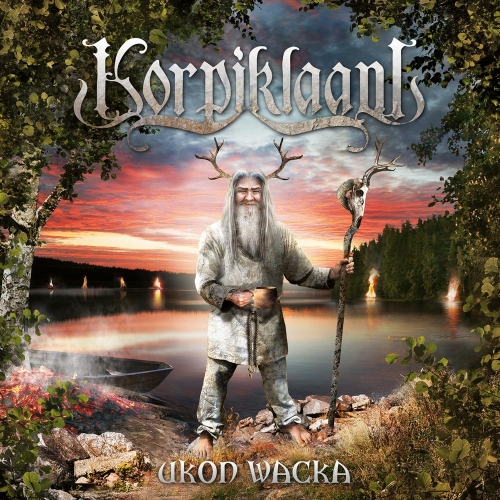
Review: Korpiklaani – Ukon Wacka


I just found out that Jaakko Hittavainen Lemmetty left Korpiklaani last month. According to the band’s official statement, “his personal health issues made the constant touring and recording impossible.” That might come as no surprise, considering Korpiklaani are one of the most prolific bands on the market. During his tenure they managed to release seven albums in nine years, and in 2010 alone they performed live approximately 100 times. I know I certainly wouldn’t be able to keep up.

His departure lends a sort of heightened significance to Ukon Wacka. Hittavainen might not have been their frontman, but he was responsible for all violins and woodwinds on all seven albums. In other words, half of what really made Korpiklaani folk metal is gone, and however well his replacement, Teemu Eerola, fills the void, their next album is bound to be different. Ukon Wacka might be the last of its kind.

Change is a pretty foreign concept to Korpiklaani, both in their sound and in their line-up. That is a point I’ve always appreciated about them. If it’s not broke, why fix it?


Louhen Yhdeksäs Poika

Ukon Wacka is no different. As always, the album makes no attempt at an introduction. It just kicks off from the get-go as quintessential Korpiklaani. Jonne Järvelä goes on rolling out incomprehensible lines at a break neck pace to a constant melody of accordion and violin, brought to life by standard metal instrumentation that’s designed to accent the folk, not compete with it. Throw in an awesome violin solo towards the end, and you’ve got a song that’s entirely unique to the band and entirely to form with everything else they’ve written. The stylistic monotony is hardly a fault, what with nearly all of their 80+ songs accomplishing a distinct and addictive melody. I probably get more Korpiklaani songs stuck in my head than any other band out there; I just might be at a loss to put a name or album to them.


Tequila

One of many long-standing traditions Ukon Wacka upholds is the booze track. Not that every song isn’t designed for copious consumption, there’s always been at least one song that requires no knowledge of Finnish to convey its lyrics. With Wooden Pints on Spirit of the Forest, Beer Beer on Voice of Wilderness, Happy Little Boozer on Tales Along This Road, Let’s Drink on Tervaskanto, Vodka on Karkelo, and now Tequila, Korven Kuningas remains the only album that doesn’t really fit that mold. And like all of those others, Tequila stands out as one of the album’s most memorable songs.


Surma

When it comes to closing songs, the band has been a little more diverse in their selection. But, aside from on Tales Along This Road, they’ve always seemed to save their most reflective or otherwise inspiring song for the end. Surma might not match Karkelo’s Kohmelo or Tervaskanto’s Nordic Feast, but it’s certainly the high point of Ukon Wacka as far as I’m concerned.

There’s not much I can say about the album really, because it sounds just like all of their others. I suppose Korpiklaani might be regarded as a bit shallow, at least in so far as most of their songs, especially in the absence of any understanding of the predominantly Finnish lyrics, are just fun and fairly thoughtless numbers about partying and getting drunk. But there’s also a sort of authenticity to that which renders them significantly more enduring than comparable acts like Finntroll. While I don’t think any particular Korpiklaani album holds a candle to Nattfödd or even Nifelvind, in the long run I always end up listening to them more. A lot of folk bands that don’t take themselves very seriously can only really be appreciated in their own right. Korpiklaani, on the other hand, extend beyond themselves, presenting a sort of continuity. I can’t really speak of them imitating or incorporating Finnish folk because, much like Irish punk and metal bands, they’re more the modern continuation of a long-standing tradition than an attempt to resuscitate it. I’ve never seen them live (they’re about to kick off a North American tour with Arkona that I might give in to a five hour drive across the state for), but I imagine their show incites a lot more dancing than headbanging, if you know what I mean. Authentic folk really implies community participation, and that’s the sort of thing Korpiklaani cater to, on Ukon Wacka as strongly as on anything else.

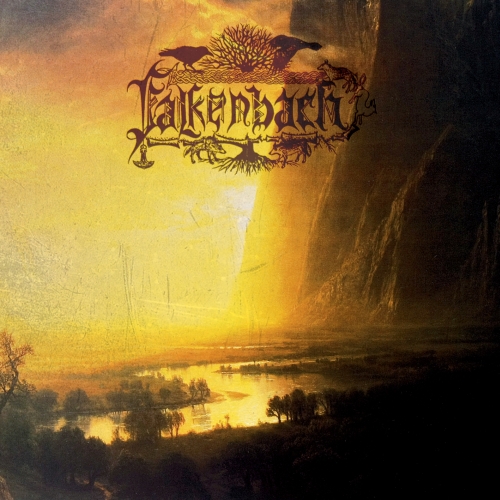
Review: Falkenbach – Tiurida


Geri and Freki does Heerfather feed, / the far-famed fighter of old, / but on wine alone does the one-eyed god / Wuotan forever live.

O’er Midgard Hugin and Munin both / each day set forth to fly. / For Hugin I fear lest he come not home. / but for Munin my care is more.

There Valgrind stands, the sacred gate, / and behind, the holy doors. / Old is the gate, but few there are / who can tell how it’s tightly locked.

Five hundred doors and forty there are, / I ween, in Walhall’s walls. / Eight hundred fighters through one door fare / when to war with the wolf they go.

Five hundred rooms and forty there are, / I ween, in Bilskirnir built. / Of all the homes whose roofs I beheld / my son’s the greatest meseemed.

There is Folkvang, where Freyja decrees / who shall have seats in the hall. / The half of the dead each day does she choose. / The other half does Othin have.

There is Gladsheim, and golden-bright / there stands Walhall stretching wide. / There does Othin each day choose / all those who fell in fight.

Now am I Othin, Ygg was I once. / Ere that did they call me Thund. / Wodan and Oden, and all, methinks / are the names for none but me.

Hail to thee, for hailed thou art / by the voice of Veratyr. / Where Valgrind stands, the sacred gate, / ye will find nine golden doors.

Hail to thee, for hailed thou art / by the voice of Veratyr. / Old is the gate, but few there are / who can tell how it’s tightly locked.


Where His Ravens Fly…

Far from a simple “see you in Valhalla,” Tiurida begins with a faring off worthy of kings, and even before understanding the lyrics you can feel their power in the music. Falkenbach’s 22 years of existence could be described as an effort to express the shared values, traditions, and beliefs of pre-Christian Europe. Written into the music just as much as the lyrics is a reverence for a greater age of man, in which fear and submission had not yet taken the place of mystery and honor. At least, that is what I have always taken out of his works, and perhaps it is why, in spite of the minimal variation in his sound over the years, I’ve always looked to new Falkenbach albums with a sort of reverence.

I never quite got the complaints that every Falkenbach album sounds the same–that he has eschewed developing as a musician and merely continued to produce the same thing over and over again. For while this is certainly true, especially of his last three albums, I would never want anything different. I would gladly take a hundred songs just like Where His Ravens Fly over any change that might cease to capture so fully the essence I’ve described.


Tanfana

I regard Tiurida as a phenomenal success, and possibly the best album of the year. Excluding the decidedly darker and heavier track Time Between Dog and Wolf, what you get on this album are five hymns. There is seldom any anxiety–no desperate or aggressive calls to return to past values, as so many other pagan bands manifest (with much success.) The lyrics are in the present tense, and so, in a sense, is the music. It’s hard to put my finger on what exactly I mean by this last comment, but it definitely lies in the folk side of his sound.

Tanfana is an instrumental song referring to a Germanic goddess of which very little is known. Tacitus’ mention of her in the 1st century is the only surviving source. Fitting, then, that the song should have no lyrics. This song is a very standard representation of how Vratyas Vakyas goes about employing folk music. A few things should stand out right away: The woodwinds are all synthesized; there are no actually traditional instruments at work here. Furthermore, they aren’t being played in any sort of traditional way, with any degree of diversity or improvisation. They are locked into the pace of the song and feel more like a sound sample loop than something performed live in studio.

The effects of this have to be significant, because it’s really what characterizes the folk element of almost all of Falkenbach’s songs. Well, two things stand out to me. Whether we’re talking monks or Burzum or really bad techno, there’s something inescapable about chanting effects. The repetition zones you in and forces you to experience the music in the here and now, whether you want to or not. It creates a heightened awareness of your present state of being. (And it might be why alcohol makes most awful music sound even worse but really bad techno sound awesome, but I’m getting way off focus now.) My point is that an element of this is present in Falkenbach’s sound, not only in the plodding progression of the drums and guitar, but in the folk. The other thing is that the folk instrumentation, being synthetic, bears a commonality with the more standard keyboard choruses he uses. Actual folk instrumentation generally calls to mind an image of something decidedly non-modern, but here there’s very little gap.

So when I say the music is in the present tense, what I mean is that his sound both evades my preconceived disconnection between folk and modernity and zones me into the moment–not of the music, but the on-going present state. Am I just babbling now? Perhaps, but it’s interesting to try and understand what about his sound appeals to me so distinctly from any other band describable as folk/viking/pagan metal. I think that, instead of taking me into the past, it has a sort of capacity to bring the past to me and blur any distinction.


Sunnavend

I suppose we all have particular bands and songs that move us in a personal way and might not have any such effect on anyone else. Falkenbach is just one of those bands for me. I don’t ever want his sound to change, and I’m so glad that on Tiurida it didn’t. This music gives me a unique sort of peace of mind–a feeling that lofty visions of the past aren’t mere idealizations or lost causes, but are entirely realizable in the present. This music is a hymn to the immortal, personified through gods whom modern society has yet to blaspheme.

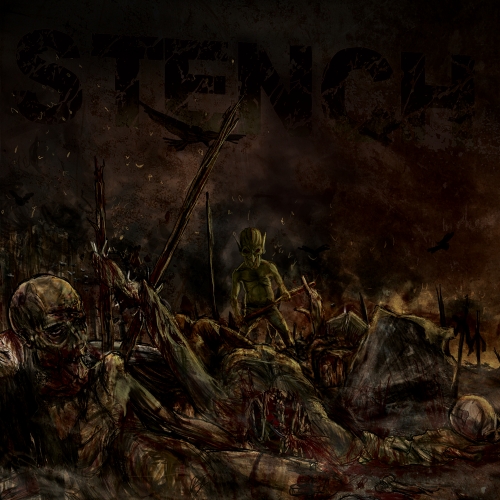
Review: Nekrogoblikon – Stench


Up until late July, Nekrogoblikon were a nearly forgotten gimmick. Their first and only previous album, Goblin Island, was released in 2006, and that was the last I ever heard of them. Aside from telling the story of an extra-terrestrial goblin invasion of the most heinous sort (they even ruin Christmas), it featured, among other things, sound clips of the band screaming like little girls, an actual stereotypical Christmas song, a cover of In Flames’ Artifacts of the Black Rain with all the lyrics substituted for banter about goblins, and a dance beat chiptune outro. Musically, it was simultaneously a mockery of a lot of the bands that probably influenced them and a pretty decent, enjoyable imitation of them. But it was never funny in say, a GWAR or Alestorm sort of way. It was more like a Weird Al thing–a novelty. You laugh, but you really don’t want your friends to know you listen to it, and you never play through it twice in a row.


Goblin Box

Their new album is a very different beast. Over the past five years they’ve actually matured into really good song-writers. Don’t get me wrong, Goblin Island had some really catchy tracks, but in the music just as in the lyrics there was a sort of audible immaturity, by design of course, that made light of the bands they were imitating. On Stench this notion is more internal. That is, they’re still parodying Children of Bodom, Finntroll, and just about anything in between, but instead of hearing a bunch of kids making a joke you hear a bunch of goblins being goblins. The immaturity is no longer in the execution; it’s encased in really solid music that, given better production value, could rival many of the very same albums it pokes and prods.

Basically, on Stench the line between a musical parody and a successful cross-genre epic metal masterpiece is very grey indeed. Yet the lyrics are just as blatantly whimsical as ever. The result is hard to swallow, because it’s so good and so bad at the same time. I imagine the spoken ending of this song is a rip on Rhapsody of Fire’s infamously lame spoken lines; it goes approximately “The humans had opened the box to torture and maim all kinds of magical creatures, but the goblins were not to be trifled with. No, not to be trifled with at all. And as the humans laid there, a pulsating mound of bone and flesh, dead and mutilated beyond all hope and reason, the goblins feasted upon their rotting corpses, filling the halls with the shrill sound of chilling laughter….. Forever!” And yet when you listen to it, beneath the cheese you get the feeling that it’s a really badass ending.

It took quite a while for me to get sufficiently passed the fact that it’s a parody to enjoy it in its own right. That was Stench’s initial impact: a part of me was left feeling like I’d been cheated out of something awesome on par with Ensiferum and Equilibrium, but the more I listened to it the more I wanted to click repeat, plant my hand firmly in the center of my face, and grin from ear to ear underneath it. At this point I can safely say I love it unconditionally.


Gallows & Graves

There’s something of a third dynamic going on here as well, and it’s what really tips the scale towards greatness. In some odd capacity this really is, well, goblin metal. If we think of them as those short, mischievous little tinkers that are a good bit like gnomes with the added plus of being spawns of Satan, you can actually hear something of this in the music. Goblins ARE both comical and evil, and while Goblin Island was too much of a joke (albeit a good one) to capture this, Stench pulls it off. Trolls and vikings and pirates have all acquired a sort of musical imagery, much of which isn’t meant to be taken entirely seriously. The idea of a goblin is a good deal less serious than all of those to begin with, and if I was going to “seriously” create a metal sound to capture them, well, Stench seems pretty on the mark. The frantic intro/chorus melody of Gallows & Graves and the kind of childish clear vocals really do call to mind some small, obnoxious, vicious little bugger hopping around your feet, and this same musical imagery reoccurs throughout Stench with a consistency that Goblin Island lacked.


A Feast

It’s really hard to talk about what Nekrogoblikon “accomplished” on this album with a straight face, but the fact of the matter is Stench is really damn good. They manage to successfully combine elements of more metal sub-genres than I can count. It’s also got the clever bonus of thematically justifying all of its potential negatives. Goblins are as obnoxious as they are evil, right, so if they’re mocking a bunch of their metal predecessors musically it’s only natural. This is goblin metal.

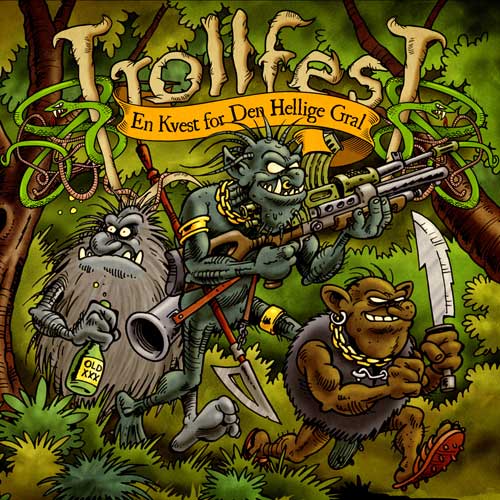
Review: TrollfesT – En Kvest for Den Hellige Gral


TrollfesT certainly aren’t for everyone, but I sometimes wonder whether a lot of people who criticize them even bother clicking play first. The biggest complaint I tend to see about TrollfesT is that they’re just a Finntroll ripoff. After all, they both have “troll” in their names. And they’re both bands. It must be a ripoff.


Undermålere (I am lead to believe this is a fan creation, not an official music video.)

Right. Well, now that you’re hearing this you’ve probably experienced more of the band than a lot of the people who’ve written negative reviews of them. What I think you get when you hear TrollfesT isn’t so much “another folk metal band” as a bunch of music students who’ve got some decent professional training but decided they enjoyed drinking and playing live more than grad school. TrollfesT is a clusterfuck of klezmer, Balkan and gypsy folk, and whatever else they were introduced to in musicology 101 and decided to incorporate. For better or worse.

One thing you’re not going to hear on En Kvest for Den Hellige Gral, or on any of their other albums, is much of a folk/viking metal ethos. There’s a decent chance they’re more familiar with Taraf de Haïdouks than with Bathory (though they have as much of an awareness of metal as all the other styles they incorporate). Hell, they’re probably the least serious band that can be called folk metal. The lyrics are barely coherent gibberish. En Kvest for Den Hellige Gral isn’t in German or Old Norse or anything of the sort. It’s exactly what it sounds like: “The Quest for The Holy Grail” as written by someone a little bit slow, like say, a troll? I think it’s supposed to be consistently coherent enough to be understandable if you know Norwegian, but it’s not a real language.

Each release is a concept album, and while I can’t speak for this one they’ve come package in the past with a mini-comic telling the tale. It usually involves a bunch of imbecilic trolls going on an epic journey for booze (I’m sure the Holy Grail here is some self-replenishing tankard of ale) and pillaging, plundering, slaughtering Christians and all those other good light-hearted folk metal topics along the way. It’s never going to make a statement or push a particular world view, it’s just meant to be fun.


Die Verdammte Hungersnot

Far from being “Finntroll ripoffs”, the band is so unique that there’s nothing I can really compare this to besides their own past works. So what I have to say about En Kvest for Den Hellige Gral specifically will be, I guess, pretty brief. One thing I noticed was a lot of breaks in the folk side of their sound. You’ll find a lot more 30 second or so segments of straight-up metal on this album than on Villanden. That, to me, is a bad thing, because when they’re not playing folk or doing something weird they’re pretty generic.

On the plus side, the folk is largely a continuation of Villanden. That is, rather than the home-grown sort of sounds they used on their first two albums, they incorporate recognizable styles that you can have some fun trying to identify. The recording quality seems to have improved a bit too, which in their case I found kind of disappointing. Villanden’s raw sound gave it a sort of primitive feel that I thought complimented their style.

In a lot of ways it’s their most mature and diverse work, but it lacks some of their last album’s lasting appeal. The songs aren’t quite as catchy. The way the middle of Die Verdammte Hungersnot instantly sticks in your head was a bit more commonplace in the past. The vocals aren’t nearly as unique, and if it sounds all around more professional, well, that doesn’t necessarily work as well for their image. If Villanden was borderline insane, En Kvest for Den Hellige Gral is merely pretty weird.


Der Sündenbock Gegalte

That all being said, if you’re new to the band entirely and intrigued I recommend Villanden over this one. I have a love/hate relationship with it that extends way beyond my interest in anything else they’ve released. But En Kvest for Den Hellige Gral is still pretty good, and it’s a promising sign of things to come that they’ve continued to expand their sound.

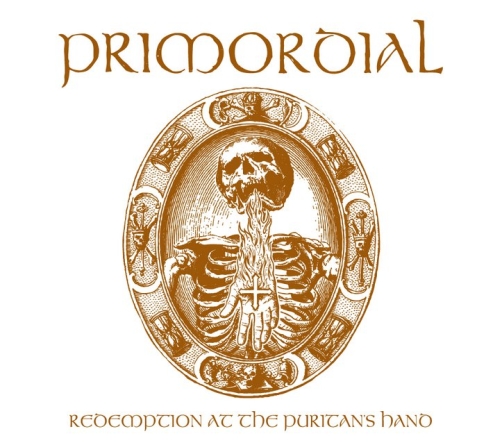
Review: Primordial – Redemption at the Puritan’s Hand


I’ve seen this tagged black metal, and I really have to wonder. I’m not familiar with the band’s history. I haven’t heard any of their earlier releases but To the Nameless Dead, and that only twice back in 2007. So maybe they were black metal once, I don’t know. But calling this anything but Celtic metal would fail to properly describe it. It bleeds green.

No Grave Deep Enough

And like many Irish bands, the lyrics are the focal point. Redemption at the Puritan’s Hand is an album about death. The band stated that much pretty bluntly when they released it. But it doesn’t approach the subject through the music (unless metal or Irish melodies can be said to be connected to it by default), nor does it settle for less mature pseudo-poetic lines about chaos and evil and all that nonsense you hear in metal. It’s an in-your-face, unfanciful confrontation. You might not get the bigger picture of each song every time. I’m not going to pretend I do. But line by line it often hits hard and direct, in a powerful vocal style you can understand without having to look up the lyrics.

To the Nameless Dead must not have immediately impressed me too much, because I never did end up giving it an attentive listen. Redemption at the Puritan’s Hand had me hooked by the opening chorus. “Oh death, where are your teeth that gnaw on the bones of fabled men? Oh death, where are your claws that haul me from the grave?” The album is packed full of lyrics you’ll not soon forget.

Bloodied Yet Unbowed

As such, its highs and lows are related. An album like this can be difficult to pull off, because it gives the listener the feeling that every line sung has to matter in some direct, accessible way. Sometimes they simply don’t. For every moment like No Grave Deep Enough’s chorus, you’re going to find an opportunity lost. The song Bloodied Yet Unbowed is a case in point. When the time comes for a powerful stand-alone statement to conclude the opening lines, they really don’t deliver, settling for “You may say I have lost to a better man . . . yet maybe one who did not dare to be wrong or even to be right.” However much meaning might be intended there, and however much you might accurately read into it, there’s a sense of nonsense about it that leaves me unimpressed.

Don’t get me wrong. If I didn’t think Redemption at the Puritan’s Hand had great lyrics I wouldn’t keep going on about them. But they don’t hit home every single time they’re intended to, and that’s at least a minor, petty disappointment.

I haven’t even mentioned the music yet. As you can tell plainly enough from Bloodied Yet Unbowed, there really is a black metal side to them. It just plays no role in driving or defining the album.

The Puritan’s Hand

The penultimate track, The Puritan’s Hand, is my favorite on the album. I about wrecked my car the first time I heard it. Without following a completely direct path of progression, the music evolves from something slow and fairly formless, to something borderline happy that you can really rock out to, to something powerful and intense.

I’m struck by the relative simplicity of the guitar and drumming throughout, and especially in the middle. I’m not sure what direct effect this has, but the track gives off more of an Irish vibe than any other on the album to me. Also the ending is interesting, because it’s the sort of intensity I’d expect in post-rock or pre-commercial success screamo (What’s the acceptable term for that these days? Emo violence?), certainly not from a band with black metal roots. But then, I get the same impression from their fellow countrymen Altar of Plagues, and they’re black metal. Make what you will of that.

Being pretty much new to Primordial, Redemption at the Puritan’s Hand was a delightful surprise–probably the last thing I ever expected from a band generally tagged “folk black metal.” The vocals, the attitude, the unique guitars and drumming that defy thorough classification, an actual regard for the power of words, it all comes together into something pretty unique and refreshing. This one’s definitely worth picking up.

Review: Moonsorrow – Varjoina Kuljemme Kuolleiden Maassa


A few months ago I placed this album in my top 5 of 2011 so far, but I really didn’t have much to say about it. Despite having listened to ample amounts of this band over the years, I really am still in no position to thoroughly compare it to their past works (though I’ll certainly try). Moonsorrow has always been a band I’ve listened to in passing–something I put on for the mood it sets, not to appreciate its intricacies. In this sense Varjoina Kuljemme Kuolleiden Maassa is no different. But in the span of just, what, six months, I’ve listened to it more than all of their other albums combined since I first heard about them. So it’s got to have something special going for it.

Tähdetön

The first thing that makes Varjoina Kuljemme Kuolleiden Maassa so effective is showcased in the first minute of the opening song. That deep, crushing guitar tone that kicks it off doesn’t lose the spotlight until at least half way through the album, and it’s never abandoned completely. A quick skip through their larger discography tells me this is something fairly new. It’s not their first album to be largely driven by guitar chords, but I’ve found nothing as deep, encompassing, or persistent as this. The result is a fuller sound that keeps me connected as the surrounding styles vary. Tähdetön might move over time from something grim to something sweeping and beautiful, but a thread connects it all. The opening song doesn’t transition in the same sense as their previous works; it follows a steady progression.

Huuto (first 15 minutes)

The folk elements of the album are also worth noting. If a bit less authentic in feel than they used to be, they’re far more in touch with the music that surrounds them. I can’t help but think of Equilibrium’s Sagas throughout Huuto, and to a lesser extent on the other three tracks as well. You’ll find little in the raw here; it’s typically encased in or entirely consistent of dreamy keyboards that feel more fantasy than folk. This isn’t something entirely new for the band. They’ve always been pretty synth-heavy. But I don’t think you’ll find a parallel to Huuto’s intro on their past albums. I think it would have started out with just an acoustic guitar and the keyboards would have entered along with the distortion, or else would have been more of a drone than a dreamy accompaniment. Just like the intro to Tähdetön gives you a distinct example of what has changed on this album metal-wise, the intro to Huuto shows their new approach to folk. The keyboards and traditional sounds are inseparably fused, not two distinct elements of the band.

The third great thing for me is that they’ve returned to writing reasonably short songs. Their last couple releases have been made up predominantly of 30+ minute marathons that are hard to engage from start to finish. The longest song on Varjoina Kuljemme Kuolleiden Maassa is sixteen minutes. I have the option to single out a song once in a while and really get into it from start to finish, making each track a bit easier to appreciate.

Kuolleiden Maa (first 10 minutes)

A lot of what I’ve said about this album doesn’t really apply to the final song, Kuolleiden Maa, which is a fourth of the entire album. It is decidedly darker, and the only track that can really be described as black metal. It’s just as enormous as the rest of Varjoina Kuljemme Kuolleiden Maassa, but the feel is very different. That it’s my least favorite track should be no slight against it; it probably sounds more like what you would have expected on a new Moonsorrow album than any of the others. And it’s well placed to not disrupt the rest of the album. The three generally upbeat tracks come packaged together before the bleak conclusion. It also ends where the first track begins (though this sample doesn’t get that far into it), making the whole album very repeatable. The annoying bit of static you hear on the left in this sample is the product of youtube, by the way, and not something to worry about on the album proper.

In short, everything about Varjoina Kuljemme Kuolleiden Maassa feels bigger, more surreal, and all around more engaging than their past works. It has an incredibly dark ending, but I’d also say it’s all in all more happy and optimistic than their past works–something that certainly appeals to me when I’m in the mood for folk metal. As quintessentially Moonsorrow as it may be, it’s a definite step in a new direction, and the result is my favorite release by them to date. I didn’t actually sample my favorite track here. That would be Muinaiset. But all four feature songs (the rest are short intro/outro/transition tracks) are superb, and you’re definitely missing out if you don’t pick this one up.

Review: Kroda – Schwarzpfad


I’ve been listening to this album for months now and I’m still not sure what exactly I want to say about it. The songs are very well written in a format you might come to expect from Ukrainian metal; In some ways I feel like they’re better written than most others in their scene, including Kroda’s past works. But there is a lack of intensity in the execution that leaves me unable to be really moved by it. I don’t know if it’s a matter of performance or production, but something just isn’t there.

First Snow

The result is rather uncharacteristic. I mean, what do most Slavic metal bands have in common if not a degree of savage intensity that puts all other metal scenes to shame? Schwarzpfad goes for a much more mellow approach. It’s got this weird dual effect of highly dynamic song writing and almost monotonal atmospherics. The acoustic breaks, the woodwind solos, the occasional peak into a triumphal chorus, they all just kind of blend together for me. Like on this song, nothing really stands out to mark the switch into the guitar and vocal peak that starts about two minutes in. I sometimes barely notice anything has changed.

Now, I’m not calling this a fault. I don’t know what Eisenslav intended, so I’m in no position to say he missed the mark. But it certainly makes for a difficult listening experience. You just have to force yourself to pay attention, because it can be very inaccessible at times.

Forefather of Hangmen

Any complaints I might have about the sound quality of this album (and these youtube rips actually sound a lot better than the 192 cbr copy I found) shouldn’t overshadow its many positive traits, but what makes Schwarzpfad good I’ve had equal difficulty describing. The songs are just really well written, and I might have to leave it at something as vague as that. Honestly, the juxtaposition of really great songs and what I feel is a really bad recording make both pretty difficult to describe. I can’t hear the good attentively without thinking of the bad, and vice versa. I’ve invested a tremendous amount of time into this album and all I’ve taken out of it is a conviction that there’s something really great here and I’m not hearing it, so I think it’s time I called it quits. If they actually decide to tour the United States for once I’ll be the first in line to find out just how good Schwarzpfad really is, but until then I think I’ll give this one a rest and wait for their next album.

Review: The Flight of Sleipnir – Essence of Nine


This has been sort of the year of stoner metal. I swear a new entry to the stoner/doom/sludge genre comes out every week. I’ve ignored most of it. It’s not that I dislike it, I just haven’t been in the mood. But once in a while I’ll sample a few tracks here and there, give each band a minute or two of my time. The Flight of Sleipnir didn’t even require that much effort–within the first ten seconds of the opening track I was hooked.

Transcendence

How these guys aren’t on the radar is beyond me, because this is pretty much everything I could ever want from an album. Sure, the production isn’t that great, but neither is Black Sabbath’s, so let’s get over that right form the start and soak this all in. Here’s a band that just hands you everything you could wnat on a silver platter right form the get-go. A killer bluesy stoner metal groove, delicious acoustic interludes, perfectly executed black metal style screaming, beautiful clean vocals that harken to Mikael Akerfeldt, and we’re only five minutes into the album.

As Ashes Rise (The Embrace of Dusk)

As you might have expected, the opener is just an introduction to what they have in store. Sure they’ve played all of their cards. No additional styles or elements are implemented further down the line. But what they’ve introduced just keeps on improving as the album progresses.

There is a surprising prominence of acoustic melodies packed into Essence of Nine, so much so that I’m inclined to call it folk metal just as much as stoner metal. The abundant allusions to Norse mythology and use of rune stones on a decidedly doom metal album cover suggest that the band would agree. That distinction alone could make an album stand apart, but if “stoner folk metal” is now a term with meaning, they’ve done more than initiate. They’ve come awfully close to perfecting it.

The Seer in White

Because the quality of their song writing overshadows the fact that what they’re doing here is unique. And while I’ve showcased those songs that most appeal to me–the most folk-centric of the lot–there is plenty to be had for fans of the more punishing characteristics of doom. It’s never quite crushing enough to rival the best artists of that sort of music, but as a compliment to the folk side of their sound rather than the main focus of the music, it’s certainly sufficient. Given a live venue and enough amplification I think they would blow me away.

As Cinders Burn (The Wake of Dawn)

Anyway, there you have it. I think I’ll spend more time talking about this album than actually listening to it throughout the year. It’s not the sort of thing I’m always in the mood for, but I can find no fault. People looking for strictly doom metal might find it lacking, but if you’re interested in something a bit more diverse Essence of Nine is a sure bet.

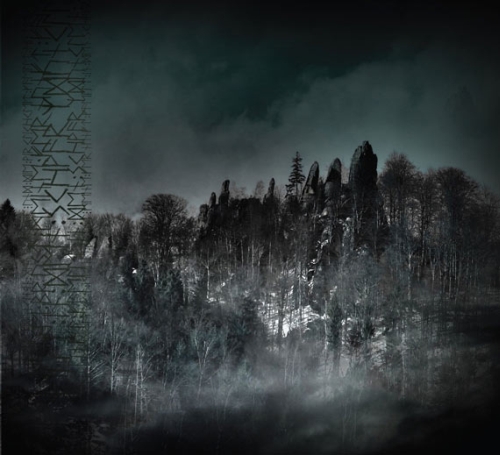
Review: Waldgeflüster – Femundsmarka: Eine Reise in drei Kapiteln


Here is an album that should appeal first and foremost to fans of Agalloch. Waldgeflüster is a rather recent creation. The one-man project was started by Winterherz in Germany in 2005 and released its second full length this past May. I can’t speak for his first album, but Femundsmarka definitely deserves more attention than it’s bound to get. A product of that marriage of black metal and ambient folk that has become rather common these days, it might not reach the very top but it certainly rises above the status quo.

Interlude II: Night

Unfortunately most of the folk and ambient tracks of the album aren’t available on youtube. This one, as much as I love it, is my least favorite of the four. Just consider that while the vibe this track offers is present throughout the album, the musical styles creating it vary. The intro and outro make use of acoustic guitar, and the first interlude is a beautiful ambient piano piece.

The concept of the album is pretty self explanatory, but requires a bit of German translation. Femundsmarka is a national park situated in the mountain range separating Norway from Sweden, and the album is a musical retelling of the artist’s travels there, translating literally as “Femundsmarka: A Journey in Three Chapters”. The track list, roughly, translates to:

Prologue: Departure
Chapter 1: Lakeland
Interlude: Rest
Chapter 2: Stony Deserts
Interlude: Night
Chapter 3: Spruce Grove
Epilogue: Homecoming

Generally speaking, the main chapters are black metal and the in-betweens are folk, but there is plenty of cross-over both ways.

Chapter 1: Lakeland

So if many of the metal portions of the album are as reminiscent of Drudkh as the folk bits are of Agalloch, it should come as no surprise that all three bands highlight nature as their main theme. I could go about comparing them all, but I don’t think it would be entirely fair. This isn’t some monumental standard-setting album like Swan Road or Pale Folklore, nor does it strive to be.

And any first impressions that Winterherz is just copying other artists’ styles should vanish around the 2:30 mark anyway. It commences the most descriptive movement of the album, as you can hear the traveler begin to comprehend the beauty that surrounds him, exploding in a final triumphal realization around 4:20.

The work certainly isn’t perfect. I struggled at times in Chapters 2 and 3 to remember that Winterherz was trying to show me something and not just writing another metal album. But its high points are pretty great, and the only standard you might say it falls short of at times is its own–it’s consistently good, just not consistently visual. The introduction, interludes, and outro are my favorite moments, and give the album a higher degree of stylistic variance than most metal of its kind. The more subdued entries aren’t sparse, either, filling up nearly half of the album.

In the absence of a full track list on youtube, someone took the effort to compile an eight minute sample of the album that covers a lot of ground without revealing too much. I’ll leave you with this. If you have to buy it to hear the rest, well, your money will be well spent. Not an album of the year contender, but a pleasant surprise from an artist you’ve probably never heard of.