Review: Panopticon – Roads to the North


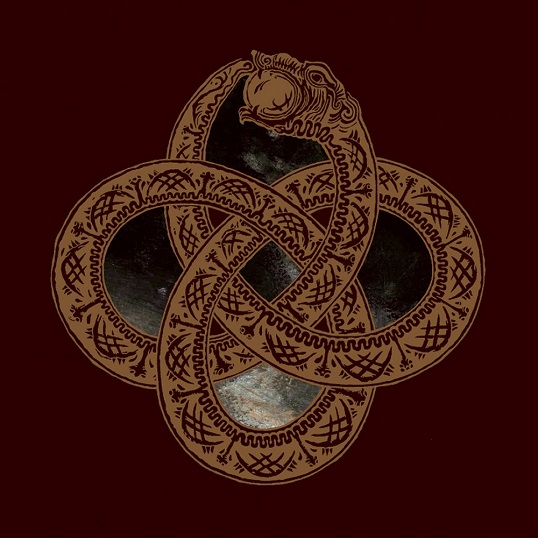
Two years removed, Kentucky has left a unique long-term impression in my mind. For all of the excitement over an authentic and well-crafted mingling of traditional Appalachian folk and black metal–the term “blackgrass” got tossed around a lot–I honestly don’t remember how most of the songs went. This is because Kentucky‘s message managed to trump its sound. I remember the old man talking about organizing strikes against the coal company. I remember Sarah Ogan Gunning’s boldly defiant calls to overthrow capitalism. I think of settlers slaughtering Indians, mountains blown into dust, rivers running black with pollution, grim-faced miners broken in body but never in spirit, a modern generation abandoning everything their ancestors worked so hard to accomplish… That is my memory of Kentucky.

https://www.youtube.com/watch?v=g-q1RURXusI

Chase the Grain

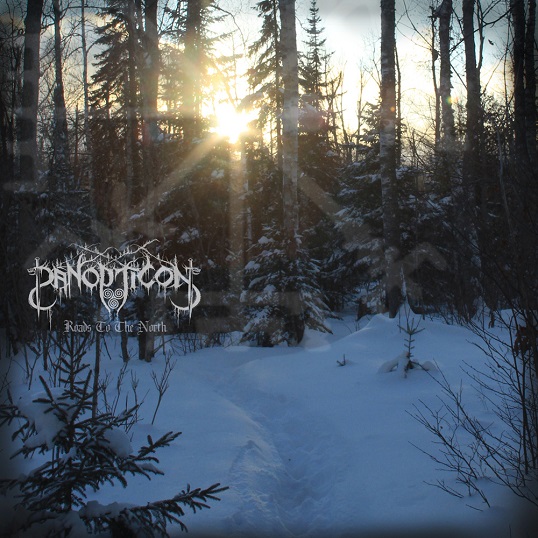
I can’t detach myself from Kentucky enough to appreciate Roads to the North as an independent entity. That’s probably fine. I had never heard of Panopticon before Austin Lunn nailed his bloody heart to his sleeve in 2012, and that identity will persist through my perception so long as it remains true. Roads to the North has no explicit message, no lyrics sheet, no spoken tracks or American folk covers. But it has Kentucky, and because of that every song takes on a deeper, more robust meaning than it might have otherwise.

It would be interesting to know what a folk/black metal fan unfamiliar with Panopticon takes from this album. Does the music alone stand far above and beyond the norm? I like to think it does. The album incorporates some entirely unexpected but highly effective melodic death metal moments, especially in the opening track “The Echoes of a Disharmonic Evensong”. This track also gives us perhaps Lunn’s best incorporation of fiddle directly into black metal to date. “The Long Road Part 2: Capricious Miles” transitions out with a long and enthralling jazzy progressive rock chill reminiscent of mid-era Opeth. The whistle in “Where Mountains Pierce the Sky” sounds nothing like what we’re used to out of the European scenes, harkening instead to a western indigenous sound I have only heard from some obscure Mexican folk metal bands. “The Long Road Part 1: One Last Fire” is an unconventional six minute acoustic bluegrass piece that feels more like something straight out of Lunn’s imagination than Appalachia.

The intensity hops around so suddenly that Roads to the North may feel disjointed at first, but the stark contrasts are never forced. Because you don’t always see them coming, they are striking rather than cliche. Lunn performs each of the album’s myriad instruments better than a lot of people who specialize in only one, and there aren’t many producers on the black metal market that can compare to Colin Marston. He has a knack for subtlety that is hard to come by in the scene. I absolutely love the way the tremolo emerges around 30 seconds into “Chase the Grain”, for instance. It’s so soft that you feel its effect on the song as a whole long before your brain consciously recognizes it.

https://www.youtube.com/watch?v=zSlCWhbKorM

Norwegian Nights

But I suppose I don’t really care about the finer musical details of Roads to the North, and that is why I found this album so difficult to review. This music is only a gateway. Like an engaging book, you never notice that it is well written. Roads to the North is not the guided tour we found on Kentucky. It leaves us be to explore where the feelings take us within the context of the world Lunn has already shown us. Those paths can be rocky. It’s not the glorified past of so many European pagan metallers. The should-be eternal is tainted. The land is marred. It’s the introspective melancholy Americana of Bob Dylan and Tom Waits, and your heart goes out to so many things that you can never hope to save.

Lie beneath a cold blanket and watch the mountains sleep. The train rolls by every hour, as I wake and dream. The woods and the hills–faces so dear to me. Frozen lakes, flatland snow, where I’m called I’ll go. Such still quiet, then the whistle echoes. My fragile sleep torn from me, as many other things will be.

Review: Saor – Aura


The history of Saor is a bit deceptive. If you’ve heard the name at all, you didn’t until last year, but the man behind it has been around for some time now. Before Scotland’s Andy Marshall chose this name for his solo project, he released Eternity as Askival in 2009. He was also a major factor in Where Distant Spirits Remain by Falloch in 2011. Neither of those albums stuck with me well enough for me to remember how they sound off the top of my head today, but I do have them. That tells me this is a musician with a good bit of experience, who managed to get his name out there well before he changed it to Saor. Aura is apparently his second release as Saor — he released Roots last year, and I’ll have to make a point to go check it out. If it sounds anything like Aura, it will be well worth the trouble.

http://www.youtube.com/watch?v=9uOhtvi_PLM

Saor – Children of the Mist, from Aura

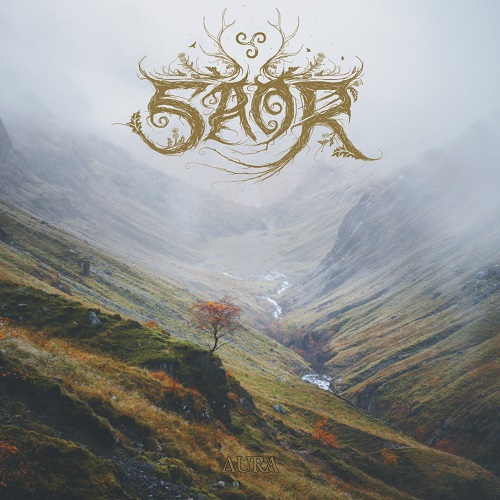
It does not take long for this five song, 57 minute album to convince you that it has something special going on. The opening track, “Children of the Mist”, erupts almost immediately into a graceful, distinctly Gaelic sweep of woodwind, layered atop well-mixed metal that lets the folk melody shine without much intrusion. The piano and string that follow seem to float in the air, painting a vivid landscape that seems to mirror the album’s cover art. The vibe is similar to Waylander of Northern Ireland, and it feels like it could drift on forever without losing any of its opening grandeur. Around 4:20, the metal briefly gives way to a beautiful cloud of strings and traditional drumming, soon to be met by blast beats that, much like on Kentucky by Panopticon, manage imbue the landscape with life rather than darkness. As the song continues on, you hear a wide variety of folk, pagan, and black metal techniques employed towards this same end of adding a feeling of life and spirit to the nature scenes that the traditional instrumentation invokes.

Saor – The Awakening, from Aura

This approach holds true throughout the grand bulk of the album. The melodies always arise from the folk instrumentation, with the metal serving a supplemental role of forcing you to feel directly engaged in the moment–a temporal witness to some eternal tranquility. It is a devout album, alive in reverence for the spirits of the land. From start to finish, it varies relatively little but never disappoints.

I suppose the terms “folk” and “pagan” can get thrown around rather haphazardly at times, without much of a clear distinction. One tends to conjure to mind lighter, “fun” bands like Korpiklaani and Alestorm, the other more serious bands such as Waylander and Drudkh. Sometimes this seriousness generates a sort of militarism or savagery, rendering bands like Arkona and Nokturnal Mortum far more intense than anything traditional black metal has produced on its own (and far too often, in Nokturnal Mortum’s case for instance, this gets vandalized by absurd notions of supremacy). But this does not always have to be the case. On Aura there is never a hint of desperation or brutality. The feeling is purely of peace and reverence boldly denying that the tradition it embraces has been in any way weakened by the modern world. “Folk” and “pagan” both denote music focused on ways of life that are no longer socially acceptable or possible in a modern, technologically advanced, monotheistic world. If folk suggests people, pagan suggests religion, and the religions of old were not based upon some highborn Greek notion of divinity. Their gods took hearth in wood and water and earth. Saor feels like pagan metal in that sort of sense to me. Its folk instrumentation paints the landscape, and the metal imbues it with supernatural life.

Aura is undeniably one of the most beautiful recordings of 2014. Don’t let it pass you by.

Review: Valknacht – Le Sacrifice d’Ymir


Valknacht is a five-piece paganish metal band from Quebec that have released three albums beginning in 2009–not to be confused with Walknut, the highly acclaimed side-project of Stringsskald from Темнозорь (Temnozor). I suppose I grabbed this album for an obvious reason: it presented a pagan tag from a relatively new act I had never heard of. With the folk and pagan metal scene now fifteen years in the making, a lot of the old stalwarts are simply running low on material. I am always hoping to stumble upon a new collaboration willing to pick up the slack and carry one of my favorite genres onward into a new era. Valknacht could be that band, but it’s going to take some work.

Valknacht – Bataille de Maldon, from Le Sacrifice d’Ymir

The album begins with a 3 minute intro track that I’ll not bother sampling here. You already know what it sounds like. Oars splash through the sea in time with viking voices oooing and OOOing and sometimes aaahhing. Break and repeat with some overbearing choral and brass synth, throw in a gong for good measure, and you will find yourself in the opening moments of “Bataille de Maldon”. Add a dash of synth woodwind, queue the crunch crunch crunch monotone guitar, and remind your drummer to make it metal in a few more measures. The black metal at 2:05 gives us a well-needed boost, and from there the song transitions to something that ought to be really, really cool. 2:40 made me think of Nokturnal Mortum’s “The New Era of Swords” from Weltanschauung, and for about one minute “Bataille de Maldon” is a song I really want to listen to. But the segment soon gives way to something fairly indistinguishable from what came before.

For the vast, vast majority of this 9:30 song, what you hear is an endless rain of double bass, rhythm guitar that only knows two patterns and three chords, a cheap synth whistle that’s totally unconvincing as the real deal, an admittedly interesting lead guitar, and total synth overkill plugging in every gap, sometimes doubled up with layers of “OOOOOOOOO”.

Yet, this could have all worked out really well. This band surely listened to a lot of Moonsorrow, and the string portion of the synth gets playfully close to Nokturnal Mortum at times. But the rest of the synth is just bad. It feels so fake. They use bold brass like they’re Equilibrium or Turisas, but the music isn’t nearly bombastic enough to merit it. The woodwinds have no depth, no air, no punctuation… Аркона (Arkona) is about the only band I can think of that pulls off fake woodwinds effectively (unless others are doing it so well I take them for studio musicians), and they must have much higher-end equipment than Valknacht at their disposal to do it with. It would have been nothing for one of the band members to pick up a whistle and record it proper. The vocals get really annoying really quickly for lack of dynamics or anything interesting to encase them. And the song goes on and on and on without ever adding much of anything. By 3:10 we’ve pretty much heard everything, and there’s next to nothing in the form of build-up or break until we hit a sudden transition at 8 minutes into an admittedly solid finale.

So, am I going to say anything good about this album? Surprisingly, yes. Quite a lot actually.

Valknacht – Le carmin des anges, from Le Sacrifice d’Ymir

The tragedy of Le Sacrifice d’Ymir is that just about anyone listening to this album will get the same impression that I did for its first 13 minutes. How many will keep listening? Few, I suspect, and it’s a shame because by the end this album is sounding pretty damn solid. “Le carmin des anges” is the closing track. It should have been the opening. Here is a song that cuts out all of the bullshit and condenses everything I did like about “Bataille de Maldon” into a much more manageable 5 minute package. The term “trying” drops back down my throat, and I hear some really badass Windir licks connected by groovy breaks and synth again reminiscent of Noktrunal Mortum. Thorleïf’s vocals do a total 360, and his previously dull deeper bellows sound epic when juxtaposed and then overlaid with higher-pitched rabid black metal screams.

The collective sound really works here, too. The Moonsorrow vibe they were going for in “Bataille de Maldon” flopped for a far-too-excessive attempt to be epic. That sort of music is meant to sound earthy, and the synth swarm just made it seem cheap and fake. On “Le carmin des anges”, a lot of the frivolous choral and brass sounds are gone, and what remains works far better with the Windir vibe they’re getting at.

Valknacht – Le sacrifice d’Ymir, from Le Sacrifice d’Ymir

You didn’t have to wait until the last track to find this though. The third, “Chants de guerre”, carries an infinitely more successful Moonsorrow vibe than the song before it. The woodwind’s fakeness is barely significant because the loop it plays is more of an unnatural Falkenbach chant than a harmony. Thorleïf’s full vocal range finally comes into play, and there is way more Windir-esque black metal–a sound they do right. Track 4, “Sur les ruines de Rome”, throws in some seemingly female screams and spoken lines that feel kind of reminiscent of Masha from Arkona, and could be a guest musician or further testament to Thorleïf’s range. (Liner notes for this album have been hard to come by.) As if Masha had been on their minds, track 5, “Le sacrifice d’Ymir”, feels pretty “slava!”, with some frantic whistle and guitar tapping. I had good cause to doubt another 10 minute track, but there is so much more going on here than in “Bataille de Maldon”. Thorleïf’s vocal dynamics alone are enough to make the overdrawn passages–and there are certainly a few–way less dull, the lead guitarist keeps up that Windir kick he’s proven pretty good at, that obnoxious rhythm guitar from the opener is all but missing, mixed down from a nuisance to its proper role and a background accessory.

“De murmures et de givre” starts nice but regrettably returns to a lot of the mistakes of “Bataille de Maldon”–a 7 minute track that could have probably made its point in three and a half. “Que le sang constelle mes mains” gives us our first and last taste of some accordion. Though its synthetic generation is painfully obvious, it does kick off with a melody pleasantly reminiscent of Finsterforst. Again though, the song drones on way too long with boring “I’m going to growl, you chugga-chug, and you hit a whole bunch of notes at once on your keyboard” moments.

So what’s the verdict? I think that this band either ran out of material and had to generate a few filler tracks, or else the minds behind it have some differences of opinion on how they ought to sound and they tried to accommodate everyone. Over all, fans of Windir will find plenty of moments to swoon over, and Moonsorrow die-hards will be modestly entertained. I got a Nokturnal Mortum vibe in some of the synth string utilization and rhythm guitar breakdowns, but not nearly enough to satisfy, and it has to take second stage to a lot of derivative crap. These guys have enormous potential, and they’re relatively young by band standards. I think the inclusion of “Bataille de Maldon” in its present state–at all let alone as the not-so-grand opener–is a little suspect. It would be nice to hear some session musicians for the folk instrumentation, or at least a better keyboard. And they really need to do something about song lengths relative to content. I will have long forgotten Le Sacrifice d’Ymir this time next year, but I won’t forget to check out their future releases. Turisas rose from a totally generic sound to release one of the best albums in folk metal. So did Finsterforst. Valknacht are certainly capable of becoming a band I could fall in love with.

Ten Years #15: Alestorm


Decade of last.fm scrobbling countdown:
15. Alestorm (1,437 plays)
Top track (73 plays): Barrett’s Privateers, from Back Through Time (2011)
Featured track: Keelhauled, from Black Sails at Midnight (2009)

I tried to start a zombie metal band once, but when I asked some friends to give me a hand they all ran away… Erm, where was I going with this?

Oh yes, for your Halloween evening amusement: Pirate Metal!

I’ve actually listened to this band so much since picking up Captain Morgan’s Revenge in 2008 that they managed to climb all the way to 15th place in my decade-spanning last.fm charts. Alestorm might be the most delightful thing to ever happen to folk metal, pending a Nekrogoblikon follow-up as sweet as Stench (2011). Alestorm support their gimmick with a brilliant knack for catchy composition and a lyrics sheet guaranteed to entertain. Happy Halloween!

My friends, I stand before you
To tell a truth most dire
There lurks a traitor in our midst
Who hath invoked the captain’s ire

He don’t deserve no mercy
We ought to shoot him with a gun
But I am not an evil man
So first let’s have a little fun

We’ll tie that scoundrel to a rope
And throw him overboard
Drag him underneath the ship
A terrifying deadly trip

Keelhaul that filthy landlubber
Send him down to the depths below
Make that bastard walk the plank
With a bottle of rum and a yo ho ho

I will not say what he has done
His sins are far too grave to tell
It’s not my place to judge a man
But for them he will burn in hell

The sharks will dine upon his flesh
And Davy Jones will have his soul
Take his money and his hat
He won’t need them where he’s gonna go

But first lets tie him to a rope
And throw him overboard
Drag him underneath the ship
A terrifying deadly trip.

Keelhaul that filthy landlubber
Send him down to the depths below
Make that bastard walk the plank
With a bottle of rum and a yo ho ho

Ten Years #16: Falkenbach


Decade of last.fm scrobbling countdown:
16. Falkenbach (1,418 plays)
Top track (84 plays): Heathenpride, from En Their Medh Riki Fara (1996)
Featured track: Tanfana, from Tiurida (2011)

Happy Halloween! As you may have guessed, October 31st is our favorite day of the year here at Shattered Lens. I thought I’d celebrate with two entries in my Top 50 series that both happen to be particularly appropriate for the occasion. The first, coming in at 16th place with 1,418 listens over the past ten years, is the solo brainchild of Vratyas Vakyas: Falkenbach. A band I find some excuse to mention almost every October, Falkenbach have about as much of a right as Bathory or Enslaved to claim the invention of viking metal. While Vakyas certainly lacks the widespread influence attributable to Quorthon–only nine copies were supposedly ever made of the 1989 Havamal demo–he seems to have been a part of the movement from its very founding. Recording originally in Iceland and later settling down in Germany, Vakyas has dedicated his career as a musician to persistently refining a unique sound inseparable from the notion of viking metal.

“Viking metal” is a term I use sparingly. It marks, in my opinion, the transition of fringe metal bands away from reactionary Satanism and towards a more refined, pagan appreciation for pre-Christian European tradition. This process took the majority of the 1990s to fully realize, and many of the bands that most commonly receive a “viking” tag–Bathory, Enslaved, Falkenbach, Burzum–originated firmly within the spectrum of black metal. (The term “pagan metal” emerged in much the same manner further east, as Ukrainian and Russian black metal bands found similar cause to divorce Satanism.) Modern use of “viking metal” refers to little more than a lyrical theme, the transition to a folk aesthetic in black metal circles and beyond being at this point complete. “Pagan metal” seems to be the tag for any folkish band that still lies on the fringe, usually through heavy doses of black metal, provided they didn’t get dumped off in the “viking” bin first.

It would make a great deal of sense to me to lump the likes of Enslaved and Bathory into the “pagan” category where applicable, along with more recent acts like Moonsorrow, and abandon “viking metal” altogether. But if it is to persist, I find no band more appropriate for the title than Falkenbach. Much like Summoning, Falkenbach’s sound developed into an independent entity with no clear counterparts. From Ok Nefna Tysvar Ty (2003) onward, Vakyas’s sound has stood distinctly apart. The looping electronic woodwinds, acoustic guitar, mid-tempo beat, and chugging electric guitar in the sample track I’ve provided are all fundamental to the sound visible within the earliest available Falkenbach recordings and fully realized by 2003. But where Summoning has always defied classification, Falkenbach’s close ties to the onset of the viking metal movement seem to grant the term weight. It would be a bit silly to suggest that Falkenbach’s uniqueness is somehow more significant than the countless other innovative, folk-inspired metal bands of the 90s and 2000s, but his timing in history and lack of parallels, be they copycats or coincidental, has earned Vakyas a distinction beyond his impeccable song writing and sincere reverence for the old gods. Falkenbach is, for me at least, the closest thing to viking metal as a style of music that you will ever find.

Ten Years #20: Equilibrium


http://www.youtube.com/watch?v=kzjvnvaAs34

Decade of last.fm scrobbling countdown:
20. Equilibrium (1,323 plays)
Top track (104 plays): Prolog Auf Erden, from Sagas (2008)

At the end of 2008, I made the peculiar decision to rank Sagas only 6th on my albums of the year list. I knew at the time that it would long outlive the albums that trumped it–The Tallest Man on Earth’s Shallow Grave, Boris’s Smile, Waylander’s Honour Amongst Chaos to name a few–but I suppose I was prioritizing some sort of artsy aesthetic over direct appeal. That was silly. Sagas is the most badass, epic 80 minutes of sound you will ever hear, and it deserves all the glory. Since I don’t know German, I can’t really judge how the lyrics hold up against comparable masterpieces like Blind Guardian’s Nightfall in Middle-Earth and Turisas’s The Varangian Way, but musically it pretty much perfects every epic/symphonic trend in the world of folk metal. What you hear on the opening track, “Prolog Auf Erden”, is a pretty accurate summary of the full album; it’s an explosive, relentless drive through one of the most imaginative worlds metal has ever conjured.

I can’t say I am terribly experienced in Equilibrium’s broader discography. Turis Fratyr (2005) did not grab me quite so immediately, and at the time I was too caught up in enjoying Sagas to really engage it. Rekreatur (2010) had its merits, but I could never fully get over the change in vocalists from Helge Stang to Robert Dahn. Never a band to rush out the new releases, their fourth studio album is not expected until some time in 2014.

Ten Years #28: Týr


Decade of last.fm scrobbling countdown:
28. Týr (1,101 plays)
Top track (75 plays): Hail to the Hammer, from various albums
Featured track: Regin Smiður, from Eric the Red (2003)

Viking metal, pagan metal, folk metal, call it what you will–it’s pretty impressive that Týr have managed to capture an extraordinary vision of the Norse past with absolutely no traditional instrumentation or synth choruses to speak of save the human voice. Since their second album, Eric the Red, Týr have revolved around Heri Joensen’s breathtaking vocals. Their unique brand of progressive rock instrumentation is heavy enough to blast out your stereo and yet entirely subservient to the driving vocal anthems. I would be very interested to gain a better understanding of where Joensen’s dedication to tradition gives way to his unique creativity as one of the most innovative musicians making music today–of the extent to which his vocals are derived from Faroese tradition. With an educational background in both vocals and Indo-European linguistics, he probably has a better idea than most of how traditional Germanic and Norse singing must have sounded, and I feel a sense of solidarity between the band and other students of folk vocalization such as Latvia’s Skyforger. At the same time, I gather that Norse musical tradition is a far more elusive beast than its eastern counterparts.

As a modern band, Týr seem to me the most central act of the whole “viking metal” scene. The term is a bit of a ruse, in so far as it lacks both the stylistic conformity of most genre labels and the acknowledged generality of catch-alls like “folk metal”. Whether a band might garner the label depends upon so many nuance factors that it is much easier to agree upon which acts ought to receive it than to discuss why. Attempts to properly define it are few and far between. The Wikipedia article on “viking metal”, for instance, is largely substantiated by a thesis on folk metal submitted by Aaron Patrick Mulvany in 2000. That is only 12 years removed from Bathory’s Blood Fire Death–now a quarter of a century behind us–and two years prior to one of the most significant bands of the “genre”‘s debut. With the utmost respect for anyone who acknowledges folk metal as a legitimate subject for scholarship (I’m looking forward to reading Mulvany’s thesis, available online, over the next few days), I would ascribe to him the gift of prophecy were it not hopelessly dated. But while I would say that Bathory was fundamentally black metal, Amon Amarth death metal at their core, Falkenbach hopelessly under-appreciated, and Thyrfing given to fantasy, the inherent catch-all-ism of progressive metal (not the Dream Theater worship standardized derivative) lends to Týr a sense of authentic originality. As a metal act they do their own thing, and that makes their tradition-influenced vocals and lyrics emerge with no strings attached.

Týr’s music is neither too confrontational nor too fanciful to be generally accessible. They are, in the very least, the first band I would recommend to an inexperienced listener who asked me what specifically Norse-derived folk metal sounded like. Their sound bleeds an authentic scholarly interest in Norse culture and plugs the myriad gaps with progressive rock that is both down to earth and impressively original. You’ll find no fallback to Tolkien here (album cover aside), and no hell-raising or Transylvanian hunger either; it’s something a bit more Apollonian, and exciting all the same. If I could pick any one artist to spend an evening in a pub with, Heri Joensen may very well top my list.

Ten Years #31: Turisas


Decade of last.fm scrobbling countdown:
31. Turisas (1,040 plays)
Top track (96 plays): In the Court of Jarisleif, from The Varangian Way (2007)
Featured track: Miklagard Overture, from The Varangian Way

The Varangian Way was one of the last albums I expected to matter when I grabbed the pre-release leak in 2007. Having owned Battle Metal (2004) since its release, I remembered Turisas as a run of the mill band with one really outstanding song–Sahti-Waari–and a bunch of generic try-too-hard epic numbers to their name. It took about one minute in 2007 to realize that this band had achieved one of the most impressive turn-arounds in the history of metal. A captivating concept album packed with outstanding vocals and folk instrumentation, a brilliant symphonic backdrop, and thoroughly convincing lyrics, The Varangian Way was my favorite album of 2007 and remains a top 10 all time contender for me today. Mathias Nygård and company crafted an inspiring musical journey from Viking Age Scandinavia through Russia to the seat of the Byzantine empire with all the gloss of a Hollywood blockbuster. From the symphonic prog suspense of “The Dnieper Rapids” to the drunken folk romp of “In the Court of Jarisleif” to the orchestral majesty of “Miklagard Overture”, Turisas employed a world of musical styles to uniquely capture every stage of the voyage. As a concept album, they delivered the full package to an extent that is perhaps only trumped by Blind Guardian’s Nightfall in Middle-Earth. This was no fluke, either. Their follow-up album, Stand Up and Fight (2011), might have lacked the fulfilling sense of completeness that only a concept album can deliver, but it by and large maintained the level of quality of its predecessor, ensuring that Battle Metal could be remembered as a freshman effort and not the more accurate representation of their matured sound. Their fourth studio album, Turisas2013, is set to release this Wednesday (August 21st). While its awkward title and cover art will require some substantiation, I have really high hopes.

I’ll leave you with the lyrics to “Miklagard Overture”. I especially love how Turisas cultivate the power of names to really drive this anthem home; they employ the fact that Constantinople is known in so many languages as a testament to its glory. I personally visited Istanbul last summer, and I can confidently say that it remains one of the most overwhelming cities on this earth, breathing 2000 years of history not in ruin but in vibrant life. Turisas manage to do it justice in a way few other artists could.

Long have I drifted without a course
A rudderless ship I have sailed
The Nile just keeps flowing without a source
Maybe all the seekers just failed

To Holmgard and beyond
In search of a bond
Far from home I’ve come
But the road has just begun

Breathing history
Veiled in mystery
The sublime
The greatest of our time
Tsargrad!

“Come with us to the south
Write your name on our roll”
I was told;

Konstantinopolis
Sui generis
The saints and emperors
Of bygone centuries
The man-made birds in their trees
Out load their paean rings
Immortality!

In astonishing colours the East meets the West
The hill-banks arise in their green
In wonder I sit on my empty chest
As we glide down the strait in between

To Holmgard and beyond
In search of a bond
Distant church bells toll
For their god they chant and troll

Breathing history
Veiled in mystery
The sublime
The greatest of our time
Tsargrad!

The Norwegian of rank
In the court of The Prince
I was convinced

Konstantinopolis
Ten gates to eternity
Seen all for centuries
Your inconquerable walls
Your temples and your halls
See all, hear all, know all

My sun rose in the North and now sets in the South
The Golden Horn lives up to its name
From tower to tower a chain guards its mouth
Unbreakable, they claim

To Holmgard and beyond
In search of a bond
Adventures lie ahead
Many knots lie unravelled on my thread

Breathing history
Veiled in mystery
The sublime
The greatest of our time
Tsargrad!

Konstantinopolis
Queen of the cities
Your welcoming smile
Made all worthwhile
The sweat and the pain

Bathing in gold
Endless rooftops unfold
The sun sets for a while just to rise again

Great walls
Great halls
Greatest of all, Miklagard

Ten Years #33: Аркона


Decade of last.fm scrobbling countdown:
33. Аркона (909 plays)
Top track (49 plays): Покровы небесного старца, from От сердца к небу (2007)
Featured track: Гой, Купала!!!, from От сердца к небу

It’s no coincidence that a lot of folk-oriented Slavic metal bands have more of an edge than their western counterparts. There is a spirit of primitivism and barbarism that seems to permeate these acts; while Alestorm and Korpiklaani are reveling in booze, bands like Arkona are delighting in something more savage. Grittier distortion, harsher vocals, lower quality production, and a tendency to incorporate black metal all play a role. While this has allowed a lot of Slavic folk metal bands to capture a slightly deeper, more introspective connection to their cultural roots, it has also reduced their accessibility. Arkona are impervious to this consequence; they manage to invoke that essence of savage Slavic glory while still constructing songs I wouldn’t hesitate to recommend to people unconditioned to extreme metal. This is due in part to their above-average production quality (obviously lacking in a youtube rip), but more so to Masha’s wildly diverse range of sung and screamed vocals, often accompanied by a glorious operatic Russian chorus.

As with the last entry in my last.fm series, there is not much I care to say about Arkona that I did not already cover in a previous post. Their position as my 33rd most listened to band of the past decade is no accident. Hell, they’re the initial reason I learned how to transliterate Cyrillic.