As some of our regular readers undoubtedly know, I am involved in hosting a few weekly live tweets on twitter and occasionally Mastodon. I host #FridayNightFlix every Friday, I co-host #ScarySocial on Saturday, and I am one of the five hosts of Mastodon’s #MondayActionMovie! Every week, we get together. We watch a movie. We snark our way through it.
Tonight, for #MondayActionMovie, the film will be 2018’s Tomb Invader!
It should make for a night of fun viewing and I invite all of you to join in. If you want to join the live tweets, just hop onto Mastodon, find the movie on YouTube and hit play at 8 pm et, and use the #MondayActionMovie hashtag! The watch party community is a friendly group and welcoming of newcomers so don’t be shy.
4 (or more) Shots From 4 (or more) Films is just what it says it is, 4 (or more) shots from 4 (or more) of our favorite films. As opposed to the reviews and recaps that we usually post, 4 (or more) Shots From 4 (or more) Films lets the visuals do the talking.
Today, the Shattered Lens wishes a happy birthday to the one and only Martin Scorsese! It’s time for….
6 Shots From 6 Martin Scorsese Films
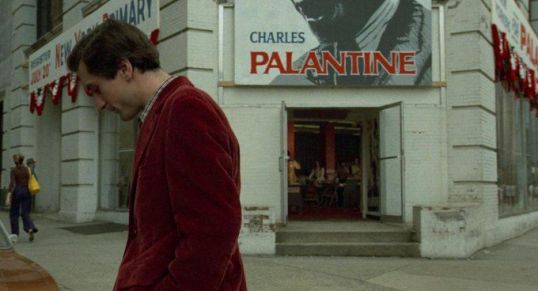
Taxi Driver (1976, dir by Martin Scorsese, DP: Michael Chapman)
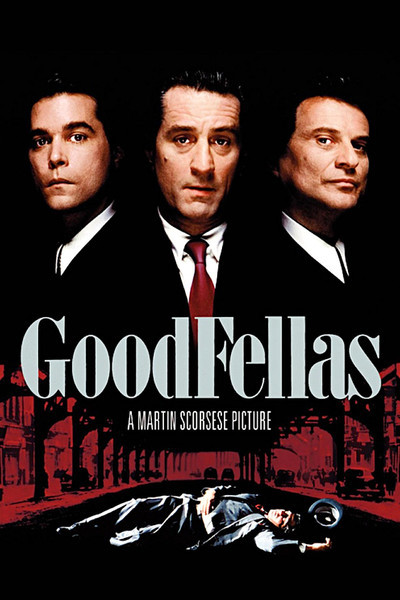
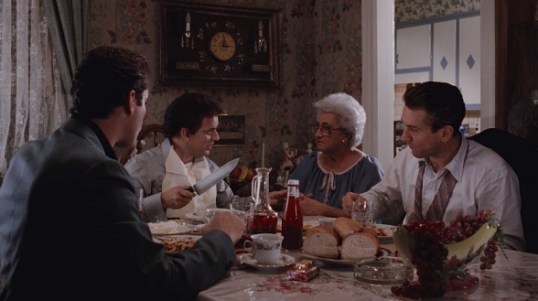
Goodfellas (1990, dir by Martin Scorsese, DP: Michael Ballhaus)
Casino (1995, dir by Martin Scorsese, DP: Robert Richardson)
Shutter Island (2010, dir by Martin Scorsese, DP: Robert Richardson)
Hugo (2011, dir by Martin Scorsese, DP: Robert Richardson)
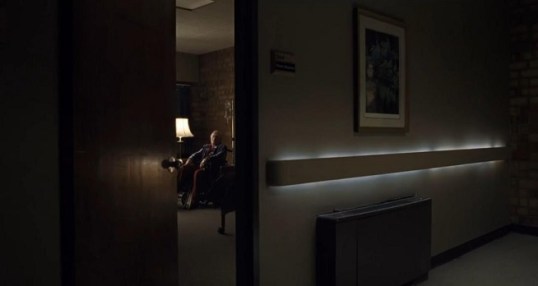
The Irishman (2019, dir by Martin Scorsese, DP: Rodrigo Prieto)
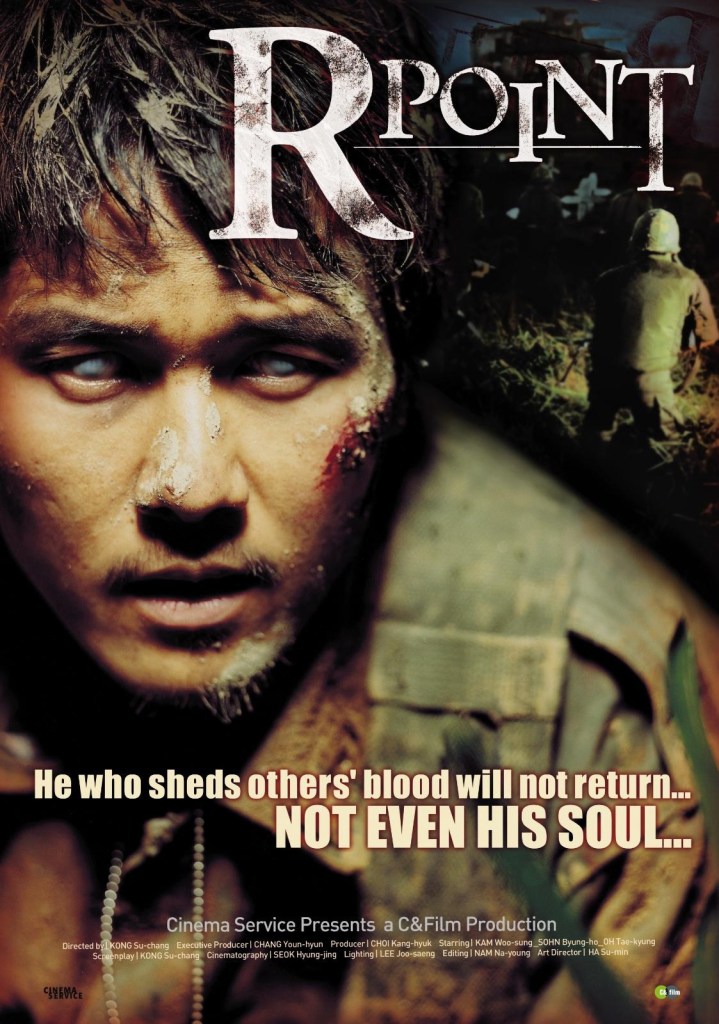
R-Point, a 2004 South Korean war horror film, expertly combines the tension and brutality of a war movie with the eerie, unsettling atmosphere of supernatural horror. Set during the late stages of the Vietnam War, it follows a South Korean military unit sent to investigate the mysterious disappearance of a platoon. The story swiftly transforms into a nightmarish journey as the soldiers confront ghostly apparitions and unexplainable phenomena deep within the thick jungle. The jungle itself acts almost like a living entity—claustrophobic, fog-shrouded, and ominous—intensifying the psychological strain the men endure.
What sets this film apart is its reliance on atmosphere over traditional jump scares, favoring a slow burn of mounting dread that perfectly suits the haunted setting. The cinematography focuses on muted greens and earthy tones, drawing the viewer into a world steeped in decay and menace. This deliberate pace and mood are enhanced by the film’s exploration of the mental and emotional toll of war, making the supernatural elements feel like extensions of the soldiers’ trauma and guilt rather than standalone scares.
The characters are more deeply developed than is typical in horror, with their individual backstories and emotional vulnerabilities slowly unfolding, making their psychological unraveling all the more impactful. Kam Woo-sung’s portrayal of Lieutenant Choi Tae-in offers a nuanced look at a man burdened by leadership and haunted by the realities of combat. Narratively, R-Point embraces ambiguity—it blurs the lines between what’s real and what might be hallucination or spiritual torment. This ambiguity invites the audience to interpret the haunting either as a literal curse tied to past wartime atrocities or as a metaphorical reflection of psychological wounds. This open-endedness adds depth and leaves a lingering impression far beyond the film’s runtime.
That said, R-Point has its share of flaws that cannot be overlooked. Its deliberate pacing can feel slow, which may frustrate viewers looking for a more tightly paced story. The dialogue sometimes tends toward repetition, and the heavy use of helmets combined with underdeveloped character distinctions can make it difficult to connect with or differentiate the soldiers. Additionally, occasional reliance on familiar horror clichés breaks the tension rather than building it, and the film’s ambiguity, while intriguing, borders at times on confusing rather than compelling. These issues temper the film’s strengths and might limit its appeal for some audiences.
An interesting note is the film’s 2011 DVD re-release under the title Ghosts of War, which helped bring the film to a wider audience and emphasized its unique blend of war and supernatural horror.
Overall, R-Point offers a dark and thought-provoking meditation on war, trauma, and the supernatural. It stands as an evocative piece of South Korean cinema that quietly pushes the boundaries of horror by intertwining the terrors of the battlefield with unseen forces. For those seeking horror rich in atmosphere and substance, R-Point remains a haunting and worthwhile experience despite occasional imperfections.
4 (or more) Shots From 4 (or more) Films is just what it says it is, 4 (or more) shots from 4 (or more) of our favorite films. As opposed to the reviews and recaps that we usually post, 4 (or more) Shots From 4 (or more) Films lets the visuals do the talking.
Today, the Shattered Lens wishes a happy birthday to the great director Allison Anders! It’s time for….
4 Shots From 4 Allison Anders Films
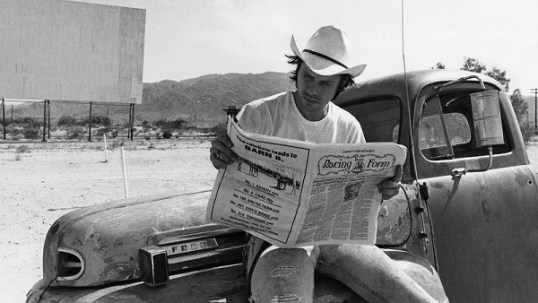
Border Radio (1987, dir by Allison Anders, Dean Lent, and Kurt Voss, DP: Dean Lent)
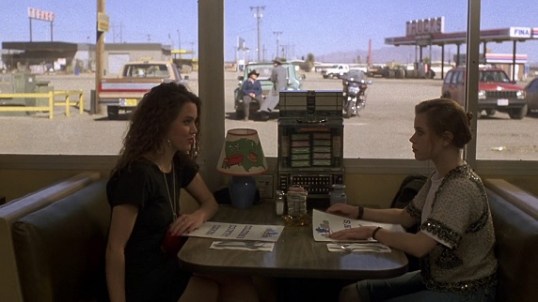
Gas Food Lodging (1992, dir by Allison Anders, DP: Dean Lent)
Mi Vida Loca (1993, dir by Allison Anders, DP: Rodrigo Garcia)
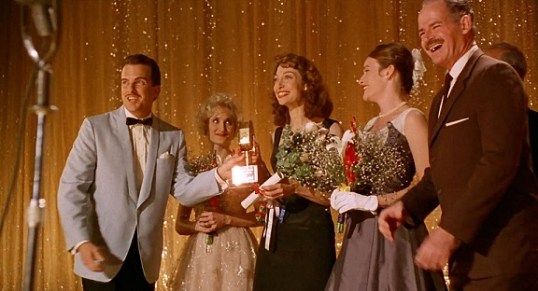
Grace Of My Heart (1996, dir by Allison Anders, DP: Jean-Yves Escoffier)
Sometimes, on twitter (or whatever it’s called nowadays), people will just become fixated with something. Yesterday, it was this music video for a song called When The Going Gets Tough, The Tough Gets Going. I lost track of how many times I saw this video shared on Saturday.
So, I figured, why not share it here as well?
This music video was made to promote the 1985 film, The Jewel of the Nile. Along with Billy Ocean, the stars of the film — Kathleen Turner, Danny DeVito, and Michael Douglas — also appear in this video. Was Danny really playing the saxophone? No, he was not. Apparently, in the UK, this video was briefly banned because Danny was not a member of the Musicians’ Union and his miming of the sax solo went against the rules.
The UK banning something because an American broke a rule? Wow, that’s so unlike them!
As some of our regular readers undoubtedly know, I am involved in a few weekly live tweets on twitter. I host #FridayNightFlix every Friday, I co-host #ScarySocial on Saturday, and I am one of the five hosts of #MondayActionMovie! Every week, we get together. We watch a movie. We tweet our way through it.
Tonight, for #ScarySocial, I will be hosting a true classic, Dario Argento’s Tenebrae!
If you want to join us on Saturday night, just hop onto twitter, start the film at 9 pm et, and use the #ScarySocial hashtag! The film is available on Prime and Tubi! I’ll be there co-hosting and I imagine some other members of the TSL Crew will be there as well. It’s a friendly group and welcoming of newcomers so don’t be shy!
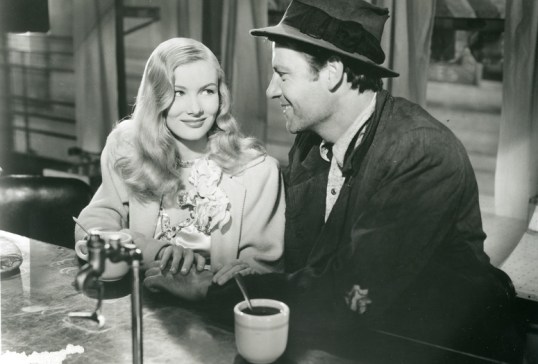
In 1941’s Sullivan’s Travels, Joel McCrea plays a filmmaker who disguises himself as a transient so that he can experience what’s really going on outside of Hollywood. Veronica Lake plays “the Girl,” who ends up sharing his journey.
In today’s scene that I love, McCrea and Lake meet for the first time.
Sally Kirkland stars as Monica Martel, a sexy but aging Hollywood actress who’s in lust for, and obsessed with, her boy toy, Eric Cline (Andrew Stevens). When Monica is given a chance for a big comeback, she uses her pull to get Eric the leading man role. Still, the producer Crocker Scott (Anthony Franciosa) insists that the film contain a lot of sexy scenes and Monica isn’t exactly in her prime anymore. Needing this big break, director Stephen Ross (Chick Vennera) hires a model of visual perfection, the lovely Lisa Shane (Sherrie Rose), to serve as a body double for Monica on the production. Soon Eric and Lisa are having a hot affair while Monica is being left out in the cold. Not one to accept being the odd woman out, Monica hires a private investigator to track the oversexed young lovers. When Lisa’s car blows up, luckily for us viewers she isn’t in it at the time, you can’t help but wonder if Monica has decided nobody will make a fool of her again. Not so fast though when Detective Robert Fenich (Richard Lynch) shows up on the scene carrying a serious grudge against Eric… something to do with a murderous event that occurred in San Francisco a few years earlier. It’s not easy to determine who’s hateful and who’s just horny in this sizzler from Director David A. Prior.
This was my first viewing of the 1992 erotic thriller, DOUBLE THREAT, but I’ve seen plenty of movies like it before. I was a teenager when the erotic thriller became a staple at the video store. Actor Andrew Stevens, who had starred with my hero Charles Bronson in the films DEATH HUNT (1981) and TEN TO MIDNIGHT (1983) became a star of the genre with his roles in the NIGHT EYES and SCORNED series. I remember talking my mom into letting me rent NIGHT EYES (1990) because “the guy from 10 TO MIDNIGHT is in it.” Needless to say, she wasn’t happy when the “erotic” part of the erotic thriller started, and we never finished the film. To be completely honest, outside of the budget differences and the overall talent on display, a film like DOUBLE THREAT isn’t that much different than a movie like BASIC INSTINCT (1992), which I’m sure served as an inspiration when you consider that both films came out in 1992. There is a scene where Andrew Stevens walks into a club and sees Sherrie Rose dancing provocatively that reminded me of the corresponding scene in BASIC INSTINCT with Michael Douglas and Sharon Stone. And when it’s all said and done, the plots of these types of films are all pretty ridiculous. This one’s a real doozy, and looking back there are ample clues, but I somehow didn’t figure out the big twist at the end.
I must say that Sally Kirkland and Sherrie Rose, separated in age by 25 years, are both extremely appealing in DOUBLE THREAT as the actress on the comeback trail and her beautiful young body double. This is the first time I’ve watched one of these straight-to-video erotic thrillers in a long, long, time, so I may just need to revisit a few more just for old times’ sake! Besides the sexy ladies, this specific film intrigues me due to the presence of Andrew Stevens as the ladies’ man whose motives aren’t completely clear until later in the film. A consistent presence in Charles Bronson films of the early 80’s, Stevens has had quite the career as an actor, director, and producer, almost exclusively in low budget fare like this. He’s a good-looking guy and a pretty good actor, and I’m always glad to see him involved in a production. He’s recently written and directed a documentary about his mother called STELLA STEVENS: THE LAST STARLET (2025) that I have on my watch-list. Honestly, the full cast of DOUBLE THREAT is pretty stacked, with actors like Rychard Lynch (INVASION USA), Gary Swanson (VICE SQUAD), and Anthony Franciosa (TENEBRAE) all bringing some additional class to the proceedings in their various roles.
At the end of the day, you fall in one of three categories when it comes to a movie like DOUBLE THREAT: you’re the kind of person who wants to watch a low budget erotic thriller; you’re the kind of person who says that you don’t want to watch a low budget erotic thriller, but then you watch one anyway; or you’re the kind of person who truly doesn’t want to watch a low budget erotic thriller. In my case, there’s a certain nostalgia that I associate with these types of video store genre films that were a dime a dozen in my youth. As silly as it all is, I must admit that I enjoyed DOUBLE THREAT and proudly fall in the first category!
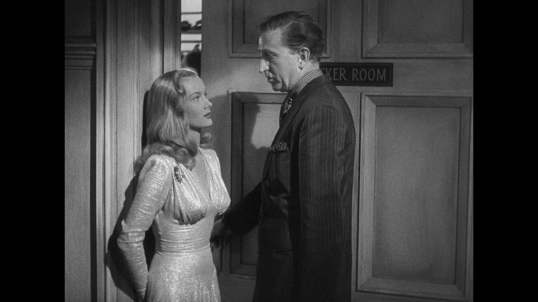
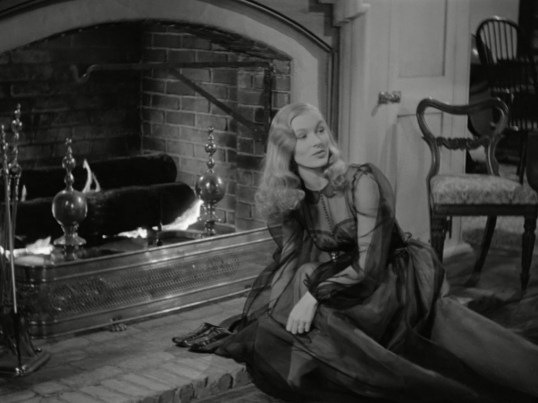
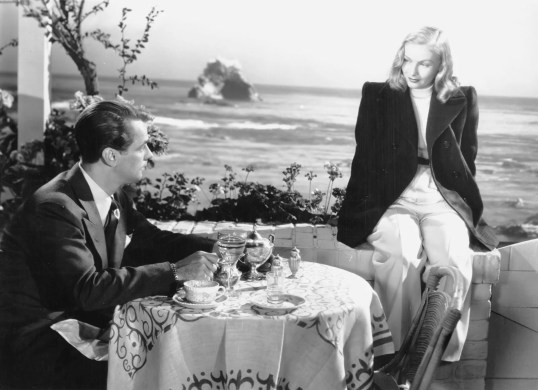
4 Or More Shots From 4 Or More Films is just what it says it is, 4 shots from 4 of our favorite films. As opposed to the reviews and recaps that we usually post, 4 Shots From 4 Films lets the visuals do the talking!
Today, we celebrate the birth of one of my favorite Golden Age actresses, Veronica Lake! It’s time for….
4 Shots From 4 Veronica Lake Films
Sullivan’s Travels (1941, dir by Preston Sturges, DP: John Seitz)
This Gun For Hire (1942, dir by Frank Tuttle, DP: John Seitz)
I Married A Witch (1942, dir by Rene Clair, DP: Ted Tetzlaff)
The Blue Dahlia (1946, dir George Marshall, DP: Lionel Lindon)





 Through the Shattered Lens