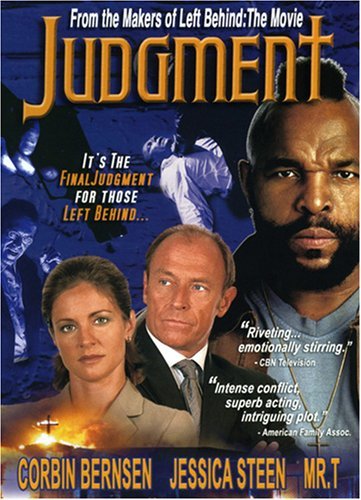
Film Review: Judgment (dir by Andre Van Heerden)


After three previous movies that all dealt with the growing power of Franco Macalousso (Nick Mancuso) and the revolution spearheaded by former journalist Helen Hannah (Leigh Lewis), the Apocalypse saga finally came to a close with the 2001 film, Judgment.

One of the more interesting things about the Apocalypse franchise is that each film was done in the style of a different genre.  Apocalypse was pretty much a straight-forward, faith-based film.  Revelation attempted to be an action film.  Tribulation was a horror film.  Meanwhile, Judgment is a courtroom drama, complete with a witnesses, objections, a corrupt judge, two former lovers turned legal adversaries, and a verdict.  Of course, the verdict itself is never in question.

Helen Hannah has finally been captured by O.N.E.  (That stands for One Nation Earth.)  Instead of just executing her like he does everyone else, Macalousso wants to put her on trial.  He wants to humiliate her while the entire world is watching.  He wants a show trial.  Mitch Kendrick (Corbin Bernsen), who father was a preacher who was executed after a previous show trial, is assigned to serve as Helen’s defense attorney,  Prosecuting the case is Victoria Thorne (Jessica Steen), who is Mitch’s former lover and one of the few people to know that Mitch has a fake mark of the beast on his hand.  Victoria believes that taking part in the trial will finally bring Mitch fully over to the side of Macalousso.

The trial has been carefully scripted out but, to everyone’s shock, Mitch refuses to follow the script.  Instead, he says that Helen cannot be punished because she has only been doing what her God told her to do so, therefore, God should be on trial instead of Helen.  Macalousso decides that he actually likes the idea of putting God on trial so he agrees to let Mitch do his thing.

Meanwhile, a revolutionary named  J.T. (Mr. T) is making plans to bust Helen out of prison but he finds himself frustrated by Helen’s aversion to violence.  J.T. just wants to break into the court and shoot everyone.  “There’s another way,” everyone keeps telling him….

Judgment is the best of the Apocalypse films, which may not be saying much when you consider how bad the other films are.  That said, Leigh Lewis had considerably improved as an actress by the time that she appeared in this film and Corbin Bernsen gives a good performance as a man torn between doing the right thing or doing what he has to do to keep himself safe.  Jessica Steen and Michael Copeman (as the Judge) bring a little bit more nuance than expected to their roles and Nick Mancuso is properly charismatic and smug as Franco Macalousso.  For a faith-based film, Judgment is not particularly preachy and I appreciated the fact that the film’s message was ultimately one of peaceful resistance.  Unfortunately, the film is also about 20 minutes too long.  It clocks in at 102 minutes and there are some parts of this film that seriously dragged.

As I’ve said about the previous Apocalypse films, Judgment actually works better as a political film than a religious tract.  The film presents Franco Macalousso as being the Beast but he could just as easily be seen as the ultimate symbol of collectivism.  When it’s announced that Helen is being prosecuted for the crime of “Hatred of the Human Race” and when witnesses in the court swear an oath to the “unity of all people,” it’s not a subtle moment but it’s a lot of fun for those viewers who tend to value personal freedom over the demands of the collective.

Judgment was the final Apocalypse film, though it doesn’t really bring the overall story to a close.  Tomorrow, we’ll bring our look at the apocalypse to a close with a look at the — God help us — Left Behind series.
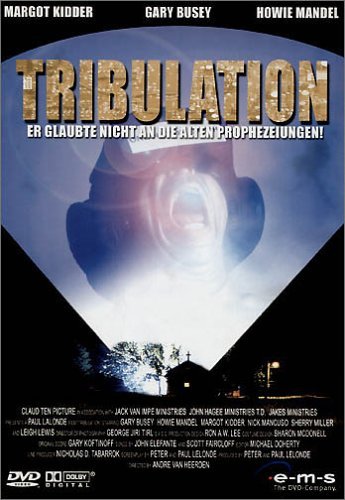
Film Review: Tribulation (dir by Andre Van Heerden)


The Apocalypse saga continues with 2000’s Tribulation!  This is the film that answers the question: How do you get an outspoken atheist and a prominent Jewish entertainer to star in your evangelical Christian propaganda film?  Apparently, you do it by not revealing what type of film that you’re making.

At least, that’s what Margot Kidder said happened.  In an interview with the AV Club, Kidder said that neither she nor Howie Mandel realized that they were appearing in a Christian film until they got on the set, looked at the complete script, and asked why Kidder’s character mysteriously vanished from the film.  According to Kidder, this was a film that she did because she was broke, she couldn’t get a job because she had a reputation for being difficult, and she was offered a lot of money to go up to Toronto for a week and shoot a few scenes.  And so, Kidder, who was not a fan of religion in general, was cast as Eileen Canboro, the outspoken Christian who tries to teach everyone about the rapture.

To quote Kidder: “And I still get stopped by those freaky fundamentalists going “Oh, I’m so glad you did Tribulation.” And I wanna go, “Don’t count me into your group, honeybuns. I’m not one of you.”

As for the film itself, it stars Gary Busey as Tom Canboro, a police detective who is indifferent to religion.  His brother-in-law is Jason Quincy (Howie Mandel), an occultist who, early on in the film, gets possessed by a bunch of Satanists.  The film never really makes it clear why Jason was possessed, beyond I guess to warn against using Ouija boards or reading New Age literature.  After Jason is briefly possessed, the Satanists decide that they have to kill everyone who saw him possessed so that no one learns of their existence.  (But it seems like it would have just been simpler to not possess anyone in the first place.)  All of this leads to Tom eventually slipping into a coma.  Don’t ask how.  It just does.

While Tom’s out of it, the events of the first two movies happen.  Franco Manculousso (Nick Mancuso) magically rids the world of nuclear missiles and declares himself to be the messiah.  Millions of people — including Margot Kidder — mysteriously vanish.  An underground rebellion — labeled “The Haters” by Manculousso — forms against the one world government.  Everyone in the world is given a VR headset that will allow Manculousso to either kill them or steal their soul by giving them the mark of the beast.

(In this film, getting the mark of the beast means that you literally end up with 666 tattooed on your hand.  One thing I always find interesting about films like this is how they take everything in Biblical prophecy so literally.  For instance, 7 is the number of God so therefore it makes sense that the number of the Beast’s number would be 6 because the Beast will always be powerful but ultimately inferior.  He’ll be “one away” from God.  However, films like this always feature people wandering around with 666 prominently displayed on their body and oddly, no one ever says, “Hey, have you ever seen that Omen movie?”)

Anyway, Tom eventually wakes up and finds himself trapped in this brand new world.  It turns out that his sole remaining brother is now prominent follower of Manculousso’s and Jason is now involved in the Hater underground.  A few characters from the previous films pop up, largely so they can be executed by Manculousso.  You know how it goes.

Anyway, if Apocalypse was basically a found footage film and Revelation was an action film, Tribulation is a horror film, complete with demonic possession, exploding heads, and virtual reality snakes.  It’s also a bit slow — it takes forever for Tom to actually enter that coma — but it has a few effective scenes.  Howie Mandel, for instance, really throws himself into being possessed.  As for Gary Busey, Margot Kidder said in that previously cited interview that he was a “pain in the ass” to work with but he actually gives a …. well, I don’t know if it’s really a good performance but it’s definitely interesting.  He’s credible during the first half of the film and then, during the second half of the film, he seems to be genuinely confused.  There’s a few weird moments where he smiles when he definitely shouldn’t be smiling but otherwise, Busey’s okay in this film.

There would be one more film in the Apocalypse saga, Judgment.  I’ll be posting a review of that film in 15 minutes.  Hope to see you there!

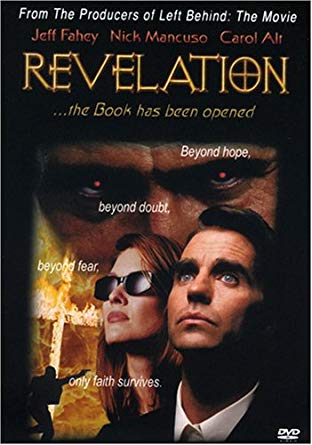
Film Review: Revelation (dir by André van Heerden)


The world which started to end in the 1998 film Apocalypse continues to end in its first sequel, 1999’s Revelation!

Revelation beings three months after the end of Apocalypse.  The people of the world worship the president of the European Union, Franco Macalousso (Nick Mancuso, replacing Sam Bornstein from the first film).   The world is ruled over by O.N.E., which stands for One Nation Earth.  Those who oppose Macalousso’s claim to the messiah are known as “The Haters.”  At the start of the film, a school bus has been bombed and all of the children aboard have been killed.  O.N.E. claims that the Haters bombed the bus but counterterrorist agent Thorold Stone (Jeff Fahey) comes across evidence that it was actually an inside job.  When Macalousso’s second-in-command, Len Parker (David Roddis), attempts to murder Thorold, he’s forced to go on the run.

The Day of Wonders is approaching.  On this day, everyone on Earth is to put on a VR headset.  Macalousso hasn’t made clear what the headset will do but everyone’s planning on doing it because Macalousso has told them to do it and everyone on the planet does what Macalousso says.  Thorold tracks down Willy Spino (Tony Nappa), a wheelchair-bound programmer (in the 90s sense of the term, of course) who is somehow involved with setting up The Day of Wonders.  Willy says that O.N.E. is not the benevolent organization that everyone thinks it is.  You would have thought that Thorald would have figured that out after Parker attempted to kill him but Thorald remains convinced that Maclousso is the messiah and that his wife and daughter previously vanished not because they were Christians but because they were abducted by aliens.

Anyway, long story short, it turns out that Willy’s stepsister is Helen Hannah (Leigh Lewis), the news anchor from the first film.  Helen is now a leader in the Hater underground.  While she tries to convince Thorold that Macalousso is actually the Devil, Willy spends his time flirting with a cynical blind woman named Cindy (Carol Alt).  Both Willy and Cindy find themselves tempted to put on the VR headset, just to see what the Day of Wonders will hold for them….

Revelation is a marked improvement on Apocalypse though, considering how shoddy the production of that first film was, that’s really not saying much.  As opposed to the first film’s stiff performances and reliance on stock footage, Revelation features actual actors, actual sets, and an actual script.  There’s even a few action sequences and some attempts at intentional humor.  That said, if you’re a nonbeliever, Revelation isn’t going to convert you and, about halfway through the film, all of the action stops so that Thorold and Hannah can have a very long discussion about faith and whether or not God should prove his existence by turning over a glass of water.

Like the first film, Revelation actually works better as a political allegory than a religious tract.  Today, it’s kind of easy to laugh at the bulky computers that fill O.N.E.’s headquarters and the scenes where Willy carefully explains what virtual reality and computer viruses are serve as a reminder that, apparently, there was a time when all of this stuff was still viewed as being somehow exotic.  I mean, it’s easy to be snarky about this movie.  But let’s be honest — it’s probably easier today than it was when this film was first released to imagine a world where everyone blindly does whatever the government tells them to do.  And the idea of a group running a false flag operation — like blowing up a school bus and blaming it on unseen enemies — no longer seems quite as outlandish as it perhaps did it 1999.

Revelation was apparently enough of a success that it was followed by yet another sequel.  This one was called Tribulation and I’ll be posting a review of it in about 15 minutes.  Hope to see you then!


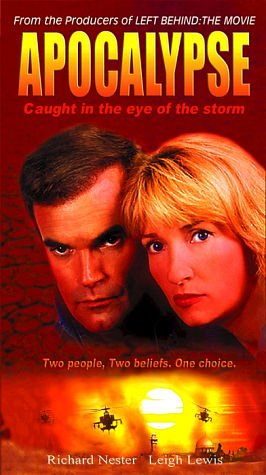
Film Review: Apocalypse (dir by Peter Gerretsen)


In the 1998 Biblical prophecy film, Apocalypse, the world ends not with a bang but with stock footage.  Lots and lots of stock footage.

Admittedly, I’m being a bit snarky about Apocalypse‘s reliance on stock footage but it’s actually kind of understandable.  When you’re trying to convincingly end the world on a budget, it just makes sense to borrow someone else’s footage of a plane exploding than going through the trouble (and expense) of buying a plane and blowing it up yourself.  The two main characters in Apocalypse are both anchorpeople for a 24-hours new channel called WNN.  Because they’re constantly reporting on the end of the world, the stock footage is portrayed as being a part of their report.  That’s kind of clever but it’s also really icky.  For instance, there’s a clip of a woman sobbing in front of an angry crowd.  We’re told that the woman is sobbing because her relatives have mysteriously vanished but, because the footage is in focus and the camera is held steady, we know that we’re actually watching stock footage.  Which means that this woman truly was crying about something but we don’t know what.  It’s hard not to feel that the filmmakers essentially took her pain and used it for their own advantage.  By that same token, when we’re shown people rioting in the streets and getting attacked by police, we’re told that it’s because the world is about to end but we know that there was another real reason why those people were rioting and it’s doubtful that any of those rioting people ever thought to themselves, “Hmmm….I wonder if this footage of me getting chased by the police will ever somehow appear in a propaganda film that has nothing to do with what I’m risking injury to protest about?”

The main characters of Apocalypse are Bronson Pearl (Richard Nester) and Helen Hannah (Leigh Lewis).  Bronson Pearl is the most trusted man in the world.  We know this because there’s a shot of a Time Magazine cover declaring that Bronson is the “Man of the Year.”  (It must have been a slow year.)  When the president of the European Union, Franco Macalusso (Sam Bornstein), announces that 1) he has magically vaporized every nuclear missile on the planet mere moments before Earth went up in a nuclear fireball and 2) he’s the true messiah, Bronson is enthusiastic but Helen has her doubts.  Those doubts are caused by the mysterious disappearance of millions of people across the globe.  One minute, they’re there.  The next minute, they’ve vanished and left behind a pile of neatly folded clothes.  Before Helen’s aunt disappeared, she organized a box of VHS tapes for Helen to watch.  The tapes feature footage of televangelists interpreting prophecy, which of course means that it’s time for more stock footage!

Anyway, you can guess where all of this is leading.  Over the course of six days, the world goes from being on the brink of nuclear war to being ruled over by Franco Macalusso.  Everyone sacrifices their individual freedom so that Maclusso can keep them “safe” and Macalusso even takes over WNN and turns the news channel into his own personal propaganda outlet.  In some ways, this film does feel a bit prophetic.  In the years since this film was first released, news channels have become propaganda outlets and people have started to look to their political leaders as being messianic figures.  In fact, I’d argue that Apocalypse works better as a warning against authoritarianism than it does as a biblical tract.

Which isn’t to say that Apocalypse actually works.  This is a low-budget and stiffly acted film and, as I said before, the use of stock footage of real disasters to stand-in for fictional disasters is undeniably icky.  It’s one of those films that was made for an evangelical audience and which seems to be more concerned with taunting nonbelievers than with actually trying to be dramatically convincing.  Still, if your natural instinct is to distrust authority, you’ll probably find a lot to relate to in Apocalypse‘s not-quite paranoid vision of people being brainwashed into accepting dictatorship.

Or you might just view the film as being a tribute to the power and convenience of stock footage.  I guess it all depends on how you look at it.

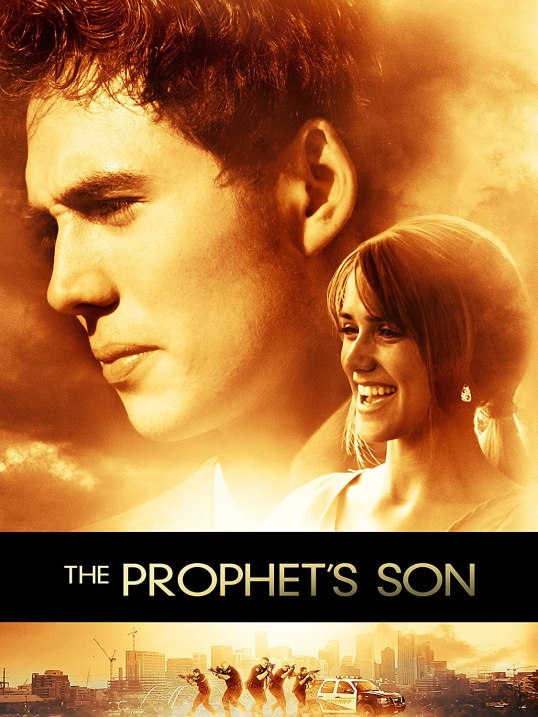
Film Review: The Prophet’s Son (dir by Paul Anthony McClean, Maurice Sparks, and Josiah David Warren)


As I’ve mentioned on this site in the past, I’ve always been fascinated by amateur feature films.  These are films that were made totally outside of the Hollywood system.  For the most part, they’re made by filmmakers with little to no formal training and they feature a cast of nonprofessionals.  Many of these films are passion projects for the people involved.  It’s not uncommon to hear about them being made by an all-volunteer cast and crew.  Sometimes, these films are surprisingly effective and sometimes — well, most times — they’re just really bad.

The 2012 film, The Prophet’s Son, is one of those largely amateur films and sad to say, it’s not a particularly good film.  If Tommy Wiseau decided to follow up The Room with an evangelical film that attempted to deal with almost every single issue facing the world today, the end result might be something like The Prophet’s Son.

It’s an odd film.  I have to admit that one of the main reasons that I watched it was because I had seen the film described as being about the end of the world and I have a weakness for cheaply made apocalypse films.  While The Prophet’s Son does feature a very brief nuclear attack on the city of Denver, it’s not really an apocalypse film because 1) the world doesn’t end, 2) the rapture doesn’t occur, and 3) the Antichrist never makes an appearance.  Instead, the nuclear attack just kind of comes out of nowhere and I will admit that it’s impossible for me not to have just a little admiration for a film that would toss a random nuclear war into an already cluttered storyline.  One minute, writer Juliet Oscar (played by Alexandra Harris) is sitting outside and the next minute, there’s missiles raining down on Denver.  Juliet and her boyfriend, musician and movie star Abel Benjamin (Josiah David Warren), get to safety and pray and the newly elected President of the United States appears on television and announces that America has survived.

Abel, incidentally, is the prophet’s son of the title.  Or, at least, I think he is.  He also has brother named Obadiah (Taurean Cavins-Flores), who I guess could just as easily be the prophet’s son.  Their father is the pastor of a church and he keeps saying that dark times are ahead, which I guess makes him a prophet, though he could just be one of those people who spends too much time on social media.  The film is a bit difficult to follow, to be honest.  At one point, Obadiah foils a robbery at a coffeeshop by telling the thief that he needs to get right with God.  The thief responds by shooting Obadiah in the leg.  Obadiah survives and Abel later learns that the thief loved Abel’s last movie so Abel visits him in jail, forgives him, and then performs an impromptu exorcism on him.  (It’s a super quick exorcism, too.  I’m used to longer exorcisms.)

Meanwhile, Juliet’s brother, Jason (Peter Lugo), says that he’s not going to waste his time with church until he turns 18.  Unfortunately, he then gets caught up in the middle of a surprisingly graphic school shooting rampage.  This leads to Jason’s twin brother, Isaac (Brad Spiotta), running away and getting lost in Denver.  Juliet and Abel search for him with the help of a some gang members.  When Juliet spots Isaac, she runs to him.  Abel, meanwhile, stays behind to give some money to a homeless woman.

Eventually, Abel ends up in Manila, where he witnesses people being kidnapped off the streets.  He tells the maid at his hotel that she needs to pay more.  While this is going on, Juliet is being pursued by Caleb (Jared Haley), who is a loud and proud atheist.  “Get me a beer and hamburger!” he shouts at one point.

What does all of this have to with the nuclear attack on Denver?  It’s hard to say.  The Prophet’s Son covers a lot of ground but the script and the direction are so disjointed that it’s basically impossible to follow the film’s story.  In fact, the film is such a disorganized mess that it becomes oddly fascinating to try to keep track of what’s actually happening.  For whatever reason, it took me forever to figure out that Abel and Obadiah were supposed to be brothers.  When Isaac mentioned that he and Jason were twins, I literally shouted at the TV, “No, you’re not!” because, seriously, there’s nothing about them that would lead you to suspect that they were even related, not to mention twins.  Characters come and go throughout the film.  The school shooters appear out of nowhere.  The coffeeshop bandit disappears after the jailhouse exorcism.  Abel has a manager who appears to be in love with him but who he treat rather coldly.  Despite being the biggest superstar in the world, Abel can wander around Denver without anyone recognizing him.  Denver, itself, is remarkably undamaged after being nuked.  It’s a strange, strange film, even if the world doesn’t actually end.

And you can watch it on Prime if you want!