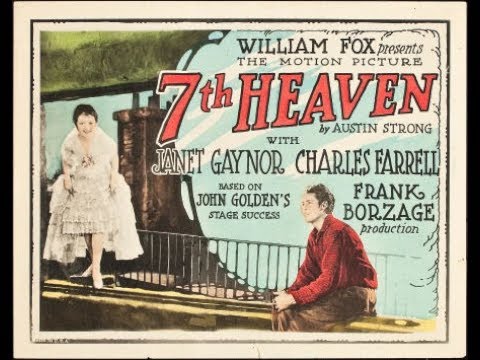
The 1927 melodrama 7th Heaven tells the story of two people in Paris.
Chico (Charles Farrell) works in the sewers but lives by the stairs. Though he spends all of his days under the street and dealing with literally the worst that the world has to offer, Chico remains an optimist. After all, he has his small apartment, which sits atop seven flights of stairs. He has his dreams, which involve eventually getting promoted to being a street cleaner. He doesn’t have much religious faith, which concerns Father Chevillon (Emile Chautard) but who knows? Maybe something can happen to change that….
Diane (Janet Gaynor) is a desperately sad young woman who lives in squalor with her older sister, the cruel Nana (Gladys Brockwell). When we first see Diane, she’s lying on the floor while being whipped by Nana and that’s pretty much the way her life goes for the first fourth of the movie. Nana treats Diane less like a sister and more like a slave, sending her out to steal food and buy absinthe. Diane and Nana’s father has made a good deal of money overseas but when he sees how they’re living in Paris, he rejects both of them.
How bad of a sister is Nana? She’s so bad that, when she’s eventually arrested by the Paris police, she points out her sister on the street and demands that they arrest her as well. Fortunately, Chico just happens to present at the scene. Having already protected Diane from Nana’s abuse once before, Chico steps forward and announces that Diane is his wife! The police ask Chico if he’s sure and then remind him that, if it’s found that he’s lying, both he and Diane could go to prison. Chico, however, insists that it is true.
To keep the deception going, Chico allows Diane to move in with him. When Father Chevillon arranges for Chico to get promoted to street cleaner, he also requests that Chico keep an eye on Diane. Chico agrees and slowly but surely, the two of them fall in love. Chico’s apartment, sitting atop 7 flights of stairs, becomes their 7th heaven.
However, World War I looms in the distance. With all of Chico’s friends and coworkers receiving their draft notices and being sent to fight, Chico and Diane knew that it’s only a matter of time before the same thing happens to Chico….
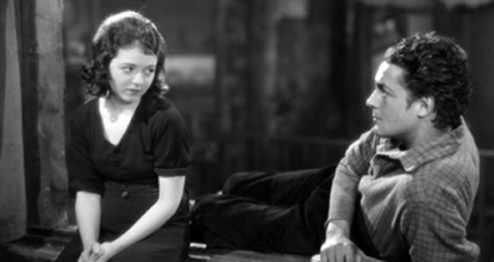
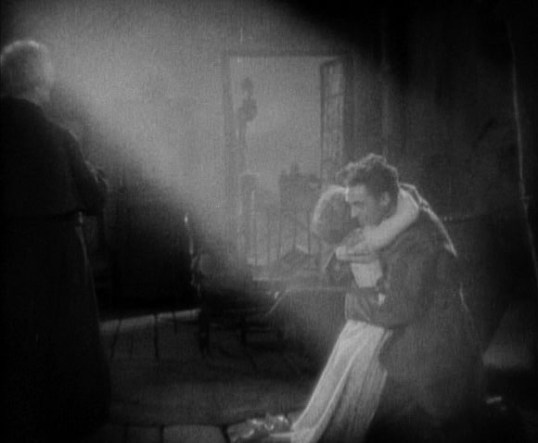
As in so many other silent films, the shadow of World War I looms over every minute of 7th Heaven. In the 20s, the Great War was still the main trauma that has shaped most viewer’s lives and one can imagine those viewers watching 7th Heaven and falling in love with the characters of Chico and Diane, all the while knowing that their happiness is only temporary. If the 1st hour of 7th Heaven is a romantic mix of melodrama and comedy, the 2nd hour becomes a rather grim war film. Even separated by war, Chico and Diane remain soulmates. When Diane is told that Chico has been listed as having been killed in action, she knows that it’s not true because she can still feel their connection. And yet, the final fourth of the film is so stylized and the final shot is both so beautiful and yet so artificial that the audience is left to wonder whether Diane is correct or if she’s simply dreaming what she (and, undoubtedly, the many other members of the audience who had also lost loved ones in the war) wishes to be true.
7th Heaven is a deliriously romantic film and watching it actually requires a bit less of an adjustment on the part of modern audiences than other silent films. Director Frank Borzage keeps the action moving quickly and, even more importantly, Janet Gaynor and Charles Farrell both give sincere and naturalistic performances. Never do they resort to the type of theatrical overacting that was featured in so many other silent films. Instead, you watch the film and you truly believe that you are watching two people fall in love. You’re happy when they’re happy and when tragedy strikes, you cry for them. Their love is your love and their sadness is your sadness.
7th Heaven was one of the first films to even be nominated for Best Picture. While Gaynor won Best Actress and Frank Borzage won Best Director, the award for Best Picture went to another World War I romance, Wings.

 Through the Shattered Lens