Unfocused Ramblings
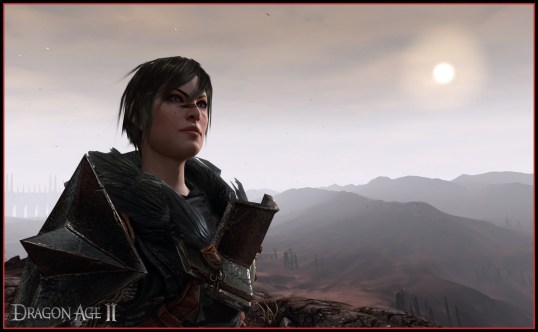
After a long wait, I hope to be back and better than ever. I was originally planning to go off the board with MLB 2K11… which is still getting a review I might add … but Dragon Age II consumed my life for a while, and I have to talk about it. BioWare and I have had a rocky relationship. The first game of theirs which I played was actually Neverwinter Nights… which I got about halfway through before my friend told me to stop playing it and go back and hit Baldur’s Gate II: Shadows of Amn instead. It was a formative experience for me. Up until that time, I would have described myself as an irredeemable JRPG fan. Since that fateful day, I’m not sure I’ve ever enjoyed a JRPG as much again. Naturally, this launched my love affair with BioWare. There have definitely been parts of that relationship that I’ve enjoyed more than others. For me, as much as I enjoyed Baldur’s Gate II, the current generation of these games is really the golden age of WRPGs in my eyes.
Is Dragon Age II the best WRPG that I’ve ever played? Ultimately, I would have to say no. Its release was too obviously rushed, which is evident in the plethora of bugs available for your gaming pleasure (some of them pretty damaging to your game experience, and all of those impossible to correct when playing the console versions). In years past, it was always true that the PC release was preferable because the developer could release patches that would solve a lot of the known bugs, and knowledgeable use of the game’s console could solve a lot of other problems. Obviously console games still don’t have the latter option, and only (relatively) recently gained the former. But as time has gone on and computers have easily outpaced what I need them for in terms of work, it became steadily less economically viable for me to upgrade my GPU three times a year… especially when I could own one XBox 360 for four years and counting.
The potential annoyance factor only comes out occasionally – when games are pushed through release with known bugs, and you have some agonizing wait for them to be fixed for the console version. Unfortunately, this was definitely the case with Dragon Age II and it sapped some of the luster off of what I otherwise felt to be an extremely fun offering from one of my favourite developers.
Oh, and a little disclaimer before I begin complaining in earnest. As I am wont to do, I’m going to table any discussions about DLC, micro-transactions, and EA’s 2010+ marketing strategy of bundling add-ons with pre-orders and adding content at regular intervals to bridge the gaps between releases. I think we can all agree that it is one of the more brilliant marketing ploys (not that we’re giving EA credit for coming up with it, but that doesn’t really detract from the idea itself) that we’ve seen… ever. I think we can also all agree that regardless of our personal feelings, on the whole, it works. This was the first game I’ve pre-ordered in years, and I did it entirely to gain access to the launch DLC that I’d otherwise have to pay for. It wasn’t particularly onerous, since I knew I was going to purchase the game anyway, and EA knew for a fact that they’d sold me a copy six months before launch. I’m sure some executives slept very soundly knowing that they’d suckered yet another fan into pre-ordering titles and sitting around in anticipation of Amazon’s launch day delivery time.
So how is Dragon Age II? As a sequel to the dark fantasy original, Dragon Age: Origins I would say that it both succeeds masterfully and disappoints completely. The feel of the two games is almost entirely different. In the original, we’re treated to a bleak literal-end-of-the-world scenario that is playing out before our eyes. Factions of whom we urgently require aid are fighting one another, the enemy is building in power, and in the grand tradition of Tolkien-esque fantasy, evil used to have a hell of a lot harder time of it. The sequel, rather, takes us through an eight-ish year period in the life of a single protagonist within the Dragon Age setting. It deals heavily with plot elements that were introduced in the original game and it has some obligatory cameos from characters we’ll recognize, but it otherwise is entirely stand alone. Gone is the overarching threat of a darkspawn-fueled apocalypse. Instead, the conflict centers around the city of Kirkwall, a deeply troubled metropolis that was formerly the center of a bustling slave trade in the ancient Tevinter Imperium.
We haven’t really gotten away from the slavery, however. Not only is Kirkwall infested with some of those very same modern-day Tevinter slavers, but the whole city lies under the pall of another form of slavery. As brutal as we may have found the treatment of mages in Ferelden – what with the vials of blood taken from every Apprentice that could allow them to be unerringly tracked down, or with the merciless hunting of unlicensed ‘Apostate’ mages – we only saw the tip of the iceberg in terms of both what mages have to suffer through, and what they’re capable of when they’re left unshackled. The picture painted by this conflict is an interesting one primarily for its gray morality. Very few issues in real life have the kind of clear-cut good and evil dynamics that we often see in video games. Real people are complex organisms with complex motivations. We are not a society of mustache-twirling villains tying maidens to railroad tracks only to be foiled by tights-wearing do-gooders from every angle. To an extent, we experienced this in Dragon Age: Origins as well. Both games mercifully liberate us from the point-based good-versus-evil system that characterized the Knights of the Old Republic games and others during that era.
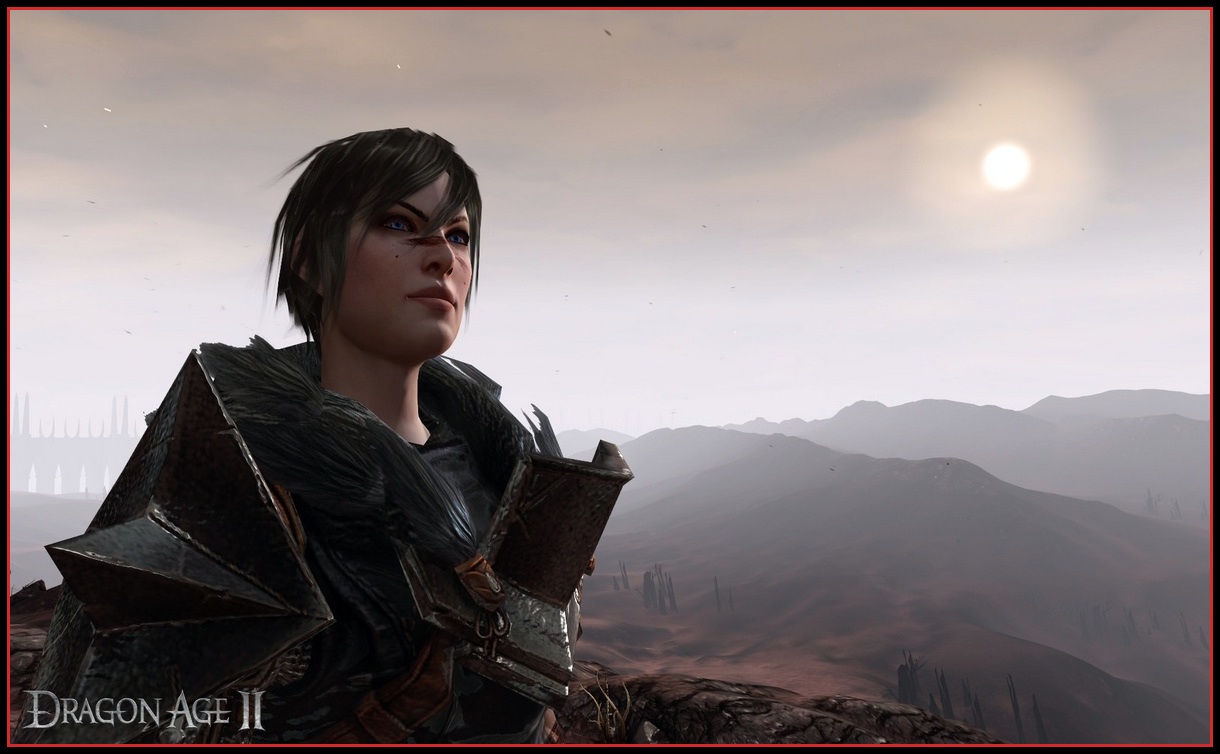
In Dragon Age II we’re treated to a whole new system which bears a little resemblance to the party-favour style system we saw in Origins, but with a new twist. Now, our party members (as expected) either approve or disapprove of our protagonist, Hawke, and the actions we take as Hawke. The relative level of either ‘Friendship’ or ‘Rivalry’ (I’m sure you can figure out which is which) then begins to colour all of Hawke’s interactions with the rest of the party. Many of the changes are subtle, but Dragon Age II is rife with subtle-but-appreciated touches that make it stand out as a game above many of the other offerings in this same genre. These little touches serve ultimately to give this title a more authentic feel than many games that I’ve played over the years, and I appreciated the attention to detail. It seems an odd contrast with the various bugs, which, I really can’t state enough, were plentiful and ranged from mildly irritating to infuriating.
Oh, and while we’re unfocused, and while we’re talking about subtle details? An odd thing occurs in this game. One which I might have appreciated more than almost anything else in the whole thing. Each conversation option is responded to with a variant of the Mass Effect style conversation wheel – responses to the right tend to lead toward the conclusion of the conversation and have a certain tone, while ones to the left tend to be follow-up questions. Unlike Mass Effect, we are treated to some symbols which help to identify the tone of the message before Hawke plants her foot in her mouth. For example, a sarcastic or whimsical reply will be accompanied by a comedy mask icon. A decisive, aggressive reply is accompanied by a closed fist. A bribe is accompanied by an image of falling coins. And so on. Anyway, this in and of itself is nice, but the truly outstanding dialog feature of the game? If you reply consistently in one vein (i.e., if you are consistently sarcastic) then the filler dialog or automatic replies from Hawke begin to mirror that type of response. Again, using the ‘sarcastic Hawke’ as an example… the dialog which is default, that is, not under the control of the player. Eventually, if enough sarcastic replies are given in order to establish a pattern, Hawke will begin to respond in a sarcastic manner on her own. It adds a lot of character to Hawke solely based on how you’re already playing the game. I hope that you can see why I think this is one of the best (albeit very subtle) features that BioWare thoughtfully included for me in this title.
So, I suppose the real question is… what is Dragon Age II like? True to how it was promoted, it’s sort of a compromise between the FPS-action-with-RPG-elements style of Mass Effect 2 and the old-school WRPG tactical gameplay of Dragon Age: Origins. If what you loved most about Origins was how it harkened back to Baldur’s Gate II, you’ll probably find the combat system in Dragon Age II to be a bit on the shallow side. You’re still, of course, perfectly at liberty to pause the game, arrange your party, and launch a more tactical assault. On the harder difficulties, being discriminating and tactical pays off big dividends. However, the game clearly wants to draw in fans of the Mass Effect games with a pace that is overall faster, and a system that is much more streamlined. As a result of this intention, it’s pretty quick-paced… or, at least, it can be, with an optimized party on the lower difficulties. Don’t expect the same degree of difficulty that Origins could present, either, if you chose to visit Orzammar first and played on the higher difficulties. Although, again, on the higher difficulties Dragon Age II has its own challenges.
Let’s boil things down, shall we?
The Good
– It’s a beautiful, detailed, thoughtful world. We’re introduced to more of a setting we’ve been introduced to. In a lot of ways, Dragon Age II exceeds Mass Effect 2 in terms of expanding on an existing setting. If you were really drawn into the world of Dragon Age, you’ll find a lot to like in the sequel.
– The voice acting is exceptional. I can’t think of a single character whose voice acting was poor, whether you like the character or not (and – almost as a side note – I liked them all)
– The characters offer a lot to the narrative, and have some fantastic interactions. BioWare has done a stunning job letting the party members banter back and forth during quiet moments. Try different combinations. You won’t be disappointed!
– The slice-of-life style which follows a single character, Hawke, and her life is perhaps a bit less ‘epic’ on the overall than the Grey Warden’s quest, but it delves far deeper into the underlying themes of the setting.
– Combat system is streamlined and intuitive. You’ll recognize everything from Dragon Age: Origins and the menus are actually easier to navigate now.
– Party members have completely unique skills, maintain their own wardrobe, and maintain their personal opinions, which lets them keep a refreshing flavour each of their own.
– BioWare went out of their way to make crafting your own potions, Runes, poisons, grenades, and supplies more attractive. Given how frustrating it could be to locate certain components in Origins, it may almost seem like an overreaction for how simple things become in Dragon Age II – but it works well.
– Girthy. This game is pretty long. If you’re planning to do everything… settle in. You’re looking at forty hours of game-play or more.
– The DLC items (from every source!) are not the best items in the game. They’ll definitely serve you well in the early part of the game, but they’re outclassed by the mid-game, and they also don’t sell for a ton of money. Just having DLC gear won’t make this game a breeze for you, or render all other equipment useless. It’s a nice touch to actually be trying to upgrade my stuff, rather than just equipping Blood Dragon Plate and calling it a day.
The Bad
– Buggy. Buggy. Buggy. Buggy. I really can’t overstate this. Every game launches with bugs, but this one launches with an unacceptable amount, and an unacceptable severity. Patches have already cleared up a couple of them (even for the console versions) but I was still frustrated to see the sloppy polish on what is otherwise a very delicious fruit.
– Much of the tactical aspect of gameplay is gone. Baldur’s Gate II could be a serious pain in the ass sometimes, but it really rewarded good planning and a thorough knowledge of spells and mechanics. Dragon Age: Origins made a strong compromise between viable-console-game and hardcore-tactical-gameplay… this element isn’t nearly as strong in Dragon Age II.
– Did I mention the bugs? Seriously. Hopefully more of the issues in this game can be patched out.
– Overused sets. Although the set pieces are beautiful and I love the look of the game, it suffers from a bit of the Mass Effect syndrome, where there are a hundred caves which are all built using the same “cave” layout and look. Very disappointing to see a step backward here after what we saw from Origins, Awakening, and Mass Effect 2. I can only assume this is another aspect of rushed production.
– We revisit too many places. I understand the scope of the game, its focus on Kirkwall and the surrounding environs, and whatever else… but while I don’t mind re-treads within the city (especially in, as the game runs on, a number of years) it seems like there should be more unique locales around the city. It feels lazy for us to revisit the same places over and over again for quests in each Act of the game. I’ll mention it once more… it was probably intended to have a few more locales, and that was probably scrapped for time. I’m in no position to complain because I bought the game, and I loved it, but I would have loved it more if EA/BioWare had spent another month catering to my discerning tastes.
– The game seems to lack focus at times in terms of the narrative. I actually appreciated this characteristic as it seemed to mirror how a real person’s life would tend to pan out… but it does seem out of place in a video game. At times, it’s not clear where the game is headed.
– This may sound stupid, but I’m far from above personal pique, so… way too much energy spent on promoting the game prior to launch. Although their strategy of offering DLC items for interacting with people on the BioWare website or whatever else might have drawn in a couple of new fans, it almost assuredly annoyed a lot of fans who were planning to buy the game anyway.
The Bottom Line
BioWare has me, at least, hook line and sinker. In spite of my various whiny complaints. I can’t wait for their next release.
 I received an email from Electronic Arts this week, letting me know that the Beta for Battlefield 3 was available to play about 48 hours from the main release. Everyone should be able to play it today, and from what I can tell, it’s well worth it for Battlefield Fans. This is just a quick synopsis of playing the game.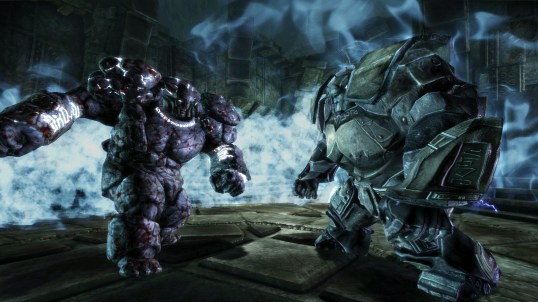
 Through the Shattered Lens