Film Review: Mister 880 (dir by Edmund Goulding)


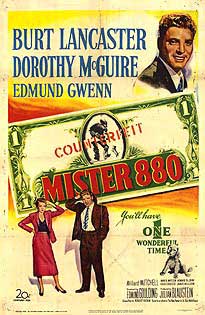
First released in 1950, Mister 880 is a wonderful surprise.

The film opens like a typical 50s crime drama.  We’re told that counterfeiting is a serious crime and that the dedicated agents of the Secret Service are working very hard to try to wipe out the scourge of fake money. We’re also told that Mister 880 is based on a true story and that it was produced with the full cooperation of the U.S. Treasury Department.  As a result, modern viewers will probably be expecting Mister 880 to be a work of pro-government propaganda, where wholesome treasury agents track down and stop soulless thieves.  Instead, Mister 880 turns out to be a wonderfully charming portrait of a criminal who doesn’t mean to cause anyone any harm.

Burt Lancaster stars as Steve Buchanan, a Treasury agent who is well-known for never letting a case go.  He’s developed a personal obsession with tracking down a counterfeiter who, for the last ten years, has been passing phony one dollar bills around a certain New York neighborhood.  The Treasury Department has named him Mister 880.  Mister 880 is definitely an amateur.  The money that he prints is sloppy.  At the same time, he also only prints one dollar bills and it appears that he only does so on occasion.  Just as no one can figure out his identity, everyone is also baffled by his motivation.  If he was looking to get rich through printing his own money, he would surely print more than just  a bunch of sloppy one dollar bills.

Investigating the neighborhood that he believes to be Mister 880’s base of operations, Buchanan meets and falls in love with Ann Winslow (Dorothy McGuire).  He also happens to meet Ann’s neighbor, Skipper Miller (Edmund Gwenn).  Skipper is an elderly man, a Navy veteran who lives with a dog and who says that he is financially supported by a rich cousin who nobody has ever met.  Skipper is a junk dealer and he’s a genuinely nice man.  Everyone in the neighborhood, including Ann, loves Skipper.  Buchanan soon comes to like the old eccentric as well.

Of course, as you’ve probably already guessed, Skipper is the counterfeiter.  He is Mister 880.  He doesn’t mean to cause any harm, of course.  He only prints money when he absolutely needs to and he always makes sure to not use too much of it.  He doesn’t want to steal from anyone.  He’s just an elderly man who wants to live out his days in peace and who doesn’t want to be a bother to anyone.

When Buchanan discovers the truth about Skipper, he’s faced with a dilemma.  Skipper is hardly a master criminal but Buchanan has sworn an oath and he has a job to do.  Not making things any simpler is that Skipper doesn’t deny what he’s done and he also says that he’ll plead guilty to his crime because …. well, he is guilty.  Skipper’s not a liar, despite the fake money.  Both Buchanan and Ann know that Skipper won’t survive spending years behind bars.  What do you do with a man who has broken the law but who, at heart, is not really a criminal?  Can a crime be forgiven just because the man who committed it is really, really likable?

Mister 880 is a sweet-natured comedy, one that doesn’t necessarily argue that Skipper’s crime should have been forgiven but which, at the same time, does make the case that not all law-breakers are created equal.  Gwenn, who is best-known for playing Santa Claus in the original Miracle on 34th Street, gives a wonderful performance as Skipper.  It’s hard not to love Skipper.  It’s not just that Skipper doesn’t make any excuses for being a counterfeiter.  And it’s not just that Skipper is an eccentric who loves his dog and has his own unique way of looking at the world.  It’s that Skipper is just a genuinely kind man.  He’s someone who would rather go to prison than be too much of a burden to the people who he cares about.  He’s the sweetest criminal you could ever hope to meet.

Gwenn was rightfully nominated for an Academy Award for his work in this film.  Not nominated but equally strong were Burt Lancaster and Dorothy McGuire.  Even though they don’t get any big, show-stopping moments like Gwenn does, both Lancaster and McGuire bring their characters to wonderful life and both do a great job of capturing their own mixed feelings about what should be done about Skipper.  Lancaster, in particular, is convincing as the by-the-book agent who is torn between his professional obligations and his feelings for both Ann and Skipper.

Mister 880 is one of my favorite movies, a wonderfully and unexpectedly good-hearted film about a real-life criminal who wasn’t the bad of a guy.  Emerich Juenetter, the real-life counterfeiter who served as the model for Skipper, reportedly made more money from the release of this film than he ever did over the course of his counterfeiting career.  After watching Mister 880, it’s hard not to feel that he earned every cent of it.
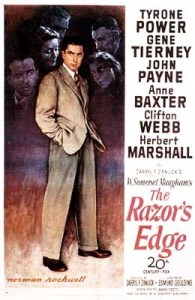
Lisa Reviews An Oscar Nominee: The Razor’s Edge (dir by Edmund Goulding)


Oh, 1919!  What a year.  The Great War had ended, leaving much of Europe devastated.  American soldiers were coming home and, scarred by the horrors they had experienced, becoming members of a lost generation.  The Spanish Flu was infecting millions, on the way to eventually wiping out 3% of the world’s population.  It was a grim time so it’s no surprise that many chose to close their eyes and pretend like everything was fine.  Only a few people were willing to look at the world and say, “There has to be something more.”

The 1946 film The Razor’s Edge tells the story of one such man.  Before the war, Larry Darrell (Tyrone Power, Jr.) was like most of his friends back in Chicago.  He was carefree.  He was wealthy.  He was engaged to marry the beautiful but self-centered Isabel (Gene Tierney).  But then he went off to fight in World War I and the experience changed him.  On the final day of the war, another soldier sacrificed his life to save Larry and Larry is now haunted by that man’s death.  No longer sure about his place in the world, Larry announces that he’s rejecting his former life.

Of course, that’s an easy thing to do when you’re rich.  Larry is lucky enough to have an inheritance that he can live off for a few years.  All of his former friends think that Larry’s just struggling to adjust to being back home and they expect that he’ll get over it soon enough.  Isabel’s uncle, Elliott (Clifton Webb), thinks that Larry’s acting like a total fool.  For Larry’s part, he no longer cares what any of them think.  He’s going to travel the world, seeking enlightenment.

While Larry’s searching, life goes on without him.  Isabel ends up marrying one of Larry’s friends, Gray Maturin (John Payne).  Larry’s best friend from childhood, Sophie (Anne Baxter), suffers a personal tragedy of her own and, when Larry next meets her, she’s living as a drunk on the streets of Paris.  Larry keeps searching for the meaning of it all.  He works in a coal mine.  He discusses philosophy with a defrocked priest.  Eventually, he ends up in the Himalayas, where he studies under a Holy Man (Cecil Humphreys).

It’s an intriguing idea and still a relevant one.  Unfortunately, the movie doesn’t really work because Larry tends to come across as being a little bit full of himself.  I could imagine someone like Henry Fonda working wonders with the role but Tyrone Power seems totally miscast as Larry.  When you look at Power, you find it hard to believe that he’s ever had a bad day, much less a need to spend months hiding in the Himalayas.  He comes across as the last person you would necessarily want to take spiritual advice from.  The fact that Webb, Tierney, Payne, and Baxter are all perfectly cast only serves to enforce just how miscast Power is.  It’s a well-intentioned film with nice production values but it’s never quite compelling.

The Razor’s Edge was based on a novel by W. Somerset Maugham.  Interestingly, the film features Maugham as a character, played by Herbert Marshall.  Even more interesting is the fact that the film was apparently remade in 1984, with Bill Murray cast as Larry Darrell.  I’ve never seen the remake so I have no idea if Murray is an improvement on Power.

(Also, since I’ve been pretty critical of Power in this review, let me recommend Witness For The Prosecution, in which Power is much better cast.)

The Razor’s Edge was nominated for Best Picture but lost to another film about returning vets, The Best Years of Our Lives.

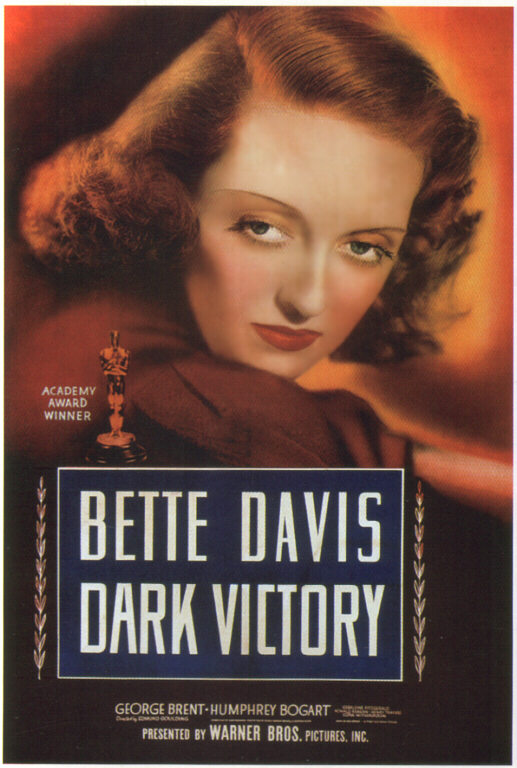
Embracing The Melodrama #8: Dark Victory (dir by Edmund Goulding)


Dark-Victory

For our next melodrama, we take a look at the 1939 best picture nominee, Dark Victory.

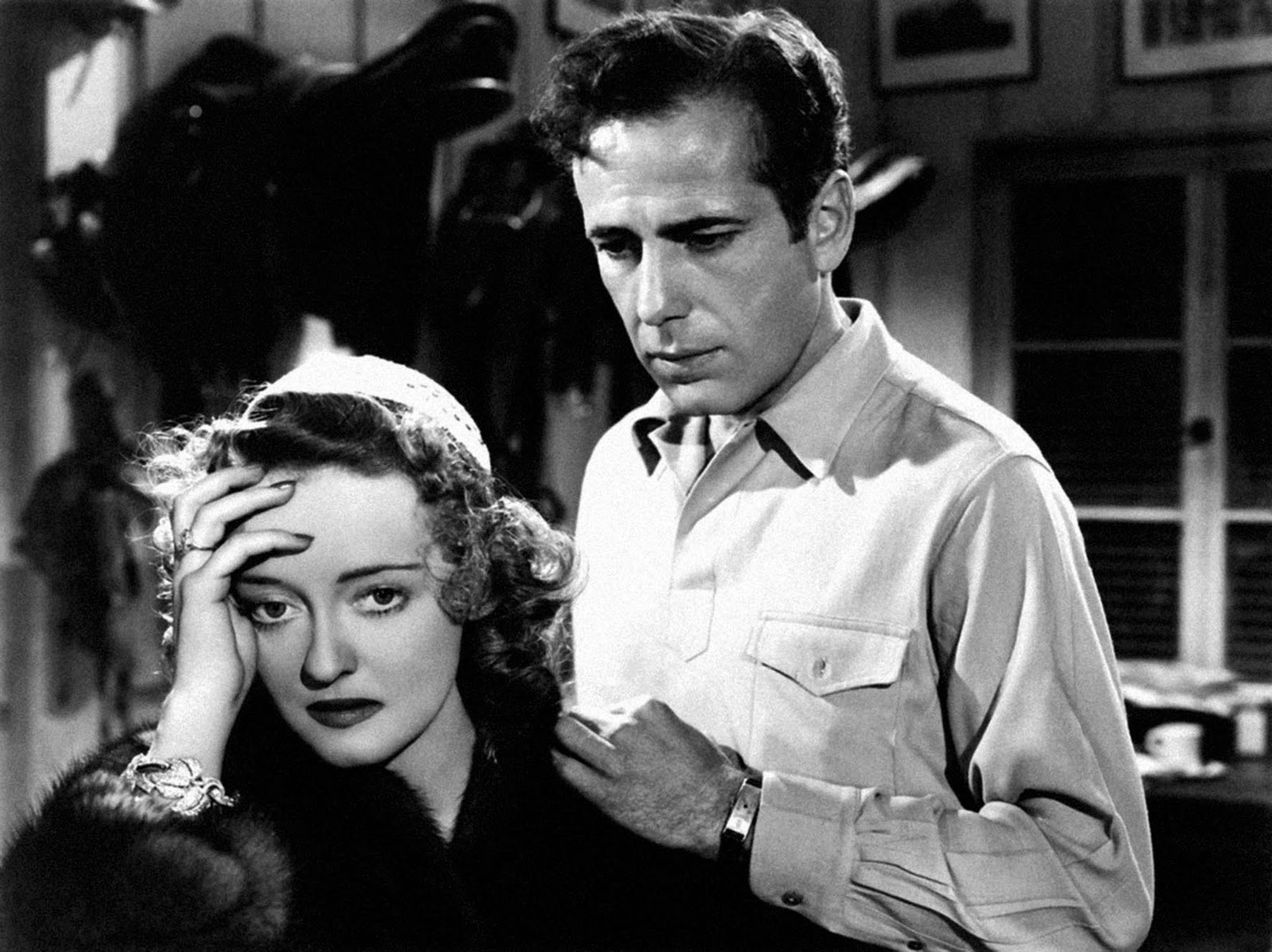
Well, with a name like Dark Victory, you can probably guess that the story told be this film isn’t going to be a cheerful one.  Bette Davis plays Judith Taherne, a spoiled and self-centered socialite whose life revolves around hanging out with her constantly inebriated friends (one of whom is played by future President Ronald Reagan) and riding horses.  When Judith starts to suffer from double vision and headaches, she initially ignores the problem but, as her condition worsens, she finally agrees to see a doctor.

Well, as you can probably guess, the news is not good.  Dr. Parsons (Henry Travers, who is best known to us classic film lovers as Clarence Oddbody, the angel from It’s A Wonderful Life) refers her to Dr. Steele (George Brent), a brilliant neurosurgeon.  At first, Steele is reluctant to treat Judith.  He, after all, had been planning on giving up his New York medical practice so he can move to Vermont and spend his time doing research.  Judith, for her part, resents having to see him and treats him rudely.  However, when Dr. Steele discovers that Judith has a malignant brain tumor, he decides to put off moving to Vermont so that he can treat her (and, needless to say, fall in love with her as well).

After getting Judith to agree to surgery to remove the tumor, Steele discovers that the entire tumor cannot be removed and that Judith has only a few months to live.  Though Judith won’t feel any pain, she will die shortly after experiencing total blindness.  Hoping to make Judith’s last few days pleasant, Dr. Steele tells her that the surgery was a complete success and he also conspires with Judith’s loyal secretary, Ann (Geraldine Fitzgerald), to not allow Judith to find out about her terminal condition.

Steele also asks Judith to marry him and move to Vermont with him.  Judith agrees but, when she discovers Steele and Ann’s deception, she breaks off the engagement and returns to her decadent and wild ways.  Can her Irish stablehand (played by Humphrey Bogart) talk some sense into Judith before it’s too late?

If you want to nitpick, you certainly could do that with a film like Dark Victory.  Yes, the film is predictable and yes, Humphrey Bogart is a bit miscast and yes, this film probably did set a precedent for movies about independent women being both punished and redeemed by terminal illness.  Nitpick away but none of it really matters because Dark Victory works almost despite itself.

Whatever flaws the film may have, it also has Bette Davis delivering one of her best performances and making even the most overdramatic of events feel plausible and real.  Bette Davis gives a performance that runs the gamut from A to Z and then keeps running until it discovers letters that you didn’t even know existed.  (Okay, I didn’t come up with that description on my own.  A reviewer named DJ Kent said it on the IMDB but it was such a perfect description for what Bette Davis does here that I simply had to repeat it.)  Dark Victory is often described as being a “tear jerker” and, by the end of the film, I was in tears.  If even as lively and strong a character as Judith Taherne can’t beat death, what hope do the rest of us have?

But, at the same time, the film is not just about the dark.  There’s also a victory to be found in the darkness and that victory comes from the fact that even if Judith can’t beat death, she can at least face it under her own terms.  By the end of the film, you’re sad because Judith is going to eventually die but you’re also happy because she lived.

Dark Victory 3

Embracing the Melodrama #6: Grand Hotel (dir by Edmund Goulding)


Poster - Grand Hotel_03

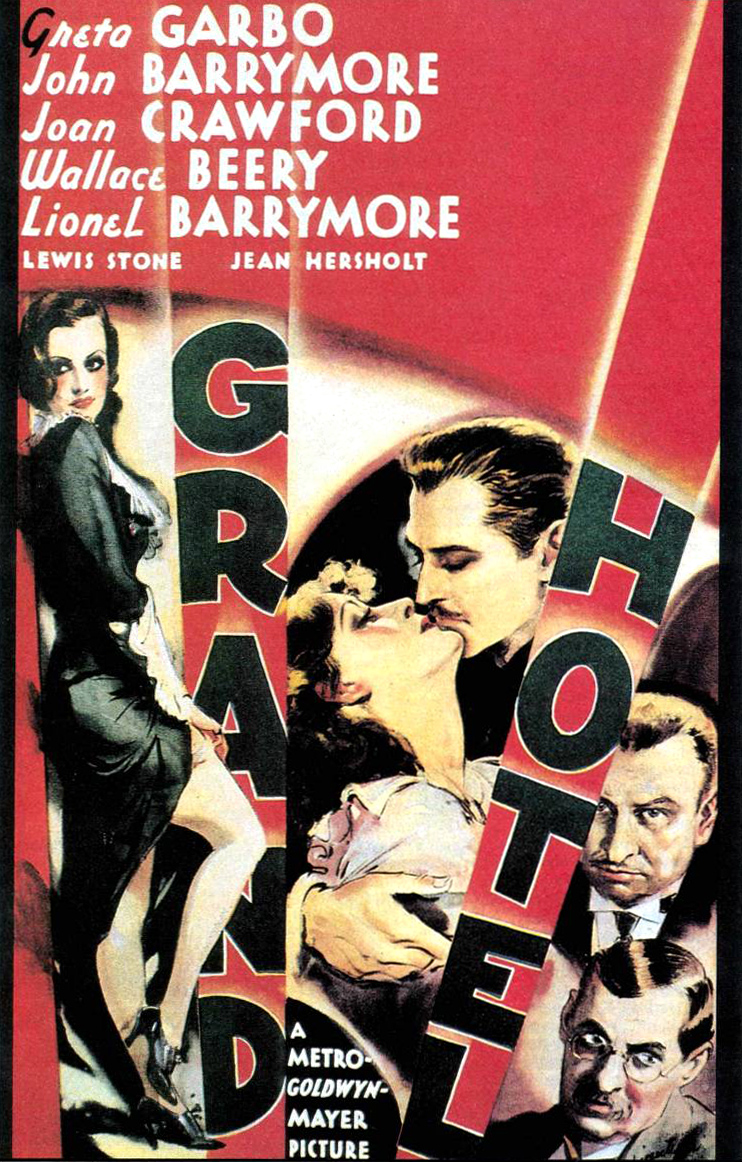
Today, we continue to chronologically embrace the melodrama by taking a look at one of the earliest examples of what would become a Hollywood mainstay, the big budget, all-start soap opera.  Today, we start things off by considering the 1932 best picture winner, Grand Hotel.

Grand Hotel follows five separate people as they all check into Berlin’s Grand Hotel.  They all have their own lives, their own secrets, and their own dreams.  As the film plays out, these five people will wander in and out of each other’s stories.  Seeing as how this was an MGM film and MGM always promoted itself as being the most glamorous studio in 1930s Hollywood, it’s not surprising that these five characters are played by five of the biggest stars that the studio had under contract.

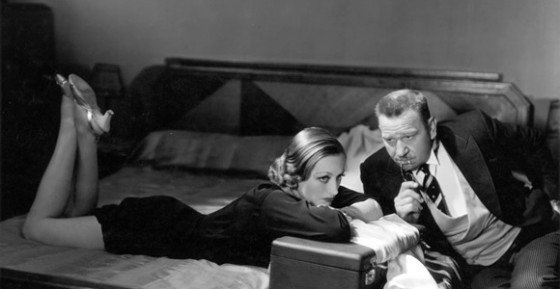
There’s Flaemmchen (played by Joan Crawford), an aspiring actress who, when we first meet her, appears to be willing to do anything in order to advance her career.  Whenever I watch Grand Hotel, I’m also surprised by how good Joan Crawford is here.  Crawford has become such an iconic character of camp that we tend to forget that she actually was a pretty good actress.  In Grand Hotel, she is perfectly cast as someone who is not quite as amoral as she wants the world to believe.

There’s Preysing (played by Wallace Beery), a greedy industrialist who hires Flaemmchen to be both his administrative assistant and his mistress as well.  Considering that the film is set in Germany, its’ easy to view Preysing as a symbol of the fascism that was sweeping across Europe in the 30s.  I don’t know if that was the intention of the filmmakers but it’s impossible to deny that Preysing is a pretty unlikable character, the type of greedy brute who inspires otherwise intelligent people to do things like run off and join Occupy Wall Street.

Crawford and Beery

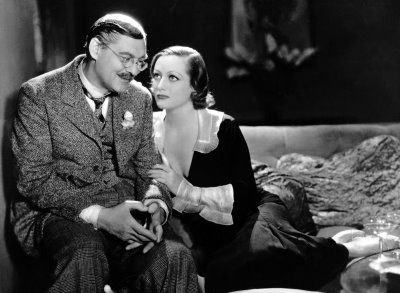
Far more likable is Otto Kringelein (Lionel Barrymore), a meek accountant who used to work for Preysing.  Kringelein is terminally ill and has basically come to the Grand Hotel so that he can at least enjoy a little bit of luxury before he dies.  At the hotel, he meets and falls in love with Flaemmchen.  Lionel Barrymore is so likable here that it’s hard to believe that he would later be best known for playing evil Mr. Potter in It’s A Wonderful Life. 

Barrymore and Crawford

Otto also meets Baron von Giegern (John Barrymore), a penniless nobleman who supports himself as a gambler and an occasional jewel thief.  If you needed proof that this film was made before the enforcement of the strict Production Code began, just consider that the Baron, despite being a criminal, is also the moral center of the film.  John Barrymore gives a charismatic and wonderfully theatrical performance.  The scenes where he and his brother Lionel play off of each other are some of the best in Grand Hotel.

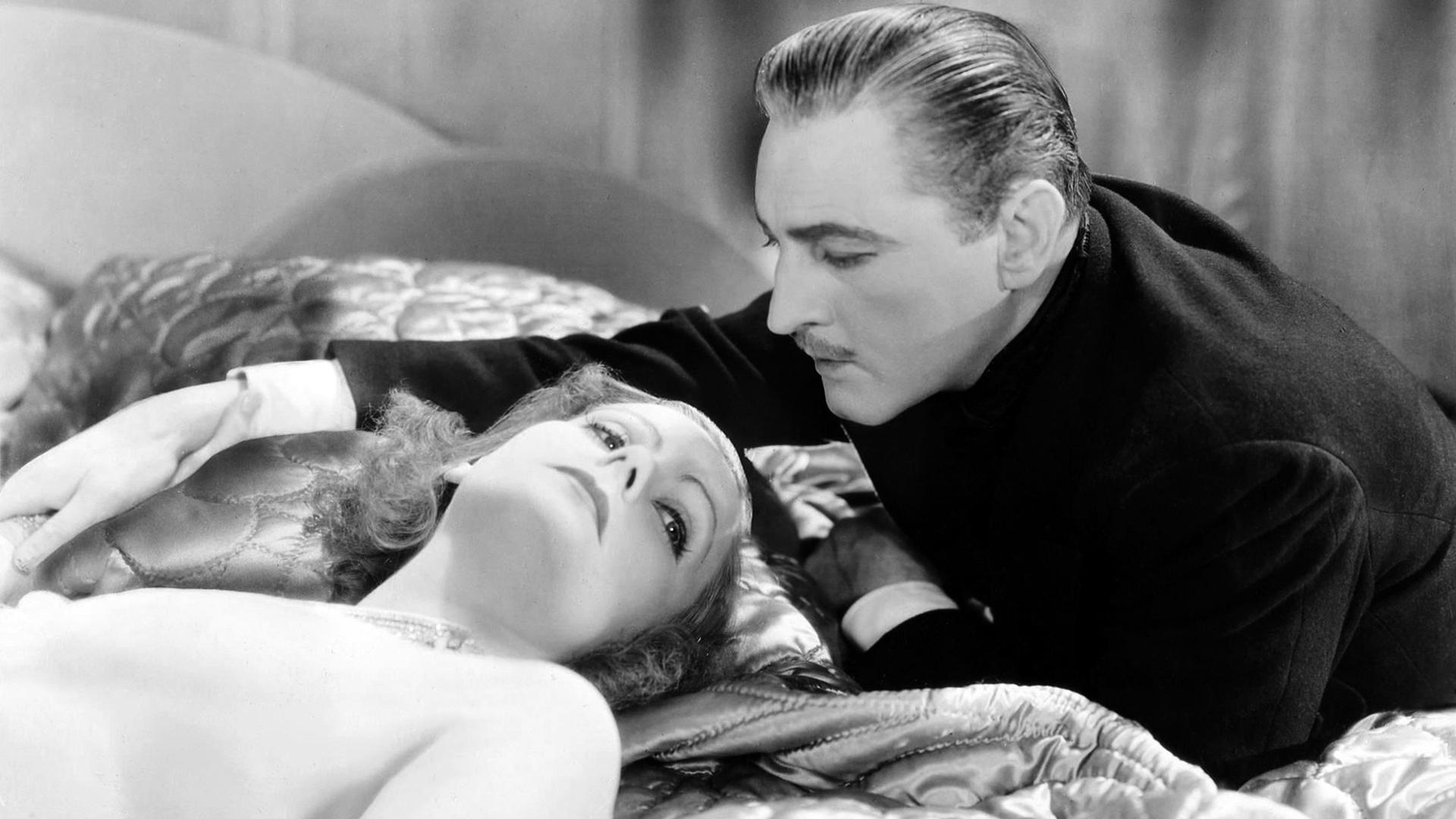
And finally, there’s my favorite of all the characters — Grusinskaya (Greta Garbo), the Russian ballerina who famously says, “I want to be alone.”  She checks into the hotel to try to escape the world and during her stay, she meets and falls in love with the Baron.  Grusinskaya is the character that I most related to, because we’re both dancers and I sometimes want to be left alone as well.

Barrymore and Garbo

I love Grand Hotel!  How couldn’t I?  The costumes, the sets, the actors, the glamour, the melodrama … what’s not to love!?  Incidentally, compared to a lot of other film melodramas from the early 30s, Grand Hotel actually holds up as pure entertainment.  The film moves quickly, much of the dialogue is still sharp and witty, and all of the actors are perfectly cast.  Curiously, Grand Hotel only received one Oscar nomination, for best picture.  However, it’s not surprising that it also won the only award that it was nominated for.

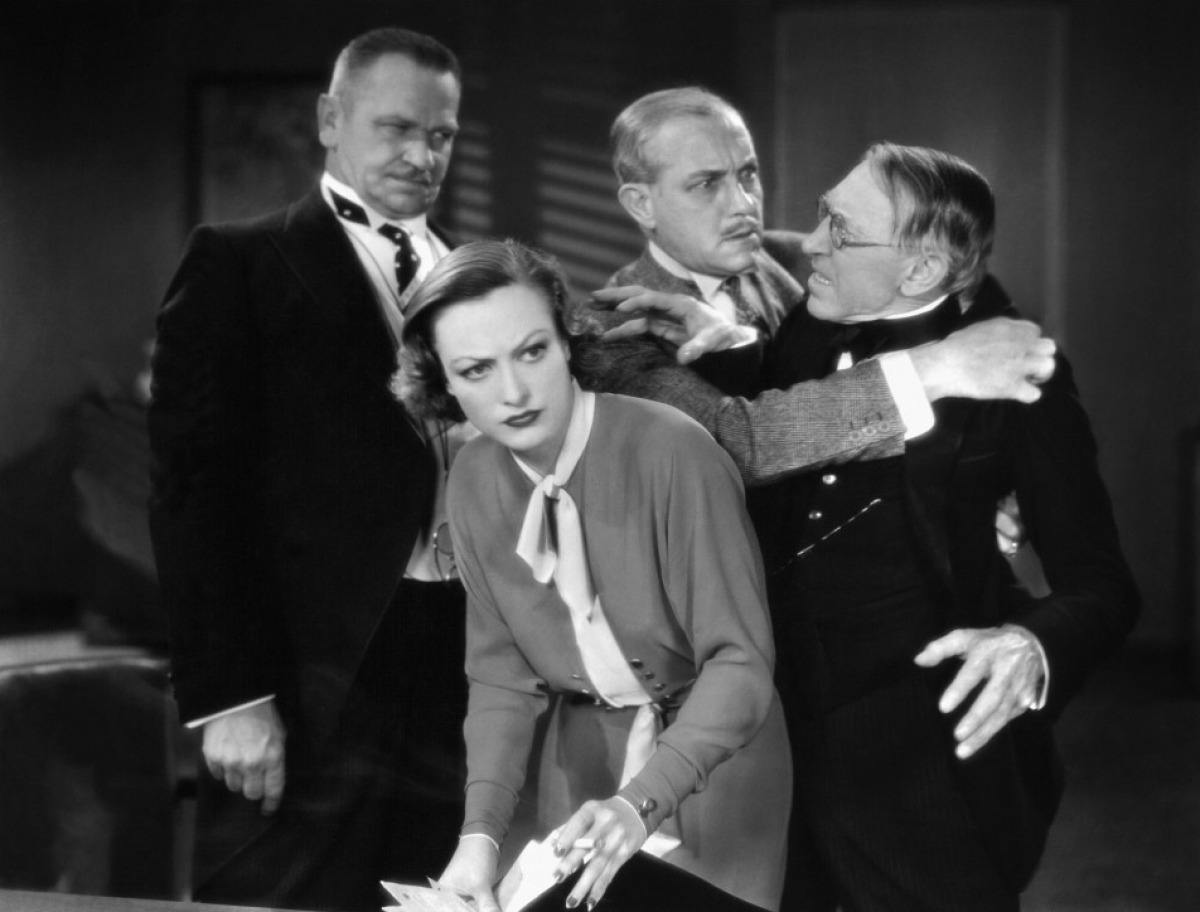
Grand Hotel has been described as being the first ensemble film.  I don’t quite agree with that because, even though it features a large cast and several intersecting storylines, you never forget the fact that you’re essentially watching a bunch of film stars sharing scenes with other film stars.  Eight decades after the film was made, the star power of Garbo, the Barrymores, Joan Crawford, and even Wallace Beery still continues to shine through and, to a large extent, your reaction to the film’s characters is pretty much the same reaction that audiences in the 1930s had to the public personas of the actors playing them.  But, and here’s the thing — it doesn’t really matter.  MGM made Grand Hotel to celebrate star power and, when you’ve got stars like these, can you blame them?

Grand-Hotel-4