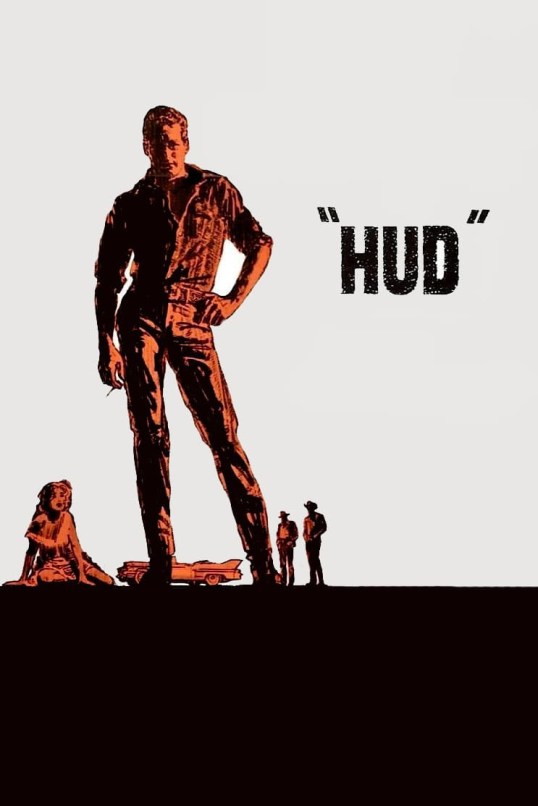
Film Review: Hud (dir by Martin Ritt)


In 1963’s Hud, Paul Newman plays a monster named Hud.

Hud Bannon is the son of rancher Homer Bannon (Melvyn Douglas).  Hud lives in a small Texas town, where he’s known for his pink Cadillac, his heavy-drinking, and his womanizing.  When we first meet him, he’s leaving the home of a married woman and narrowly escaping the rage of her husband.  Throughout the film, he mentions that he’s heading into town to meet “Mrs.” So-and-So.  Hud’s father fears that Hud might be incapable of caring about anyone but himself.  Hud’s nephew, Lonnie (Brandon deWilde), at first looks up to Hud but, over the course of the film, he comes to see his uncle for who he truly is.  Though Hud is quick to defend Homer from others, he himself views Homer with contempt and even plots to have the old man declared incompetent so that he can take over the ranch.  His flirtation with the family housekeeper, Alma (Patricia Neal), soon crosses the line into something much more dangerous.  Hud is charming and handsome in the way that only a 30-something Paul Newman could be.  But he’s also a complete monster.

In Hud, Newman gave one of his best performances and director Martin Ritt and cinematographer James Wong Howe captured some haunting images of the most barren parts of the Texas panhandle.  Howe’s black-and-white imagery not only captures the harsh landscape but also the harsh outlook of the people who live there.  Hud’s ruthless personality as is much a product of the demands of the land as his own narcissism.  The characters in Hud live in a land that doesn’t allow sentimentality.  It’s a land that’s allowed Hud to become the monster that he is.

At least, that’s the way that Paul Newman saw Hud.  That was also the way that the film’s director, Martin Ritt, viewed Hud.  They viewed him as being about as villainous and unlikable as a character could be but, to Newman’s surprise, audiences actually walked out of the film embracing the character and making excuses for him.  Newman was shocked to learn that teenagers were putting posters of him as Hud on their walls.

Why did viewers embrace Hud?

Some of it is due to the fact that Brandon deWilde gives a remarkably bland performance as Lonny.  We first see Hud through Lonny’s eyes and we are meant to share Lonny’s growing disillusionment with his uncle.  But Lonny comes across as being such an empty-headed character that it’s hard to really get emotionally invested in his coming-of-age.  When Hud eventually dismisses Lonny and his concerns, Lonny really can’t defend himself because there’s not much going on inside of Lonny.  On the other hand, Paul Newman gives such a charismatic performance as Hud that we find ourselves continually making excuses for his bad behavior.  When he talks about how he was raised and his difficult relationship with his father, we have sympathy for him even though we know we shouldn’t.  The viewer makes excuses for Hud because that’s what we tend to do when it comes to charismatic bad boys who don’t follow the rules.

Indeed, Hud is proof of the power of charisma and screen presence.  As a character, Hud does some truly terrible things and yet, because he’s Paul Newman, we want to forgive him.  We want to try to figure out why someone who is so handsome and so charismatic would also be so angry.  Lonny may be the “good” character but Hud is the one who we want to get to know.  When Lonny flips through a paperback to read the sex scenes, he comes across as being creepy.  When a drunk Hud flirts with a woman who he has just met, we ask ourselves what we would do if Hud ever tried that with us.  The truth is that we all know what we would do.  That’s what makes Hud both a dangerous and an intriguing character.

In the end, Hud is an excellent film that features Paul Newman at his best and which uses the downfall of Homer’s ranch as a metaphor for a changing American society.  Though Hud was  not nominated for Best Picture, it was nominated for almost everything else.  Melvyn Douglas and Patricia Neal won acting Oscars.  James Wong Howe’s cinematography was also honored.  Paul Newman was nominated and perhaps would have won if not for the fact that Sidney Poitier was nominated for playing the exact opposite of Hud in Lilies of the FieldHud was meant to be a picture about Lonny discovering his uncle was a monster.  Instead, the film became about Hud’s refusal to compromise.  It turns out that people like good-looking rebels who do what they want.

Even if viewers missed the point, Hud was one of the best films of the early 60s and Paul Newman’s powerful performance continues to intrigue.


MAN WITH A CAMERA (TV Series) – Starring Charles Bronson – S1,E1: Second Avenue Assassin


Charles Bronson began acting in movies and on TV shows in 1951. Through the mid-fifties, he established himself as a solid character actor with a strong physical screen presence. Beginning in October of 1958, he was given the opportunity to headline his own TV show, MAN WITH A CAMERA. The show, which ran for 29 episodes, features Bronson as a freelance photographer from New York named Mike Kovac, a guy who specializes in the difficult and dangerous assignments that his peers stay away from. Always on the side of truth and justice, Kovak will do anything to get the picture. 

In the first episode of the series, Mike Kovac (Charles Bronson) wants to get a picture of his old neighborhood pal, Joey Savoyan (Tom Laughlin). Joey has risen in the boxing ranks, and is getting a title shot at the champ, Sal Benning (Don Kennedy). But it seems that success has changed Joey from the guy Mike knew, and there have been many reports that he’s turned into a jerk who’d rather punch a reporter or photographer than look at them. When Mike goes to Joey’s training camp, and proceeds to tell him that his attitude is an embarrassment to the people pulling for him back home, Joey gets pissed and the two men end up in the ring. Apparently Mike could whip him back in the day, but times have changed and after absorbing a few of Mike’s jabs, Joey lays his ass out cold with one punch. The photograph that makes the papers that night is Mike laying flat on his back with the headline “Joey Savoyan puts ace photographer in darkroom!” Licking his wounds with spare ribs at a local restaurant that night, another pal from the old neighborhood shows up to see him. This time it’s Dolly (Ruta Lee), Joey’s main squeeze, who’s there on his behalf. Joey’s in trouble and needs Mike’s help. Mike goes out to Joey’s cabin where he’s filled in on the truth. The reports of his punching photographers and reporters were all made up to create his “killer” image. What’s even worse is the fact that Joey had found out the day before that the fights he had won to get the title shot were all fixed. Now, gangster Willie Fletcher (Theodore Marcuse) is putting the pressure on him to take a dive. Joey doesn’t want to do it, so he asks Mike to get a picture of him, Willie, and the champ planning the fix that night. He believes he can use this picture as leverage to turn the dangerous mobster down. It wouldn’t be much of a show if things went exactly as planned, and the fun is seeing how it all plays out! 

The series MAN WITH A CAMERA stretches our ability to suspend our disbelief right off the bat, when it asks us to accept that anyone, including Billy Jack himself, could lay out Charles Bronson with one punch. The fact that Bronson is shirtless, revealing muscle on top of muscle, makes it that much harder to believe. That lack of realism aside, I really did enjoy this first episode. Bronson plays Mike Kovac with a determination and uncompromising integrity that lets us know right off the bat that he will do whatever it takes to get to the truth, and that he doesn’t care who he has to piss off to accomplish that goal. He seems fearless and very tough. When the gangster Willie Fletcher, who’s known for using his gun, threatens Mike, he responds with “Boy, you talk tough… you scare me, Willie” in a way that would indicate it’s impossible to scare him and you get the feeling he can back it up. As a lifelong fan of Bronson, it’s nice seeing his powerful screen charisma and toughness come across so easily at this early point in his career. It’s also fun seeing Bronson and Tom Laughlin on screen together, even if the writers came up with the unrealistic scenario that I discussed earlier. I have to admit I would love to see Billy Jack take on Chaney from HARD TIMES. I think that would be one hell of a show!

This is a solid first episode, and I’m looking to see where the show heads from here. I’ve watched various episodes of MAN WITH A CAMERA over the years, but this will be first time I’ve ever started from the beginning and watched and reviewed each episode. Although he’s only talked about in episode 1, I remember Mike’s dad being a fairly big part of the series. Father/son relationships on TV and in movies are my favorites, so I’m looking forward to seeing that play out. If Tom Laughlin is any example, I’m also looking forward to the quality of guest stars we’ll be seeing. A quick look on IMDB reveals actors like Don Gordon, Angie Dickinson, Gavin McLeod, and Lawrence Tierney will be showing up throughout the series. This should be a lot of fun!

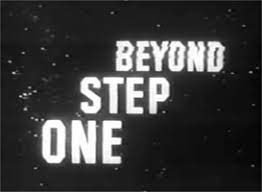
Horror On TV: One Step Beyond 1.6 “Epilogue” (dir by John Newland)


Carl Archer (Charles Aidman) is a recovering alcoholic who returns home after an extended stay in a rehab.  His wife (Julie Adams, of Creature of the Black Lagoon and The Last Movie fame) is skeptical about whether or not Carl has really sobered up and is prepared to be a responsible father to their son, Steve (Charles Herbert).  When Steve gets trapped in a cave, will Carl be able to use their psychic connection to find and rescue him?

Can you prove this didn’t happen!?

This episode originally aired on February 24th, 1959.

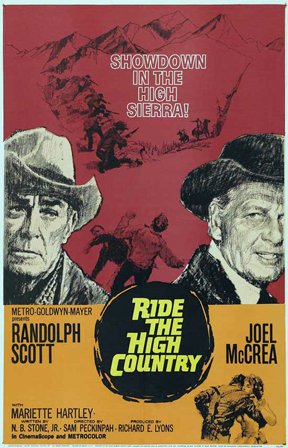
Thank You, Mr. Peckinpah: Ride the High Country (1962, directed by Sam Peckinpah)


rideIt’s the turn of the 20th century and the Old West is fading into legend.  When they were younger, Steve Judd (Joel McCrea) and Gil Westrum (Randolph Scott) were tough and respect lawmen but now, time has passed them by.  Judd now provides security for shady mining companies while Gil performs at county fairs under the name The Oregon Kid.  When Judd is hired to guard a shipment of gold, he enlists his former partner, Gil, to help.  Gil brings along his current protegé, Heck Longtree (Ron Starr).
On their way to the mining camp, they spend the night at the farm of Joshua Knudsen (R.G. Armstrong) and his daughter, Elsa (Mariette Hartley).  Elsa is eager to escape her domineering father and flirts with Heck.  When they leave the next morning, Elsa accompanies them, planning on meeting her fiancée, Billy Hammond (James Drury), at the mining camp.

When they reach the camp, they meet Bill and his four brothers (John Anderson, L.Q. Jones, John Davis Chandler, and the great Warren Oates).  Billy is a drunk who is planning on “sharing” Elsa with his brothers.  Gil, Judd, and Heck rescue Elsa and prepare for a final confrontation with the Hammond Brothers.  At the same time, Gil and Heck are planning on stealing the gold, with or without Judd’s help.

Ride the High Country was actually Sam Peckinpah’s second film but it’s the first of his films to truly feel like a Sam Peckinpah film.  (For his first film, The Deadly Companions, Peckinpah was largely a director-for-hire and had no say over the script or the final edit.)  Peckinpah rewrote N.B. Stone’s original script and reportedly based the noble Steve Judd on his own father.  All of Peckinpah’s usual themes are present in Ride the High Country, with Judd and, eventually, Gil representing the dying nobility of the old west and the Hammond brothers and the greedy mining companies representing the coming of the “modern” age.  Ride The High Country‘s final shoot-out and bittersweet ending even serve as a template for Peckinpah’s later work in The Wild Bunch.

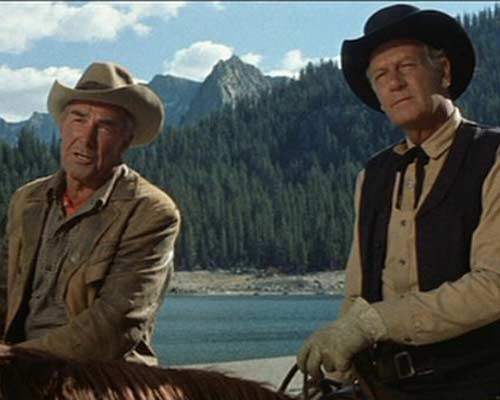
Much like the characters they were playing, Randolph Scott and Joel McCrea were two aging veterans on the verge of retirement.  For these two aging stars, who had starred in countless westerns before this one, Ride The High Country would provide both fitting farewell and moving tribute.  This would be the last chance that either of them would have to appear in a great movie and both of them obviously relish the opportunity.  The best moments in the film are the ones where Judd and Gil just talk with the majestic mountains of California in the background.

Among the supporting cast, Ron Starr and Mariette Hartley are well-cast as the young lovers but are never as compelling as Gil or Judd.  Future Peckinpah regulars R.G. Armstrong, L.Q. Jones, and Warren Oates all make early appearances.  Seven years after playing brothers in Ride the High Country, L.Q. Jones and Warren Oates would both appear in Peckinpah’s most celebrated film, The Wild Bunch.

The elegiac and beautifully-shot Ride The High Country was Sam Peckinpah’s first great film and it might be his best.

Randolph Scott and Joel McCrea in Ride The High Country

Randolph Scott and Joel McCrea in Ride The High Country