The Film’s of 2024: God’s Not Dead: In God We Trust (dir by Vance Null)


It can be easy to forget just what a big splash God’s Not Dead made when it was released back in 2014.  Today, it’s taken for granted that every year, at least one faith-based movie will be released to terrible reviews and then “shock” everyone by opening up strong at the box office.  However, in 2014, God’s Not Dead was the film that started the whole trend, along with sparking the ongoing debate about whether or not Hollywood has the slightest idea what most Americans want to see.

That’s not to say, of course, that God’s Not Dead was a good film.  It’s not.  It’s a ludicrously simplistic and smug film that, over the course of its overly long run time, promotes the idea that the only reason atheists exist is because they’re either bitter, evil, or both.  (For the record, if a professor truly threatened to fail a paying student solely because of his religious beliefs, the end result would probably be a lawsuit.)  The idea that someone could sincerely disagree with the film’s heroes or even believe differently than them without having an ulterior motive is not one that is entertained in the God’s Not Dead universe.  Indeed, perhaps the most interesting thing about the God’s Not Dead films is that they are just as heavy-handed and often just as condescending as the secular films being churned out by the major studios.

God’s Not Dead has, to date, spawned four sequels.  The second was enjoyably campy and featured an earnest performance from Melissa Joan Hart.  The third, which is the the closest that the franchise has gotten to actually making a good film, was surprisingly even-handed, or at least as even-handed as a film in this franchise can be.  The fourth was way too talky but, because it came out during the COVID lockdowns, its condemnation of government overreach reflected the way that a lot of people were feeling at the time.  Somewhat inevitably, the fifth film finds Reverend David Hill (David A.R. White) running for Congress again the villain from the second film, dastardly atheist Peter Kane (Ray Wise).

The film opens with the death of an incumbent congressman.  His opponent, Peter Kane, tells the press that the congressman was a good man and then proceeds to gloat about his death in private.  Kane is an ultra-liberal atheist.  Usually, the villains in the God’s Not Dead universe have a dead relative to help explain why they’ve lost their faith but Kane is just evil.  (In God’s Not Dead 2, Kane specifically put Melissa Joan Hart on trial for expressing her Christian beliefs and then chortles, “We are going to prove God is dead!”)  With Kane on the verge of being elected to Congress by default, Rep. Daryl Smith (Isaiah Washington) suggests that David Hill, who went viral for denouncing Congress in the fourth film, should be the party’s new nominee.

After some hesitation, Hill agrees.  However, he drives his campaign manager, Lottie Joy (Samaire Armstrong), crazy by basing his campaign on his religious beliefs.  Of course, if you didn’t want a candidate to talk about his religious beliefs in a campaign, why would you nominate a pastor whose fame is totally based on those beliefs?  Add to that, Hill is running for a Congressional seat in Arkansas.  I have family in Arkansas.  Growing up, I occasionally lived in Arkansas.  Sure, there are liberals in Arkansas and there are atheists in Arkansas.  But none of them are going to get elected to Congress anytime soon.  Arkansas is probably one of the few states where Hill’s faith-based campaign wouldn’t be considered controversial.

(That Mike Huckabee has a cameo as himself should be all the reminder that viewers need that Arkansas is not at all hesitant about electing pastors to higher office.)

It’s heavy-handed and cartoonish, which is probably to be expected.  Unfortunately, it’s also rather boring, with not even Ray Wise’s villainy providing much entertainment value.  Outside of arguing that atheists are evil and that separation of church and state is just a catch phrase, the film argues that money is a divisive force in politics and that politicians shouldn’t be bought.  Wow, really!?  It’s a film about politics that has little fresh insight to offer.  David Hill goes from being a media-savvy pastor to being an innocent naïf who is shocked to discover that politics is a dirty business.  God’s Not Dead: In God We Trust makes Billy Jack Goes To Washington seem like a hard-hitting portrayal of American politics.

I will give this franchise some credit for maintaining a surprising sense of continuity.  As I mentioned earlier, Ray Wise returns as the character that he played in the second film.  Paul Kwo is back as Hill’s associate pastor.  Dean Cain returns as the amoral businessman from the first film.  You have to imagine that Kevin Sorbo is kicking himself for allowing his smug professor character to die in the first film.  What’s funny is that the college student who kicked off the franchise by refusing to sign a piece of paper declaring God to be dead has pretty much vanished from the films.  Whatever happened to that kid?

In the end, we all know where this is going.  The next film will undoubtedly feature David Hill running for president.  2028 is right around the corner.
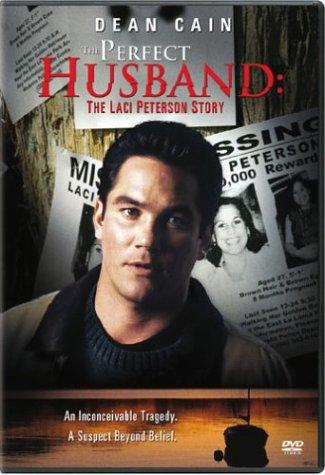
October True Crime: The Perfect Husband: The Laci Peterson Story (dir by Roger Young)


In December of 2002, most likely on Christmas Eve, Laci Peterson was murdered in Modesto, California.  At the time, she was eight months pregnant and, by all account, looking forward to the birth of her first child, Connor.  Suspicion immediately fell on her husband Scott Peterson, who seemed reluctant to contact police when Laci first disappeared and who was later revealed to be cheating on his wife, both before and after his disappearance.  Though Scott and Laci’s friends and family may have thought of Scott Peterson as being the perfect husband, the truth was far different.

After the bodies of both Laci and unborn Connor were discovered, Scott was arrested and charged with murder.  Scott insisted that his wife had been kidnapped and murdered by a gang of meth-dealing Satanists.  The jury disagreed and Scott was found guilty.  Originally sentenced to death, Scott is now serving a life sentence.

The disappearance and subsequent murder of Laci Peterson was national news and Scott Peterson, with his cold demeanor and his history of infidelity, was a perfect villain.  (The case would serve as one of the inspiration for the novel and film, Gone Girl.)  Today, unfortunately, the case has received renewed attention due to a docuseries called The Murder of Laci Peterson.  Though the documentary may have Laci’s name in the title, she’s treated largely as an afterthought.  Instead, the documentary focuses on making excuses for all of Scott’s incriminating behavior and, in the final episode, it goes as far as to include cheesy reenactments of Satanists stalking the streets of Modesto.  This heavy-handed work of propaganda, which was produced by a friend of Scott Peterson’s family, can be found on Hulu and is regularly re-aired on stations like A&E.  Whenever it airs, one can be sure that the dumbest people on twitter will start tweeting stuff like, “I lowkey think Scott Peterson might be innocent!”  The documentary ends with Scott’s creepy sister-in-law delivering an unconvincing monologue about how she often goes to the beach where Laci was found and thinks about her and Connor.  It’s one of the few times that anyone in the documentary mentions anything about Laci.

The 2004 made-for-TV movie, The Perfect Husband: The Laci Peterson Story, also keeps Laci off-screen but it still feels like a more honest look at the Peterson case than the documentary.  Because the movie was put into production before Scott’s trial had actually begun, the film does maintain a sense of ambiguity as to whether or not Scott is actually guilty but, unlike the docuseries, it also doesn’t deny just how suspicious Scott’s behavior was in the days following Laci’s disappearance.  While his friends and his family frantically look for Laci, Scott calls his mistress and flirts over the phone.  (As shown in the film, Scott’s girlfriend did not know that Scott was married and was shocked to see Scott on television, talking about his missing wife.)  When his friends and family beg Scott to help get the word out about his missing wife, Scott retreats into his own shell.  And when Laci’s body is discovered, Scott puts on a fake beard, dyes his hair, and heads to San Diego with a bag full of money.  In the docuseries, Scott’s condescending father claimed that Scott was just trying to get away from the media.  The film leaves little doubt that he was trying to get away from his crimes.

Dean Cain does a good job in the role of Scott Peterson.  Because Scott’s trial had yet to begin, Cain couldn’t play him as being an outright murderer so, instead, he focused on playing Scott as being petulant, insecure, and self-centered, the type of guy who seems to be annoyed that Laci’s disappearance is inconveniencing him.  Dee Wallace and G.W. Bailey have a few good scenes as, respectively, Laci’s mother and the detective investigating the case.  David Denman (who is probably best-known for playing Roy, Pam’s lunkhead fiancé on The Office) gives the film’s strongest performance as a friend of Scott’s who desperately wants to believe that he’s innocent even though the evidence keeps piling up against him.

The Perfect Husband probably gets closer to the truth of the case than any of the documentaries that have followed.  Scott’s a killer.  RIP, Laci and Connor.

Film Review: Override (dir by Richard Colton)


In the middle of the desert, there sits an isolated pink house.

And inside the house, there lives a woman named Ria (Jess Impiazzi), who wakes up every morning to a neon sign that wishes her a good morning. Every morning, she stands in front of a mirror in her underwear and she asks the world what “fun adventures” it has in store for her today. She then carefully selects her outfit and the color of her lipstick. She goes into the bedroom and awakens Jack, who is sometimes her husband and sometimes her best friend but who is always a different person.

During the day, she does “chores” around the house. She is always smiling. She is always positive-minded. Every day, at the exact same time, Ria asks Jack to dance with her. Every night, she talks about how she can’t wait to watch the latest episode of her favorite television program. She has a strange habit of holding up everyday products and announcing how much they cost and whether or not there are any special offers associated with them. She talks frequently about how happy she is to be a housewife, which she believes is the important job that anyone can have. At 9:00, she and Jack retreat in to the bedroom. At 7:00, the next morning, she wakes up and does it all over again with a different Jack.

As you may have guessed, Ria is not quite human. In fact, she’s not human at all. She’s an android, built and programmed to be everyone’s fantasy companion. She’s also the start of her own TV show, “A Day With Ria.” People across the country compete for the chance to be Jack for a day and to spend their time using Ria to fulfill their own fantasies. One of the Jacks (played by Luke Goss) seems to truly care about her. Another Jack viciously abuses her, which Ria accepts without question. Another Jack is just so excited to spend her day with her best friend, Ria! (They have a pillow fight.) Meanwhile, the audience at home votes on what Ria should wear and what meals she should prepare for each Jack. Everyone seems to love watching A Day With Ria, even the vice president of the United States (played by Dean Cain).

Override gets off to a surprisingly good start, doing a good job of bringing us into Ria’s bizarre world. The house in the desert is especially a triumph, a cleverly designed tribute to kitsch that, in all of its pink glory, manages to be both grotesque and inviting, depending on which angle you’re look at it from. Jess Impiazzi does a good job bringing Ria to life and Luke Goss is well-cast as the most sympathetic of Jacks. Director Richard Colton has worked extensively as an editor and there’s a wonderfully composed montage in which Ria goes from one Jack to another. Even the film’s low budget works to its advantage, as most reality shows are produced as cheaply as possible. (Seriously, just watch the Big Brother live feeds sometime.)

Unfortunately, during the second half of the film, things get bogged down with a political conspiracy plot and the attempts to satirize reality TV become increasingly heavy-handed. (One problem with satirizing reality TV is that most reality television show already feel like a parody. No movie or book can make a show like The Bachelorette or, again, Big Brother appear any more ridiculous than an actual episode does.) As strong as the first half of the film was, the second half is a bit of a mess and nowhere near as compelling. A strong beginning leads to a disappointing (and rather drawn out) ending.

While it’s a shame that the movie couldn’t maintain its narrative momentum, Jess Impiazzi’s performance remains strong and both Luke Goss and Dean Cain do the best that they can with their slightly underwritten characters. The film doesn’t really work as a whole but it still has enough good moment to make the watch worthwhile.

Val’s Movie Roundup #15: Hallmark Edition


MV5BMTEyNzg4MTIzNDZeQTJeQWpwZ15BbWU4MDc1NzcyMTIx._V1_SY317_CR15,0,214,317_AL_

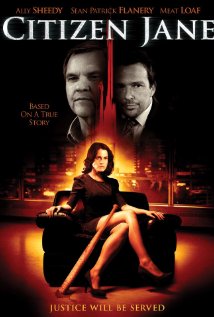
Citizen Jane (2009) – I was quite surprised that this was actually a Hallmark movie. The acting was strong. The story stayed focused. They actually bothered shooting in San Francisco. This almost could have been a small time B-Movie or something I would expect from Lifetime.

It begins with Jane Alexander’s (Ally Sheedy) aunt being murdered. Jane lives with a man named Tom O’Donnell (Sean Patrick Flanery) and it’s never really a mystery that he did it. The film is about how they prove it. Jane has assistance from Detective Jack Morris (Meat Loaf). I think Meat Loaf did a great job and so does Sheedy. We care, we follow, we get a decent movie. The only problem I found is the same one that was in the Lifetime movie Cleveland Abduction (2015). That movie was also based on real events. Even not knowing the true story behind it, you could tell that the film was a superficial treatment that needed much more time to properly tell the story. The same is true here. At times things will feel like they just jumped from one gear to another. Otherwise, it’s one of the most well made of the Hallmark mystery type movies. Even if there isn’t much of a mystery to it. More like mystery in the Columbo sense of the word where we know exactly what happened, but find out how the person is going to be caught.

9d1f26c4b9f94aed872c7522a258077b

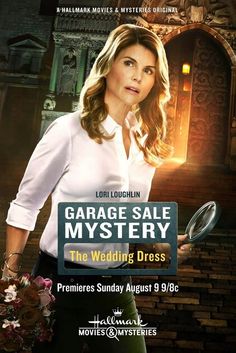
Garage Sale Mystery: The Wedding Dress (2015) – Again, it’s time for Jennifer (Lori Loughlin) to get involved in a mystery. This time she is at an estate sale and when she returns to her shop she discovers that among the things she has purchased is a vintage 1970’s wedding dress. Great! Except there are blood stains in a pocket. And thank god there are. I say that because this establishes a good reason for her to be investigating while the cops don’t. That’s really nice when it comes to the recent deluge of these murder mystery movies that Hallmark is producing. Usually the woman just comes across as a busybody who should just mind her own business. Here she has something that should spark her interest and the further she looks into it, the more she has a reason to bring her police officer friend into the case. It’s still heavily sanitized in the way you expect from these movies. However, for this series, I think it’s the best one I have seen so far.

LoveUnderTheStarsPoster

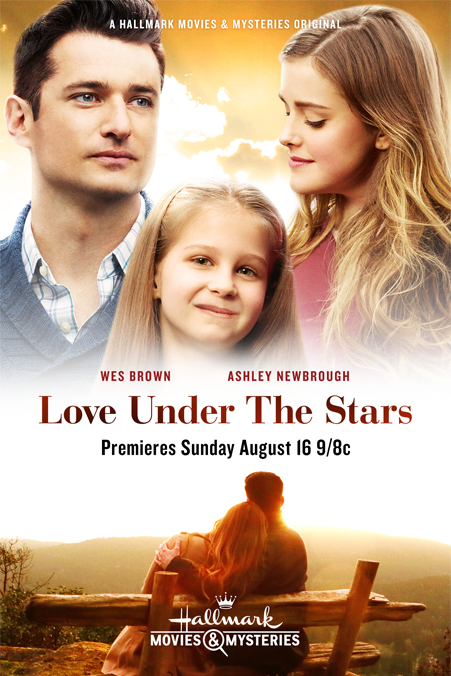
Love Under the Stars (2015) – When you boil it down to the basic plot, this is like the Hallmark movie Class (2010). Except it’s much better. It’s about a college girl played by Ashley Newbrough who needs to come up with her thesis in child psychology. Her college advisor played by Barry Bostwick has a niece that teaches a fourth grade class and has Newbrough go there for inspiration. She meets a guy played by Wes Brown who is raising a daughter as a single parent because the mother/wife has passed away. It plays out the way you expect it to and the way Class did, but it’s just better the whole way through. Especially Wes Brown. We can easily understand why she is attracted to him, but he also comes across well as a loving father who appears happy, but also has an underground river of fear and concern for his daughter constantly flowing through him. He is the real reason the film works as well as it does. Newbrough is pretty good too, but she basically walks around the film like she’s hot and horny, to put it bluntly, all the time she’s with him. It makes it difficult to take her character seriously as a real person the way we do with him. In particular, when it comes to her backstory of also losing her mother and the development of the relationship with the daughter. They should have had her dial it back a bit and act less like an infatuated teenager.

Also, the daughter (Jaeda Lily Miller) is a little annoying. I don’t think it’s the actresses fault so much as it is the way her character is written. I don’t think they give her enough credit and let her be more like a real kid with problems, then a cardboard cut out of a troubled child. A little tweaking of her character would have helped.

I really did like the use of the counting thing. When the father leaves her off at school or somewhere else, he counts down a few seconds because he knows she will turn around, usually opening a door, in order to wave to him one more time. She’s afraid he might be gone like her mother is forever. It’s a really nice touch that of course pays off in the end.

All around, this is one of the top tier Hallmark movies I have seen so far.

OperationCupcake-ADLg

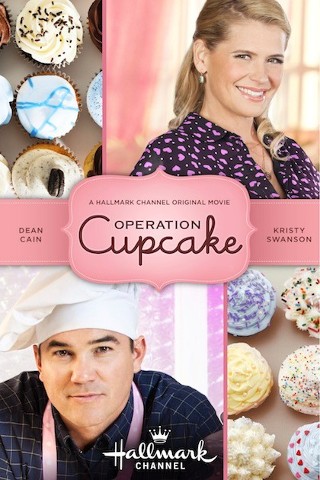
Operation Cupcake (2012) – I mentioned not giving the character of the daughter enough credit in Love Under The Stars and the problem is in this film too. This is about Army Colonel Griff Carson (Dean Cain) who comes home on leave to his wife Janet (Kristy Swanson) who runs a cupcake shop. The whole thing is about Griff adjusting to civilian life while also awaiting a possible promotion to General. The problem is they don’t give this guy enough credit. Instead, they drag out his adjustment way too long. It shouldn’t have taken him so long and the change should have been more gradual rather than played for laughs as long as it could. He works at the shop with his wife, and there was at least one scene where you wonder if he actually comes from the Army. He is mobbed by a ton of people at the cupcake store that he suddenly has to service. He doesn’t really attempt to put some of his training to use in order take a bunch of unruly people and get them to act in a civilized manner. The scene doesn’t work and the movie just doesn’t really work either. I think they should have had Cain’s character transition more gradually rather than having him be essentially a brick wall that only comes down in the end. Hallmark avoided that with Recipe For Love and that’s why it is one of my favorites. I also think that Dean Cain was miscast. I have difficultly buying any kind of machismo from his character. He just doesn’t fit the part. This is one that’s fine if you wind up catching it by chance, but don’t put your lure out into the Hallmark waters explicitly to see it.

Final note: I didn’t even notice till I was looking at the credits, but Donna Pescow is in this. She was a baker at the store who has some back and forth with Cain. Of course for most people she is from Saturday Night Fever (1977), but I will always remember her as the mom on the TV Show Out Of This World. Makes me want to break out my bootleg copies of that show. To the best of my knowledge, they still haven’t released that show on DVD.