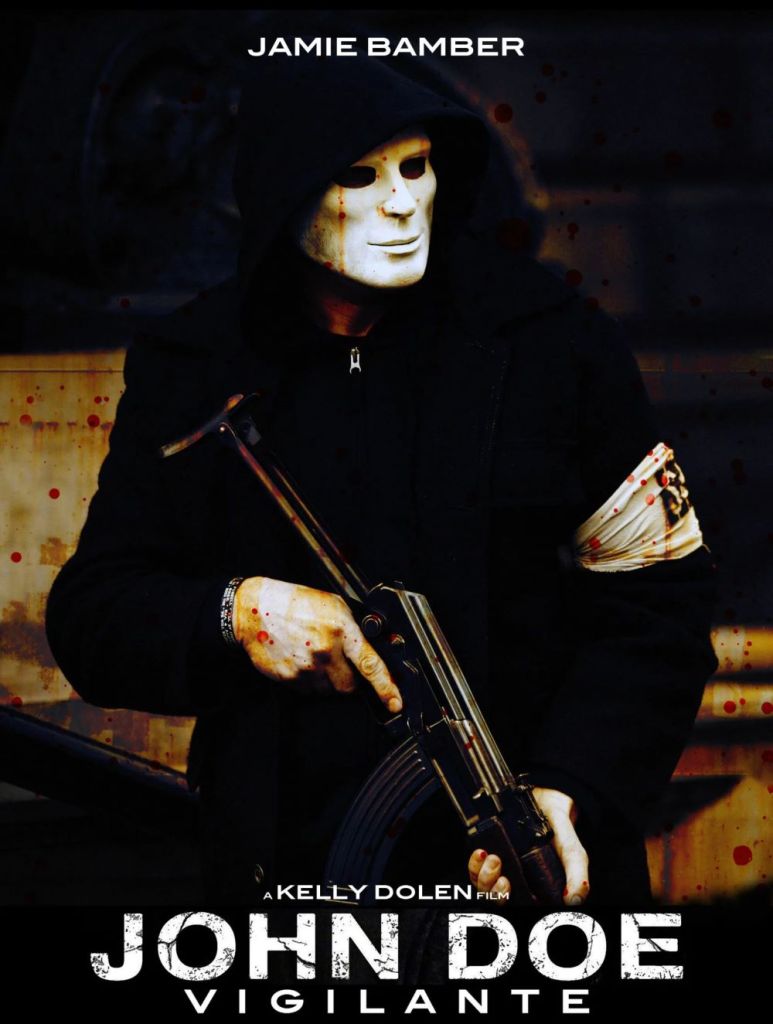
“They failed us… so what choice did I have?” — John Doe
John Doe: Vigilante, directed by Kelly Dolen and released in 2014, is a blunt and provocative take on the vigilante thriller, brimming with social commentary and visual grit. The film revolves around John Doe, played by Jamie Bamber, whose world is shattered by the violent deaths of his family members. Disillusioned by a justice system that barely delivers justice, Doe transforms himself into a vigilante, targeting repeat offenders who continually evade real consequences. The narrative takes a non-linear approach, jumping between timelines using mock interviews, courtroom debates, and TV news segments to piece together Doe’s story and the societal mania swirling around him.
The structure of the film is both one of its most engaging features and a source of occasional frustration. Rapid switches between documentary-style “talking head” interviews, real-time action, and flashbacks keep the viewer on their toes. While this can create some dramatic momentum, it also leads to a sense of disconnect, as the story sometimes trades clarity for style. Still, there’s an undeniable energy to this format. The movie feels urgent and relevant, throwing the audience directly into a conversation about law, order, and the places these systems break down.
A major focus of the film is on the media’s influence over the public’s perception of vigilantism. The mixed portrayal of John Doe as both a monster and a folk hero reflects how quickly public sentiment can tilt depending on who’s doing the telling. There’s an uncomfortable suggestion that cycles of violence and public outrage are not only connected but sometimes dependent on the news cycle to fuel them. The film hammers this point home repeatedly, sometimes at the expense of nuance. It isn’t shy about waving its message in the viewer’s face, with characters often delivering speeches about justice, victimization, and the failings of society.
Despite some heavy-handedness, Jamie Bamber’s performance is the glue holding everything together. He plays Doe with a haunted distance rather than unrestrained rage, showing a character who’s been hollowed out by tragedy and driven by a cold, relentless sense of necessity. He’s not a cartoonish avenger—his actions clearly torment him, and his moments of uncertainty make the character believably conflicted. However, the supporting cast doesn’t fare as well, with most roles feeling thin and underdeveloped. Journalists, detectives, and secondary victims drift in and out, often serving mainly as delivery devices for the film’s ceaseless thesis statements about crime and morality.
The violence in John Doe: Vigilante is unflinching and rarely sensationalized. Confrontations come fast and harsh, depicted with practical effects that drive home the ugliness of the acts themselves. This directness serves to emphasize the horror of violence, whether enacted by criminals or by Doe himself. The film’s refusal to sugarcoat these scenes will appeal to viewers who prefer realism and discomfort to stylized action, but it may push others away due to its unrelenting bleakness.
On the plus side, the movie does succeed in keeping the viewer guessing about its core question: Is Doe’s crusade righteous or an invitation to chaos? His victims are almost unfailingly depicted as monsters, which blunts some of the intended ambiguity, but the reaction from the world around him—copycat crimes, protests, media manipulation—spins the plot in more interesting directions. The broader implication is that once a society loses faith in the courts, retributive justice becomes both appealing and very, very dangerous. While the film mostly sticks to familiar genre beats, it does occasionally land a punch that lingers. Scenes showing a growing vigilante movement in response to Doe’s actions are particularly thought-provoking, inviting viewers to consider how collective anger can quickly spiral out of control.
However, the film repeatedly stumbles over its own desire to make a point. Its depiction of evil is strikingly black-and-white, and the justice system is rendered in frustratingly broad strokes. Very little time is spent on the possibility of innocent people being caught in the crossfire or of criminals ever achieving redemption. All the nuance falls to Bamber’s performance, as the rest of the characters serve mostly as echoes of his trauma or mouthpieces for the script.
Dialogue can also be a weak point. Characters often speak in loaded, over-serious refrains about crime and victimhood. If you’ve seen other media with vigilante themes, especially ones grappling with morality, John Doe: Vigilante might give you déjà vu. It isn’t particularly subtle and tends to repeat itself, particularly in the latter half, as perspective shifts and news segments rehash similar arguments. By the time the final acts come around—with a pivotal, tension-drenched scene of Doe delivering his last “message” to the public—the narrative momentum has already started to lag.
Still, the film isn’t without its bright spots. Its editing, especially the way flashbacks are woven into the present narrative, is creative and keeps certain plot elements hidden until just the right moment. There are a few bold narrative choices—one involving a child’s perspective near the end is a standout—that briefly elevate the film above its otherwise standard revenge-thriller fare. These are the moments that will stick with viewers long after credits roll.
At its core, John Doe: Vigilante is angry and bruising, with its heart firmly pinned to its sleeve. It wants to provoke discomfort and debate, not offer easy answers or escapist fun. The movie wrestles with questions of what justice really means when institutions fail, and whether violent reckoning is ever justifiable—even for the worst of the worst. It doesn’t ultimately land on a satisfying conclusion, but that may be the point.
John Doe: Vigilante stands as a solid and sometimes stirring entry in the vigilante genre, bolstered by a committed lead performance and raw intensity but hampered by heavy-handed dialogue, weak supporting characters, and a lack of moral complexity. For viewers who enjoy gritty crime films and are open to films that raise difficult, unsettling questions, John Doe: Vigilante is worth checking out. Just don’t expect it to pull its punches—or to give you any tidy resolutions.
 Through the Shattered Lens