The TSL Horror Grindhouse: The Last House On The Left (dir by Wes Craven)


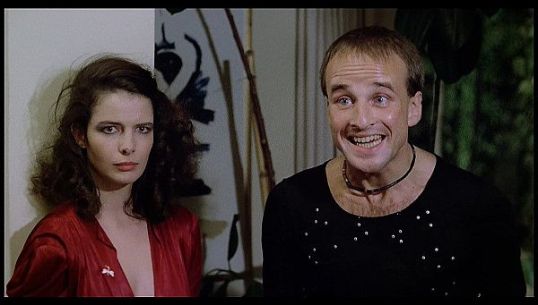
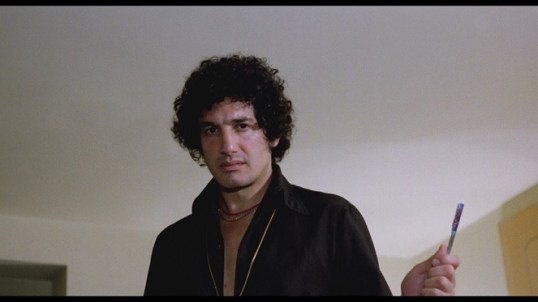
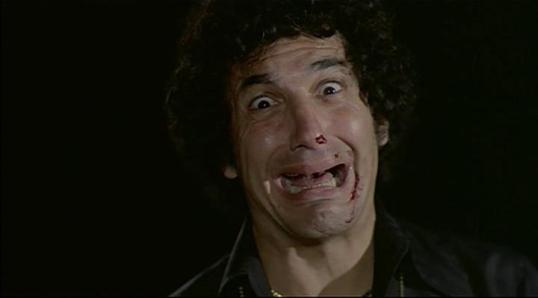
The year is 1972 and the news is grim.  The fighting continues in Vietnam.  The protests continue at home.  Crime is rising.  The economy is struggling.  Groups like the Weathermen and the SLA are talking about taking the revolution to the streets.  In New York, the notorious murderers Krug Stillo (David Hess) and Fred “Weasel” Podowksi (Fred Lincoln) have broken out of prison and are one the run.  They are believed to be traveling with Krug’s drug-addicted son, Junior (Marc Sheffler), and a woman named Sadie (Jeramie Rain), who is said to be feral and bloodthirsty.

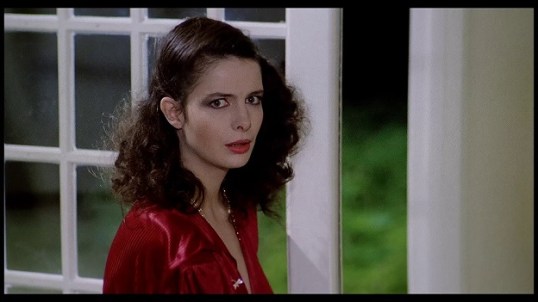
However, Mari Collingwood (Sandra Cassel) doesn’t care about any of that.  She’s just turned seventeen and she can’t wait to go to her first concert with her best friend, Phyllis (Lucy Grantham).  Mari is naive, optimistic, and comes from from a comfortably middle-class family.  Phyllis is a bit more worldly and tougher.  As she explains it, her family works in “iron and steel.”  “My mother irons, my father steals.”

While Mari’s parents (Richard Towers and Eleanor Shaw, though they were credited as Gaylord St. James and Cynthia Carr) bake a cake and prepare for Mari’s birthday party, Mari heads into the city with Phyllis.  Before they go to the concert, they want to buy some weed.  When they see Junior Stillo hanging out on a street corner, they assume he must be a dealer and they approach him.  Junior takes them to an apartment, where they are grabbed by Weasel and Krug.

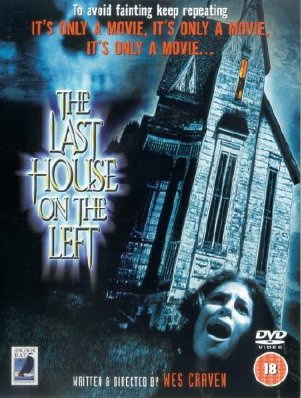
1972’s The Last House On The Left was advertised with the classic (and much-repeated line), “To avoid fainting, keep repeating, ‘It’s only a movie …. it’s only a movie…. it’s only a movie….”  That advice is easy to remember during the first part of the film because, up until Mari and Phyllis approach Junior, the movie is fairly cartoonish, with Richard Towers giving an incredibly bad performance as Mari’s father.  This film was Wes Craven’s debut as both a director and a writer.  By his own admission, Craven had no idea what teenage girls would talk about and, as such, he just wrote a lot of dialogue in which Mari talked about her breasts and Mari’s mother complaining that young women no longer wore bras.  (On the commentary that he recorded for the film’s DVD release, Craven succinctly explained, “I guess I was obsessed with breasts.”)  This part of the film plays out like a weird counter-culture comedy.  Even when we first meet Krug, he’s using his cigar to pop a little kid’s balloon.
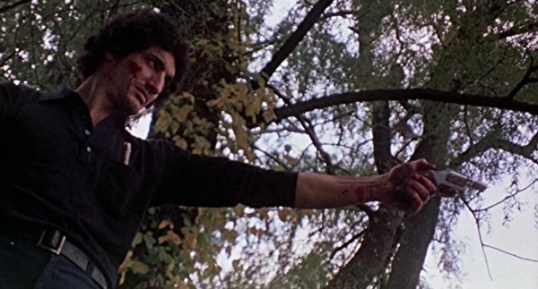
The Last House On The Left (1972, dir by Wes Craven, DP: Victor Hurwitz)

The tone of the film jarringly shifts the minute that Mari and Phyllis step into that apartment.  That’s largely due to the performances of David Hess and Fred Lincoln, who are both so convincing in their roles that it can be difficult to watch them.  In real life, Fred Lincoln was a stuntman (he’s in The French Connection) and an adult film actor.  David Hess, meanwhile, was a songwriter who was looking to break into acting.  (Hess’s songs — some of which are beautifully sad and some of which are disturbingly jaunty — are heard throughout the movie.)  Hess, in particular, is so frightening as Krug that he spent the rest of his career typecast as sociopathic murderers.  The middle part of the film alternates between disturbingly realistic scenes of Mari and Phyllis being tortured and humiliated and cartoonish scenes involving two incompetent cops (one whom is played by Martin Kove) and Mari’s parents.  Phyllis is murdered and dismembered in a graveyard and the gore effects remains disturbingly realistic even when seen today.  Mari, after being raped by Krug, recites a prayer, and then wades into a nearby lake.  Krug shoots her three times.  Afterwards, Krug, Weasel, and Sadie try to wash the blood off of themselves, the expression on their faces indicating that even they understand that they’ve gone too far.

Eventually, Krug, Weasel, Sadie, and Junior stop off at a nearby house, claiming to be salespeople who just had a little car trouble.  What they don’t realize is that the people who are generously welcoming them to spend the night are also the parents of Mari Collingwood….

Basing his script on Ingmar Bergman’s The Virgin Spring, Wes Craven has often said that The Last House On The Left was meant to be a commentary on the Vietnam War and the way that other films had glamourized violence.  That may or may not be true.  (Craven has also said that, at the time, he was so desperate to direct a movie that he would have filmed almost anything.)  What is true is that the violence in Last House On The Left is not easy to watch.  Once it starts, it’s relentless and, at no point, is the audience given an escape.  David Hess is so committed to playing a sadist that he never takes a moment to wink at the audience and say, “Hey, we’re just playacting here!”  Craven shot the film in a guerilla style and the shaky camera, the natural light, and the grainy images leave you feeling as if you’re watching some sicko’s home movies.  At the end of the movie, when Mari’s parents take the same joy in attacking her killers as Krug took in attacking their daughter, it’s hard not to feel that Mari has been forgotten.  Everyone has been consumed by the violence that has erupted around them.  Even though Richard Towers’s nearly blows the ending with a few hammy line readings, the film still leaves you exhausted.
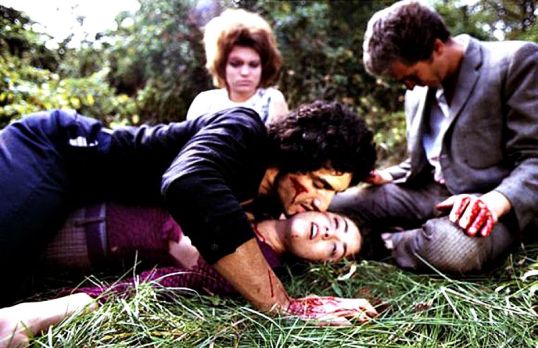
The Last House on the Left (1972, dir. by Wes Craven, DP: Victor Hurwitz)

Not surprisingly, The Last House On The Left was attacked by most reviewers when it was originally released.  The movie played the drive-in and grindhouse circuit for three years, with producer Sean Cunningham often taking out advertisements in local newspapers that read: “You will hate the people who perpetrate these outrages—and you should! But if a movie—and it is only a movie—can arouse you to such extreme emotion then the film director has succeeded … The movie makes a plea for an end to all the senseless violence and inhuman cruelty that has become so much a part of the times in which we live.”  The film’s advertisements also contained a warning that no one under 30 should see the movie.  Needless to say, The Last House On The Left was a huge hit, especially with viewers under 30.

(One of the great ironies of film criticism is that one of the few critics to defend Last House On The Left was Roger Ebert.  Ebert, who would later be one of the slasher genre’s biggest attackers, gave Last House On The Left a very complimentary review and praised it for its political subtext.)

Seen today, The Last House On The Left still packs a punch.  It’s a shocking and shamelessly sordid film, one that shows hints of the talent that would make Wes Craven one of the most important directors to work in the horror genre.  It’s flawed, it’s exploitive, it’s thoroughly unpleasant, and yet it’s also a film that sticks with you.  It’s powerful almost despite itself.  It’s not a movie that I would necessarily chose to watch on a regular basis but, at the same time, I can recognize it as being a historically important film.  For better or worse, much of modern American horror owes a debt to Wes Craven’s Last House On The Left.  Even today, when one is regularly bombarded with horrific images, Last House On The Left still has the power to shock.
Scenes That I Love: Giovanni Lombardo Radice Dances in The House on The Edge of the Park


Today, the Shattered Lens celebrates what would have been the 71st birthday of the great Italian actor, Giovanni Lombardo Radice!

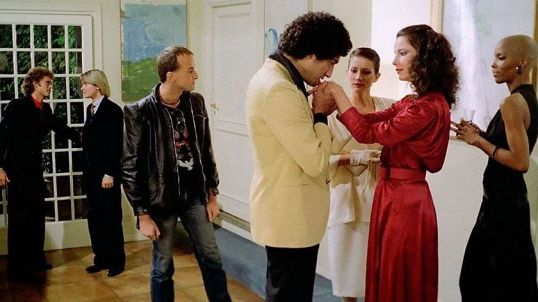
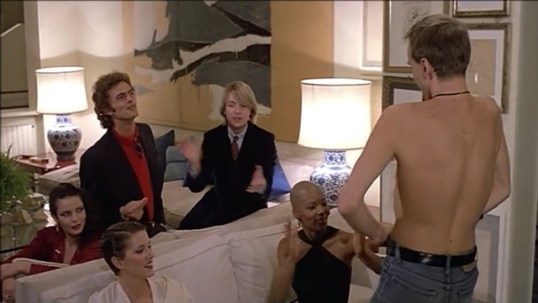
I’ve shared this scene before but I’ll happily share it again.  In Ruggero Deodato’s The House On The Edge of the Park, Giovanni Lombardo Radice shows a bunch of rich jerks how he can dance.  Dancing with Radice is his frequent co-star, Lorraine De Selle.  And, wearing the yellow suit, is David Hess.

4 Shots From 4 Films: Special David Hess Edition


4 Shots From 4 Films is just what it says it is, 4 shots from 4 of our favorite films. As opposed to the reviews and recaps that we usually post, 4 Shots From 4 Films lets the visuals do the talking!

Today, we remember actor David Hess on his birthday.  It’s time for….

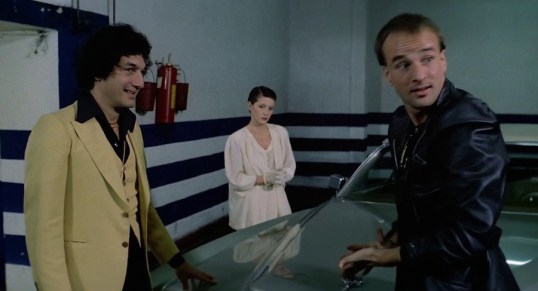
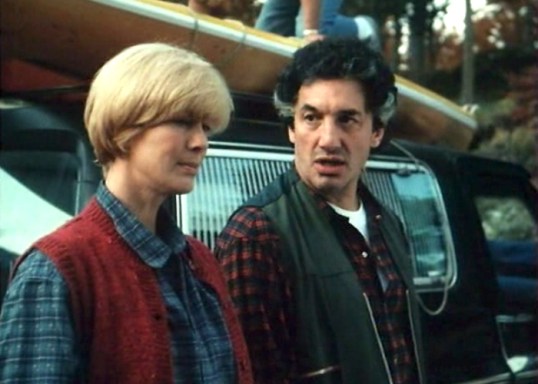
4 Shots From 4 David Hess Films

The Last House On The Left (1972, dir by Wes Craven, DP: Victor Hurwitz)

Hitch-Hike (1977, dir by Pasquale Festa Campanile, DP:
Franco Di Giacomo and Giuseppe Ruzzolini)

The House On The Edge of the Park (1980, dir by Ruggero Deodato, DP: Sergio D’Offizi)

Body Count (1986, dir by Ruggero Deodato, DP: Emilio Loffredo)

Song of the Day: Now You’re All Alone by David Hess


Today’s song of the day comes from Wes Craven’s infamous Last House On The Left.  Of course, many people might know it better from it’s use in Quentin Tarantino’s The Hateful Eight.

This haunting piece of music was composed by David Hess, who played the murderous Krug in Craven’s film.

Holiday Film Review: To All A Good Night (dir by David Hess)


To All A Goodnight, a holiday-themed horror film from 1980, opens with a particularly macabre hazing.  One teenage girl runs through a mansion, eventually ending up at the edge of a balcony.  A bunch of other teenage girls surround her, in what I assume is meant to be a sorority initiation.  Over the edge of the balcony the first girl goes, plunging to her death.  AGCK!  Actually, it would perhaps a bit more effective if not for the fact that the shot of the girl plunging to her death was shot with a very obvious dummy.

Two years later, on the Friday before Christmas, none of the students at the Calvin Finishing School For Girls seem to remember or care about the accident that led to the death of one of their classmates.  Instead, they are too busy getting ready for Christmas break.  Most are heading home but a few are planning on staying at the school.  One of the girls explains that her superrich boyfriend is going to be flying his private plane to the school and he’s bringing along a few of his friends.  Yay!  Everyone gets a date!  They just have to make sure that they’re not caught by the housemother (Kiva Lawrence) or Ralph (Buck West), the weirdo handyman who spends a lot of time telling the girls that something evil is going to happen.

The plane lands.  (Viewers will want to keep an eye out for porn star Harry Reems, playing the pilot.)  The boys invade the school.  Guitars are played.  Love is made.  Philosophies are discussed.  And it turns out that Ralph was correct.  Evil things happen.  Someone has dressed up like Santa Claus and is committing murder!  The girls eventually call the police and Detective Polansky (Sam Shamshak) leaves behind two other detectives to keep an eye on the place.  For whatever reason, it never seems to occur to anyone to just leave the school and maybe stay at a hotel or something.  I mean, the plane is right there!

To All A Goodnight is a fairly generic, low-budget slasher.  The acting is stiff.  The lighting is so haphazard that it’s actually a challenge to keep track of whether a scene is taking place during the day or at night.  There are several character but none of them have enough of a personality to really make an impression.  It’s a challenge to keep track of who is who.  More than a few times, I found myself saying, “I thought she was dead.”

There are two things that make this film memorable.

First off, To All A Goodnight was released on January 30th, 1980.  That was a month too late to take advantage of the holiday connection but, at the same time, that also makes it the first slasher of the 80s.  Friday the 13th would not be released until May.  Much like the first Friday the 13th, To All A Goodnight is basically an American version of an Italian giallo film, with the emphasis on the whodunit aspect of the plot.

Secondly, To All A Goodnight was the only film to be directed by David Hess, the songwriter-turned-actor who was best known for playing Krug in the original Last House On The Left.  (Fans of Italian cinema, of course, know him for his turn as the main psycho in The House On The Edge of the Park.)  With the exception of one nicely surreal moment in which one of the students has a nervous breakdown and starts to dance during the film’s final confrontation, there’s nothing particularly memorable about Hess’s direction.  The film was obviously shot quickly and for little money so it’s not easy to say whether Hess would have improved as a filmmaker with more time and a bigger budget.

To All A Goodnight was one of the first of the Santa Claus slasher films but it would certainly not be the last.  Something about jolly old St. Nick just seems to bring out the macabre in certain filmmakers.

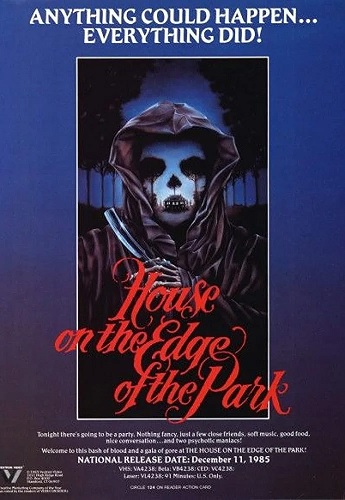
International Horror Film: House On The Edge of the Park (dir by Ruggero Deodato)


Or is it House Of The Park On Edge?

When this Italian thriller was first released in the United States in 1980, the film’s title was mistranslated by whoever put together the film’s American trailer.  In Italy, it was known as La casa sperduta nel parco.  When it was released in the United States, it was meant to be known as The House On The Edge of the Park but the trailer famously referred to it as being….

That the trailer was sent out with the title incorrectly translated tells you a lot about the American grindhouse film scene.  If a similar mistake had been made a with a big studio production, someone would have lost their job and a lot of money would be spent to put together a new trailer.  In the world of the grindhouse, it was probably understood that people would come to the film regardless of whether they even knew what the title was.  According to the book Sleazoid Express, House on The Edge of the Park was very popular in the grindhouse theaters of New York’s 42nd Street, where audiences loved the violence, the nudity, and the misogynistic dialogue.

Today, House on the Edge of the Park is remembered for being the film that brought together Ruggero Deodato, David Hess, Giovanni Lombardo Radice, Christian Borromeo, Annie Belle, and Lorraine De Selle.  (The Anchor Bay DVD release featured interviews with Deodato, Hess, and Radice.  Radice and Deodato seemed a bit surprised and, at times, horrified that the film still had fans.  Hess seemed considerably less shocked.)  House on the Edge of the Park was the film that Deodato made after the subversive and satirical Cannibal Holocaust.  Though House on the Edge of the Park retains a subversive edge, it’s a much more straight forward movie than Cannibal Holocaust.  No one has ever mistaken House on the Edge of the Park for a documentary.

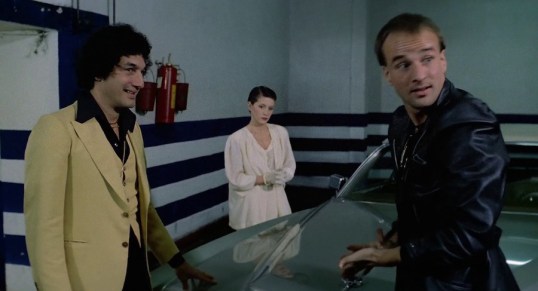
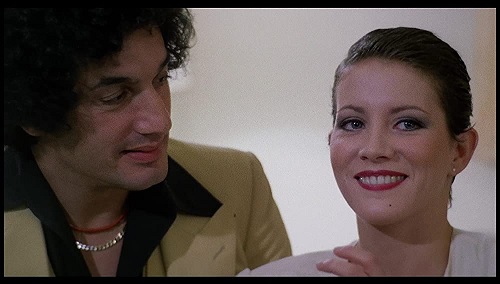
David Hess, who may have written songs for Elvis and Pat Boone but who is destined to always be remembered for his performance as Krug in Last House On The Left, plays Alex.  Alex owns a New York City garage.  Alex owns a canary yellow suit.  Alex likes to dance.  Alex is also a serial killer who, when we first see him, is forcing a woman (played by Hess’s wife, who is credited as Karoline Mardek), off the road so that he can assault and murder her.  As the film begins, Alex and his sidekick, Ricky (Giovanni Lombardo Radice, appearing in one of his first films and stealing the show with his demented energy) are getting ready to go “boogie.”  Two rich kids, Tom (Christian Borromeo, my blonde Italian horror crush) and Lisa (Annie Belle), pull into the garage.  Ricky fixes their car.  Tom and Lisa, whose white dress is to die for, are insistent that Alex accompany them to a party at a house …. a house on the edge of the park!

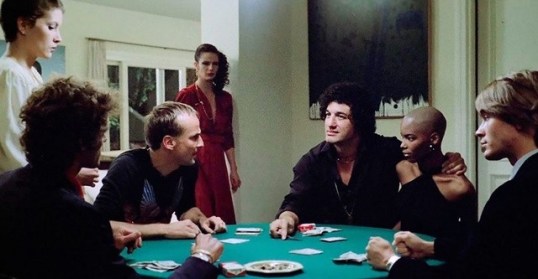
Already at the house are Gloria (Lorraine De Selle), whose red dress is to die for, and Howard (Gabriele Di Giulio), who is apparently Gloria’s boyfriend.  Also waiting at the house is Glenda (Maria Claude Joseph), who appears to just be hanging out because she has nothing better to do.  (There’s a lot of talk about boredom and ennui, amongst the rich young people of House on the Edge of the Park.)  When Tom and Lisa show up with Alex and Ricky, a very familiar class dynamic plays out.  Alex and Ricky are very blue collar.  Alex is earthy and says whatever pops into his head.  Ricky is dependent on Alex to tell him what to do and is also too slow to realize that the rich people are talking down to him.  Ricky is taunted into dancing and then into playing poker.  Ricky loses his money.  Alex discovers that the game is fixed.  Violence follows, with Alex holding the house hostage with the help of the increasingly conflicted Ricky.

Of course, it turns out that there’s a twist and that it wasn’t just coincidence that led to Tom and Lisa pulling into Alex’s garage.  Of course, the twist itself never really makes sense.  The entire film centers around Tom finding time to retrieve something from his office.  It takes him forever to do it because Alex keeps watching him and beating him up.  But there’s actually several moments in the film in which Alex is distracted and he even leaves Tom alone at one point.  You have to wonder just what exactly Tom was doing during all that time.

It’s a deeply misogynistic film, one that features an inexcusable scene in which Gloria and Ricky have consensual sex just a few minutes after Ricky tries to rape her.  (Even if you can see beyond the idea of the sophisticated Gloria falling for a rapist, who stops to have sex while there’s a madman threatening to murder all of your friends?)  Before the party turns violent, Lisa flirts with Alex and, at one point, even showers in front of him.  Her actions make even less sense once it is revealed that Tom and Lisa always knew who Alex was and what he was capable of.  Indeed, the film is sometimes so offensive that it feels almost like a parody of an offensive film.

And yet, there are things to appreciate about the film.  Deodato plays up the class warfare aspect of the story, with Tom and his friends initially condescending to Alex and Ricky, just to discover how little power they actually had once Alex got the upper hand.  Giovanni Lombardo Radice, Lorraine De Selle, Annie Belle, and Christian Borromeo all give good performances, even when their characters are required to do things that don’t make any sense.  David Hess is a force of malevolent nature as Alex.  The house is lovely and I especially liked the pool, though I would suggest changing out the water before taking a swim.  The location shots of late 70s New York are interesting to look at, especially if you’re a history nerd like me.  Riz Ortolani’s soundtrack will get stuck in your head.  I defy you to watch this film and not end up singing that “Do It To Me Once More” song.

In the end, House on the Edge of the Park is not a film that I can really recommend, unless you’re a fan or a student of Italian horror.  In that case, you have to watch the film, if just because of the familiar faces in the cast and the fact that it was directed by Deodato.  Still, if anyone ever told me that this was their favorite film, I would probably immediately start eyeing the exit.  Towards the end of the movie, Gloria says that there has been enough violence and I agreed with her.  That said, violence against Alex is totally acceptable.

The film itself is destined to live forever as an internet meme, as a GIF of David Hess screaming in slow motion has recently become quite popular on Twitter.  There’s just no escaping the House of the Park on the Edge!

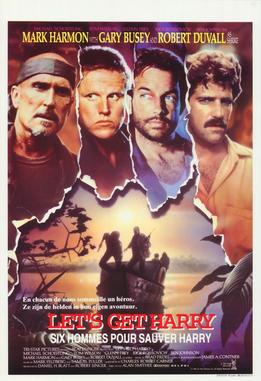
Live Tweet Alert: Join #FridayNightFlix for Let’s Get Harry!


As some of our regular readers undoubtedly know, I am involved in a few weekly live tweets on twitter.  I host #FridayNightFlix every Friday, I co-host #ScarySocial on Saturday, and I am one of the five hosts of #MondayActionMovie!  Every week, we get together.  We watch a movie.  We tweet our way through it.

Tonight, at 10 pm et, I will be hosting #FridayNightFlix!  The movie?  1986’s Let’s Get Harry!

https://www.youtube.com/watch?v=5uiAIJT9G9c

When Mark Harmon is taken hostage, the U.S. Government proves that it was just as worthless in 1986 as it is in 2022!  Fortunately, Harmon’s friends are going to let him be forgotten.  Enter Robert Duvall as a soldier of fortune!  This film also features Glenn Frey, Rick Rossovich, Thomas F. Wilson, Gary Busey, and David Hess!  Director Stuart Rosenberg requested to be credited as Alan Smithee.  That’s always a good sign, right?

If you want to join us this Friday, just hop onto twitter, start the movie at 10 pm et, and use the #FridayNightFlix hashtag!  I’ll be there tweeting and I imagine some other members of the TSL Crew will be there as well.  It’s a friendly group and welcoming of newcomers so don’t be shy.

Let’s Get Harry is available on Prime!

See you there!

Scenes That I Love: Giovanni Lombardo Radice Dances in The House on The Edge of the Park


Today, the Shattered Lens wishes a happy 68th birthday to the great Italian actor, Giovanni Lombardo Radice!

I’ve shared this scene before but I’ll happily share it again.  In Ruggero Deodato’s The House On The Edge of the Park, Giovanni Lombardo Radice shows a bunch of rich jerks how he can dance.  Dancing with Radice is his frequent co-star, Lorraine De Selle.  And, wearing the yellow suit, is David Hess.

International Horror Film Review: Body Count (dir by Ruggero Deodato)


Sitting in the middle of the forest, there’s a camp ground.  Rumor has it that the camp was built on the site of an ancient Native American burial ground and that’s why grouchy Robert Ritchie (David Hess) and his wife Julia (Mismy Farmer) were able to afford it as such as reasonable price.  I guess that could be true and maybe the part about the curse is true, too….  Well, no matter!  People love to camp and the forest is lovely and there’s no way that this camp ground won’t be a success!

In fact, the only thing that could stop it from being a popular vacation location would be if two teenagers were mysteriously murdered one night….

Which, of course, is exactly what happens!  The daughter of a local doctor (played by John Steiner, of all people) goes off with her boyfriend and both of them are murdered!  (Though we’re told that the two of them are high school students and, when we first see them, they’re at basketball practice, both victims appear to be in their early 30s.  When the actress playing the doctor’s daughter first approached him, I immediately assumed that she was playing his wife.  I was actually a little bit stunned when she said, “Bye, Daddy.”)

Anyway, the unsolved murder pretty much ruins any hope of the camp ground being successful.  15 years later, Robert is paranoid and convinced that a Native shaman is sneaking around the forest and looking for campers to kill.  Meanwhile, Julia is so frustrated with her increasingly unstable husband that she’s having an affair with the sheriff (Charles Napier).  The sheriff is so busy shtupping Julia that it often falls upon Deputy Ted (Ivan Rassimov, who had the best hair of all the Italian horror actors) to actually enforce the law.  Meanwhile, the doctor is still mourning the death of his daughter and wandering around the forest.

Eventually, a bunch of obnoxious 30-something teenagers arrive, looking for a place to park their camper and ride their dirt bikes.  Despite the history of murder and the general grouchiness of Robert Ritchie, they decide to say at the campground.  Soon, a masked killer is carving people up.  Is it the spirit of the Native shaman or is it something else?  Who will survive and what will be left of them?

This 1986 Italian film was directed by none other than Ruggero Deodato, the man behind films like Cannibal Holocaust and The House On The Edge of the Park (which starred Body Count’s David Hess).  As one might expect from a Deodato film, the emphasis is on blood and atmosphere.  Deodato, who always had a good eye for properly ominous locations, gets a lot of mileage out of that spooky forest, which really does look like exactly the place where a masked killer would chose to hang out.  While the kills are tame by Deodato standards, they’re still icky enough to make you cringe.  I’m sorry but if the scene involving the body hanging from the hook doesn’t freak you out, then you’ve obviously become dangerously desensitized and you probably should probably take a break from watching movies like this.

Of course, the main appeal of Body Count is to see a cast of Italian horror and exploitation veterans going through the motions of starring in an American-style slasher film.  David Hess, Ivan Rassimov, John Steiner, Charles Napier, and Mimsy Farmer are all such wonderfully eccentric performers that they’re worth watching even when they’re stuck in one-dimensional roles.  David Hess, especially, does a good job as the unhinged Robert Ritchie and the film makes good use of Hess’s image.  The film understand that we’re so used to watching David Hess kill people on screen that our natural instinct is to suspect the worst when we see him in Body Count.  I also liked the performance of John Steiner, largely because Steiner always came across like he couldn’t believe that, after a distinguished theatrical education, he somehow ended up an Italian horror mainstay.  And, of course, Ivan Rassimov had the best hair in the Italian horror genre.

Body Count is on Prime.  The story’s not great but it’s worth watching just for the horror vets in attendance.

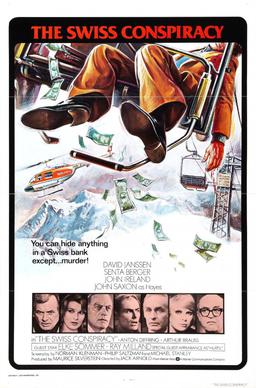
The Swiss Conspiracy (1976, directed by Jack Arnold)


In The Swiss Conspiracy, David Janssen growls his way through another international crime thriller.

Janssen plays David Christopher, a former Treasury agent who is now living in Geneva.  When a Swiss bank is contacted by blackmailers who threaten to reveal the secret account numbers of some of its most prominent and unsavory clients, the bank’s president, Johann Hurtill (Ray Milland), hires Christopher to find out who is behind the plot.  Unfortunately, one of the account holders is a U.S. gangster named Robert Hayes (John Saxon, naturally) and he’s not happy about having to work with a former fed.

With The Swiss Conspiracy, you know what you’re getting into the minute that the film opens with a narrator giving a lengthy explanation about how Swiss bank accounts work.  This is one of those 70s thriller where the budget is low, the plot is often nonsense, and the entire cast seems to be more interested in hitting the slopes than actually making a convincing movie.  The cast is full of familiar actors who, at the time of filming, had seen better days.  Along with Ray Milland, John Ireland, Anton Diffring, and Elke Sommer all have small roles while “German screen sensation” Senta Berger is cast as the woman who might be in love with David Christopher.  Martin Landau is not in this movie but it certainly feels like he should have been.

David Janssen made a lot of movies like this in the 70s.  Janssen was a good actor and he was especially skilled at playing grizzled tough guys but in The Swiss Conspiracy, he seems to be more interested in checking out the sights than in anything else.  You can’t really blame him because the film was shot on location in Zurich and the local scenery is always more interesting than anything else that’s happening on screen.

The Swiss Conspiracy was directed by Jack Arnold, a veteran B-movie director who was also did The Creature From The Black Lagoon and The Incredible Shrinking Man.  His direction in The Swiss Conspiracy is workmanlike and undistinguished but he does make great use of the locations.  The Swiss Conspiracy may not be a great movie but I’ll damned if I don’t want to hop on the next plane and head to Switzerland for the week.