Lisa Marie Reviews An Oscar Nominee: Born On The Fourth of July (dir by Oliver Stone)


In 1989, having already won an Oscar for recreating his Vietnam experiences in Platoon, director Oliver Stone returned to the war with Born On The Fourth Of July.

Based on the memoir of anti-war activist Ron Kovic, Born on the Fourth of July stars Tom Cruise as Kovic.  When we first meet Kovic, he’s growing up on Long Island in the 50s and 60s.  He’s a clean-cut kid from a nice family.  He’s on the school wrestling team and he’s got a lot of friends.  When he was just 15, he heard John F. Kennedy telling people to ask what they can do for their country and he was inspired.  He decided he wanted to join the Marines, despite the fact that his father (Raymond J. Barry) was still haunted by the combat that he saw in World War II.  (In one of the film’s better scenes, a young Kovic notices that the elderly veterans marching in the Independence Day parade still flinch whenever they hear a firecracker.)  He enlists in the Marines after listening to a patriotic speech from a recruiter (played by Tom Berenger).  Ron runs through the rain to attend his prom and has one dance with Donna (Kyra Sedgwick), on whom he’s always had a crush.  There’s nothing subtle about the way that Stone portrays Kovic’s childhood.  In fact, one might argue that it’s a bit too idealized.  But Stone knows what he’s doing.  The wholesomenss of Kovic’s childhood leaves neither him nor the viewer prepared for what’s going to happen in Vietnam.

Vietnam turns out not to be the grand and patriotic adventure that Kovic thought it would be.  After Sgt. Kovic accidentally shoots one of his own men in a firefight, he is ordered to keep quiet about the incident.  After he is wounded and paralyzed in another firefight, Kovic ends up in a Hellish VA hospital, surrounded by men who will never fully recover from their mental and physical wounds.  Kovic is eventually returns home in wheelchair.  The film then follows Kovic as he goes from defending the war in Vietnam to eventually turning against both the war and the government.  At one point, he ends up with a group of disabled vets in Mexico and there’s a memorable scene where he and another paraplegic (Willem Dafoe) attempt to fight despite having fallen out of their chairs.  Eventually, Kovic returns to America and turns his anger into activism.

There’s nothing subtle about Born On The Fourth Of July.  It’s a loud and angry film and Oliver Stone directs with a heavy-hand.  Like a lot of Stone’s films, it overwhelms the viewer on a first viewing and it’s only during subsequent viewings that one becomes aware of just how manipulative the film is.  Tom Cruise gives a good performance as Ron Kovic but his transformation into a long-haired, profane drunk still feels as if it happens a bit too abruptly.  A good deal of the film centers on Kovic’s guilt about accidentally killing one of his men but the scene where he goes to the soldier’s family and asks them for forgiveness didn’t quite work for me.  If anything, Kovic came across as being rather self-centered as he robs the man’s mother and father of the belief that their son had at least died heroically in combat as opposed to having been shot by his own sergeant.  Did Kovic’s need to absolve himself really give him the right to cause this family more pain?  Born on the Fourth Of July is an effective work of agitprop.  On the first viewing, you’ll want to join Kovic in denouncing the military and demanding peace.  On the second viewing, you’ll still sympathize with Kovic while also realizing that he really owes both his mother and father an apology for taking out his anger on them.  By the third viewing, you’ll be kind of like, “Wow, I feel bad for this guy but he’s still kind of a jerk.”  That said, when it comes to making an effective political film, Adam McKay could definitely take some lessons from Oliver Stone.  Born On The Fourth of July is at its best when it simply captures the feeling of living in turmoil and discovering that the world is not as simple a place as you once believed.  As idealized as the film’s presentation of Kovic’s childhood may be, anyone who has ever felt nostalgia for an earlier and simpler world will be able to relate.

Oliver Stone won his second Best Director Oscar for Born On The Fourth Of July.  The film itself lost Best Picture to far more genteel version of the past, Driving Miss Daisy.
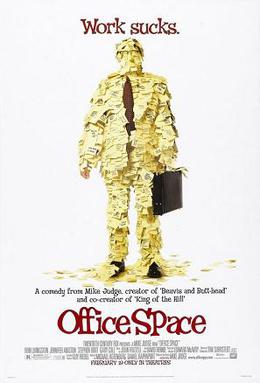


The Unnominated: Office Space (dir by Mike Judge)


Though the Academy of Motion Picture Arts and Sciences claim that the Oscars honor the best of the year, we all know that there are always worthy films and performances that end up getting overlooked.  Sometimes, it’s because the competition too fierce.  Sometimes, it’s because the film itself was too controversial.  Often, it’s just a case of a film’s quality not being fully recognized until years after its initial released.  This series of reviews takes a look at the films and performances that should have been nominated but were, for whatever reason, overlooked.  These are the Unnominated.

The other night, Erin and I started a new Labor Day weekend tradition of watching the 1999 comedy, Office Space.

As we watched Mike Judge’s first live-action film, it occurred to me that Office Space is a film that unites all of my friends.  It doesn’t matter whether they work in an office like Peter (Ron Livingston), Samir (Ajay Naidu), or Michael Bolton (David Herman) or if they work in a restaurant like Joanna (Jennifer Aniston) or even if they’re an independent contractor like Peter’s loud neighbor, Lawrence (Diedrich Bader).  It doesn’t matter if they would rather be fishing like Peter or watching reruns of Kung Fu like Joanna.  Everyone that I know has said that they can relate to Office Space.  Everyone has had to deal with a passive-aggressive jerk of a boss like Bill Lumbergh (Gary Cole).  Everyone has known a crazy co-worker like the red stapler-obsessed Milton (Stephen Root).  Everyone dreads the arrival of consultants like the Bobs (John C. McGinely and Paul Willson).  Everyone resents being told that doing the bare minimum is not enough, whether it’s just sitting in your cubicle or wearing 15 pieces of flair.  Everyone dreams of sleeping late and not stressing about TPS reports.  Everyone dreams of screwing over their company in a way that’s so clever that they’ll never be caught.  (And I think everyone secretly knows that they would screw it up by putting a decimal point in the wrong place.)  Everyone wants to destroy the oldest and least reliable piece of equipment at work.  Everyone wants to feel like they can just announce that they’re going to quit and spend the rest of their life doing what they would do if they had a million dollars.

Considering the fact that the film has now become universally beloved, it’s interesting that Office Space opened to mixed reviews and middling box office.  The studio wasn’t sure how to sell a live action film from the director of Beavis and Butt-Head and King of the Hill and many critics focused on the film’s rather loosely-constructed, episodic narrative and overlooked the fact that the film captured all of the small details that drive people crazy about their work.  Audiences, though, discovered the film on video and undoubtedly enjoyed watching it after a long day of dealing with their own annoying boss.  The film’s star, Ron Livingston, has said that many people have approached him and told him that he inspired them quit their jobs.  “That’s kind of a heavy-load to carry.”

For a film that centers around office workers updating data so that computer systems don’t cash in 2000, Office Space has aged remarkably well.  Ron Livingston, David Herman, and Ajay Naidu are an instantly sympathetic and likable trio of nerdy heroes.  Stephen Root’s panic as he realizes that he will be the only employee not to get a piece of cake remains both poignant and funny.  Gary Cole is still the boss from Hell.  I still laugh at John C. McGinley’s rage when his praise of Peter as a “straight-shooter with upper management potential” is dismissed by Peter’s boss.  We can all relate to Jennifer Aniston’s dislike of flair and her hatred for Brian (Todd Duffey).  The jump to conclusion mat would probably be even more popular today than back in 1999.

Of course, Office Space was not nominated for any Oscars.  That’s not really a shock.  It’s an episodic comedy that was directed by a Texas filmmaker who was, at the time, best-known for a cartoon about two brain-dead teenagers.  Obviously, it wasn’t going to be nominated for anything, even though I think more people have probably watched Office Space over the past few days than have watched American Beauty.  Oscars aren’t everything, though.  Office Space remains both a great work film and a great Texas film.

Previous entries in The Unnominated:

  1. Auto Focus 
  2. Star 80
  3. Monty Python and The Holy Grail
  4. Johnny Got His Gun
  5. Saint Jack