February Positivity: Always A Winner (dir by Dave Christiano)


In this 2023 film, teenage golf champion Emily (Evangeline Griffin) transfers from one private Christian academy to another.  At her new school, the golf coach, Coach Kelly (Jenn Cooke), tells her two best players, Madison (Amelia Still) and Hannah (Ashley Brant), to befriend Emily and gauge whether or not she plans on continuing to play golf in high school.

When they approach Emily in the school’s cafeteria, they are shocked when Emily says that she’s a pretty good golf player and she plans to be state champion again.  They are scandalized when Emily mentions that she broke all of Coach Kelly’s old records at her previous school.  They are stunned when Emily suggests that she’s a better golfer than Coach Kelly ever was.

“Are you a Christian?” Madison asks.

Yes, this is another one of those films.  This is another Dave Christiano-directed film in which high school athletics (in this case, golf) are used as a metaphor for faith.  Emily may say she’s a Christian but first she’s going to have to learn that being a Christian means always doing what your coach tells you to do (even if that means hitting with a seven when you’d rather use your nine) and, of course, being a humble winner and a gracious loser.  As Coach Kelly explains it, Emily could be the best player in the world but God might have plans for her that don’t include winning the state championship.  To me, that’s an odd way to look at things.  I mean, if God is the one who is deciding who is going to win the tournament, why waste all that time with practicing your swing and learning how to putt?  It takes Emily a while to listen to Coach Kelly so we end up with a lot of scenes of Madison and Hannah sucking up to the coach while Emily rolls her eyes in the background.  One wonders if Christiano realized that Madison and Hannah are both the type of people who everyone hated in school, the snitches who followed the rules and called out anyone who didn’t.  Emily may be arrogant but at least she seems like she gets some sort of enjoyment out of winning.  At least she acts like a human being as opposed to a Sim, waiting to be told what to do.

Meanwhile, Madison is freaking out over whether or not she’ll be able to afford to attend Zion College.  She has applied for all of the scholarships and she’s been working part-time and saving her money and her father is willing to contribute a little as well but Madison is still short $5,000.  Madison suggests that she could take out a student loan but her mother says, “No, your father doesn’t want you borrowing any money.”

On the one hand, that’s good advice.

On the other hand, Madison’s the one who is paying for most of her tuition so shouldn’t she be the one to decide whether or not to apply for a student loan?  I mean, Madison is going to be a legal adult by the time she starts college.  And it’s not like Dad is helping out all that much so who cares what he thinks?  Still, Madison’s mother tells her that it might just be God’s plan for Madison to go to a community college.  And again, with all due respect, you have to wonder if we’re supposed to take comfort in the idea of a God who micromanages ever aspect of our lives.

Finally, Hannah learns that a friend is pregnant and thinking about getting an abortion.  Hannah tells her friend that she can’t get an abortion because the Bible says, “Do unto others.”  As Hannah explains it, how would her friend feel if she had been aborted?  Her friend takes Hannah’s words to heart and tells her father that she’s pregnant.  This leads to a montage of her father yelling at her but we don’t hear what he’s saying because a very mid Christian rock is playing over the soundtrack.  Everything works out in the end, of course.  Speaking as someone who has never been comfortable with the extremes of either side of the abortion debate , this whole scene really irked me, as it was very heavy-handed and poorly written.  It’s easy to win an argument when the other side isn’t allowed to present its case.  Just because pro-abortion writers tend to caricature pro-life arguments, that still doesn’t make it any less strident when pro-life writers do the same thing to the other side.

In the end, everything works out.  Emily learns to be humble.  Madison goes to college.  Hannah is hopefully prepared to babysit.  The film ends with one golfer getting disqualified for making a technical mistake, just for Emily to beg that the rules be suspended so that the other golfer can get the trophy she’s earned.  Amazingly, the rules are suspended which really isn’t the way rules are supposed to work.  Apparently, the message is that God’s rules cannot be broken but UIL’s rules are fair game.
October Positivity: A Matter of Faith (dir by Rich Christiano)


“Does your mother look like a gorilla?” Evan (Chandler Macocha) demands of one of his fellow college students.  “Do your grandmother look like an ape?  WHO IN YOUR FAMILY IS THE MONKEY!?”

Normally, you might think that Evan sounds like a jerk but, since he is a character in the 2014 film A Matter of Faith, he’s presented as being a hero.  No one can come up with anything to say when he demands to know why no one in their family looks like a gorilla.  Because Evan is apparently the first person to ever use the “Why don’t humans look more like apes?” argument, he wins every theological debate that he gets involved with.

A Matter of Faith is all about a theological debate.  Professor Kamen (Harry Anderson) is a popular college biology professor who teaches that evolution is the only possible way that life could have been created.  He even brings a rubber chicken to class to illustrate that the egg came before the children.  However, one of his students, Rachel Whitaker (Jordan Trovillion), has always been taught that the chicken came first because God created the chicken.  When Rachel’s father, Stephen (Jay Pickett), discovers what Kamen has been teaching and that Rachel hasn’t even opened her Bible since going off to college, he heads down to the campus.  When Stephen objects to what Kamen teaches, Kamen challenges Stephen to a debate.  Stephen agrees, though you have to wonder why a college would sponsor a debate between a professor and some random guy that no one has ever heard of before.  It would be one thing if Stephen were an activist with a huge following.  But really, Stephen is just a guy who no scientist background and stepped into a professor’s office and was challenged to campus date.  Is it even ethical for Kamen to debate the father of one of his students like this?

Soon, the Evolution vs. Creationism debate is the hottest ticket on campus, because apparently it’s a very boring campus.  Everyone is planning on attending!  Rachel wishes her father would just drop out while Evan, who works for the school newspaper, tries to help Stephen prepare.  Evan discovers that the college’s former biology professor, Joseph Portland (Clarence Gildyard, Jr.), lost his job when he refused to each the theory of evolution as established fact.  In fact, Kamen was the one who got Portland fired.  Can Stephen convince Portland to set aside his bitterness and help him win the debate?  And can Evan help Rachel see that her jock boyfriend, Tyler (Barrett Carnahan), is a no-good frat boy who doesn’t even go to church?  And will Rachel ever develop a personality beyond sitting in her dorm room and studying?

Yes, this is a Christiano Brothers production, with all of the awkward dialogue and heavy-handed sermonizing that one would normally expect.  Rich and Dave Christiano wrote the script while Rich directed.  The debate aspect of the film will undoubtedly remind many viewers of God’s Not Dead, though the film deserves some credit for not resorting to the old trope of having Professor Kamen be a former believer who became an atheist due to family tragedy.  That said, the debate itself is a bit of let down as neither side makes much of a case for itself.  When Kamen uses Freud to dismiss the existence of God, Portland shouts out, “Freud was wrong!” and the stunned gasp from the audience made me laugh out loud.

The actors playing the college students are all fairly boring.  Watching the film, one wonders when the last time was that the Christianos ever talked to anyone under the age of 40.  Not surprisingly, the best performances in the film come from Harry Anderson and Clarence Gilyard, Jr.  Anderson, in particular, deserves a lot of credit for bringing some nuance to the role that was probably not present in the script.  (Sadly, this was his final acting role.  He died four years later.)  Gilyard, as well, has a good moment towards the end of the film when Portland apologizes for his previous refusal to only teach creationism, saying that the job of the college is not to push either creationism or evolution but to allow both sides to be heard.  That’s not a sentiment that you would necessarily expect to hear in a Christiano film.

That said, once you get past Anderson and Gilyard, you’ve still got Evan demanding to know if anyone has a monkey in their immediate family and one gets the feeling that, despite all of the talk of letting both sides be heard, the film has more sympathy for Evan’s abrasiveness than Portland’s fair-mindedness.  As well, it’s hard not to feel that, as a character, Rachel is never really allowed to make up her own mind about anything.  At first, she looks up to Kamen.  Eventually, she looks up to her Dad.  At first, she wants to spend all of her non-studying time with Tyler.  By the end of the film, she’s falling in love with Evan.  In the end, Rachel’s decision is never about what she believes but instead about which man she’s going to follow.  For Rachel, it’s less a matter of faith and a more a matter of, “Hey, he’s cute!”

In the end, when I think about this film, I’ll probably think less about the debate and mostly just remember Harry Anderson and the rubber chicken.

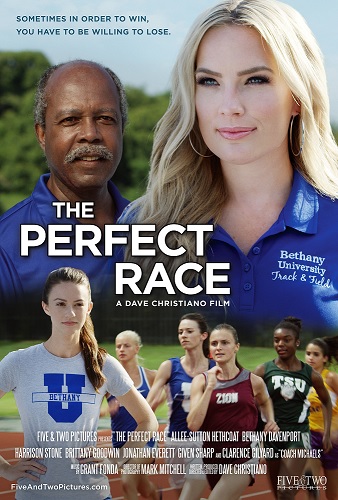
October Positivity: The Perfect Race (dir by Dave Christiano)


In this 2019 sequel to Remember The Goal, cross country coach Courtney Smith-Donnelly (Allee Sutton Hethcoat) finds herself coaching at the college level.  One of the runners that she coached in high school, Brittany (played by Bethany Davenport), is now the best runner at Bethany University.  In fact, she’s the second best runner in the nation!  Coach Michaels (Clarence Gilyard, Jr.) brings in Courtney to work with Brittany while he deals with some health complications.

So, pretty much all the stuff that happened during the first movie happens during the second.  Once again, everyone doubts Courtney’s training methods.  Once again, Courtney takes it upon herself to tell all of the runners how to live their lives.  Brittany’s father gets angry when Courtney tells Brittany to run slower than usual.  Considering that Courtney is now a local celebrity because of how well the cross country team did in Remember the Goal, you might think that the other coaches would know about her techniques and would prepare for them.  But nope.  No one has any faith in Courtney’s ideas but she’s vindicated in the end.  In fact, over the course of two movies, Courtney is never once incorrect about anything.  To be honest, that’s kind of annoying.

The main difference between Remember The Goal and The Perfect Race is that Courtney is a thousand times more preachy in the sequel.  In the first film, she cited a verse from Corinthians and later talked about Jesus raising a girl from the dead and that was about it.  In The Perfect Race, it’s rare that a scene goes by without Courtney saying, “Do you remember the story about….” and then offering up a Biblical lesson.  It gets a bit tiring and, again, it’s hard not to get bored with Courtney having all of the answers all of the time.  For example, when she’s told that the track team doesn’t practice when its raining, she promptly asks everyone in the room to raise their hand if their parents are divorced.  Courtney goes on to explain that, if you’re not willing to train while it’s raining, you probably won’t be able to make a marriage work either.  WHAT!?  You know what else might end a marriage?  Dying of pneumonia.

For a film about athletics, The Perfect Race is a very talky film.  Unfortunately, most of the conversations are very repetitive.  When Courtney tells Brittany to slow down during one of her races, we got several scenes in a row of people asking each other why Courtney did that.  Brittany’s father asks Brittany why Courtney told her to slow down.  Brittany replies that she doesn’t know.  In the very next scene, Brittany’s father tells Coach Micheals about what Courtney told Brittany to do.  Coach Michaels asks Brittany’s father why Courtney did that.  “I don’t know,” Brittany’s father replies.  Coach Michaels asks Brittany why Courtney did that.  “I don’t know,” Brittany replies.  In the next scene, two rival coaches talk about Brittany slowing down.  One coach asks, “Why did she do that?”  “I don’t know,” the other coach replies.  And it just kept going and going until eventually, I wanted to throw something at the TV.

Anyway, my frustrations aside, Courtney is triumphant at the end of the movie, largely because Courtney is perfect and never makes any mistakes.  Did I mention how annoying that can get?

This film inspired me to go for a run, if just to have an excuse to stop watching it.  And, before anyone asks, I do not like carrots.

October Positivity: Power of the Air (dir by Dave Christiano)


The 2018 film, Power of the Air, tells the story of David Williams (Nicholas X. Parsons).  David thinks that he can be a committed Christian despite the fact that he spends every weekend at the movies.  In fact, he and his friends have a streak going.  For over 40 weekends, they have gone to the movies and David has never once worried about all of the violence, nudity, and adult language that he sees.

Some might say that this is because David is an adult who has found a way to relax after work.  However, a Nigerian missionary named Emeka Odum (played — quite well, it must be said — by Veryl Jones) says that it’s because David is using the movie theater as a substitute for church.  As Odum explains it, the movie theater has become America’s new house of worship and, as a result, America is now a second-rate nation that has lost its way.  Why, in three years, America might even have a president who obviously doesn’t know where he is half the time.  And it’s all Hollywood’s fault!  Well, actually, the movie suggests that it’s really your fault for going to the movies.

If that sounds like an old-fashioned message, that’s because Power of the Air is a very old-fashioned movie.  That is perhaps not surprising, as this is a Dave Christiano production, but it still feels strange to hear David — the character and not the director, though one gets the feeling that it’s not a coincidence that they share the same name — announce that he can no longer watch any movies that feature people cursing.  I mean, avoiding a movie because of violence makes sense to me.  Avoiding a movie because of nudity or political messaging is also understandable.  Everyone has different things that they’re looking for.  But avoiding a movie because of cursing is basically just another way of announcing that you’re never going to watch another movie.  I mean, I’ve known plenty of Christians who do curse.  At the same time, I do have to admit that I hardly ever curse but that’s just because I don’t want to sound like everyone else.  I gave up cursing for Lent and my sisters all accused me of cheating because, according to them, it’s not really a sacrifice if you give up something that you don’t actually do.

Anyway, David wants to use mass media to spread a good Christian message so he comes up with the idea of broadcasting a commercial on all fifteen of his city’s radio stations at the exact same time.  As he sees it, this will mean that everyone will hear the commercial whether they try to change the station or not.  (Or, you know, they might just turn off their radio.  Or they might turn down the volume.  Or they might resent having David’s message forced upon them and respond by going to a Marvel film.)  Unfortunately, Charlie (Patty Duke), the manager of the biggest station in town, doesn’t want to run a religious commercial.  Can David change her mind?

Of course, I think the real problem with David’s plan is that the days of people spending all day listening to the local radio stations are pretty much over.  That’s true today and it was true when this film was made in 2018.  There are now so many options out there and so many other ways to keep oneself entertained during the day that the idea of everyone in the city listening to local AM radio seems a bit naïve.  David really should have started a podcast or something.

Anyway, Power of the Air is a fairly slow-moving film and it’s one of those films that will mostly appeal to people who already agree with its message.  The film is probably most interesting as Dave Christiano’s feature-length justification for making the type of movies that he does.  The main message seems to be that if only more people watched Christiano’s films, then David wouldn’t have had to spend all that money on those radio ads.

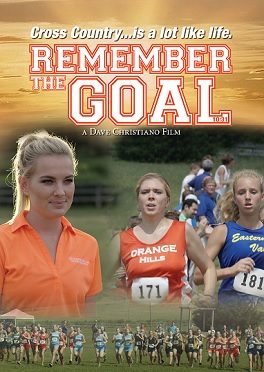
October Positivity: Remember The Goal (dir by Dave Christiano)


The 2016 film, Remember the Goal, is all about running track.

Well, actually, I guess it’s not all about running track.  It’s also about the importance of teamwork.  It’s also about the importance of remaining humble, respecting authority, and doing what your coach tells you to do.  In short, it’s a film that makes me happy that I wasn’t on the track team in high school.  I’m not really a fan of authority or doing what other people tell me to do.  For that matter, I’m not really much of a team person.  I’m an individualist who enjoys being around other individualists.  I’m a big believer that people can work together while still allowing everyone to do their own thing and at their own pace.

In short, Coach Courtney Smith-Donnelly (Allee Sutton Hethcoat) would probably not want me on her track team and that’s okay.  Though I will say that, a few years ago, I took up running because I was told that it might help to ease my asthma and it totally has.  I start nearly every morning with a good run.  I enjoy running.  It helps me to clear my head and get my thoughts in order.  Plus, it keeps my legs looking good.

But anyway, back to the film.

Courtney is the new coach at the local Christian school.  Unfortunately, her coaching techniques prove to be controversial.  She wants the members of the track team to pace themselves and to only run at a certain tempo, even if it means losing the race.  Courtney is trying to teach the team how to conserve their energy so that they’ll still have it when they get to State.  All of the parents, though, are upset because they want their daughters to win every race instead of spending all of their time preparing for the state competition.  They’re also not happy when Courtney starts tells them that they need to stop putting so much pressure on their children and instead just have faith in Courtney’s plans.

Meanwhile, the five girls on the team all deal with typical high school problems.  One of them likes a guy but her father has forbidden her from dating and, since this is a Christian film, she decides to honor her father’s wishes.  Another girl has just started smoking weed and, when confronted about it, she replies (quite correctly) that the Bible doesn’t say anything about smoking.  She also points out that most teenagers her age are experimenting with new things.  “An alcoholic starts with just one drink!” her friend replies, “A drug addict starts with just one joint!”  Uhmmm, that’s not really true but it’s enough to get her friend to give up the weed with roots in Hell.

This is another Dave Christiano film that takes a popular genre — in this case, a sports movie — and uses it to push a faith-based message.  The coach continually quotes Corinthians and the end of the film literally compares coaching a cross country team to Jesus raising the dead.  It’s a bit much, even if it’s not quite as preachy as his earlier films.  (No one is condemned to Hell in this film, for example.)  Christiano makes the unfortunate decision to have the final race play out in slow motion.  That’s several minutes of nonstop slow motion.  Unfortunately, slow motion and running are not a great combination, especially when some members of the cast are obviously more experienced runners than others.

Anyway, the main message here (beyond the religious one) seems to be that there’s no “self” in team.  What fun is that, though?  I’ll keep running for myself.

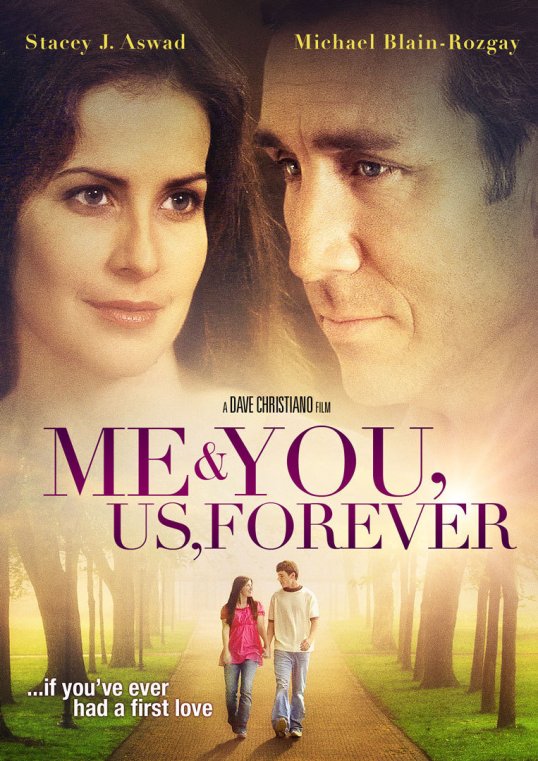
October Positivity: You & Me, Us, Forever (dir by Dave Christiano)


A 2008 film with an incredibly unwieldy title, Me & You, Us, Forever, tells the story of Dave (Michael Blain-Rozgay).  Dave is an advertising exec.  Originally from New York, he now lives in North Carolina.  He has only recently gotten divorced and he’s still struggling with his feelings.  His ex-wife makes it a point to call him from her new boyfriend’s house so that his name will appear on Dave’s caller ID.  Dave’s teenage daughters only spend a limited amount of time with him and, even if they are surprisingly open to playing Scrabble with him, it’s obvious that they’re growing up without him.  Dave’s business partner says that Dave needs to move on and just put his faith in God.  Dave, however, would rather think about Mary (Sandi Fix).

Mary was the girl that Dave dated during his senior year of high school.  He broke up with her while he was in college and he’s always regretted it.  He starts to think that maybe his life would have been perfect if he had just married Mary.  Dave’s business partners points out that God didn’t want Dave to marry Mary.  (But did God want Dave to marry the woman who cheated on him and now taunts him by calling him from her boyfriend’s house?)  One thing that no one mentions is that neither one of his daughters would exist if he had married Mary.

Even after Dave starts attending a Christian support group for divorced people and meet a single woman named Carla (Stacey J. Aswad), he can’t stop wondering about Mary.  Even after he finds out that she is now married and has a very good life with her husband and her family, Dave cannot stop thinking about Mary.  Even though everyone tells Dave that it’s a bad idea, he is determined to go to New York and see her.

The main problem with Me & You, Us, Forever (other than that really long title) is the fact that Dave’s dilemma is presented as being a crisis of faith when, in reality, he’s just an immature and selfish man who is having a midlife crisis.  Everyone keeps telling Dave that God doesn’t want him to try to get back together with Mary but really, you don’t have to be a Christian to realize that Dave’s plan isn’t a good one.  You just need common sense!  I’m sure that a Muslim would have been just as quick to tell Dave that seeing Mary was a bad idea as Dave’s Christian business partner was.  For that matter, I imagine many atheists would have had the same opinion.  Dave’s a jerk, regardless of his religious beliefs.

This is a Dave Christiano film so, not surprisingly, there’s some talk about how divorce is the work of the devil.  In reality, it’s sometimes best for people to get divorced.  Good people get divorced for a lot of reasons and it’s not always as simplistic as one person screwing up while the other essentially remains blameless.  (For instance, Dave never considers that his wife may have left him because she could tell he was still obsessed with an old high school girlfriend.)  My parents got divorced and it wasn’t necessarily easy for me and it led to me acting out in a lot of ways when I was younger but, all these years later, I’m now mature enough to understand that it was exactly what they needed to do.

This film is a long 91 minutes.  There are conversations that just seem to go on forever.  That said, I do think that  Christiano did an okay job with the scene in which Mary and Dave finally talk about their past and their present.  That scene was handled with a sensitivity that’s missing from most of the movie.  As well, I think Stacey J. Aswad gave a good performance as Carla.  She made Carla into a sympathetic character.  I couldn’t help but feel that she deserved a better friend than Dave.

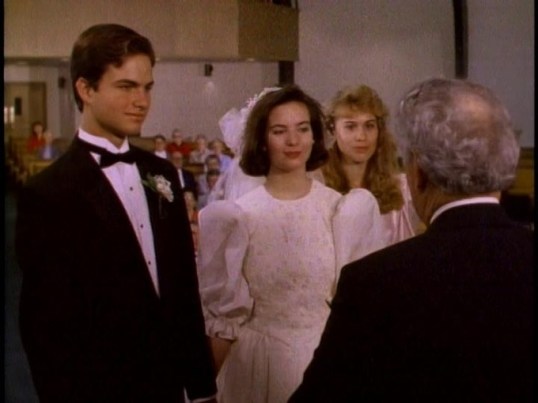
October Positivity: Pamela’s Prayer (dir by Dave Christiano)


The 1998 film, Pamela’s Prayer, opens with a title card that informs us that “Pamela Bucklin” got married in 1992 when she was 22 years old.  It’s a bit of an odd opening, because I imagine that there were a lot of 22 year-olds who got married in 1992.

The film then flashes back to the 70s and we learn that, after her mother died in childbirth, Pamela was raised by her father, Wayne (Rick Scheiderman).  Wayne works at the family business, a Christian film library which specializes in sending films (like this one!) to church groups and evangelical retreats.  Wayne prays with Pamela every night.  As Pamela grows up, he makes clear to her that she’s to wait until marriage.  From Wayne’s point of view, that means no dating, no kissing, no male friends at all.  Needless to say, once Pamela becomes a teenager, she starts to resent Wayne’s protectiveness but, since this is a faith-based film, Pamela’s rebellion is not only very chaste but it only lasts for one night and it leads to a sleazy boy spreading rumors about her.  Later, that same boy goes on a date with Jessica, who is also Pamela’s best friend, and things do not end well.  When Pamela informs Wayne about all of this, Wayne can barely suppress smirk.  It’s a real “I Told You So” moment.

Fortunately, there’s a nice boy working at the Christian Film Library and eventually, he and Pamela have one of those courtships where they don’t even hold hands.  After getting Wayne’s permission, they marry.  (Jessica, being the maid of honor, can only wonder why she has yet to find the one.)  Having waited 22 years to even kiss a boy, Jessica decides that she can wait for a few minutes more and she calls her father …. ON HER WEDDING NIGHT! …. so that they can pray together over the phone.

I think that I’ve proven over the years that I can be fair when it comes to judging faith-based films on their own merits but seriously, Pamela’s Prayer is exactly the type of faith film that drives other people crazy.  I mean, don’t get me wrong.  Some people choose not to have sex before marriage and, if that’s their decision, that’s fine.  Personally, I think it’s a bit foolish to go into a commitment like marriage blind but whatever.  The problem with Pamela’s Prayer, though, is that its emphasis on purity feels rather cult-like and it’s never really Pamela’s decision not to date or to kiss.  Instead, it’s all due to Pamela’s father ordering her to wait.  One gets the feeling that Pamela spent the first 22 years of her life being controlled by father and now she’ll spend the next 60 or 70 years being controlled by her husband.  What does Pamela want?  The film seems to suggest that it really doesn’t matter.

Christian films always seem to struggle when it comes to dealing with sex.  I guess it’s understandable when you consider that, especially in the 90s, the majority of these films were made to be shown at church meetings and to youth groups.  An honest discussion about sex and attraction and the suggestion that sex can be more than just a marital obligation would probably have scandalized the film’s target audience.  That’s one reason why films like this always seem to resort to the best friend who gets “in trouble.”  In this film, it leads to a telling of the story of Jesus and the woman accused of adultery, with the emphasis being not on Jesus ordering people not to cast stones but instead on Jesus saying, “Go and sin no more.”  To me, that’s missing the most important part of the story.  Don’t throw stones, people!

In the end, Pamela’s Prayer is about as effective as an old purity ring.

October Positivity: Late One Night (dir by Dave Christiano)


The 2001 film, Late One Night, takes place in a diner.  As you can probably guess from the title, it also takes place late one night.  It’s so late that there are only five people in the diner.  There’s a cook.  There’s three men who work at a local factory, the main one of which is named Larry (Brad Heller).  And then, there’s a quiet guy (John Gaffga) sitting at the counter.  Though the guy never introduces himself, Larry decides to call him Jesus.

To say that Larry is a bit of an obnoxious character really doesn’t do justice to just how grating a human being Larry is.  At work, Larry sexually harasses the only woman working at the factory.  In the diner, he sexually harasses a waitress as her shift ends.  When he sees the quiet man sitting at the counter, Larry starts to harass him.  Larry is angry.  Larry, as we learn, was abandoned by his father, raised by an unstable mother, and he spent several years in jail before ending up at a go-nowhere job at a bottling factory.  Larry has his reasons but that doesn’t make him any more likable.

In fact, Larry is such a jerk that you kind of wonder why the cook even allows him to hang out in the diner.  From the dialogue, it becomes clear that Larry has a long history of harassing people.  At one point, Larry does point out that he spends a lot of money at the diner but you have to consider how many people probably avoid the place whenever they see Larry and his co-workers sitting in their booth.  No matter how much money Larry spends, it seems likely that he keeps even more money out.  Really, the cook should call the cops whenever he sees Larry and maybe slap with him a trespassing charge.  I imagine Larry probably isn’t even a good tipper.

Anyway, on this night, Larry is obsessed with the quiet stranger.  When the stranger briefly goes into the restroom, Larry searches the stranger’s jacket and finds a pamphlet about Christianity.  When the stranger returns, he’s been given the nickname “Jesus” and he now has to deal with Larry mocking him by asking, “Am I going to Hell when I die?”  “Jesus” controls his temper, no matter how much he is taunted.

If you’ve seen any other films from director Dave Christiano, you might be excused for expecting “Jesus” to reveal himself to actually be Jesus.  In this case, though, I think he’s simply meant to be a believer who simply wants to eat in peace.  For that matter, you might also expect the film to end with Larry converting but instead, he’s as confused and angry at the end of this short film as he was at the beginning.  Particularly when compared to the films that he was making in the 80s and the 90s, Late One Night shows a certain dramatic restraint on the part of Christiano.  The main theme, of course, still seems to be that non-believers are going to suffer forever but, for once, Christiano doesn’t seem to be asking the viewer to take any pleasure out of that.

That said, I do have to say that, in college, I spent a lot of time in a lot of late night diners and I never once saw anyone get into the type of random verbal altercation that Larry gets into in this film.  I kind of suspect that might not happen in the real world as often as it happens in the movies.

October Positivity: Crime of the Age (dir by Dave Christiano)


“Do you like carrots?”

The question gets asked a lot over the course of the 1988 film, Crime of the AgeCrime of the Age deals with the theft of a book.  The director of the local Christian summer camp discovers that someone broke into his office and stole a book called How To Be A Christian.  The only clue is a carrot, which was left behind by the thief.

When the Detective (played by Keith Salter, who has previously played the world’s most obnoxious atheist in The Daylight Zone) shows up, he takes a look at the carrot.  He realizes that the carrot is the only clue that he and the Director have towards solving a very serious crime.  As the Detective explains it, only someone on staff could have stolen the book.  And that means that one of the staff members is …. wait for it …. NOT A CHRISTIAN!

*Cue the Dramatic Music*

No, seriously, I’m not kidding.  There are a lot of dramatic music cues in this film.

The Detective proceeds to interview the rest of the staff.  He asks them all if they saw anything suspicious.  He asks them what they were doing the previous night.  He asks them all if they like carrots.  Every member of the staff says that they saw someone else going into the director’s office.  Every member says that they like carrots.  Every member reveals something that leads the Detective to doubt their faith.

“That’s odd,” the detective says to himself, after one interview, “A Christian who only listens to music.”

“That’s odd,” the detective says after another interview, “A Christian who doesn’t like to go to church.”

After talking to the Groundskeeper, the detective says to himself, “That’s odd.  A Christian who doesn’t care about sin.”

You may be getting the feeling that this is a bit of repetitive movie and indeed, the dialogue is made up of about five or six lines that are continually repeated from scene to scene.  On the one hand, the structure mirrors any number of Biblical parables.  On the other hand, it doesn’t make the conversations sound any less awkward.  Of the suspects, the Groundskeeper is the only one who manages to project any sort of individual personality and that’s because he seems to be so genuinely annoyed with the whole thing.  While everyone else is very polite about being asked if they like carrots, the Groundskeeper replies, “Yeah, I like carrots!” with a tone that suggests that he’s prepared to throw a punch over it.

This is another early Christian film from the Christiano Brothers.  Like almost all of their films, the film is disguised as a genre film but the main message is that everyone is one misstep away from going to Hell.  If you’re not excited about going to Church, you’re going to Hell.  If you don’t talk about your faith with everyone you meet, you’re going to Hell.  If you only listen to music, you’re going to Hell.  And I presume that if you steal a book, you’ll be going there as well.  Despite the film’s attempts at comedy, it’s a bit of a harsh message.  For the most part, the cast looks like they had fun shooting the film and that’s always a plus.  But I have to confess that I’ve never liked carrots.

October Positivity: The Pretender (dir by Dave Christiano)


The 1987 film, The Pretender, invites us to meet Keith!

As played by Mark Rose, Keith is a typical high school student.  He has a job delivering pizzas.  He likes to hang out with his friends.  He likes to smoke.  He likes to drink.  He takes football a little bit too seriously.  And, most of all, Keith wants to get laid.

However, almost all of the girls at his high school have gone out with Keith and are tired of him.  At least, that’s the way that Keith and his friends explain it.  (Considering how unappealing Keith is, I think he might be giving himself a little bit too much credit.)  Though his friends insist that “Robin Williams” is the hottest girl in school, Keith sets his sights on Dana (Crystal Robbins).  Everyone wants to date Dana but everyone also knows that Dana is ultra-religious.

So, quicker than you can say Dangerous Liaisons or Cruel Intentions or even The Resurrection of Gavin Stone, Keith decides to pretend that he’s become ultra-religious as well!  Keith announces to everyone that he’s met that he became a Christian over the summer.  Keith even fools the leader of the school’s Christians, Frank (Dan Addington).  Keith reads the Bible.  Keith memorizes verses.  Keith goes to church.  And soon, Keith is kind of dating Dana!

Now, if you’re expecting me to say that all of this means that Keith actually becomes a Christian …. well, you’re wrong.  This is a film from the Christiano Brothers and a major theme running through almost all of their films is that most people who claim to be a Christian actually aren’t.  Indeed, the major Christiano theme always seems to be that you should trust no one.  That’s the case with Keith, who comes across as being something of a sociopath, a southwestern Patrick Bateman.  Keith is such a liar that he even convinces another friend of his to start a fight with Frank so that Keith can step in and protect Frank.  Keith may say that he’s all about Jesus but he’s still getting into fights on the football field and threatening kids in class.  Speaking of class, I’m a little bit curious about just what exactly Keith’s grades look like.  He spends so much time setting up fake confrontations and hiring people to lie for him, you have to kind of wonder if he actually has any time left for studying.  Those lies aren’t going to get you into SMU, Keith!  Eventually, much like Valmont, Keith is on the verge of getting what he wants from Dana but don’t worry!  Keith’s not a slick as he thinks he is.

The film is a definite time capsule, full of 80s styles, 80s haircuts, and 80s attitudes.  The grainy cinematography gives the film almost a documentary feel and, as a Southwesterner, it’s always nice when I get to watch a film where everyone has the same accent that I do.  That said, it’s a pretty silly film.  The problem is that Keith’s plan is so obvious that you actually kind of lose respect for Frank and Dana when they don’t immediately see through him.  This is one of those films where things happen not because they make sense but because the film needs them to happen in order to make a bigger point.  Still, the film ends on a slightly upbeat note, suggesting that redemption is available to even sociopaths, like these three toadsuckers below.