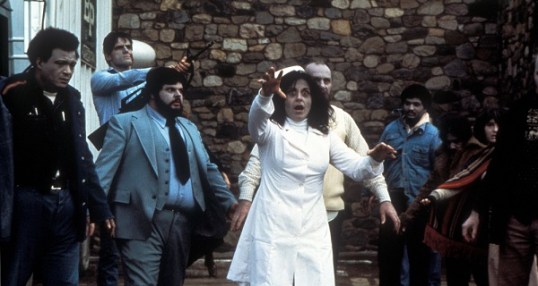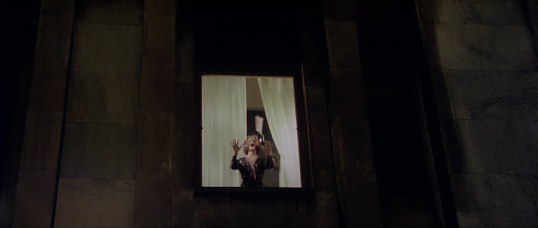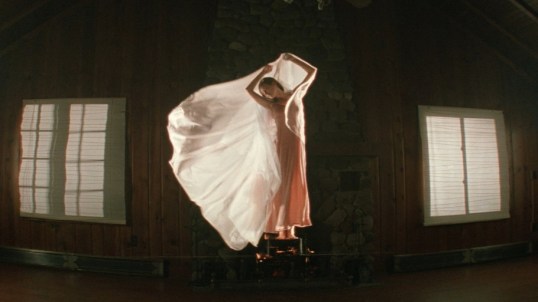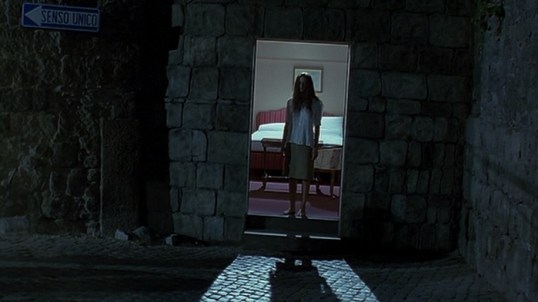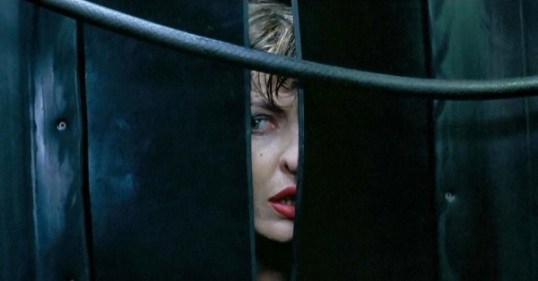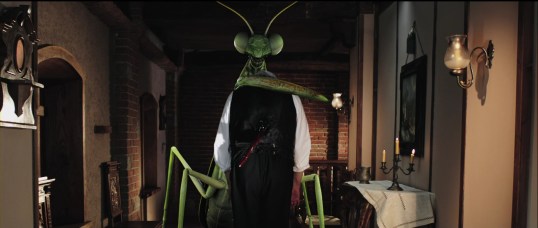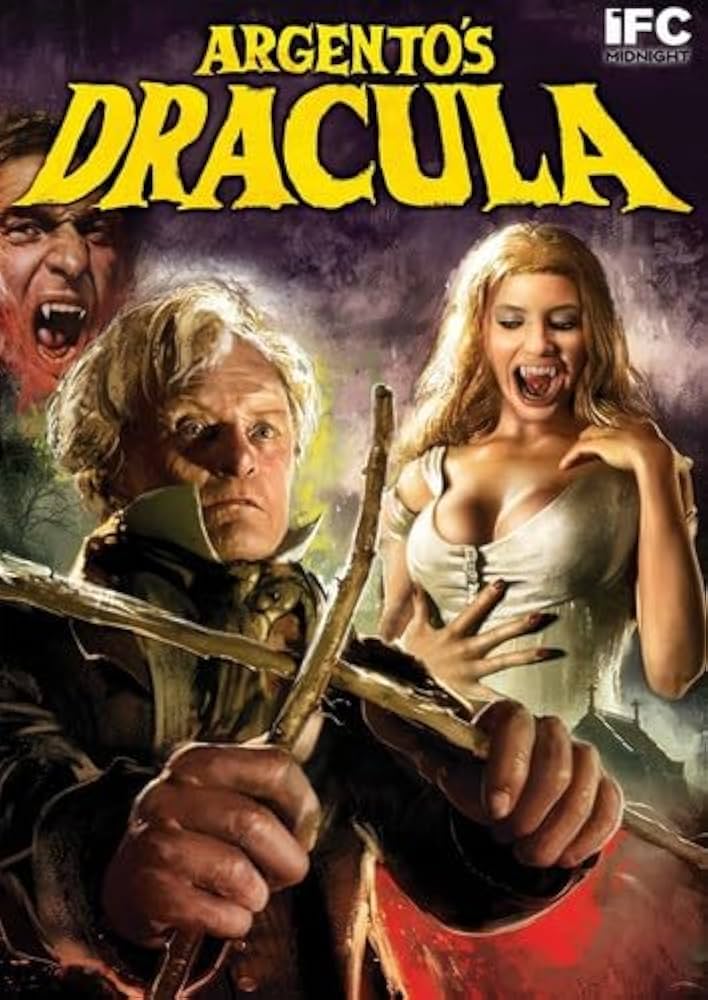
Dawn of the Dead (1978, dir by George Romero, DP: Michael Gornick)
Dario Argento not only produced and edited the European cut for 1978’s Dawn of the Dead, he also introduced George Romero to Goblin. The Italian band, famous for their horror movie soundtracks, provided the classic score to Dawn of the Dead.
(Admittedly, the score is is used far more prominently in Argento’s cut of the film than in Romero’s.)
For today’s horror song of the day, here is Goblin’s Main Theme From Dawn of the Dead.
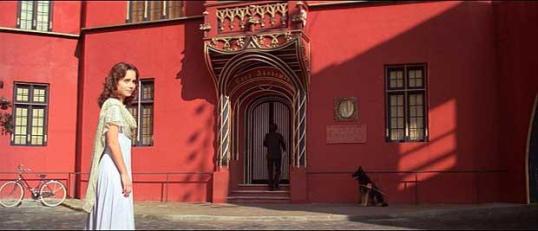
Suspiria (1977, dir by Dario Argento, DP: Luciano Tavoli)
I can’t wait to re-watch Dario Argento’s Suspiriatonight! Today’s horror scene of the day is one of my favorite scenes from that film.
As you probably guessed from the title of this post, that scene is the famous “Names that start with S” scene. This is the scene in which dance student Suzy Banyon’s new roommate explains that names that start with S are often the names of snakes! Suzy’s new best friend, Sarah, disagrees.
When I first saw Suspiria, this was a scene to which I, as a dance student, could immediately relate. As odd as the dialogue may have sounded and as silly as the two students may have appeared to be, it actually felt very authentic. By nature, dancers are competitive and we are dramatic. If anyone is going to accuse you of having the name of a snake, it’s probably going to be dancer.
Admittedly, no one ever told me that I had the name of the snake. But there was the girl who told me that I was “soooooo pretty,” or at least I would be pretty if I got the nose job that I obviously required if I ever had any hope of being happy or successful. “But,” she added as she turned away from me, “I guess you’d have to figure out how you could possibly pay for it.” Of course, she was also quick to explain that she was only telling me the truth and that she had the best of intentions. I had about the same reaction to her advise as Sarah has to be calling a snake.
(Sarah stuck out her tongue. I may have said something about her boyfriend not having any issue with the size of my nose when he was hitting on me the night before. But basically, it was pretty much the same reaction…)
This scene made such an impression on me that, in the months after I first saw Suspiria, I would often randomly launch into the name of snakes monologue. Unfortunately, I had failed to take into account that I was literally the only student at my high school who would actually take the time to watch an Italian horror film from the 1970s. As such, no one knew what I was talking about and I lost a few friends named Susan and Sarah as a result.
Oh well!
Anyway, you can watch the scene below! Pay special attention to the way Jessica Harper reacts to being caught in the middle of the conversation. Dario Argento will probably never be known as a great director of actors but Jessica Harper is great in Suspiria!
Suspiria (1977, dir by Dario Argento, DP: Luciano Tovoli)
You knew this was coming!
Today’s horror song of the day is the classic main theme to Dario Argento’s Suspiria! (The Argento version is the only version that matters.) The iconic soundtrack was composed by Goblin. I saw an interview with Claudio Simonetti in which he said he wanted the song to be “almost annoying” in its intensity. While I could never be annoyed this song, I do understand Simonetti’s point. The score is designed to be as overwhelming as the evil at the center of the film.
Today’s music video of the day is for an instrumental piece that was composed by Bill Wyman and Terry Taylor for Dario Argento’s 1985 film, Phenomena.
Put together by Michele Soavi, this music video features not only scenes from the film but also clips of Dario Argento directing both Jennifer Connelly and Fiore Argento. Soavi, of course, went on to have a directorial career of his own, directing four classic horror films before stepping away from feature films to take care of his ailing son. Soavi has since returned to directing, though most of his subsequent work has been for Italian television.
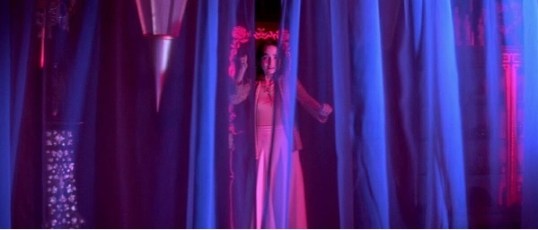
For today’s scene that I love, here is the classic scene from 1980’s Inferno, Dario Argento’s follow-up to Suspiria. In this scene, Irene Miracle takes a fateful swim. I’ve seen this film several times and this sequence still creeps me out! Not only does it remind me of my own very strong fear of drowning but I also wish someone had been there to say, “Don’t do that, you’re going to ruin that pretty dress!”
This scene is Argento at his most dream-like and frightening.
8 Shots From 8 Films is just what it says it is, 8 shots from 8 of our favorite films. As opposed to the reviews and recaps that we usually post, 8 Shots From 8 Films is all about letting the visuals do the talking.
Inferno (1980, dir by Dario Argento, DP: Romana Albano)
Today’s horror song of the day comes from Keith Emerson’s soundtrack of Dario Argento’s Inferno. I have to admit that, when I first saw Inferno, I thought that Emerson’s music was maybe a little bit too overdramatic for the film but, on subsequent viewings, it’s really grown on me.
Emerson did not have an enviable task, having to follow up Goblin’s soundtrack for Suspiria. But Emerson pulled it off, crafting a score that compliments Goblin’s earlier work while maintaining an identity of its own.
First noted by the author Stendhal, Stendhal Syndrome is something that happens when one is confronted by a sight that they never expected to see in person. Usually, it’s a work of great art that triggers the condition and the viewer becomes so overwhelmed by the sight of it that they’re left disorientated and even dizzy. People have reported it happening while visiting museums or historical cities. Recently, a few teenagers made the news when they claimed to have felt the syndrome’s symptoms while at a Taylor Swift concert.
I know that it’s a real thing because I’ve actually experienced Stendhal Syndrome. I was in Florence, the summer after I graduated from high school. One minute, I was fine and even feeling a little bratty, as one does when they’re 18 and they have their entire future ahead of them. But then I looked up at the sky and I saw the skyline of Florence, with its mix of the ancient and the modern and I suddenly became aware that I was in one of the oldest cities in the world and that I was standing on a street that had existed for centuries and I was looking at buildings and statues and paintings that most people would never get a chance to see in person and suddenly, the entire world seemed to be spinning around me. I had to actually sit down for a few minutes to catch my breath because I was so overwhelmed with emotion. My sisters assumed I was having an asthma attack but, even then, I understood that I was feeling something far different. At that moment, history become very real for me and I understood that I existed in the same universe as every great artist and writer. We were all a part of the same existence.
Dario Argento’s 1996 film, The Stendhal Syndrome, also takes place in Florence and features Asia Argento as Anna Mani, a police detective who is sent to the city to capture a serial killer. When Anna visits a museum, she is overwhelmed by what she sees. When she looks at Botticelli’s The Birth of Venus, she hears the wind that blows Venus’s hair. When she views Bruegel’s Landscapes With The Fall Of Icarus she, perhaps significantly, becomes Icarus and flies through the air before crashing into the water below, where she shares a passionate kiss with a fish. In the museum, Anna faints. She drops her purse, giving Alfredo Grossi (Thomas Kretschmann) time to not only steal her gun but also the key to her hotel room.
Dazed and not even sure of who she is, Anna returns to her hotel. A copy of Rembrandt’s The Night Watch turns into a doorway, which she steps through. Finding herself on a rainy city street, Anna is reminded that she’s a detective and that she’s in Florence to catch a vicious killer. When Anna steps back into her room, she discovers that she’s not alone. Alfredo grabs her, rapes her, and abducts her. Anna manages to escape and runs through the streets of Florence while a naked and blood-covered Alfredo screams in the night, which is one of the most disturbing scenes that Dario Argento has ever given us. Alfredo continues to stalk Anna while Anna goes through some changes herself, buying a blonde wig and pursuing a relationship with a French art student (Julien Lambroschini).
The Stendhal Syndrome was the first of Argento’s film to feature CGI, not just in the scenes in which Anna enters the paintings but also in scenes where were literally follow the pills that she’s taken down her throat and where a bullet is seen to enter the face of one of Alfredo’s victims. (Alfredo looks through the resulting bullet holes and winks at Anna on the other other side.) Sometimes, the CGI is effective and sometimes it’s a bit too cartoonish for its own good. At its most effective, the CGI inspires us to wonder if Anna is seeing reality or if she’s still trapped in her Stendhal Syndrome-inspired fantasy world. The scene where disturbing graffiti comes to life may not exactly look real but it’s still undeniably effective. At other times, the special effects just come across as being a bit self-indulgent on Argento’s part.
The film is at its best when it concentrates on the cat-and-mouse game between Anna and Alfredo. As played by Thomas Kretschmann, Alfredo is one of the most terrifying characters to ever appear in an Argento film, a handsome and seemingly charming man who is actually fueled by pure evil and hate. Alfredo is a villain who takes a definite pride in his ability to hide his true nature from the rest of the world. At first, Anna seems almost too physically frail and emotionally open to be believable as a police detective but she soon proves herself to be far tougher than anyone realizes. Anna, it turns out, has secrets of her own. Shot roughly around the same time that Asia Argento was being victimized by Harvey Weinstein, the scenes where Alfredo attacks Anna are difficult to watch, as they should be. Dario Argento took a lot of criticism (particularly from his former partner, Daria Nicolodi) for casting his daughter in a role where she is assaulted but the film itself is fully on Anna’s side.
The second half of the film loses its way a bit, though I can’t go into too much details without spoiling the plot. Several of the first half’s intriguing ideas are abandoned. Asia Argento gives a strong performance during the second half of the film, one that features some of her bravest and most revealing work. That said, despite the strength of Asia’s performance, many of Anna’s actions still don’t make sense no matter how much the film tries to convince us that they do. That said, the final scenes still carries an impact.
In the end, the film uses Stendhal Syndrome as a gimmick. If you want to see a realistic film about Stendhal Syndrome, you’re probably out of luck because it’s not a condition that’s easy to capture cinematically. But, as a thriller, The Stendhal Syndrome holds up well. This is an uneven film but ultimately, what does work outweighs what doesn’t.
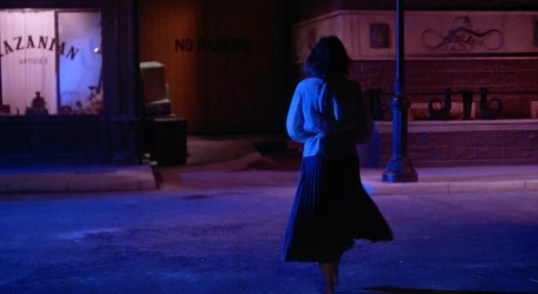
In 1993’s Trauma, Dario Argento tells a story of giallo horror, complete with a killer who wears black gloves, a camera that stalks through the streets of a rainy city, and plenty of eccentric red herrings. The story is set and was filmed in Minneapolis, Minnesota, making this one of the two Argento films to be completely shot in America.
Trauma was also the first of Argento’s films to star his daughter Asia Argento. Asia, who was 16 at the time of filming, plays Aura Petrescu, the daughter of Adriana (Piper Laurie) and Stefan (Dominique Serrand). Aura is a bulimic drug addict, with track marks up and down her arms. Having recently escaped from a mental hospital run by the eccentric Dr. Judd (Frederic Forrest), Aura is preparing to jump off a bridge and end her life when she’s grabbed by David (Christopher Rydell). David works as a headline writer and an artist for a local TV news station. David is also a recovering addict who takes sympathy on Aura and buys her breakfast. Aura thanks David by stealing his wallet and running out of the restaurant.
After being caught by the police, Aura is then returned to her home, a baroque mansion where Adriana works as a fake psychic. When Aura arrives, Adriana is preparing for a séance. She’s been hired to contact the spirit of a victim of The Head Hunter, a serial killer who has been chopping off people’s heads in Minneapolis. As a storm rages outside, Aura again flees from the house. Stefan and Adriana chase after her. Soon, while a terrified Aura screams in the rain (in a scene that will remind some of Asia’s mother, Daria Nicolodi, freaking out at the end of Tenebrae), the Head Hunter is holding up what appeas to be the heads of her parents.
Terrified for her life, Aura goes through David’s wallet, finds his number, and calls him. After setting Aura up at his house, David investigates who is chasing her and how those people are connected to The Head Hunter. David also falls in love with Aura and Aura falls for him. Unfortunately, as so often happens in the films of Dario Argento, the world is full of people who don’t care how in love two people are. The people who are after Aura are determined to get her and if that pushes David back into the world of drug abuse, so be it.
Trauma is middle-of-the-road Argento, featuring some scenes that are touched with genius and other scenes that just feel a bit bland. The cast is an interesting mix of veteran performers like Piper Laurie, Frederic Forrest, and Brad Dourif and younger actors like Christopher Rydell and Asia Argento. Dario Argento is known for being a director who prefers for his actors to come in, hit their marks, and deliver their lines with a minimum amount of fuss and he’s complained about American method actors (like Tenebrae’s Anthony Franciosa, with whom Argento had a notoriously difficult relationship) who want to discuss every little detail of their character and their performance. One can only imagine how he handled working with actors as outspoken and creative as Laurie, Forrest, and Dourif. It must be said that those three actors all give memorable performances but none of them seem to be acting in the same film as Rydell and Asia Argento. Rydell and Asia give rather earnest and straight-forward performances while Laurie, Forrest, and Dourif are all a bit more eccentric in the way they interpret their characters. Piper Laurie, in particular, rejects subtlety and delivers her lines with all of the melodramatic force she can summon. (It should be said that this is absolutely the right approach for the character that she’s playing.) That said, it’s Fredric Forrest who truly seems to be on a different planet from everyone else, giving a performance that can only be described as weird. Again, much as with Laurie’s self-aware melodrama, Forrest’s approach works well enough for his odd character, who I assume was named for the Dr. Judd who appears in Cat People.
The most controversial aspect of the film was the casting of Asia Argento as Aura, with some complaining of nepotism and others accusing Dario of exploiting his own daughter. Personally, I think Asia does a perfectly acceptable job in the lead role, even if it’s obvious that she still had room to develop as an actress. At the time the film was made, Asia was herself bulimic and the film’s most powerful scenes are the ones dealing with Aura’s own fragile sense of self-worth. Along with being hunted by a serial killer and having lost her entire entire family, Aura is also an outsider in America. The film paints a portrait of a society that doesn’t care about those living on the fringes. The only person that Aura has to look out for her is David, himself a former resident of the fringe. Christopher Rydell gives a good performance of David, playing him as someone who is trying to do the right thing and protect the victimized, even at the risk of his own sobriety.
(That said, there is one scene in which David receives a panicked phone call from Aura and Rydell’s underreaction suggests that the actor was not informed of just how desperate Asia Argento would sound when she later dubbed in her part of the conversation.)
Argento’s camera glides down dark hallways and through the streets of the city. He films Minneapolis in the same way that many directors would film New Orleans and, as such, the film becomes a vision of Middle America through European eyes. Because there’s a few issues with pacing and some clunky dialogue that was probably due to the Italian script being translated into English, Trauma is not Argento’s best. It’s middle-of-the-road Argento but it remains intriguing, nonetheless.