The Films of Dario Argento: Deep Red


I’ve been using this year’s horrorthon as an excuse to watch and review all (well, almost all) of Dario Argento’s films!  Today, I take a look at one of Argento’s best — 1975’s Deep Red!

profondo_rosso_poster

After the successful release of Four Flies on Grey Velvet in 1971, Dario Argento announced his retirement from the giallo genre.  His next film was 1973’s The Five Days of Milan, a historical comedy-drama with a political subtext.  The Five Days of Milan was a huge box office flop in Italy and, to the best of my knowledge, it was never even released in the United States.  To date, it is Argento’s most obscure film and one that is almost impossible to see.  In fact, it’s so obscure that, in two of my previous posts, I accidentally called the film The Four Days of Milan and apparently, no one noticed.

Forgotten Argento

Forgotten Argento

After the failure of Five Days, Argento returned to the giallo genre.  And while he was undoubtedly stunned by the failure of his previous film, Argento ended up directing one of the greatest Italian films of all time.  If The Bird With The Crystal Plumage and Four Flies on Grey Velvet were both great giallo films, Deep Red is a great film period.  It is Argento at his over the top best.

Now, before I go any further, I should point out that there are many different versions of Deep Red floating around.  For instance, it was released in the United States under the title The Hatchet Murders and with 26 minutes of footage cut from the film.  For this review, I watched the original 126-minute Italian version.  I’ve always preferred the original to the shorter version that was released in America.  Oddly enough, Argento has said that he prefers the shorter version.

hatchetmurders

Deep Red opens with a blast of music that both announces Argento’s return to the giallo genre and also provides some hints to his future as a filmmaker.  Whereas his previous films had all featured an excellent but rather serious score by Ennio Morricone, Deep Red was the first Argento film to be scored by Goblin.  There’s a gothic, almost operatic playfulness to Goblin’s work on the film.  (If the Phantom of the Opera had ended up working in Hollywood and writing film scores, the end result would have sounded a lot like Goblin.)  Goblin’s deafening score works as the perfect sonic companion to Argento’s constantly roving camera and vibrantly colorful images.  (The blood spilled in Deep Red is the reddest blood imaginable.)

deepred6511

Deep Red‘s protagonist is Marcus Daly (David Hemmings) and, like so many Argento protagonists, he’s both an artist and a man without a definite home.  At one point, he explains that he was born in England, grew up in America, and now lives in Italy.  He’s a jazz pianist but he supports himself by giving music lessons.  In a scene excised from the American cut, Marcus tells his students that, while classical music should be respected and appreciated, it’s also necessary to be willing to embrace art that some critics would dismiss as being “trashy.”  Marcus, of course, is talking about jazz but he could just as easily be Dario Argento, defending his decision to return to the giallo genre.

deepred4k3

While Marcus plays piano and tries to help his alcoholic friend, Carlo (Gabriele Lavia), a German psychic named Helga Ulmann (Macha Meril) is giving a lecture when she suddenly announces that someone in the audience is a murderer.  Later, Helga is brutally murdered by a gloved, hatchet-wielding attacker.

deep-red-hatchet

(Helga’s murder scene is always difficult for me to watch, even if Argento doesn’t — as Kim Newman pointed out in a review written for Monthly Film Bulletin — linger over the carnage in the way that certain other horror directors would have.  I have to admit that I also always find it interesting that Helga is played by the same actress who, that same year, would play the evil Lady On The Train in Aldo Lado’s The Night Train Murders.  Playing one of the Lady’s victims was Irene Miracle, who later co-starred in Argento’s Inferno.)

deepredscream1655_copy0_original

The only witness to Helga’s murder?  Marcus Daly, of course.  He’s standing out in the street, having just talked to Carlos, when he looks up and sees Helga being murdered in her apartment.  Marcus runs up to the apartment to help, arriving just too late.  And yet, Marcus is convinced that he saw something in the apartment that he can’t quite remember.  Deep Red is yet another Argento film that deals with not only the power of memory but the difficulties of perception.  Marcus knows that he saw something but what?

deep-red-12

Well, I’m not going to spoil it for you!  In this case, the mystery and its solution makes a bit more sense than the mysteries in Argento’s first three films.  Argento isn’t forced to resort to debunked science, like he did in both Cat o’Nine Tails and Four Flies on Grey Velvet.  One reason why Deep Red is so compulsively watchable is because, for perhaps the first time, Argento plays fair with the mystery.  After you watch the film the first time, go back and rewatch and you’ll discover that all the clues were there.  You just had to know where to look.

dr

That said, the way that Argento tells the story is still far more important than the story itself.  Argento’s first three films may have been stylish but Deep Red finds Argento fully unleashed.   The camera never stops moving, the visuals are never less than stunning with the screen often bathed in red, and Goblin’s propulsive score ties it all together.  This is one of those films from which you can’t look away.  It captures you from first scene and continues to hold you through the gory conclusion.  Deep Red is an undeniably fun thrill ride and, even today, you can easily see why Argento frequently refers to it as being his personal favorite of his many films.  In fact, Argento even owns a store in Rome that is called Profondo Rosso.

03_42

But you know why I really love Deep Red?

It’s all because of the relationship between David Hemmings and Daria Nicolodi.  Daria Nicolodi plays Gianna Brezzi, a reporter who helps Marcus with his investigation.  After three films that featured women as either victims or killers, Gianna is the first truly strong and independent woman to show up in an Argento film.  I know that some people have criticized the scenes between Hemmings and Nicolodi, feeling that they drag down the pace of the movie.  I could not disagree more.  Both Hemmings and Nicolodi give wonderful performances and their likable chemistry feels very real.

Gianna and Marcus arm westle. (Gianna wins. Twice.)

Gianna and Marcus arm westle. (Gianna wins. Twice.)

To me, that’s what sets Deep Red apart.  You care about Marcus and you care about Gianna.  Yes, the mystery is intriguing and the murder set pieces are brilliantly choreographed, and Deep Red is definitely Argento at his best.  But for me, the heart and soul of the film will always belong to the characters of Marcus and Gianna and the performers who brought them to life.
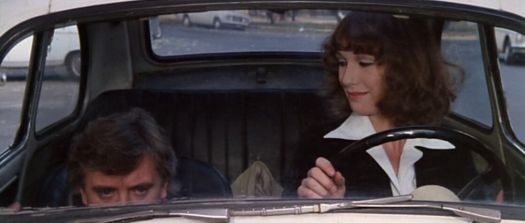
deep-red

deep-red-2

Deep Red was the start of Dario Argento and Daria Nicolodi’s long and often contentious relationship.  (Dario and Daria’s daughter, Asia Argento, was born around the same time that Deep Red was released and has directed two films, Scarlet Diva and Misunderstood, that deal with her often chaotic childhood.)  This relationship would play out over the course of six films and, as much as I love those six films, it’s always a little sad to consider that, when watched in order, the provide a portrait of a doomed and dying romance, one that did not particularly end well.  (It is possibly not a coincidence that, with the exception of Deep Red and Tenebrae, Daria Nicolodi suffered some type of terrible death in every film she made with Argento.)

But, regardless of what may or may not have been going on behind the scenes, Deep Red remains a triumph for both its director and its stars.

david-daria-dario

The Films of Dario Argento: Four Flies On Grey Velvet


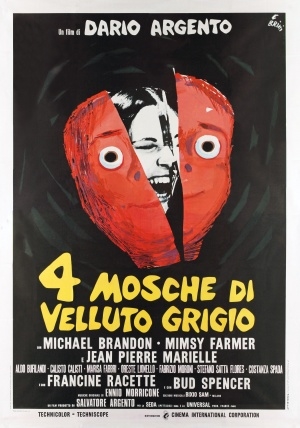
quattro_mosche

After the good but somewhat generic Cat o’Nine Tails, Dario Argento returned to form with his third film, 1971’s Four Flies on Grey Velvet.

It’s not particularly easy to describe the plot of Four Flies because, much like The Bird With The Crystal Plumage, the storyline is less important than the way that Argento tells it.  The film tells the story of Roberto Tobias (Michael Brandon), a drummer with an up-and-coming rock band in Rome.  In many ways, Roberto is a typical drummer.  He’s the guy who, even though he’s often obscured in the background, keeps things balanced.  He has a loving wife, Nina (Mimsy Farmer), a nice house, and worldly, politically woke friends who smoke weed and praise art.  Admittedly, one of those friends does tell a rather gruesome story about witnessing a beheading in Saudi Arabia which leads to Roberto having a reoccurring nightmare but otherwise, Roberto would appear to have a great life.

(Incidentally, Roberto’s nightmares are Argento at his best.)

So, why is this stable and easy-going guy suddenly being followed by a mysterious man in a suit?  And why, when Roberto confronts the man, does he discover that there’s yet another mysterious figure — this one wearing a mask — following him and taking pictures?

That’s the mystery that opens Four Flies on Grey Velvet but it’s not the only mystery to be found in the film.  In fact, this movie finds Argento at both his most macabre and his most playful.  At times, he literally seems to be seeing just how far he can push and how complicated he can make things before totally losing his audience.  The film may start with Roberto being followed and having nightmares but eventually, it comes to involve everything and everyone from Nina’s enigmatic cousin, Dalia (Francine Racette) to a beatnik named God (played by none other than spaghetti western mainstay, Bud Spencer) to a flamboyant private investigator (Jean-Pierre Marielle).  (By today’s standards, the portrayal of the gay detective has a few cringey moments but you have to remember that Four Flies On Grey Velvet was made in 1971.  It was nothing less than revolutionary for an Italian film of that era to portray an openly gay contemporary character in any type of positive light.)  To top it all off, the solution to the film’s main mystery is discovered through optography, the long-since discredited idea that an eye will “save” the last image seen before death.  It’s ludicrous but Argento pulls it off with a cheerfully over-the-top style that perfectly matches the film’s twisted plot.  After the toned down Cat o’Nine Tails, Four Flies was Argento’s way of reminding viewers of who he truly was as a filmmaker.

The film’s brilliant opening sets the tone for the entire film.  Watch it below and thank me later:

It’s rare that anyone every really discusses the acting in an Argento film.  Argento has himself admitted that he doesn’t worry much about actors and many of his films have been released in badly dubbed versions, which often makes it difficult to fairly judge any of the performances.  That said, Roberto Tobias is one of my favorite Argento protagonists and it’s all due to Michael Brandon’s performance.  Brandon makes Roberto into such a nice guy and does such a good job of capturing his descent into paranoia that it’s impossible not to get caught up in his story.  (I would even argue that the long-haired and politically concerned Roberto is almost an autobiographical stand-in for Argento himself.)  Though I can’t really explain why without running the risk of spoiling a major part of the movie, Mimsy Farmer is also excellent.  Reportedly, Argento originally wanted to cast Mia Farrow and you can imagine a post-Rosemary’s Baby pre-Woody Allen Farrow in the role.  But I’m glad that Argento couldn’t get her because Mimsy Farmer gives a close to perfect performance.

Four Flies was the third and final part of Argento’s “animal trailer,” and, at the time, Argento declared that Four Flies would also be his final giallo film.  He followed up Four Flies with The Four Days, a historical comedy that was considered to be such a failure that, after its release, Argento returned to the safety of the giallo genre and gave the world one of his greatest triumphs, Deep Red.  However, if The Four Days had been a success and Four Flies had been Argento’s final giallo film, it would have been a triumphant note to go out on.

Here’s the very misleading trailer that was used for Four Flies On Grey Velvet‘s American release.

And here’s the even more obscure European trailer!

The Films of Dario Argento: The Cat o’Nine Tails


(I’m using this year’s horrorthon as an excuse to watch and review all of the films of Dario Argento.  Yesterday, I reviewed The Bird With The Crystal Plumage.  Today, I take a look at The Cat o’Nine Tails.)

gatto_a_nove_code

In 1971, Dario Argento followed up the massive success of The Bird With The Crystal Plumage with his second film as a director, The Cat o’Nine Tails.  While The Cat o’Nine Tails was another huge financial success, it’s never been as a critically acclaimed as Argento’s first film.  Argento, himself, regularly cites The Cat o’Nine Tails as being his least favorite of all of the films that he’s directed.

Much like The Bird With The Crystal Plumage, The Cat o’Nine Tails is a giallo that uses it’s rather complicated mystery as an excuse (a MacGuffin, to quote Hitchcock) for several suspenseful set pieces, the majority of which end with someone suffering some sort of terrible fate.  In this case, a series of murders are taking place around a mysterious medical complex, the Terzi Institute.  The murders are connected to some research being done at the institute.  I’m not going to spoil things by revealing what exactly is being researched but I will say that the key to the mystery is vaguely ludicrous, even by the typically flamboyant standards of the giallo genre.

But, then again, so what?  The fact that the genre’s mysteries are often overly complex and feature solutions that don’t always make sense is actually one of the appeals of the giallo film.  You don’t really watch a giallo for the mystery.  You watch it to see how the story will be told.  Perhaps more than any other genre, giallo requires a director with a strong vision.

And, if nothing else, Argento has always had a strong directorial vision.  Even when you may disagree with the choices that he makes (and I’m sure we all wonder why, in his later films, Argento grew so obsessed with telepathic insects), you can’t deny that they’re always uniquely Argento.  Though the film never reaches the delirious heights of The Bird With The Crystal Plumage, The Cat o’Nine Tails still has several strong set pieces.  There’s a sequence involving a poisoned glass of milk that I particularly appreciate.  And then there’s the long scene at the crypt, in which our two protagonists realize that they don’t really trust each other all that much.  And, of course, there’s the ending.  For a film that’s often dismissed as being lesser Argento, The Cat o’Nine Tails features one of Argento’s darkest endings.

The Cat o’Nine Tails is unique as being one of the only Argento films to regularly show up on TCM.  A lot of that is because The Cat o’Nine Tails is perhaps the least gory of all the films that Argento has made.  That doesn’t mean that there isn’t plenty of death and mayhem.  There is.  Blood is spilled but it never exactly flows.  The Cat o’Nine Tails is an Argento film that you could probably safely watch with an elderly relative.  That’s not necessarily meant as a complaint.  It’s just an observation that, when compared to the panty murder in The Bird With The Crystal Plumage or the skewering in The Mother of Tears, Cat o’Nine Tails is definitely a toned down Argento film.

The other reason why The Cat o’Nine Tails is popular on TCM is because it stars none other than that classic film mainstay, Karl Malden.  Continuing the Argento tradition of featuring protagonists who aren’t sure what they’ve witnessed, Malden plays a former newspaper reporter who is now blind.  He teams up with another reporter (played by James Franciscus, who may not have been a great actor but who did have perfect hair) to solve the murders.  Franciscus has the eyes.  Malden has the brains.  And Malden’s niece, Lori (Cinzia De Carolis), is largely present to provide the film with its final ironic twist.

Malden does a pretty good job in the role, too.  I’ve read some reviews that have complained that Malden overacts but actually, he gives the perfect performance for the material.  In fact, Malden’s unapologetically hammy performance contrasts nicely with the work of James Franciscus, which could  charitably be called subdued.  (Perhaps a better description would be dull…)

Cat o’Nine Tails may not be Argento’s best but I still like it.  If for no other reason, watch it for Malden and that wonderfully dark ending.


The Films of Dario Argento: The Bird With The Crystal Plumage


the-bird-with-the-crystal-plumage-2

Dario Argento.

The name inspires a lot of reactions.  Some people will tell you that Dario Argento is one of the greatest directors of all time.  Some people regularly cite him as being a prime example of an artist who hit his peak too early and who has spent the latter part of his career imitating his previous successes.  Some people will tell you that his films are dangerous.  He’s one of those directors whose films always seem to end up getting banned in certain communities.  Other cineastes will always praise him as a superior stylist whose influence is still felt to this very day.  Argento’s films have inspired thousands of horror filmmakers.  His films have also inspired a countless number of viewers to fall in love with horror.  Without the influence of Argento the horror genre would be not only less interesting but less profitable as well.

Myself, I’m a huge Argento fan.  Yes, I do love Suspiria but then again, everyone love Suspiria.  I have also made it a point to track down and watch the forgotten and/or critically reviled Argento films, like Trauma and The Phantom of the Opera.  My love of Argento is so strong that I usually even find myself enjoying his less acclaimed work as much as his acknowledged triumphs.  He is one of the masters of horror, a true maestro of Italian art.  For the longest time, I’ve been meaning to watch and review all 21 of Argento’s cinematic thrillers.  (Sadly, his one non-thriller, The Four Days, is notoriously difficult to see.)  With this being October, I figured why not now?

Dario Argento made his directorial debut in 1970 with The Bird With The Crystal Plumage.  Before directing his first movie, Argento had been a film critic and a screenwriter.  (Among other credits, he is listed as being one of the writers of Sergio Leone’s Once Upon A Time In The West.  Interestingly enough, his co-writer was another future director, Bernardo Bertolucci.)  With his very first film as a director, Argento established himself as a master of both suspense and horror.

I have seen some reviews that have identified The Bird With The Crystal Plumage as being the first giallo film.  That’s not at all true.  If anything, the credit for directing the first giallo should probably go to Mario Bava (who directed The Girl Who Knew Too Much in 1964) and some students of Italian cinema would even disagree with that.  However, The Bird With The Crystal Plumage undoubtedly did a lot to popularize the genre outside of Italy.

The film tells the story of Sam (Tony Musante) and his girlfriend, Julia (Suzy Kendall).  Sam is a writer and he’s living in Rome.  Argento is not traditionally known as an actor’s director but Musante and Kendall are both remarkably sympathetic in their roles and they seem to have a very real chemistry when they’re both on-screen together.  You actually do care about them as a couple and you find yourself hoping that nothing bad happens to them.  One thing that I liked was that their tiny apartment looked like it was someplace where a couple actually would live, love, and try to solve a murder.  Looking at Sam and Julia in that apartment (which is decorated with a picture of Albert Einstein and a poster reading “Black Power!”), you get the feeling that they have an existence outside of what you’re seeing during the film’s 94 minute running time.  They feel real.

Reportedly, Tony Musante and Argento did not have a great working relationship.  (Mustante was a character actor who wanted to talk about motivation.  Argento was more concerned with the technical aspects of shooting the film.)  Mustante may have been miserable but that actually works for his character.  When we first meet Sam, he’s frustrated because he’s suffering from writer’s block.  He’s so frustrated that he’s on the verge of moving back to the United States.  Sam’s frustration feels real and if that’s because Musante happened to be frustrated while shooting the film, so be it.  Whatever works.

One night, Sam goes for a walk and witnesses a stabbing in an art gallery.  Monica Ranieri (Eva Renzi) survives but it appears that her assailant has managed to escape.  The police suspect that Sam might be more than just a witness so they confiscate his passport.  Until the attacker is caught, Sam is stuck in Rome.

There’s a serial killer terrorizing Rome and both Sam and the police suspect that Monica nearly became the killer’s latest victim.  Some of the film’s most unnerving sequences are shot from the point-of-view of the killer, a technique that both leaves the killer’s identity a secret and also makes the audience complicit in the murders.  It’s as if Argento the film critic is daring the audience to consider why they’re watching what Argento the director is doing.

(And the murders in The Bird With The Crystal Plumage are brutal, even by the standards of Italian cinema.  The first murder that we actually witness — which is usually referred to as being “the panty murder,” for reasons that I’m not going to freak myself out by describing — is pure and total nightmare fuel.)

Everything that you might expect to find in a giallo is present in The Bird With The Crystal Plumage.  It may not have been the first but it’s definitely one of the prototypes for what the genre is usually considered to be.  Graphic violence, sexual perversion, point-of-view shots, a constantly roaming camera, a dramatic musical score, a killer who wears black gloves and carries a razor, a witness who has to prove his innocence, and a solution that’s revealed only when Sam reexamines what he thinks he saw; it’s all here.

What distinguishes The Bird With The Crystal Plumage is the style with which Argento tells his story.  Dario was 30 years old when he directed The Bird With The Crystal Plumage and there’s an infectious enthusiasm to the way he frames the mayhem.  Like many film critics directing their first film, Argento fills his debut with homages to earlier films.  You can tell he’s having a lot of fun while discovering just how far he can go without losing his audience.

46 years after it was first released, The Bird With The Crystal Plumage holds up surprisingly well.  It’s a nightmarish but compulsively watchable thrill ride and it remains one of Argento’s best.

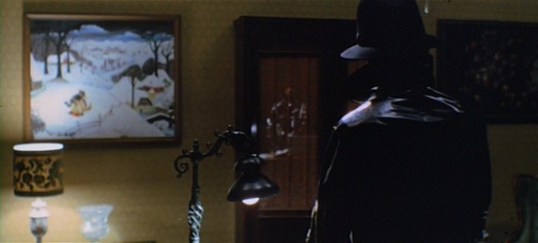
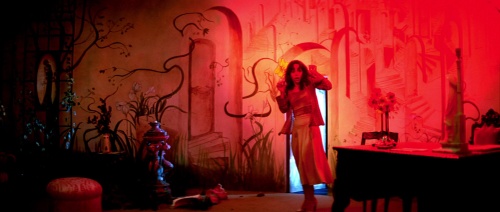
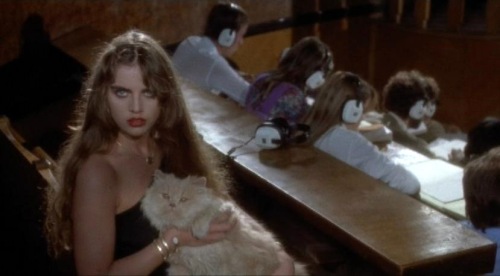
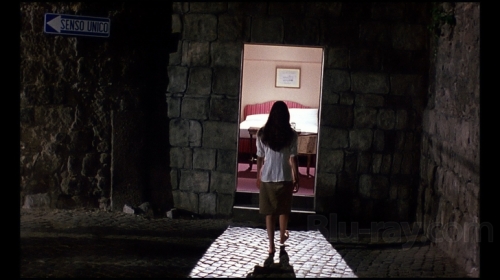
4 Shots From 4 Dario Argento Films: Deep Red, Suspiria, Inferno, The Stendhal Syndrome


4 Shots From 4 Films is just what it says it is, 4 shots from 4 of our favorite films. As opposed to the reviews and recaps that we usually post, 4 Shots From 4 Films is all about letting the visuals do the talking.

Happy birthday, Dario Argento!

4 Shots From 4 Films

Deep Red (1975, dir by Dario Argento)

Deep Red (1975, dir by Dario Argento)

Suspiria (1977, dir by Dario Argento)

Suspiria (1977, dir by Dario Argento)

Inferno (1980, dir by Dario Argento)

Inferno (1980, dir by Dario Argento)

The Stendhal Syndrome (1996, dir by Dario Argento)

The Stendhal Syndrome (1996, dir by Dario Argento)

Scenes That I Love: The Classroom Scene From Dario Argento’s Inferno


So, as I mentioned earlier, I was in the mood for some late night horror and I decided to rewatch Dario Argento’s Three Mothers trilogy.  I started watching Suspiria at midnight and, after that, I moved on to Argento’s 1980 follow-up, Inferno.

Having just finished watching Inferno, I now realize that it’s almost time for me to start getting ready for my day, which means that I may have to hold off on watching the third film in the trilogy, The Mother of Tears.  That’s really quite frustrating because I think I may be the only person in the world who thinks that Mother of Tears is actually a good film.

Oh well!  Such is life, right?

But before I hop in the shower and get dressed and all that good stuff, I did want to share a scene that I love from Inferno.

Of course, the most famous scene from Inferno is the scene that opens the film, Irene Miracle’s underwater swim.  In fact, it’s such a famous scene that I have already shared it.

So, instead, I’ll share a scene that comes shortly after Irene’s famous swim.  In the scene below, Irene’s brother, a music student who is played by a somewhat forgettable actor named Leigh McCloskey (reportedly, Argento wanted to cast a young James Woods in the role and he would have been awesome, too), is sitting in class and attempting to read a letter from his troubled sister.

And that’s when he finds himself being subtly menaced by the Mother of Tears.

The Mother of Tears is played by the beautiful Ania Pieroni, who lovers of Italian horror will immediately recognize as both the mysterious housekeeper in Lucio Fulci’s House By The Cemetery and the doomed shoplifter from Argento’s Tenebrae.

To me, this scene is Argento at his best.  Not much happens in the scene.  McCloskey attempts to read a letter and finds himself unnerved by Pieroni’s intense stare.  And yet, it’s a scene that’s full of menace and atmosphere.  It’s a scene that leaves the viewer with no doubt about the power of the Three Mothers.

Watch the scene below.  And then, if you haven’t, be sure to watch Inferno because it’s a wonderful and underrated horror film, one that I would argue is even better than Suspiria.  And, while you’re watching the scene and considering the wonders of Italian horror cinema, I’ll be busy getting ready for my Friday!

(Unless, of course, you’re reading this on a day other than today and at a time other than 4:35 am.)

Enjoy!

Scenes I Love: “Names that Start With S” from Suspiria


Hi there!  I’m in the mood for some late night horror so I’m currently watching Dario Argento’s Three Mothers Trilogy!  I just finished Suspiria and, before I started Inferno, I figured I would devote a hundred or so words to sharing one of my favorite scenes from Suspiria.

As you probably guessed from the title of this post, that scene is the famous “Names that start with S” scene.  This is the scene in which dance student Suzy Banyon’s new roommate explains that names that start with S are often the names of snakes!  Suzy’s new BFF, Sarah, disagrees.

When I first saw Suspiria, this was a scene to which I, as a dance student, could immediately relate.  As odd as the dialogue may have sounded and as silly as the two students may have appeared to be, it actually felt very authentic.  By nature, dancers are competitive and we are dramatic.  If anyone is going to accuse you of having the name of a snake, it’s probably going to be dancer.

Admittedly, no one ever told me that I had the name of the snake.  But there was the girl who told me that I was “soooooo pretty,” or at least I would be pretty if I got the nose job that I obviously required if I ever had any hope of being happy or successful.  “But,” she added as she turned away from me, “I guess you’d have to figure out how you could possibly pay for it.”  Of course, she was also quick to explain that she was only telling me the truth and that she had the best of intentions.  I had about the same reaction to her advise as Sarah has to be calling a snake.

(Sarah stuck out her tongue.  I may have said something about her boyfriend not having any issue with the size of my nose when he was hitting on me the night before.  But basically, it was pretty much the same reaction…)

This scene made such an impression on me that, in the months after I first saw Suspiria, I would often randomly launch into the name of snakes monologue.  Unfortunately, I had failed to take into account that I was literally the only student at my high school who would actually take the time to watch an Italian horror film from the 1970s.  As such, no one knew what I was talking about and I lost a few friends named Susan and Sarah as a result.

Oh well!

Anyway, you can watch the scene below!  Pay special attention to the way Jessica Harper reacts to being caught in the middle of the conversation.  Dario Argento will probably never be known as a great director of actors but Jessica Harper is great in Suspiria!

Here’s The Trailer For Inferno!


Remember when the Da Vinci Code came out and every toadsucker in the world suddenly thought they were an expert on both art history and Catholic theology?

“The Magdalene was actually the beloved disciple and, by having Jesus’s children, she gave birth the French royal family blah blah blah blah blah..”

Yeah, everyone wants to deny it now and pretend like they were too smart to fall for Dan Brown’s BS but, just ten years ago, Da Vinci Code was a big deal.  I never had much use for it because, as an art history major, it was obvious to me that Dan Brown didn’t know a damn thing about Leonardo Da Vinci or The Last Supper.

Anyway, Ron Howard, Dan Brown, and Tom Hanks are all back with Inferno!  Inferno is going to suck but here’s the trailer anyway:

My advise is that you skip Ron Howard’s Inferno and instead, watch Dario Argento’s!

Dario Argento’s Inferno — now, that’s a good movie!

Horror Scenes I Love: Asia Argento Gets Hit By The Stendhal Syndrome


Since I just shared 4 shots from 4 Dario Argento films, I figured why not take this week’s horror scene that I love from an Argento film as well?

Argento’s 1995 film The Stendhal Syndrome has always gotten mixed review but I think it’s actually one of the better of his post-Tenebrae films.  In the scene below, police detective Anna Manni (Asia Argento) wanders through Florence and finds herself overwhelmed by the sheer beauty of the place.  Eventually, while looking at Bruegel’s Landscape With The Fall of Icarus, Anna is so overwhelmed that she faints and has a fantasy where she swims through the ocean and kisses a fish.  Of course, as this happens, she is watched by serial killer Alfredo Grossi (Thomas Kretschmann).

I have to admit that one reason why I like this scene (and this film) is because I had a similar experience when, the summer after graduating high school, I visited Florence.  No, I didn’t faint but I definitely found myself wandering around in a bit of a daze.  Standing in Florence is like finding yourself in the middle of living painting.  It’s an amazing experience and one that I recommend to everyone.

4 Shots From 4 Dario Argento Films: Phenomena, Trauma, Sleepless, Dracula 3D


4 Shots From 4 Films is just what it says it is, 4 shots from 4 of our favorite films. As opposed to the reviews and recaps that we usually post, 4 Shots From 4 Films is all about letting the visuals do the talking.

4 Shots From 4 Films

Phenomena (1985, directed by Dario Argeto)

Phenomena (1985, directed by Dario Argeto)

Trauma (1993, dir by Dario Argento)

Trauma (1993, dir by Dario Argento)

Sleepless (2001, directed by Dario Argento)

Sleepless (2001, directed by Dario Argento)

Dracula 3D (2012, directed by Dario Argento)

Dracula 3D (2012, directed by Dario Argento)