Since today is Boris Karloff’s birthday, I thought I would devote this edition to everyone’s favorite reanimated corpse, Frankenstein’s Monster! Over the years, there’s been a lot of movies about the Monster. Here are the trailers for six of them!
The Curse of Frankenstein (1957)
Believe it or not, there was a time when it was felt that the story of Frankenstein and his Monster has been played out. With the Universal films bringing in less and less money, many felt that the Monster’s days were behind it. Then, Hammer, Peter Cushing, and Christopher Lee came along and said, “No! This is what Frankenstein is all about!”
At least, I assume that’s what they said. I hope they did.
2. Jesse James Meets Frankenstein’s Daughter (1965)
You can’t keep a good Frankenstein down as Jesse James discovered in this 1965 western.
3. Lady Frankenstein (1971)
In this Italian film, the Baron’s daughter continues her father’s scientific experiments! I guess Jesse James wasn’t the only one to meet Frankenstein’s Daughter!
4. Flesh for Frankenstein (a.k.a. Andy Warhol’s Frankenstein) (1973)
Udo Kier is the Baron and Andy Warhol may have been the producer of this film. Or he may have just lended his name out for the money. It depends on who you ask.
5. Blackenstein (1973)
Of course, following the success of Blacula, there was a blaxploitation take on Frankenstein.
6. Frankenhooker (1990)
And, of course, who can forget Frankenhooker?
I hope that your Halloween is full of the type of creativity and scientific curiosity that made the Frankenstein family legendary!
In the 2013 film, Dead in Tombstone, Danny Trejo plays Guerrero De La Cruz, an old west outlaw who is loyal to his family, who has no problem robbing banks, but who also is not a fan of unnecessary bloodshed. Even though the film opens with Guerrero and his gang gunning down a posse of men, that’s just because they were saving the life of Red (Anthony Michael Hall), who just happens to be Guerrero’s half-brother. No sooner than you can say, “In what world could Danny Trejo and Anthony Michael Hall possibly be related?,” Red is asking Guerrero to help him pull off a daring robbery.
Guerrero helps Red because Guerrero is all about family. Unfortunately, Red is all about money and, not wanting to share the loot after the robbery, he promptly guns Guerrero down. Not only does Red shoot Guerrero but he insists that each member of the gang shoot him as well, implicating all of them in the crime.
Guerrero dies and promptly goes to Hell, where he’s met by Lucifer (Mickey Rourke). Guerrero doesn’t want to go to to Hell. He wants to get revenge. He offers to send a lot more souls down to Hell if Lucifer gives him a chance to return to the world of the living so that he can kill Red and the former members of his gang. Amused, Lucifer agrees but with a condition: Guerrero only has 24 hours to kill all six of his killers and Guerrero has to do all of the killing himself. He can’t hire someone else to do it or ask anyone for help. Guerrero agrees.
Unfortunately, as Guerrero soon discovers, he’s not the only one who wants Red dead. He’s going to have to move quickly if he’s going to kill all the members of the gang before Calathea (Dina Meyer), the wife of a sheriff killed by Red, gets a chance to do it herself!
Dead In Tombstone is one of those films that sounds a lot more interesting than it is. The concept behind the film is actually a pretty neat one and I like the idea of Guerrero actually having competition. This isn’t one of those westerns where everyone patiently waits their turn to go after the bad guys. The entire world wants these guys dead! Plus, who wouldn’t be excited about the idea of watching Danny Trejo and Mickey Rouke act opposite each other? With his weathered features and stoic demeanor, Danny Trejo is the perfect choice to play an outlaw and, for that matter, Rourke’s gravelly whisper and permanent smirk are put to good use in the role of the Devil. And while Anthony Michael Hall might seem like an odd choice to play Danny Trejo’s half-brother, he’s still properly villainous and loathsome in the role of Red.
And yet, the overall film itself is a bit uneven. The film looks good (especially for a straight-to-video project) but it never really seems to develop any sort of narrative momentum and there’s more than a few slow spots. At times, the film seems to be unsure of just how seiously it wants to take itself and, as a result, the story exists in a kind of limbo between being a straight western with supernatural elements and send-up of the whole genre. The end result is pretty uneven but the dream combination of Rourke and Trejo still makes it worth watching.
We are rapidly reaching the halfway mark of our October horrorthon here at the Shattered Lens. By the time we reach the end of the first half at midnight on Saturday, we will have published over 200 posts. During the second half, we’ll publish …. well, let’s not speculate. You never know. The world could end tomorrow and, as a result, we might never post again. What’s important is that I’m proud of what we’ve accomplished so far and I look forward to seeing what we accomplish during the rest of the month!
(That said, I’m hoping for another 250 to 300 or so posts. 500 FOR OCTOBER! It seems like a reasonable go. We’ll see!)
Anyway, today seems like a good time for another edition of Lisa Marie’s Favorite Grindhouse Trailers! And, since today is Jack Arnold’s birthday, it only seems appropriate that today’s edition deals with giant creature features!
Q: The Winged Serpent (1982)
From director Larry Cohen, it’s Q The Winged Serpent! I’ve seen this movie and it’s undeniably entertaining. On the one hand, you’ve got the serpent flying around and looking all dangerous. Then you’ve got David Carradine and Richard Roundtree kind of sleepwalking through their roles. And then, suddenly, Michael Moriarty shows up and gives this brilliant, method-influenced performance. It’s an odd film but it’s hard not to like that Claymation flying serpent.
2. The Giant Spider Invasion (1975)
From Wisconsin’s own Bill Rebane, here’s the trailer for The Giant Spider Invasion! This is probably Rebane’s best film. If you’re trying to frighten your audience, you can’t go wrong with a giant spider.
3. Empire of the Ants (1977)
What’s the only thing scarier than a giant spider? A giant ant, of course! This film is from Bert I. Gordon, a director so obsessed with films about giant monsters that he was actually nicknamed Mr. BIG. (Of course, it also helped that those were his initials.)
4. Food of the Gods (1976)
Speaking of Bert I. Gordon, he was also responsible for this film, Food of the Gods. Like Empire of the Ants, it was based (however loosely) on a novel by H.G. Wells. Two old farmers feed the food of the Gods to the local animals and things do not go well. For some reason, a football player played by Marjoe Gortner decides to investigate. Shouldn’t he be practicing for the big game? Gordon missed an opportunity here by not having a giant-sized Marjoe Gortner.
5. Night of the Lepus (1972)
As frightening as those previous trailers were, can anything prepare you for the terror of killer rabbits!? This movie is proof positive that rabbits look cute no matter who they’re killing.
6. Village of the Giants (1965)
In the end, though, the greatest monster will always be man. By the way, this is another Bert I. Gordon film. Beau Bridges turns into a giant and plots to conquer the world. Only a young Ron Howard can stop him.
I hope you’re having a wonderful October! Never stop watching the shadows!
One of my pet peeves, as someone who has watched her share of movies about disturbed men driven by madness to kill, is that serial killers are often presented as being far more interesting than they actually are. Whereas the typical serial killer is someone who has never been able to maintain a relationship and who can’t hold down a job and who, in many cases, barely even graduated high school, movie serial killers always tend to be portrayed as being handsome, charming, witty, and diabolically clever. Blame it on Ted Bundy. Blame it on the popularity of Hannibal Lecter. Blame it on the film industry’s embrace of clichés. Blame it on whoever. or whatever It’s annoying and it encourages the tendency of the media to focus more on the killers than on their victims.
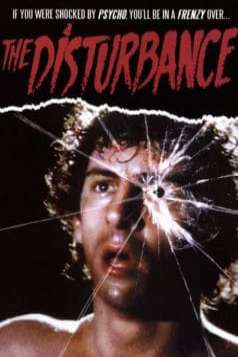
One good thing that you can say about the 1990 film The Disturbance is that it’s killer is no winner. Clay Moyer (Timothy Greeson) is a schizophrenic who has just been released from a mental hospital and seems to be destined to soon return. He’s someone who is haunted by hallucinations and violent fantasies. At the same time, he’s also learned how to project enough superficial charm that he can actually interact with people. When he meets Susan (Lisa Geoffrion) on the beach, he’s able to get a date and later, he’s even able to get a relationship. But, as the film graphically shows, even when he’s making love to Susan, he’s fantasizing about killing her. Even during the best moments of their relationship, he’s fantasizing about doing terrible things to the neighbor. Because he’s extremely possessive while obviously hiding a huge part of his life from her, Susan eventually starts to pull away from him. When he gets too pushy in his efforts to keep her around, she breaks it off. Since the relationship was the only positive thing that Clay had in his life, he sinks further into madness and he eventually does some very bad things. But, seeing as how Clay was having violent fantasies even while he was still dating Susan, it’s totally probable that his collapse was predestined. If he hadn’t been triggered by the end of the relationship, he would have been triggered by something else. There’s no hope for Clay, who was pretty much doomed from the minute he was born.
The budget of this Florida-shot indie is low and it’s obvious that most of the actors weren’t professionals. And yet, the fact that the actors are occasionally stiff and awkward actually adds to the film’s authenticity. If the film had been too slick, it wouldn’t have been as effective. It would have felt like another overproduced Hollywood serial killer film. Instead, The Disturbance feels like a journey into the mind of someone who actually is a ticking time bomb, reaching the end of his countdown. It’s not a fun journey but then again, it shouldn’t be fun. The mind of a sexual sadist is not going to be a pleasant place to visit.
The film works largely due to the lead performance of Timothy Greeson, who plays Clay as someone who desperately wants to be normal but who is very much aware that he never will be. He’s a prisoner to his fantasies and, as much as he tries, he knows that he’s never going to escape his demons. As an actor, Greeson is appealing enough that you can buy that Susan might go on a date with him while he also believably portrays the instability that leads to her dumping him.
It’s a well-done film, though a bit too disturbing to really be an entertaining viewing experience. (On a personal level, there were several scenes involving a cat that I simply could not handle.) I appreciated the film’s integrity far more than I enjoyed actually watching it but at least the movie refused to idealize its killer.
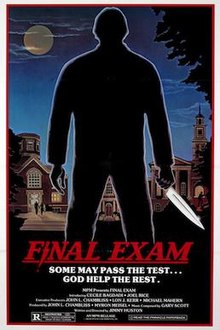
The 1981 slasher film, Final Exam, opens with a familiar scene. A couple is making out in a car. A man (played by Timothy L. Raynor) comes along and kills them both.
Why does the man do this? Is he an escaped mental patient, like the killer who always appear in the urban legend about the man with the hook? Is he an angry father, upset that students have been parking near his farm and corrupting his children with their sinful ways? Is he an occultist, hoping that a blood sacrifice will bring about the end of the world? Is he a jilted lover or an unemployed day laborer or a zombie or an international assassin or a former fat boy looking for vengeance on the students who pulled the prank that caused him to drop out of college? Seriously, what is this guy’s deal!?
We never find out. That, in itself, makes Final Exam unique. The Killer is not only not given a motive, he’s not even given a name! He’s just someone who shows up and starts killing. No one knows him and he doesn’t appear to know anyone that he kills. The fact that he’s so anonymous is actually a factor in the film’s favor. The flamboyant motivations that are given to most slasher villains tend to serve as a distancing device for the audience. It’s easy, for instance, to dismiss Jason Voorhees because we know that the idea of him drowning and then somehow showing up in the woods just doesn’t make any sense. The convoluted backstory of Michael Myers (or at least the Myers who was present in the original, pre-reboot Halloween films) eventually became so ludicrous that it made it easier for audiences to say, “Well, it’s just a move.” Final Exam‘s motiveless killer is actually far more true to life. In real life, it’s rare that we ever learn the motives behind the crimes. By making the Killer anonymous, Final Exam takes away one of the tools that the audience can use to assure themselves that it’s only a movie.
Unfortunately, the scenes following the opening murder are so inept that the audience is instantly reminded that they’re just watching a movie and not a particularly well-made one at that. It’s final exam time on campus but several students aren’t ready to take their Chemistry exam. So, a fraternity fakes a shooting spree — yes, you read that correctly — and manages to get the exam delayed for a day. That means that, while all of the other students have gone home, the chemistry students stay on campus so that they can study for their final exam. And, of course, the killer is on his way to the campus as well….
While the killer makes his way to campus, we sit through several scenes of campus hijinks. It’s a weird mix of horror and comedy. We meet a few students who are obviously destined to victims. Neurotic Radish (Joel S. Rice) is likably nerdy. Lisa (DeAnna Robbins) is having an affair with one of her professors, but at least she has a great first name. The frat boys are doing steroids and tying each other to trees. Apparently, spending the night tied to a tree is some sort of initiation ritual. That’s not a good situation to find yourself in when there’s a killer stalking the surrounding area.
Yes, the killer does eventually arrive on campus but it seems to take him forever. Once he does arrive, he starts killing everyone that he meets and, again, his lack of motivation makes him far more disturbing and frightening than he has any right to be. It really is the ultimate nightmare. Not only is someone trying to kill you but he’s doing it just because. There’s no reason for his actions and therefore, there’s no way to talk him out of it. There’s no secret to distracting or stopping him. You just have to run and hope you can escape. Cecile Bugdadi plays Courtney, who is pretty obviously destined to be the final girl. She gives a good performance and you definitely want her to escape but again, the film is so poorly paced that, by the time she gets her chance to face the Killer, the majority of the audience will probably have checked out, either mentally or physically.
Final Exam has a cult following, which I kind of understand. It really is the epitome of what people imagine when they imagine a typical, low-budget, early 80s slasher film. It represents an era. But for me, it’s just too uneven to work.
No, wait a minute. That’s not right. Let’s try that again.
Half Shark….
Half Octopus….
All Killer!
There, that’s it! That’s our Sharktopus!
Produced by the legendary Roger Corman, Sharktopus originally aired on the SyFy channel in 2010. It tells the story of S-11, a creature that is half-shark and half-octopus. How exactly did S-11 come to exist? Well, blame the government! The government wanted a new weapon and apparently, it didn’t bother them that the weapon would have no practical use beyond going rogue and killing civilians. Dr. Nathan Sands (Eric Roberts, the one and only) created the sharktopus with the help of his daughter, Nicole (Sara Malakul Lane). When S-11 swims off on its own and starts eating human beachgoers, Nicole teams up with mercenary Andy Flynn (Kerem Bursin). Nicole and Andy think that they’ve been sent to destroy S-11 but it turns out that Nathan has other plans.
Let’s just state the obvious. This is the greatest film ever made. Okay, well …. maybe it’s not the greatest. Some people would probably say that it’s not even that good but I think they’re overthinking things. What it comes down to is that there really aren’t as many films out there about shark/octopus hybrids as you might think. When it comes to this very specific genre of horror films, Sharktopus is the best.
This is a film that understands why the audience is watching. We’re watching because we want to see Sharktopus action! So, while the film does contain its fair share of scenes of Nicole and Andy searching the ocean, the majority of the film is still made up of Sharktopus attacks. You don’t really get to know any of the victims, though I did feel bad for the gentleman who shouted, “Oh no! Not like this!” as he was pulled down to the ocean by S-11’s tentacles, but that’s okay. It’s all about the Sharktopus, a creature that is so ludicrous that it’s impossible not to like it.
Another thing that’s impossible not to like is the fact that Eric Roberts is in this film. The last time I checked, Roberts had a total of 641 acting credits listed on the imdb. He’s appeared in every type of films — from Oscar-nominated prestige films to low-budget faith-based films to Lifetime films to …. well, films like Sharktopus. But regardless of the film, Roberts always seems to be trying his best or, at the very least, he comes across like he’s genuinely amused by the absurdity of it all. Roberts has a lot of fun in Sharktopus, playing his mad scientist character with a twinkle in his eye and a barely suppressed evil smile. Dr. Sands takes genuine pride in his creation and it’s kind of hard not to get caught up in his enthusiasm.
Sharktopus is a fun movie. It’s a low-budget and deeply silly epic and it you can’t enjoy the sight of shark/octopus hybrid creeping across the beach than I don’t know what to tell you. In fact, Sharktopus was popular enough with SyFy audiences that it would return for a whole series of films in which it battled hybrid monsters. Go Sharktopus!
On a final note, keep an eye out for Roger Corman while watching this film. He plays a man on the beach who watches as a treasure seeker is dragged off to the ocean. When he realizes that she dropped a valuable coin while being taken away, Corman walks out on the beach and grabs it for himself. Hopefully, he sold that coin and used the money to go on a nice vacation. If anyone’s earned it, it’s Roger Corman!
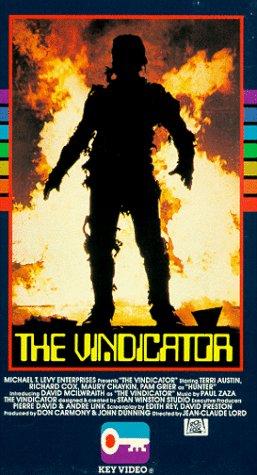
The 1986 film, The Vindicator, is one of those Canadian exploitation films that doesn’t make much sense but is still memorable just because of how dedicated it is to being utterly incoherent.
Basically, an evil corporate guy named Alex Whyte (played by Richard Cox) wants to design a space suit that will turn people into rage-filled assassins. Or something like that. To be honest, I had a hard time following just what exactly Alex was trying to do. When one of his scientists, Carl Lehman (David Mcllwraith), figures out that Alex is up to something sinister, Alex blows him up. Alex then puts Carl’s charred body into the suit and Carl is transformed into a cyborg who flies into a murderous rage whenever anyone gets too close to him. That’s not exactly what Carl was hoping to spend the rest of his life doing so Carl breaks free from the lab and seeks revenge while also trying to protect his wife (Terri Austin) and his daughter (Catherine Disher). Unfortunately, because of the whole rage thing, Carl can’t allow himself to get close to them but somehow, he figures out how to speak to them through the synthesizer that’s sitting in the living room.
Now that Carl is wandering around Canada and killing all of his former co-workers, Alex decides that he needs to do something to take Carl out of commission so he hires an assassin known as Hunter. Hunter is played by Pam Grier. Yes, that’s right — the Pam Grier! Soon, Hunter and her team are pursuing Carl across Canada and, in the process, they end up killing almost as many people as Carl. And those people who aren’t killed by Carl or Hunter fall victim to the types of accidents that could only happy in a Canadian exploitation film. For instance, in one scene, a truck drives over a guard rail and immediately explodes.
Meanwhile, Carl’s friend, Bert (played by Maury Chaykin because this is a Canadian film), is falling in love with Carl’s wife and plotting to try to take her away from her cyborg husband. At first, Bert appears to be a sympathetic character and then, about an hour into the movie, Bert is suddenly not sympathetic at all. The same can actually be said for just about everyone in the film, which will lead most viewers to wonder just why exactly we should care about whether or not Carl is ever stopped.
It’s a messy film. For a relatively short and presumably low-budget film, there’s a lot of characters in The Vindicator and it’s not always clear how everyone is related. Since Carl kills most of them, I can only assume that they’re all bad but still, you can’t help but wonder if maybe Carl is being a bit too quick to assume that everyone was okay with him getting blown up. Carl is one judgmental cyborg.
Supposedly, special effects maestro Stan Winston was involved with the production of The Vindicator and, to give credit where credit is due, Carl does look like what I guess most people would expect a cyborg to look like. In fact, when I watched the movie, I originally assumed that it was a Robocop rip-off but then I discovered that The Vindicator actually came out a year before Robocop. That’s not to say, of course, that The Vindicator was, in any way, an influence on Robocop. Beyond the cyborg-theme, the two films really have nothing in common. Robocop is a satirical commentary on fascism. The Vindicator is …. well, I’m not really sure what it’s supposed to be.
The Vindicator is a mess. It’s one of those films where no one’s motivations make any sense and it is often next to impossible to actually keep track of who is who. (The actors playing Alex and Carl looked so much alike that it took me a few minutes to figure out that Carl was the one who got blown up.) And yet, like many Canadian exploitation films from the 80s, The Vindicator is also compulsively watchable. The actions move quickly. The entire plot has a make-it-up-as-you-go-along feel to it that’s kind of entertaining. Plus, Pam Grier’s in the film, openly rolling her eyes at just how silly it all is. The Vindicator isn’t exactly good but it did hold my interest. All things considered, maybe that’s vindication enough.
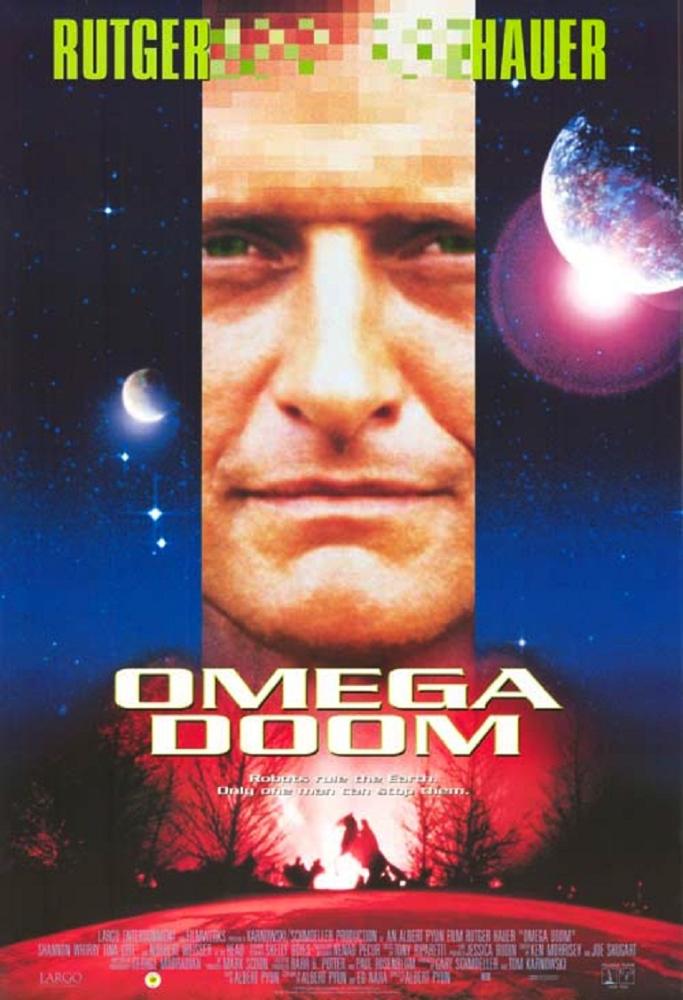
Seriously, don’t ask me. I just watched this Albert Pyun-directed, 1996 sci-fi epic and I’m stil a bit confused as to what exactly was actually going on in the movie. This is a movie that opens with a totally blank screen and then, eventually, two red suns appear in the sky. The film takes place in the future, at a time when humans have nearly wiped themselves out of existence through their endless wars and the planet is now controlled by robots and cyborgs. Omega Doom (Rutger Hauer) was a cyborg programmed to kill humans until he got shot in the head. Apparently, taking a bullet to his cranium changed Omega’s programming and now….
Well, that’s the thing, isn’t it? It’s kind of hard to say what exactly it is that Omega does now. We do know that he spends a lot of time walking around because there’s a lot of scenes of him doing just that. Eventually, he stumbles upon the ruins of a town that is now controlled by two warring bands of robots. Before you can say Yojimbo or even AFistfulofDollars, Omega is playing both sides against each other and …. well, I don’t know what the preferred outcome here is. What is Omega Doom’s motivation? He’s not making any money out of it because robots don’t need money and it’s not like there’s anything left to buy. And he doesn’t seem to be interested in ruling the town himself because it’s kind of a dead end of a town. I mean, there’s dead bodies and robotic parts all over the place. It’s suggested that he might be looking for a secret stash of weapons that can be used to either kill or protect the remaining humans but, at the same time, we don’t ever really see any remaining humans and there’s no reason why Omega would care enough about them to get caught up in a war between robots on their behalf.
So, don’t ask me what’s going on. I guess it really doesn’t matter because it’s not like you watch a film like this for the plot. You watch it for the action! Unfortunately, there’s not a whole lot of action to be found. There’s a lot of scenes of robots talking about various exciting things that they could, in theory, be doing but no one ever seems to actually get around to doing any of that stuff. Instead, all of the robots stay in their separate sections of the town and wait for everyone else to make the first movie. Eventually, Omega makes a few moves but, even then, they’re not particularly exiting moves. Omega carries a gigantic sword on his back and how I anticipated seeing what he was going to finally do with that sword. Well, it turns out that Omega didn’t do very much with it at all.
Actually, the main reason you’re going to want to watch OmegaDoom is because Rutger Hauer plays the title role and Hauer was always cool, even when he was appearing in a less than memorable film. In OmegaDoom, Hauer does a passable Clint Eastwood impersonation, delivering his lines with just the right amount of weary condescension. Though you’re never quite sure why Omega is doing anything, Rutger Hauer is always watchable.
And, to be honest, I actually didn’t dislike OmegaDoom as much as it may sound like I did. It’s a slow movie and not much happens but, at the same time, I did like the look of the bombed-out city and, though the dialogue was largely forgettable, there was still the occasional line that suggested that Omega Doom had existential ambition, albeit unrealized ones. “God took a vacation,” Omega says at one point and, for a split second, you get a hint of what OmegaDoom could have been if it had a bigger budget and a better script. It’s a film that had potential and it’s somewhat fascinating to consider how little of that potential was realized.
Of course, in the end, it all comes down to this: How can you possibly resist Rutger Hauer as a cyborg?
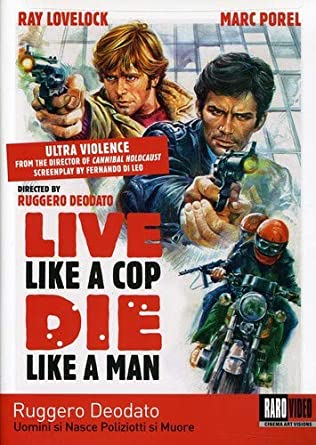
The 1976 film, LiveLikeACopDieLikeAMan, takes place during the Christmas season.
We know this because the film opens with a man dressed like Santa Claus standing on a street corner in Rome and impotently watching as a woman is dragged behind a motorcycle by two men who were attempting to snatch her purse. When she doesn’t let go of her purse, one of the men hops off the motorcycle and proceeds to kick her in the face until she stops moving. Suddenly, two other men — our heroes, as it were — came driving up on a motorcycle of their own. A chase ensues, through the streets of Rome, during which a blind man’s dog is graphically run over. The chase which, it must be said, is very well-shot and directed, lasts for over 10 ten minutes and it ends with the two thieves being executed by, once again, our nominal heroes.
A lot of people are executed over the course of LiveLikeACop, DieLikeAMan. That’s because Detectives Fred (Marc Porel) and Tony (Ray Lovelock) have been given a license to kill anyone who breaks the law. The film is a bit vague on just how exactly the license works and why, apparently, it’s only been given to Fred and Tony. One major set piece features several dozen cops all waiting outside a house, powerless to get the three criminals within, until Fred and Tony arrive. Fred and Tony, of course, solve the problem by killing everyone. Why couldn’t the other cops have done that? The film doesn’t really make that clear.
Admittedly, Fred and Tony aren’t the first movie cops to get results through unorthodox means. TheFrenchConnection was a popular film in the 70s and it inspired a whole genre of Italian rip-offs, of which LiveLikeACopDieLikeAMan is a definite example. What sets Fred and Tony apart from cops like Popeye Doyle and Dirty Harry is the amount of joy that Fred and Tony seem to get out of killing people. Early on, they show up at a party and proceed to set all of the cars on fire. They also set two criminals on fire, with Fred doing a happy little dance as the two men go up in flames. It’s disturbing but there’s also a strange integrity to the film’s shameless embrace of violence. LiveLikeACop, DieLikeAMan doesn’t pretend to be about anything other than satisfying the vigilante fantasies of its audience.
And indeed, it should be considered that LiveLikeACop, DieLikeAMan was released during the so-called Years of Lead, when a combination of political terrorism and open crime had made violence an almost daily part of Italian life. When you’re living day-to-day with the knowledge that you could be blown up at any minute by the Red Brigade, the OrdineNero, or the Mafia, I imagine that there would be something appealing about watching two young men who are perfectly willing to just shoot anyone who appears to be up to no-good. It’s easy to imagine that, for audiences in 1976, the random violence of this episodic film mirrored the random violence of everyday life. Though LiveLikeACop, DieLikeAMan was obviously inspired by TheFrenchConnection, it perhaps has more in common with the original DeathWish, with the main difference being that LiveLikeACop’s vigilantes are officially sanctioned.
The film also places a good deal of importance on just how close Tony and Fred are supposed to be. They live together in a ramshackle flat, they apparently spend all of their free time together, and, towards the end of the film, the only thing that keeps the two of them from taking part in a threesome is the sound of someone else being shot. Unfortunately, Ray Lovelock and Marc Porel did not get along in real life and, as a result, there was never a LiveLikeACopDie Like A Man Part II. LiveLikeACop would also be director Ruggero Deodato’s only stab at the polizieschi genre. He went on, of course, to direct CannibalHolocaust and TheHouseon the Edge of the Park. (Interestingly, Tony and Fred’s relationship is mirrored, to sinister effect, by the relationship between the characters played by David Hess and Giovanni Lombardo Radice in HouseOn The Edge of the Park.) LiveLike A Cop, Die Like A Man has gone on to become a bit of a cult film and, as offensive as some will find it to be, it’s also so over-the-top in its violence and its celebration of officially sanctioned bad behavior that it becomes rather fascinating to watch. It’s so without shame or apology that it’s hard to look away from it, even though you may want to.
Ronald DeFeo, Jr. may not be a household name but he’s someone who was indirectly responsible for a lot of cinematic schlock.
Of course, that’s the least of DeFeo’s crimes. When the 69 year-old DeFeo passed away in March, he was serving a life sentence in the state of New York. That’s because, back in 1974, the 23 year-old DeFeo grabbed a rifle and killed his entire family while they slept. When he was brought to trial, DeFeo claimed that he heard Satanic voices that urged him to kill his parents and his siblings. His lawyers tried for an insanity defense, though the prosecution successfully argued that DeFeo was lying about the voices and that he was in full control of his actions on the night that he killed his family. After being convicted and sentenced to life imprisonment, DeFeo sometimes claimed that he had been possessed by the devil and sometimes said that he committed the murders in self-defense and then other times, he said that he did it because he was hoping to inherit his father’s money. Out of all the excuses that he gave for his brutal crimes, DeFeo’s claims of being demon-possessed were the claims that everyone remembered.
Years later, the DeFeo house — which sat in Amityville, New York — was purchased the George and Kathy Lutz. The Lutzes made a small fortune by claiming that the house was haunted and that they had been forced to leave their new home by demonic spirits. (Their claims were apparently supported by paranormal investigators Ed and Lorraine Warren of Conjuring fame.) The Lutzes told their story to Jay Anson, who wrote a book called The Amityville Horror. That book was later turned into a movie and the success of that movie led to a series of sequels and spin-offs. At last count, there’s been at least ten books written about the Amityville case and there have been 30 films that, in one way or another, claim to be connected to the Amityville haunting. Few of those films share much, other than a haunting and the word “Amityville” in the title. There’s not a great deal of continuity to be found in the Amityville films.
One of the latest of the Amityville films, 2018’s The Amityville Murders, deals with the actual murders that supposedly started off the whole cycle of possession and violence. (1982’s Amityville II: The Possession also dealt with the murders, albeit with Ronald DeFeo renamed Sonny Montelli. Two of the stars of that film — Burt Young and Diane Franklin — appear in The Amityville Murders.) John Robinson plays the bearded and withdrawn Ronald DeFeo, Jr. Chelsea Ricketts plays his concerned sister. Paul Ben-Victor plays their abusive father. The film covers the general facts of the DeFeo murders while trying to have it both ways as to whether or not Ronald was in control of his actions. Ronald DeFeo is portrayed as being genuinely unbalanced but, at the same time, potentially demon-possessed as well. The talented John Robinson does a good job of playing Ronald and there’s a few effective shots of his looking unbalanced but, for the most part, there’s nothing here that you haven’t seen in a dozen other Amityville-influenced horror films. As well, since you know from the start that Ronald is going to end up murdering his family, there’s really not any suspense to be found in the film. Instead, the entire movie is just about waiting for Ronald to pick up that rifle and start shooting people, including two children. It’s more than a bit icky, to be honest.
Whenever it comes to an Amityville prequel, the main question is always just how stereotypically the DeFeos are going to be portrayed. It only takes five minutes for DeFeo, Sr. to admonish Ronald with, “Oh! Watch how you talk to your mother!” Every cliché about Italian-American family life is present in The Amityville Murders, from the father hulking around in his undershirt to the mother decorating the house with religious iconography to the superstitious grandmother. Watching the film, I found myself imagining Tony Soprano watching a cheap Amityville film and exclaiming, “Oh! The mouth on this fucking kid over here, like he’s possessed by the devil or something!” The Amityville Murders hints that the DeFeos themselves may have had mafia connections. Indeed, before he decided to blame demonic possession for his crimes, Ronald DeFeo, Jr. claimed that his family had been taken out by hitmen from New York.
This film was directed by Daniel Farrands, who also directed The Haunting of Sharon Tateand The Murder of Nicole Brown Simpson. The Amityville Murders is neither as well put-together as the Sharon Tate film nor as offensive as the Nicole Simpson film. It’s somewhere in between, just another link in the endless chain of Amityville films. I will say that I personally think Farrands is a talented director and I’d like to see what he could do with a budget and a decent script. The Amityville Murders has its share of impressive shots, even if the end result isn’t exactly the last word in Amityville horror.