4 Shots From 4 Films is just what it says it is, 4 shots from 4 of our favorite films. As opposed to the reviews and recaps that we usually post, 4 Shots From 4 Films lets the visuals do the talking!
Here are a few the classic films that we released in 1972.
4 Shots From 4 1972 Films
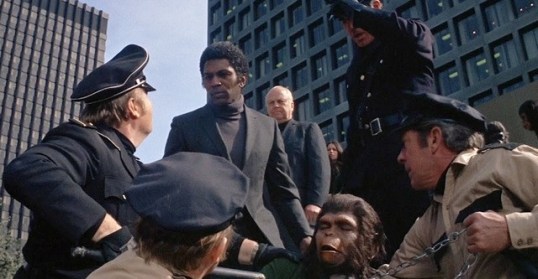
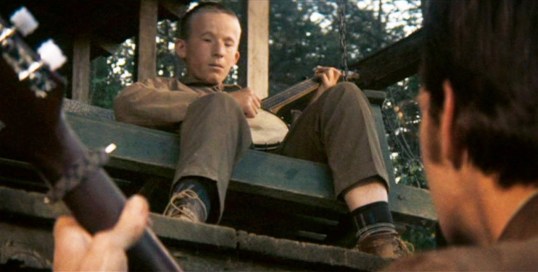
Conquest of the Planet of the Apes (1972, dir by J. Lee Thompson, DP: Bruce Surtees)
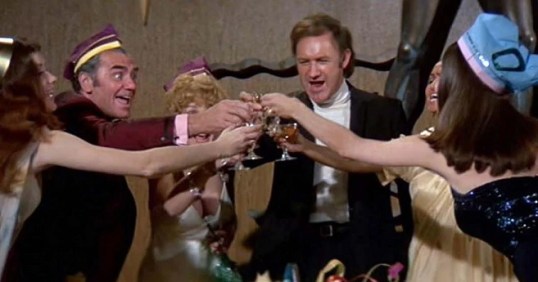
The Poseidon Adventure (1972, dir by Ronald Neame, DP: Harold E. Stine)
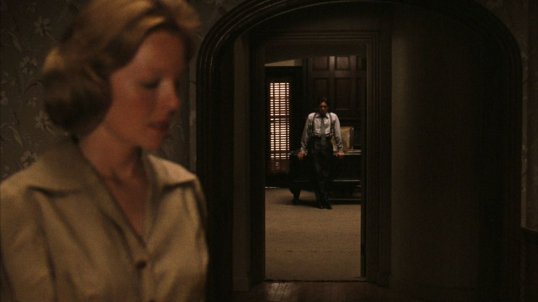
The Godfather (1972, dir by Francis Ford Coppola, DP: Gordon Willis)
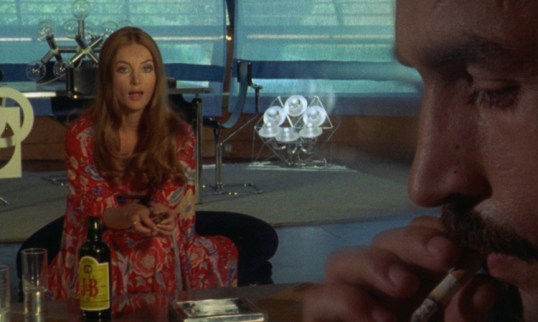
Don’t Torture A Duckling (1972, dir by Lucio Fulci, DP: Sergio D’Offizi)
4 Or More Shots From 4 Or More Films is just what it says it is, 4 shots from 4 of our favorite films. As opposed to the reviews and recaps that we usually post, 4 Shots From 4 Films lets the visuals do the talking!
111 years ago today, the director J. Lee Thompson was born in Bristol, England. Though he never quite got the respect that he deserved while he was alive (though he did receive an Oscar nomination for TheGuns of Navarone and later won fame as one of the few directors that Charles Bronson actually liked), J. Lee Thompson has since been recognized as a master of genre filmmaking and as someone who was not afraid to add a little subversive subtext to his films. From TheGuns of Navarone to the later sequels of Planet of the Apes to working with Charles Bronson and Robert Mitchum, Thompson was one of the best.
In honor of the man and his legacy, here are….
4 Shots From 4 J. Lee Thompson Films
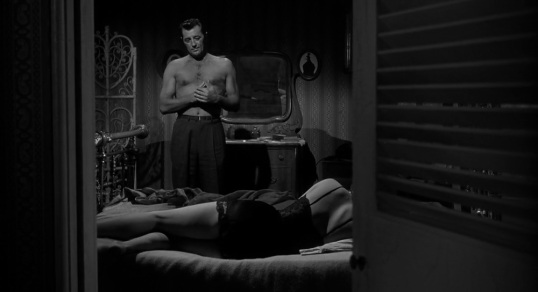
Cape Fear (1962, dir by J. Lee Thompson, DP: Sam Leavitt)
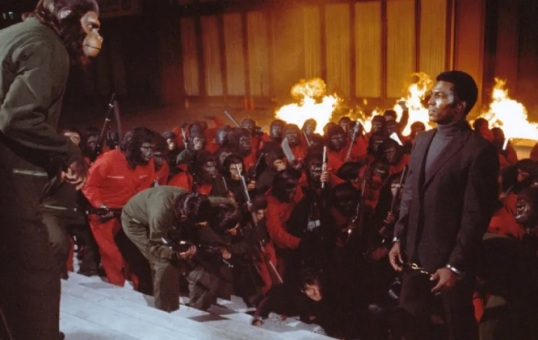
Conquest of the Planet of the Apes (1972, dir by J. Lee Thompson, DP: Bruce Surtees)
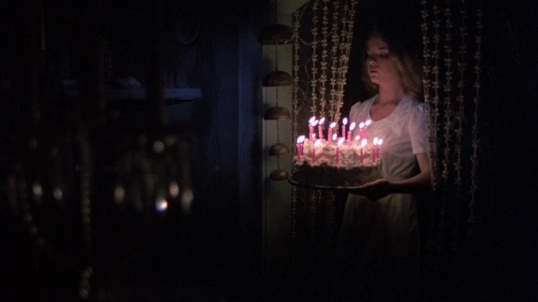
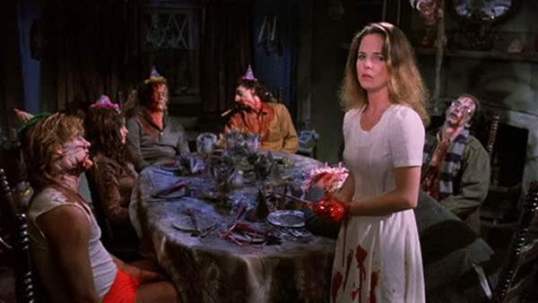
Happy Birthday To Me (1981, dir by J. Lee Thompson, DP: Miklos Lente)
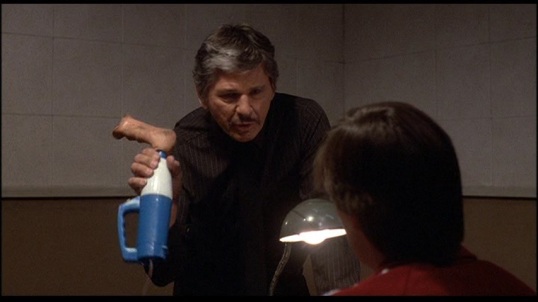
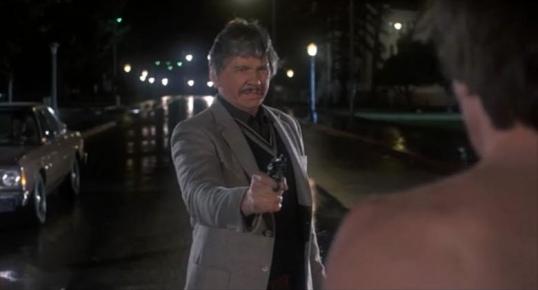
10 To Midnight (1983, dir by J. Lee Thompson, DP: Adam Greenberg)
4 Shots From 4 Films is just what it says it is, 4 shots from 4 of our favorite films. As opposed to the reviews and recaps that we usually post, 4 Shots From 4 Films lets the visuals do the talking!
4 Or More Shots From 4 Or More Films is just what it says it is, 4 shots from 4 of our favorite films. As opposed to the reviews and recaps that we usually post, 4 Shots From 4 Films lets the visuals do the talking!
109 years ago today, the director J. Lee Thompson was born in Bristol, England. Though he never quite got the respect that he deserved while he was alive (though he did receive an Oscar nomination for TheGuns of Navarone and later won fame as one of the few directors that Charles Bronson actually liked), J. Lee Thompson has since been recognized as a master of genre filmmaking and as someone who was not afraid to add a little subversive subtext to his films. From TheGuns of Navarone to the later sequels of Planet of the Apes to working with Charles Bronson and Robert Mitchum, Thompson was one of the best.
In honor of the man and his legacy, here are….
4 Shots From 4 J. Lee Thompson Films
Cape Fear (1962, dir by J. Lee Thompson, DP: Sam Leavitt)
Conquest of the Planet of the Apes (1972, dir by J. Lee Thompson, DP: Bruce Surtees)
Happy Birthday To Me (1981, dir by J. Lee Thompson, DP: Miklos Lente)
10 To Midnight (1983, dir by J. Lee Thompson, DP: Adam Greenberg)
4 Or More Shots From 4 Or More Films is just what it says it is, 4 shots from 4 of our favorite films. As opposed to the reviews and recaps that we usually post, 4 Shots From 4 Films lets the visuals do the talking!
108 years ago today, the director J. Lee Thompson was born in Bristol, England. Thompson started his career making social realist films before he moved into making genre pictures. He was nominated for Best Director for his work on 1961’s The Guns of Navarone. That said, during his lifetime, Thompson was never exactly a critical favorite. When they were first released, critics were dismissive of his entries in the original Planet of the Apes franchise and they were downright hostile to his work with Charles Bronson. However, all of those films were better appreciated by audiences and they remain cult classics to this day. Conquest of the Planet of the Apes, with its themes of protest and revolution, has especially been the subject of much recent critical reevaluation. Thompson may have been a genre director but that didn’t mean that his film were devoid of subtext. If anything, Thompson was a master of sneaking subversive themes into the least likely of works.
Thompson was a filmmaker who knew how to tell a story and who always did the best with whatever he had to work with. To be honest, many aspiring and working directors could learn a lot from spending a weekend watching some of Thompson’s films.
In honor of the man and his legacy, here are….
4 Shots From 4 J. Lee Thompson Films
Cape Fear (1962, dir by J. Lee Thompson, DP: Sam Leavitt)
Conquest of the Planet of the Apes (1972, dir by J. Lee Thompson, DP: Bruce Surtees)
Happy Birthday To Me (1981, dir by J. Lee Thompson, DP: Miklos Lente)
10 To Midnight (1983, dir by J. Lee Thompson, DP: Adam Greenberg)
And so, we reach the end of the original series of Planet of the Apes films. Battle for the Planet of the Apes was the cheapest of the Apes films and most critics agree that it’s also the worst. Sad to say, I happen to agree with them. If nothing else, Battle For The Planet of the Apes is the only one of the original Apes films that fails to even reach the meager level of quality of Tim Burton’s remake.
The film begins a decade after the end of Conquest of the Planet of the Apes. A nuclear war has destroyed what was left of human society. It’s never made clear if that war was between apes and human or between humans and humans. All that is clear is that the Apes are now firmly in charge of the world. Caesar (Roddy McDowall) leads the Apes civilization. Humans, while clearly second class citizens, are treated relatively well by the Apes. Early on in the film, Caesar views archival footage of his parents and learns of what the future holds. He immediately makes move to try to prevent that future from occurring.
However, all is not well. Gorilla general Aldo (Claude Akins) hates humans and is secretly plotting a military coup to overthrow Caesar. Meanwhile, over in the Forbidden City (a.k.a. New York), there’s a tribe of radiation-scarred humans who are being led by Kolp (Severn Darden), the sadistic torturer from Conquest of The Planet of the Apes. Driven mad by the ravages of war, Kolp and his followers are plotting to launch their own last-ditch attack on Caesar and the apes.
So much of this film can be legitimately criticized, from the cheap look (the apes are no longer characters but instead just actors in rubber masks) to the predictable storyline. So, instead of focusing on what’s wrong with this film, I’m going to highlight the handful things that actually did work. While few of the performers make any effort to invest their characters with any sort of life, both McDowall and Darden give strong performances. Darden, in particular, makes a great villain and it’s a shame that he didn’t get a better film in which to show off. Predictable as the film is, there’s a few memorable touches, my favorite being Kolp and his followers converting a bunch of school busses into armored attack vehicules.
As well, Battle for the Planet of the Apes may ultimately feel like an unnecessary chapter in the whole Planet of the Apes saga but the film, at the very least, makes the effort to provide some sort of continuity with the other films in the series. Kolp and his followers are obviously meant to be the ancestors of the bomb-worshipping mutants from Beneath the Planet of the Apes and, in one of my favorite little touches, Kolp’s assistant is named Mendez. If you’ll remember, the leader of the mutants in Beneath was named Mendez the Tenth.
It’s those little touches that show that the filmmakers, at the very least, respected their viewers enough to maintain the continuity of the series. As bad a film as Battle is (and it’s definitely not very good), it can still teach a valuable lesson to today’s filmmakers.
Released in 1972, Conquest of the Planet of the Apeswas the fourth film in the original Planet of the Apes saga. Taking place two decades after the end of Escape from the Planet of the Apes, Conquest details how Caesar, the son of Cornelius and Zira, eventually rallies his fellow apes to overthrow humanity. Caesar, in this film, is played by Roddy McDowall and Conquest features what is probably his best performance of the series.
Conquest of the Planet of the Apes is definitely the most radical film of the series and it’s probably one of the most radical films of the 1970s. Once you peel away the sci-fi/fantasy wrapping, you’re left with one of the few “mainstream” studio films to ever promote the idea of overthrowing society with a violent revolution. Even when viewed today, it’s odd to consider that this violent and rather dark film was actually given the same G rating that was otherwise exclusively given to children’s films. Obviously, the poor critical reputation of the Planet of the Apes series kept the Hollywood censors from really paying attention to what they were watching.
Director J. Lee Thompson goes for a far different direction from the previous more television-orientated directors involved with the series. Thompson emphasizes that savage, totalitarian aspect of future human civilization. This is a film in which the most sympathetic human character (the circus owner played by Ricardo Montalban) is graphically tortured and murdered within the first few minutes of the film. This is followed by Caesar being given electro-shocked treatment by the cheerful torturer Kolp (Severn Darden, who is a chilling villain) and finally, Caesar and his fellow apes violently overthrowing society while the futuristic city burns in the background.
Director Thompson reportedly based the ape uprising on contemporary news reports about the Black Panthers and it brings a real sense of urgency to the film. What sets this film apart is that director Thompson is clearly on the side of the Apes and by the end of the film, so is the audience. McDowall’s passionate performance is neatly contrasted with an equally impassioned performance from Don Murray (who plays Breck, the racist leader of the humans) and the audience is firmly on McDowall’s side by the end of the film, cheering as their own civilization is destroyed.
Originally, Thompson wanted to end the film with McDowall giving a fiery speech announcing that the time of man was finished. However, this finally proved to be too much for the film’s producers and, at the last minute, the scene was clumsily redubbed to allow Caesar to suddenly — out of nowhere — have a change of heart and call for a peaceful co-existence. This revised ending — though it did leave things open for yet another sequel — is an undeniable weakness. It just doesn’t feel right.
With that in mind, here’s Thompson’s original, unseen ending, in which Caesar watches as his apes followers murder Don Murray. It gives you a feeling of the type of film that Thompson was going for:



 Through the Shattered Lens