October Positivity: Meant To Be (dir by Bradley Dorsey)


2012’s Meant To Be tells the story of …. well, it tells a few stories.

Tori (Erin Sossamon) is a teenage girl who has a bright future but only if she can survive her less-than-wonderful present.  She has an abusive boyfriend.  Her parents seem to be absent.  She’s a photographer and her high school counselor (Michael Gross) has helped her to find a scholarship but Tori has recently discovered that she’s pregnant!

Linda Dickson (Erika Eleniak) is a social worker, who lives in a nice house and who has a wonderful husband (Dean Cain) but who also seems to be struggling with an overwhelming depression.  Maybe it’s because her 18 year-old daughter has recently left home for college.  She obsesses on finding newspaper stories about 20 year-olds doing wonderful things.  She cuts them out of the paper and puts them in a shoebox.  (I do the same thing with well-written obituaries.)  When a call comes in about a loud argument at Tori’s house, Linda is the one who investigates.  When she realizes that Tori is pregnant, Linda becomes a part of Tori’s life, giving her advice.  Linda is determined to convince Tori to not get an abortion, even if it means that Tori will lose her scholarship.

And finally, there’s Nathan (Bradley Dorsey), a twenty year-old aspiring writer who doesn’t know what he should write about.  In a voice-over, he says that he’s learned that writing about only what you know can be a trap so he’s decided to write about what he doesn’t know.  (By that logic, my next short story should be about trigonometry.)  Nathan grew up in the foster system.  He doesn’t know who his mother was.  He’s not even fully sure where he was born.  But he’s still going to search for her so he can discover not only where he came from but also why he was abandoned.

Nathan finds himself staying at a mysterious hotel, one where all of the other guests also appear to be people who never knew their mother.  Even though Nathan puts a do-not disturb sign on his door, the motel maid (Della Reese) still regularly enters his room and encourages him to get out of bed and continue his search.  With the help of two other guests, Shelly (Kristen Renton) and Becky (Colleen Foy), Nathan is able to track down his mother and her address….

Can you guess who she is?

Of course, you can!  Now, in all fairness to the movie, it doesn’t present the fact that Linda is Nathan’s mother as some sort of surprise twist.  From the moment that Nathan figures out that his mother was named Linda and then Becky comes across an old glamour shot of Erika Eleniak in a high school yearbook, it’s pretty clear that Linda Dickson gave up Nathan and she’s never stopped thinking about him and that’s why she’s so obsessed with Tori.  That’s not the twist.

But there is a twist and here it is….

Are you ready?

Nathan and all the residents at the hotel and most of the passengers on the flights that Nathan takes in  and out of town are …. ABORTION GHOSTS!  That’s right.  Linda had an abortion.  Nathan was the son she was meant to have but didn’t.

Is it heavy-handed?  Yes.  Is it effective?  Well, the answer to that question probably depends on how you feel about abortion.  That’s one thing about all of these abortion movies.  It’s hard for me to imagine that any of these films — whether it’s the church-produced Pro-Life films or the studio-produced Pro-Choice films — have ever changed anyone’s mind about abortion.  As such, movies about abortion largely exist to preach to the choir.  Abortion movies, regardless of which side they come down on, are largely movie that people watch so that they can nod and think to themselves, “My side really is the only correct one.”

As for the film itself, it’s rather slow and the voice-over tends to get rather portentous.  Dean Cain was probably on the set for one day.  Colleen Foy gave the best performance while Erika Eleniak was a bit bland in the lead role.  On the plus side, it looked like a real movie, which is more than one can say for a lot of faith-based films.  Again, how you react to the film will largely depend on whether or not you agree with its message.
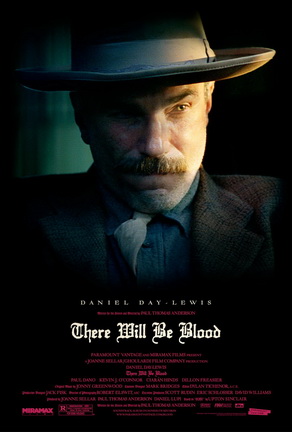
Embracing the Melodrama Part II #109: There Will Be Blood (dir by Paul Thomas Anderson)


There_Will_Be_Blood_PosterYou know how there are some films that you really want to love and that you know that, given your taste in cinema, you probably should love but yet you somehow just cannot bring yourself to actually love?

To a certain extent, that’s the way I feel about the 2007 best picture nominee There Will Be Blood.  It’s a film that I greatly respect, as I tend to respect all of Paul Thomas Anderson’s movies.  He’s one of the best director working today and also one of the most consistently interesting.  (He’s also probably the only contemporary filmmaker who would actually base a two and half hour epic on the first 150 pages of a forgotten novel by Upton Sinclair.)  And I think that There Will Be Blood is a well-made and well-directed film.  I also think it’s well-acted, though I do think Daniel Day-Lewis goes a bit too far over-the-top at the film’s conclusion.   (If anything, Paul Dano is the one who actually deserved to win an Oscar for his work in this film.)  There Will Be Blood is an original work of cinematic art.  I’m thankful that it was made and that Anderson stayed true to his vision.

But, with all that in mind, it’s never been a film that I’ve been able to love.  Unlike Anderson’s earlier Boogie Nights, There Will Be Blood holds the audience at a distance.  We remains outsiders looking in.  As a result, the film engages intellectually but not emotionally.  It’s a film that earns respect without necessarily winning the audience’s love.

Speaking of respect, that’s something that you have to give to both Daniel Day-Lewis and Paul Thomas Anderson.  From the start of the film, Daniel Plainview (played by Day-Lewis) is a cruel and self-centered bastard and that characterization remains consistent throughout.  Briefly, it does seem that Plainview might truly care about his deaf, adopted son but, by the end of the film, Plainview has even proven that to be wishful thinking on our part.  (The only other character to whom Plainview is consistently pleasant is a young girl named Mary but Day-Lewis plays those scenes with such a corrupt twinkle in his eye that the subtext becomes increasingly creepy.)  Give Anderson and Day-Lewis credit.  They commit to portraying Daniel Plainview as being an almost Satanic character and, at no point, does either one of them waver in that commitment.  As we watch Plainview ruthlessly buy up all the land and drill all the oil that he can find, we wait for him to have some moment of redemption.  It took guts for neither Anderson nor Day-Lewis to allow him one.

Paul Dano plays Eli Sunday, an evangelical preacher who stands in the way of Plainview’s efforts to buy up all the land around the Sunday family farm.  The film presents Eli and Plainview as being two sides of the same coin.  Plainview hides his moral emptiness behind his money.  Eli hides behind his religion.  The two characters hate each other because they alone truly recognize what they truly are.  Dano, who also plays Eli’s brother, gives a mesmerizing performance, one that unfortunately has been overshadowed by Day-Lewis’s work.

It all ends, as all things must, with violent death in a bowling alley.  I know that a lot of my fellow cineastes think that the bowling scene is the highlight of the film but, to be honest, this was the point where the film lost me.  To me, this was the scene where Daniel Day-Lewis’s performance crossed the line from being flamboyant to shrill.  The end just did not work for me.

However, two things that did definitely work for me: Johnny Greenwood’s wonderfully ominous and atmospheric score and Robert Elswit’s amazing cinematography, which made the film’s landscape appear both beautiful and threatening at the same time.  The mix of Greenwood’s music with Elswit’s cinematography created some truly haunting moments.

In the end, There Will Be Blood is a lot like Daniel Plainview.  It is powerful, memorable, unpredictable, flamboyant, overbearing, and at times a little frightening.  And, again much like Daniel Plainview, it’s a film that’s easy to respect and difficult to love.