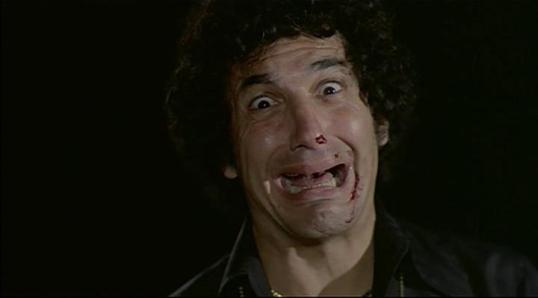
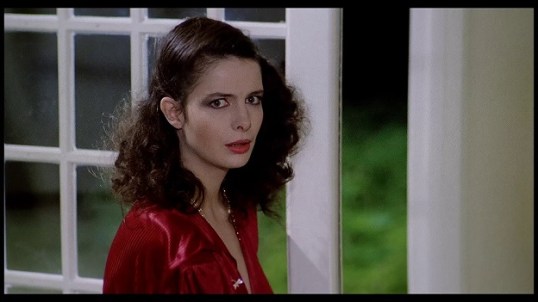
October Hacks: Murder Rock (dir by Lucio Fulci)


Are the streets to blame?  Paranoia’s coming your way….

Ah, Murder Rock.

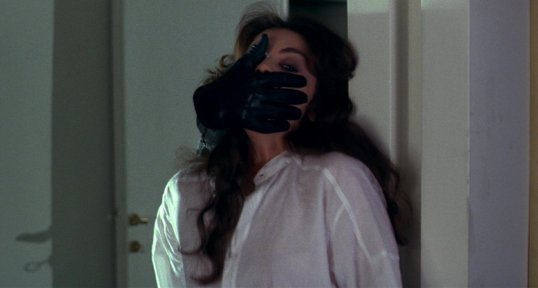
This 1984 film is often dismissed as being one of director Lucio Fulci’s lesser efforts, an attempt to combine the trappings of the giallo genre with the sexy, choreographed dance routines of Flashdance.  And certainly, the film does lack the visceral, dream-like horror of The Beyond trilogy and Zombi 2.  The film’s killer isn’t even as interesting as The New York Ripper‘s killer who talked like a duck.  That said, I think some critics have been a bit too hard on Murder Rock over the years.  Taken on its own terms, it’s a well-made slasher with a healthy does of 80s style.  Of course, I should admit that, as someone who grew up attending dance classes and dancing through the pain, I could relate to the film’s milieu.  I’ve never had to deal with a zombie in real life but I did meet my share of dancers who would do anything to move up.

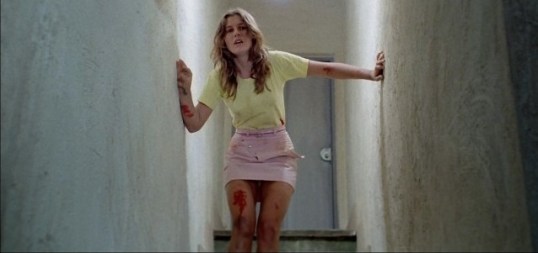
The film takes place at the Arts For The Living Center in New York City, where young dancers are hoping to land a spot on a televisions show and also hoping to avoid getting killed by the murderer who is haunting the locker rooms and using a long hairpin needle to stop the hearts of his victims.  (The sound of a previously healthy victim’s heart beating on the soundtrack and then abruptly stopping is far more powerful than one might expect.)

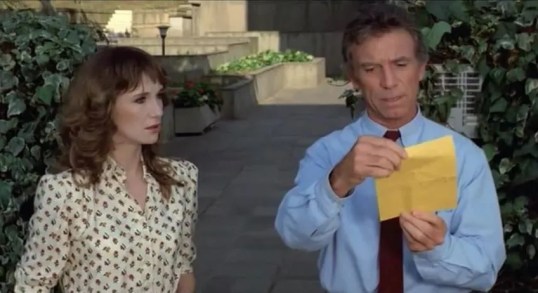
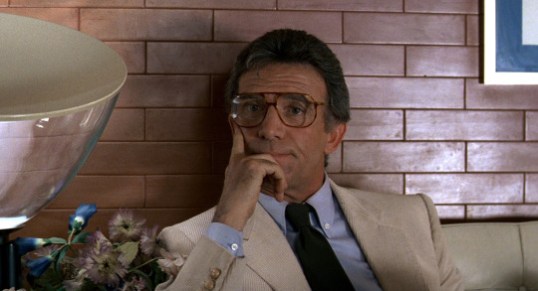
Previously seen losing an eye in Fulci’s Zombi 2, Olga Karalatos plays Candice Norman, the owner of the dance studio.  When one of her dancers is murdered while taking a shower, Candice is just one of many suspects.  Candice, however, is haunted by a dream in which she sees herself being stalked by a handsome man (Ray Lovelock) carrying a hairpin.  Later, Candice realizes that she’s seen the handsome man before.  He’s George Webb, a male model whose face adorns a billboard.  Candice starts to investigate George on her own, discovering that he’s apparently an alcoholic who lives in a run-down apartment.  When evidence starts to show up suggesting that George could be the murderer, he claims that he’s being framed.

Of course, George isn’t the only suspect.  There’s also Willy Stark (played by Christian Borromeo), a dancer whose girlfriend ends up as a victim of the murder spree.  With his blonde hair and aristocratic bearing, Christian Borromeo was one of the most handsome actors to appear in Italian films in the early 80s.  He didn’t do many films before retiring but he still managed to appear in films directed by Dario Argento, Federico Fellini, Ruggero Deodato, and Lucio Fulci.  He played very different characters in all of his films and gave a good performance each time.  One reason why I specifically want to single out Christian Borromeo here is because there’s still a lot of people online who are under the impression that Borromeo died a heroin overdose in the 80s.  This is largely due to a comment that was made during an interview with David Hess, who co-starred with Borromeo in The House At The Edge of the Park.  Hess was confusing Borromeo with their co-star, Garbiele Di Giulio.  Di Giulio did indeed die of a heroin overdose.  Christian Borromeo is still alive, though retired from acting.

As for Murder Rock, the killings are nowhere near as gory as in Fulci’s other films but that actually adds to the film’s creepy atmosphere.  The killer is frightening because the killer is coolly efficient and can kill without resorting to the out-of-control, manic violence of quacking sociopath at the center of The New York Ripper.  As is usual with Fulci, the film’s visuals are Murder Rock‘s greatest strength.  The first murder occurs while the locker room’s light blink on and off, creating a truly frightening sequence as the camera seamlessly assumes the killer’s point of view.  When the police investigate the crime, the flashes of the police cameras are almost blinding as they record the stark crime scene.  Candice’s nightmares play out like a particularly macabre perfume commercial (and yes, that it meant as a compliment).  Fulci’s camera roams from location to location, keeping the audience off-balance throughout the film.  As he did in so many of his other films, Fulci makes New York look like the grimiest, most claustrophobic city in the world.

As for the dance sequences, they’re so over-the-top that you can’t help but love them.  The film was obviously envisioned as a way to cash in on the popularity of Flashdance but Fulci’s dispenses of the romanticism that made Flashdance a hit and instead just focuses on bodies moving in a explosion of choreographed carnality.  There’s nothing subtle about the way the film lingers on the spandex-clad dancers but then again, that’s why we love Fulci.  He was not one to make apologies.

Fulci once said that Murder Rock was meant to be the first part of a projected trilogy of musical gialli.  Who knows whether or not that’s true.  (As an interview subject, Fulci was always quick to boat of the grand projects he had planned for the future.  As the diabetic Fulci was in precarious health at the same time that he made his most popular horror films, there was always something rather poignant to Fulci’s constant boasting about all of the great films he planned to make.)  As I said at the start of this review, Murder Rock is one of Fulci’s less-appreciated films but, as someone who loves both dancing and watching horror movies, I’ve always liked it.  Even the fact that the killer is exposed in a way that doesn’t really stand up to close scrutiny just adds to the film’s charm.  (Seriously, a good giallo rarely makes that much sense.)

In closing — SING IT!

Are the streets to blame?

Paranoia’s coming your way!
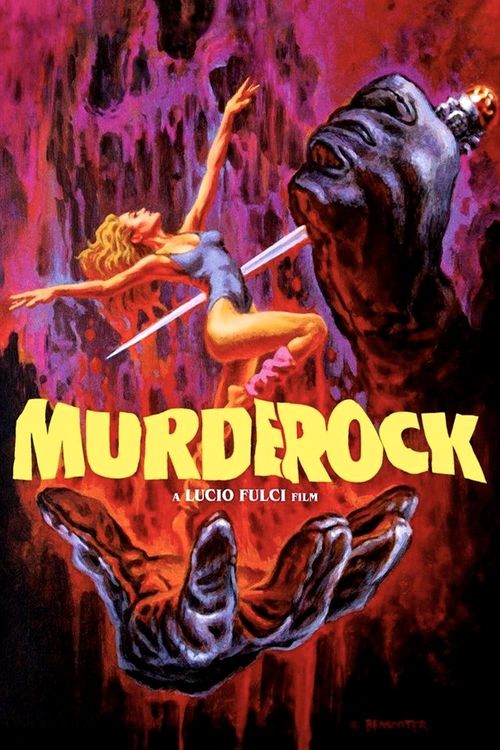
 

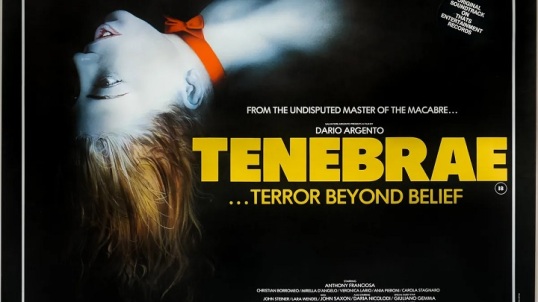
The Films of Dario Argento: Tenebrae


A few Octobers ago, I got the bright idea to try to review all of Dario Argento’s films over the course of TSL’s annual horrorthon.  Unfortunately, I got that idea on September 29th, two days before the start of Horrorthon.  I managed to make my way through Inferno until I had to temporarily abandon the project to focus on everything else that was going on that month.  However, since I’m not the type to fully give up on anything, I figured this would be the great year to finish up my Argento reviews.

Following the commercial failure of Inferno, a disillusioned Dario Argento returned to Rome.  His bad experience with 20th Century Fox had soured Argento on continuing to work with Hollywood and his struggles to film Inferno (as well as his increasingly strained relationship with girlfriend Daria Nicolodi) left him with little desire to continue The Three Mothers trilogy.  Instead, he focused on a new idea, one that was inspired by his own experience with an obsessed fan who had left vaguely threatening messages for him when he was in New York.  Released in 1982, Tenebrae was Argento’s return to the giallo genre and it would turn out to be a very triumphant return, even if in, typical Argento fashion, it would take a few years for many people to realize just how triumphant.

Argento himself claimed that, while the film was certainly a giallo, it was also his first stab at science fiction.  In an interview that appeared in Cinefantastique, Argento said that the film was meant to take place a few years in the future, after some sort of calamity had occurred that has greatly reduced the world’s population.  Interestingly, Argento said that the survivors were largely from the upper class and that none of them wanted to talk about or remember what had happened.

Is the science fiction element actually present in this film?  I think it is, though perhaps only because I’ve specifically looked for it.  Rome, as portrayed in Tenebrae, is a city that is full of sleek but impersonal buildings, the type that would have been recently built by a wealthy society that was unsure of what it believed.  Argento specifically avoids filming any scene near any historical landmarks, suggesting all of the evidence of Rome’s former greatness has been wiped out.

Perhaps the most futuristic element of the film (and the most prophetic) is that no one really seems to have a connection with anyone else.  The crowd scenes in Tenebrae aren’t really that crowded, even the ones that take place in what should be a busy airport.  (In many ways, the film’s portrayal of a Rome that is both busy but strangely empty brings to mind Jean Rollin’s portrayal of Paris in The Night of the Hunted.)  Even when we see people socialize, there seems to be an invisible barrier between them, as if they don’t want to run the risk of getting too close to each other.  When one character is fatally stabbed while out in public, perhaps the most disturbing aspect of the murder is that so many people just walk away, as if they’ve been conditioned to ignore anything unpleasant.  The only thing that prevents this scene from feeling like a vision of 2023 is that there aren’t a bunch of people filming the victim’s final moments on their phone.

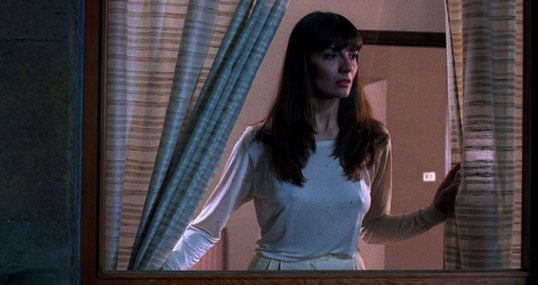
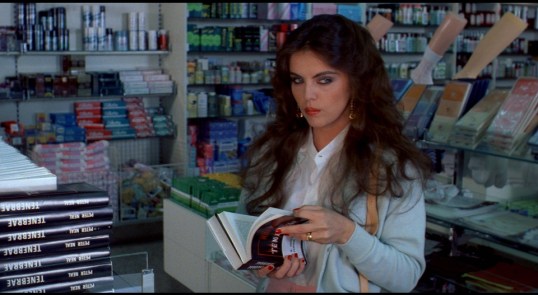
The film opens with a sequence that, as a former teen shoplifter, left me feeling disturbed.  Elisa Manni (Ania Pieroni, who played The Mother of Tears in Inferno and the enigmatic housekeeper in Fulci’s The House By The Cemetery) is a shoplifter who gets caught trying to steal the latest book by thriller novelist Peter Neal.  After being released, the carefree Elisa walks back to her home and, after being menaced by both a barking dog and a pervy old man, Elisa arrives in the safety of her house, starts to undress, and is promptly attacked by a black-gloved killer who slashes her neck and stuffs pages of Neal’s book into her mouth.  It’s not just the murder that makes this scene disturbing but also the fact that the killer was somehow waiting for Elisa in her house, establishing that this is a world where the safety of even a locked door is an illusion.

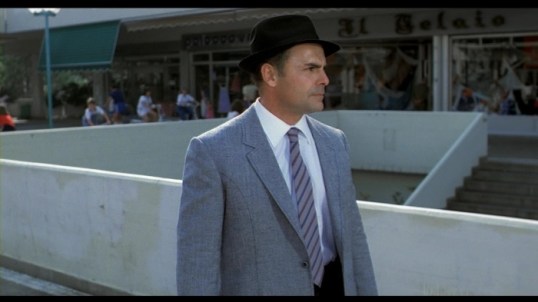
Peter Neal (Anthony Franciosa), who we first see riding his bicycle in New York, has come to Italy to promote his latest book, Tenebrae.  He arrives in Rome with his manager, Bullmer (John Saxon, giving a likable performance) and his assistant, Anne (Daria Nicolodi).  Confident to the point of arrogance, Peter is a pro at dismissing claims that his books are violent and misogynistic but even he is taken aback when an old friend of his, the journalist Tilde (Mirella D’Angelo), suggests that Tenebrae might inspire violence.

Peter Neal is a celebrity and a pretty obvious stand-in for Argento and everyone in the film is obsessed with him.  His ex-fiancée, Jane (Victoria Lario), has followed Peter to Rome, intent on getting some sort of revenge for the way that he treated her while they were together.  (Daria Nicolodi felt the vindictive and unstable Jane was based on her, which was another thing that strained her notoriously volatile relationship with Dario.)  Peter’ young assistant, Gianni (Christian Borromeo, of Deodato’s The House on the Edge of the Park and Fulci’s Murderrock) hero worships him.  The puritanical talk show host, Christiano Berti (John Steiner), wants to interview Peter about the morality of his books.  And the killer, whoever they may be, is leaving letters for Peter, informing him that his book have inspired the killer’s crimes.  Detective Germani (Spaghetti western star Giuliano Gemma) is investigating the letters and he is an admitted fan of Peter Neal’s novels but, somewhat alarmingly, he mentions that he’s never able to guess the killer’s identity.

Argento’s camera restlessly prowls his futuristic Rome while Goblin’s music booms on the soundtrack as the people in Peter Neal’s life are murdered by a killer wearing black gloves and carrying a straight razor.  The murder scenes feature some of Argento’s best work, directed in such a ruthless and relentless manner that we understand the killer’s determination without having to see their face.  This is a film of elaborate set pieces and, as if in direct response to 20th Century Fox’s attempts to control his work on Inferno, Argento is eager to show what he can do when left alone.  The film is remembered for the sequence where the camera glides over the exterior of an apartment building while the killer stalks the inhabitants but, for me, the scariest scene is when poor Maria (Lara Wendel), the daughter of Neal’s landlord, finds herself being chased straight into the killer’s lair by a very viscous Doberman.

When the film does slow down, it’s for flashbacks to a beach and acts of sexual violence performed by and against an enigmatic woman (who is played by transgender performer, Eva Robbins).  The beach flashbacks unfold in a hazy, dream-like manner and they leave us to wonder if what we’re watching is real or if it’s just a fantasy.  If the “modern” scenes feature Argento at his most energetic, the beach scenes feature Argento at his most enigmatic.

Daria Nicolodi often said that she considered her final scene in this film to be Argento’s greatest act of cruelty to her.  Coming across the killer’s final tableaux and discovering the truth about who the killer is, Anne stands in the rain and screams over and over again.  Nicolodi apparently felt that Argento required her to stand there soaked and screaming in order to punish her for having worked (with Tenebrae co-star John Steiner) on Mario Bava’s Shock, instead of having accepted a supporting role in Suspiria.

Whatever personal motives may have been involved in the decision, I think Nicolodi’s screaming is one of the most powerful moments to be found in Tenebrae.  It’s certainly the most human moment because I think anyone with a soul would scream upon learning the truth of what has been happening in Rome.  Every assumption that Anne had has been overturned.  Who wouldn’t scream?  Continuing with Argento’s claim that the film was about a world where people no longer discuss the terrible things that have happened, Anne’s screams are the most human part of the movie.

Tenebrae is the last of Agento’s truly great and flawless films.  Of course, in usual Argento fashion, it was not treated well in the States, where it was initially released in a heavily edited version and with a terrible title (Unsane, under which it can still be found in certain Mill Creek box sets).  But Tenebrae has since been rediscovered and today stands as one of Argento’s greatest triumphs.

The (Reviewed) Films of Dario Argento:

  1. The Bird With The Crystal Plumage
  2. Cat O’Nine Tales
  3. Four Flies on Grey Velvet
  4. Deep Red
  5. Suspiria
  6. Inferno

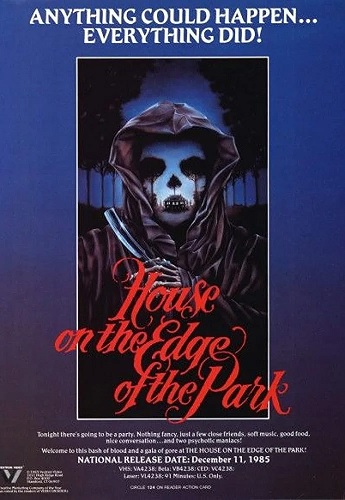
International Horror Film: House On The Edge of the Park (dir by Ruggero Deodato)


Or is it House Of The Park On Edge?

When this Italian thriller was first released in the United States in 1980, the film’s title was mistranslated by whoever put together the film’s American trailer.  In Italy, it was known as La casa sperduta nel parco.  When it was released in the United States, it was meant to be known as The House On The Edge of the Park but the trailer famously referred to it as being….

That the trailer was sent out with the title incorrectly translated tells you a lot about the American grindhouse film scene.  If a similar mistake had been made a with a big studio production, someone would have lost their job and a lot of money would be spent to put together a new trailer.  In the world of the grindhouse, it was probably understood that people would come to the film regardless of whether they even knew what the title was.  According to the book Sleazoid Express, House on The Edge of the Park was very popular in the grindhouse theaters of New York’s 42nd Street, where audiences loved the violence, the nudity, and the misogynistic dialogue.

Today, House on the Edge of the Park is remembered for being the film that brought together Ruggero Deodato, David Hess, Giovanni Lombardo Radice, Christian Borromeo, Annie Belle, and Lorraine De Selle.  (The Anchor Bay DVD release featured interviews with Deodato, Hess, and Radice.  Radice and Deodato seemed a bit surprised and, at times, horrified that the film still had fans.  Hess seemed considerably less shocked.)  House on the Edge of the Park was the film that Deodato made after the subversive and satirical Cannibal Holocaust.  Though House on the Edge of the Park retains a subversive edge, it’s a much more straight forward movie than Cannibal Holocaust.  No one has ever mistaken House on the Edge of the Park for a documentary.

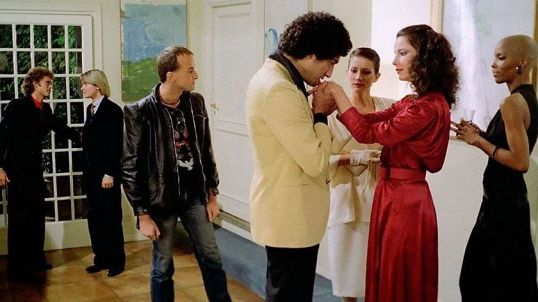
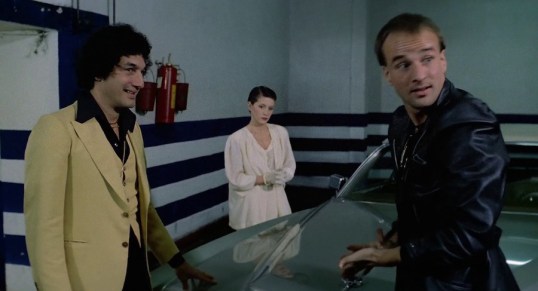
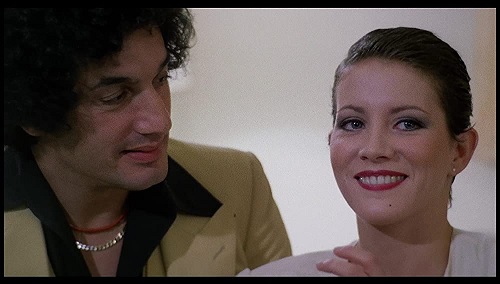
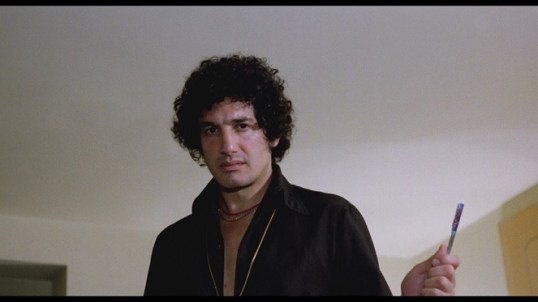
David Hess, who may have written songs for Elvis and Pat Boone but who is destined to always be remembered for his performance as Krug in Last House On The Left, plays Alex.  Alex owns a New York City garage.  Alex owns a canary yellow suit.  Alex likes to dance.  Alex is also a serial killer who, when we first see him, is forcing a woman (played by Hess’s wife, who is credited as Karoline Mardek), off the road so that he can assault and murder her.  As the film begins, Alex and his sidekick, Ricky (Giovanni Lombardo Radice, appearing in one of his first films and stealing the show with his demented energy) are getting ready to go “boogie.”  Two rich kids, Tom (Christian Borromeo, my blonde Italian horror crush) and Lisa (Annie Belle), pull into the garage.  Ricky fixes their car.  Tom and Lisa, whose white dress is to die for, are insistent that Alex accompany them to a party at a house …. a house on the edge of the park!

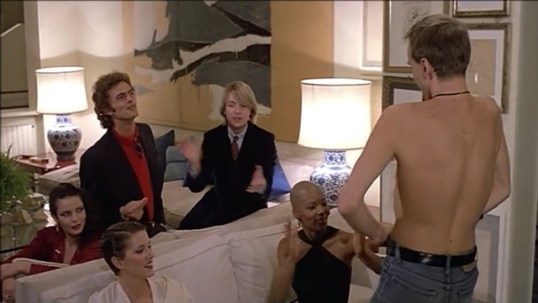
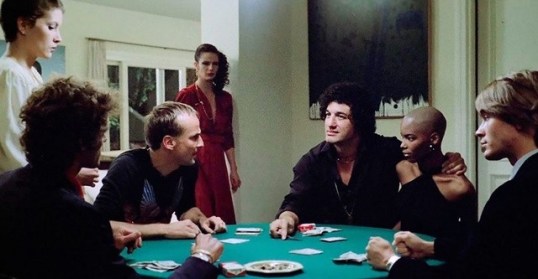
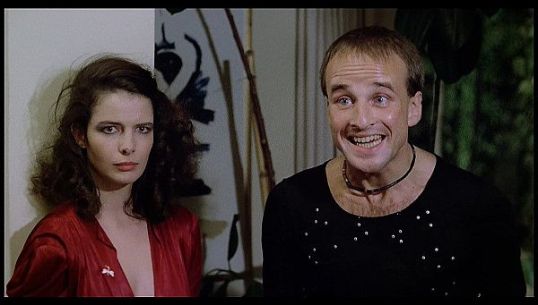
Already at the house are Gloria (Lorraine De Selle), whose red dress is to die for, and Howard (Gabriele Di Giulio), who is apparently Gloria’s boyfriend.  Also waiting at the house is Glenda (Maria Claude Joseph), who appears to just be hanging out because she has nothing better to do.  (There’s a lot of talk about boredom and ennui, amongst the rich young people of House on the Edge of the Park.)  When Tom and Lisa show up with Alex and Ricky, a very familiar class dynamic plays out.  Alex and Ricky are very blue collar.  Alex is earthy and says whatever pops into his head.  Ricky is dependent on Alex to tell him what to do and is also too slow to realize that the rich people are talking down to him.  Ricky is taunted into dancing and then into playing poker.  Ricky loses his money.  Alex discovers that the game is fixed.  Violence follows, with Alex holding the house hostage with the help of the increasingly conflicted Ricky.

Of course, it turns out that there’s a twist and that it wasn’t just coincidence that led to Tom and Lisa pulling into Alex’s garage.  Of course, the twist itself never really makes sense.  The entire film centers around Tom finding time to retrieve something from his office.  It takes him forever to do it because Alex keeps watching him and beating him up.  But there’s actually several moments in the film in which Alex is distracted and he even leaves Tom alone at one point.  You have to wonder just what exactly Tom was doing during all that time.

It’s a deeply misogynistic film, one that features an inexcusable scene in which Gloria and Ricky have consensual sex just a few minutes after Ricky tries to rape her.  (Even if you can see beyond the idea of the sophisticated Gloria falling for a rapist, who stops to have sex while there’s a madman threatening to murder all of your friends?)  Before the party turns violent, Lisa flirts with Alex and, at one point, even showers in front of him.  Her actions make even less sense once it is revealed that Tom and Lisa always knew who Alex was and what he was capable of.  Indeed, the film is sometimes so offensive that it feels almost like a parody of an offensive film.

And yet, there are things to appreciate about the film.  Deodato plays up the class warfare aspect of the story, with Tom and his friends initially condescending to Alex and Ricky, just to discover how little power they actually had once Alex got the upper hand.  Giovanni Lombardo Radice, Lorraine De Selle, Annie Belle, and Christian Borromeo all give good performances, even when their characters are required to do things that don’t make any sense.  David Hess is a force of malevolent nature as Alex.  The house is lovely and I especially liked the pool, though I would suggest changing out the water before taking a swim.  The location shots of late 70s New York are interesting to look at, especially if you’re a history nerd like me.  Riz Ortolani’s soundtrack will get stuck in your head.  I defy you to watch this film and not end up singing that “Do It To Me Once More” song.

In the end, House on the Edge of the Park is not a film that I can really recommend, unless you’re a fan or a student of Italian horror.  In that case, you have to watch the film, if just because of the familiar faces in the cast and the fact that it was directed by Deodato.  Still, if anyone ever told me that this was their favorite film, I would probably immediately start eyeing the exit.  Towards the end of the movie, Gloria says that there has been enough violence and I agreed with her.  That said, violence against Alex is totally acceptable.

The film itself is destined to live forever as an internet meme, as a GIF of David Hess screaming in slow motion has recently become quite popular on Twitter.  There’s just no escaping the House of the Park on the Edge!

Scenes I Love: The House On The Edge of the Park (dir. by Ruggero Deodato)


Don’t ask me why I love this scene from the 1980 grindhouse classic House on the Edge of the Park because I’ll go on and on.  I could say that I love dancing in general.  I could talk about how I own a red dress just like the one that Lorraine De Selle wears in this scene.  I could rave about how pretty Annie Bell and Christian Borromeo were when they made this movie or the time capsule appeal of David Hess’s canary yellow suit. 

But, in the end, I love this scene for two reasons:

1) The song playing in the background, composed by Riz Ortolani, is so bad yet so addictive and,

2) Giovanni Lombardo Radice is just so adorable doing his little dance.