Ten Years #42: Burzum


http://www.youtube.com/watch?v=iSa4wFaynho

Decade of last.fm scrobbling countdown:
42. Burzum (756 plays)
Top track (42 plays): Key to the Gate, from Det Som Engang Var (1993)

I remember watching some comedy in the early 90s where a cave man frozen in ice gets thawed out and has to adapt to life in modern Los Angeles. I don’t really remember any details about it, except that it was bad. This has pretty much been Varg Vikernes’s fate since being released from prison in 2009, and no one ought to feel the least bit sorry for him. Varg ultimately made his name known through his crimes, not his music, but he used to deliver a sound to match. There is a tinge of the deranged in classic Burzum. Albums like Det Som Engang Var carry such a lasting appeal because they simultaneously capture the pagan spirit of early 1990s black metal and the air of madness that overtook the scene, landing many of its participants in coffins or jail. Varg’s first new recording after his release, Belus, was sufficiently better than anyone expected to open the door for a potential second chance at a successful musical career. But after more than a decade with no means to record, Varg let his longing for creative expression take him, pumping out five new albums in the four years that followed with little quality control, coupled with an endless sea of writings. The overwhelming majority of this material was ho-hum, and for any other aging artist this would be fine. Plenty of other later-career heavy metallers have earned sufficient respect in their younger years to maintain a fan base as their capacity for greatness dwindled. Plenty of revolutionary thinkers have maintained a right to social commentary extending beyond their original mode of expression. But no one respects Varg Vikernes nor views him as a revolutionary, and no one really should. In spite of the quality of his early albums, he remained rightly subject to criticism, leaving prison to run head first into a sea of high expectations and further demands for proof of talent. He failed to rise to the occasion, and now no one cares. He is busy writing treatises and filming documentaries that no one will ever grant the time of day. He is chugging out album after album that most of us will never bother listening to. Sorry Count Grishnackh. It is too late for your opinions to ever matter.

We can certainly continue to derive enjoyment from select Burzum material while rolling our eyes at any mention of its creator, but for me Varg is a bit of a disappointment. Black metal is something of the thinking man’s sledgehammer–a genre which oddly entangles disgust for intellectualism with ideas which require a great deal of formal dialogue to express in other-than-artistic ways. But if the fault lines of egotism render my favorite forms of music necessarily esoteric, I have always preserved the hope that some musician might have something intelligent to say about it. Varg runs his mouth ceaselessly, and I think it a shame that nothing substantive has ever come out of it. No one has ever been in a greater position to serve as the spokesman for the genre than Varg Vikernes, granted for all of the wrong reasons. The murder of Euronymous and Varg’s outrageous, self-incriminating comments which followed propelled him to a level of stardom that his music alone could have never achieved. Sure, he was entirely at odds with the genre; he could never, unlike artists such as Ihsahn, point to unlawful actions in the early 90s scene as an immature expression of an entirely justifiable state of mind. But he had the one thing no other black metal artist could hope to achieve: extensive public attention beyond his niche genre.

I guess I hoped that more than 15 years in prison would have given him the opportunity to grow up a little. I thought maybe he would fess up to having been a dumb-shit teenager who ruined the Norwegian scene by letting his emo jealousy of Euronymous get in the way of his commitment to its values. I thought he might very carefully and very professionally take his time crafting an outstanding album as proof that he was moving on to bigger and better things. Belus succeeded in buying time, but Fallen and the works that followed proved beyond a doubt that the dumb-shit teenager was nothing more than an educated, bearded, dumb-shit adult. He never acknowledged his debt to metal–and his potential for adding a substantial new flame to a musical movement that has since rapidly left him in the dust. In short, it irks me that a man of so many words, once returned to the spotlight in 2009, had so little to say and show for it. Nevertheless, classic Burzum has stood the test of time and remains a quintessential example of the sound that swept Scandinavia in the early 1990s and continues to influence countless bands today.
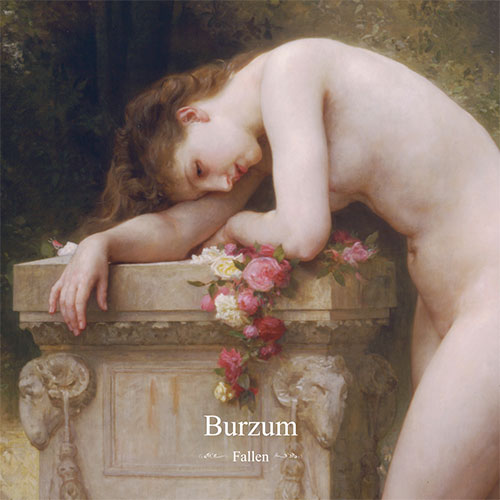
Review: Burzum – Fallen


Varg Vikernes was released from prison on May 24th, 2009, and in less than half a year he was recording a new album. Belus turned out to be everything I could have hoped for and more. It’s hard to describe what makes Varg’s music so enthralling. It has a sort of power to it–a trance-like quality that forces me to never really contemplate what it is he’s playing and just soak in its effects. Whether it’s Han Som Reiste in 1993 or Kaimadalthas’ Nedstigning in 2010, each album reaches a point where I’m completely lost in the music, sucked into his demented little world. Some of the weirdest dreams I ever had have ensued from falling asleep to Det Som Engang Var.

Jeg Faller

Sixteen years in prison didn’t seem to detract from this. Belus felt to me like the perfect continuation to Filosofem, as though his long absence from the metal world did not negatively impact his talents in the slightest. Yet somehow, just a year later, everything has changed.

I want to say straight ahead that Fallen is pretty bad. Not only does it musically lack his long-standing ability to captivate me, it’s pretty obnoxious at times. First of all, the vocals are a train wreck. Maybe in response to criticism that his screaming vocals weren’t as demented on Belus as they used to be, or maybe because he’s just an old man who can’t pull it off anymore, Varg completely abandons screaming on Fallen. Instead he whispers with a mouth full of marbles–the most annoying spoken vocals I have heard since Rhapsody of Fire were visiting the court of king chaos.

And the opening track’s chorus… Well, to quote a friend of mine, “It’s so catchy. I think Varg has an unexplored career in pop music waiting on him. Ahhhhh ahhhhh ah ahhh, jeg faller. Oooo oooo oo ooo, jeg faller.”

Enhver til Sitt

Jeg Faller might be the biggest joke on the album, but a lot of the problems that plague it persist. His new vocal style is completely unconvincing, and that feeling that he’s trying too hard forces me to actually pay attention to the music, not just let it take me like his past works. You’re then left with the realization that he’s really not a very good musician at all. In the absence of any encompassing force, the boring repetitive simplicity of his riffs stand defenseless.

It’s always intrigued me that a guy as batshit insane and colossally egotistical as Varg Vikernes could write such brilliant music. No one but Varg himself honestly expected Belus to be any good, and that made its success all the more startling. Fallen, on the other hand, is pretty much what I expected Belus to be.


Budstikken

That being said, the album has its few sparse moments. Budstikken stands out as my favorite by far, being the only track I actually really like. But its uniqueness is too little, too late. If he’d released Fallen straight out of prison I’d have said “ah well” and not bothered much with it. It’s because he so recently proved himself that Fallen disappoints rather than simply living up to low expectations.

The weird thing is this album seems to have met a generally better reception than Belus. I don’t know if more people actually like it or if the critics aren’t even wasting their breath anymore, but my verdict is that Fallen just isn’t very good. Who knows, maybe his next one will be brilliant. He’s a pretty unpredictable guy. But for now, I’m going to keep listening to Belus and pretend this one never happened. Except for Budstikken. I really like Budstikken.

A Blaze in the Northern Sky: Music for October (part 6)


Happy Halloween. Hope you enjoy the conclusion to my black metal countdown.


10. Bathory – Bestial Lust
Were I outlining a history of black metal, this song probably wouldn’t make the cut. By mid-80s standards it might be black metal, but by early Bathory standards it’s pretty straight forward thrash. That is, from a stylistic perspective it was already in 1985 a throwback to the genre Bathory had evolved out of. But it’s such an awesome song that, thrash and black metal being so intimately tied in the 80s, I think I can justify it. I considered giving the ten slot to In Conspiracy with Satan instead. Feel free to humor it as the more appropriate choice.


9. Mörk Gryning – Tusen år har gått
When I think of quintessential black metal, stylistically speaking, the first album that comes to mind isn’t In the Nightside Eclipse, De Mysteriis Dom Sathanas, or any other obvious staple. It’s Mörk Gryning’s 1995 release, Tusen år har gått. This inexplicably forgotten Swedish band managed to capture every stereotype element of black metal perfectly in their debut release. If I personally ever aspired to start a black metal band, this album is what I would try to emulate.


8. Immortal – The Call of the Wintermoon
But when it comes to influence, to the legends go the glory. Immortal gained much of their fame for later works, with Call of the Wintermoon known best for its ridiculous music video, not the song itself. I avoided showing that video for a reason. 1992’s Diabolical Fullmoon Mysticism is less noisy than a lot of its contemporaries, and its dark character shines through all the more because of it. This album, and this song especially, set a standard for black metal aesthetics. It’s one of the first to be so distinct from thrash that the influence is no longer immediately apparent.


7. Burzum – Key to the Gate
Varg Vikernes’s works being so album-oriented, I could think of very few individual tracks that maintained their greatness apart from their larger vision. But Key to the Gate always, for me at least, stood apart. The intro is absolutely demented, and yet it progresses into a well-structured song. For me it really captures Varg himself, a mind half brilliant and half warped beyond rationality. In explaining his historic past, Varg has been known to change his story frequently. Sometimes the church burnings, the murder, the primitivism all appears to be part of a rational and not altogether disagreeable plan. Sometimes he reveals himself a racist, homophobic, paranoid imbecile. The 2010 release Belus, his first in over a decade, is in striking contrast to Dissection’s Reinkaos. Following Jon Nödtveidt’s jail term for murdering a homosexual African man, his creative genius had left him. His next album was a failure, and he took his life not long after. Varg made some rather bold statements about Euronymous’s sexual orientation in explaining his motivation for murder (not to mention some claims to white supremacy that surpassed mere confusion to the point of complete ridiculousness). Yet after serving more than twice as long as Nödtveidt, his next album was a brilliant continuation of the old Burzum, as though no time had passed at all. There is a sort of unnatural complexity to him, and his music alike.


6. Dissection – Where Dead Angels Lie
But Jon Nödtveidt’s significance in at least this one instance should not be overlooked. Storm of the Light’s Bane, released in 1995, features perhaps the single most memorable black metal song I’ve ever heard. At least for a brief three years, Sweden’s Dissection was rivaling anything Norway had to offer. As so many black metal stories go, Nödtveidt’s suicide was nothing approaching traditional. I read that he blew his brains out sitting in the middle of a pentagram surrounded by candles, with a grimoire open before him.


5. Gorgoroth – Ritual
I wouldn’t go so far as to say Gaahl is overrated, but Hat, their vocalist from 1992 until 1995, suits me best. Their debut Pentagram is just as unforgiving as their later works, but with a lo-fi value that captures an essence of evil more effectively than brute force. The third track, Ritual, struck me the first time I heard it and remains still one of my favorite songs of the genre. (And it shares so much in common with Nattefrost that I almost have to believe it had a direct influence on his solo project.)


4. Darkthrone – Transilvanian Hunger
This one kind of goes without saying. If Kathaarian Life Code initiated the second wave of black metal, Transilvanian Hunger predicted its future. Primitive and raw on a whole new level (it was recorded three years before Ulver’s Nattens Madrigal), the album’s trance-like appeal might have some relation to Varg Vikernes’s lyrical contributions. I imagine it was more a matter though of fewer minds leading to a more consistant focus. It was the first Darkthrone album involving Nocturno Culto and Fenriz exclusively as band members.


3. Emperor – I am the Black Wizards
Emperor’s self-titled 1993 EP briefly pre-dates In the Nightside Eclipse and, along with two other EPs/demos of the era, features many of their first album’s classics in their unrefined, original forms. I wouldn’t go so far as to call the originals better (Emperor’s reunion performance of the song at Wacken 2006 is by far the best version of it out there), but the original appeals best to that rawness with which the second wave of black metal made its mark. All of the refined features that set Ihsahn’s song-writing apart–the heavy synth, the complex movements, the difficult guitar riffs–are present, but in this early form they still took second stage to that demented ethos black metal embraced for a few years in the early 90s.


2. Carpathian Forest – Shut Up, There is No Excuse to Live
If you question this placement get the fuck out of my article.


1. Mayhem – Funeral Fog
“Please excuse all the blood.” Dead’s suicide note, the artistic photographed rearrangement of his splattered brains for use on a future album cover, clothing buried with dead animals for weeks to reek of decay, Euronymous’s brutal cold-blooded murder with a knife to the skull, Varg Vikernes’s inclusion as the album’s bassist AFTER murdering its lead guitarist, the burning of the Fantoft stave church, the trial that lead to Faust’s confession of murdering a random stranger, Tchort’s imprisonment for grave desecration, Samoth’s imprisonment for arson… Black metal consumed itself in a real life horror story unrivaled in fiction between 1991 and 1993, and it all culminated in the release of De Mysteriis Dom Sathanas. Funeral Fog must be appreciated with an eye towards the literal insanity that surrounded it. “In the middle of Transylvania, all natural life has from a long time ago gone. It’s thin and so beautiful.” We reflect on Elizabeth Bathory and Vlad Tepes as the real life icons of evil from which the cultural genre known as horror, 20th century serial killers not withstanding, was born. But in the early 90s, the middle of Transylvania was southern Norway.

Happy Halloween!

I leave you with a final treat that couldn’t stylistically make the cut.