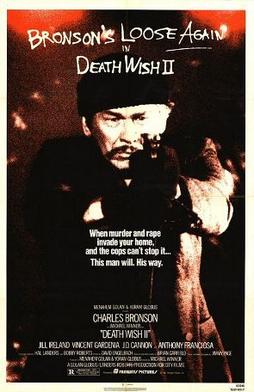
Bronson’s Back!: Death Wish II (1982, directed by Michael Winner)


To quote John McClane, “How can the same shit happen to the same guy twice?”

It has been eight years since Paul Kersey (Charles Bronson) lost his wife and single-handedly cleaned up New York City.  The first Death Wish ended with Paul in Chicago, preparing to gun down a new group of criminals.  I guess Chicago didn’t take because, at the start of Death Wish II, Paul is in Los Angeles and he’s working as an architect again.  He has a new girlfriend, a bleeding heart liberal reporter named Geri (Jill Ireland, Bronson’s real-life wife) who is against the death penalty and who has no idea that Paul used to be New York’s most notorious vigilante.  Having finally been released from the mental institution, Carol (Robin Sherwood) is living with her father but is now mute.

Crime rates are soaring in Los Angeles and why not?  The legal system is more concerned with the rights of the criminals than the victims and Paul has retired from patrolling the streets.  But when a group of cartoonish thugs rape and kill his housekeeper and cause his daughter to fall out of a window while trying to escape them, Paul picks up his gun and sets out for revenge.

Death Wish II was not the first sequel to Death Wish.  Brian Garfield, the author of the novel on which Death Wish was based, never intended for Paul to be seen as a hero and was disgusted by what he saw as being the film’s glorification of violence.  As “penance,” he wrote a sequel called Death Sentence, in which Paul discovered that he had inspired an even more dangerous vigilante.  When Menahem Golan and Yoram Globus bought the rights to produce a second Death Wish film, they decided not to use Garfield’s sequel and instead went with a story that was co-written by Golan.

It’s the same basic story as the first film.  Again, Paul is a mild-mannered architect who is a liberal during the day and a gun-toting reactionary at night.  Again, it’s a home invasion and a death in the family that sets Paul off.  Again, Paul gets help from sympathetic citizens who don’t care that the police commissioner (Anthony Franciosa) wants him off the streets.  Jeff Goldblum played a rapist with a switch blade in the first film.  This time, it’s Laurence Fishburne who fills the role.  (Fishburne also carries a radio, which he eventually learns cannot be used to block bullets.)  Even Detective Ochoa (Vincent Gardenia) returns, coming down to Los Angeles to see if Paul has returned to his old ways.

The main difference between the first two Death Wish films is that Death Wish II is a Cannon film, which means that it is even less concerned with reality than the first film.  In Death Wish II, the criminals are more flamboyant, the violence is more graphic, and Paul is even more of a relentless avenger than in the first film.  In the first Death Wish, Paul threw up after fighting a mugger.  In the second Death Wish, he sees that one of the men who raped his daughter is wearing a cross, leading to the following exchange:

“Do you believe in Jesus?”

“Yes, I do.”

“Well, you’re going to meet him.”

BLAM!

Death Wish II is the best known of the Death Wish sequels.  It made the most money and, when I was a kid, it used to show on TV constantly.  The commercials always featured the “You believe in Jesus?” exchange and, every morning after we saw those commercials, all the kids at school would walk up to each other and say, “You believe in Jesus?  Well, you’re going to meet him.”  It drove the teachers crazy.

Overall, Death Wish II is a lousy film.  Michael Winner, who was always more concerned with getting people into the theaters than anything else, directs in a sledgehammer manner that makes his work on the first film look subtle.  He obscenely lingers over every rape and murder, leaving no doubt that he is more interested in titillating the audience than getting them to share Paul’s outrage.  The script is also weak, with Geri so poorly written that she actually gets more upset about Paul going out at night than she does when she learns that Paul’s daughter has died.  When Paul sets out to track down the gang, his method is to merely wander around Los Angeles until he stumbles across them.  It doesn’t take long for Paul to start taking them out but no one in the gang ever seems to be upset or worried that someone is obviously stalking and killing them.

There are a few good things about the film.  Charles Bronson was always a better actor than he was given credit for and it’s always fun to watch Paul try to balance his normal daily routine with his violent night life.  Whenever Geri demands to know if he’s been shooting people, Paul looks at her like he is personally offended that she could possibly think such a thing.  Also, the criminals themselves are all so cartoonishly evil that there’s never any question that Paul is doing the world a favor by gunning them down.  For many otherwise sensible viewers, a movie like Death Wish II may be bad but it is also cathartic.  It offers up a simple solution to a complex issue.  In real life, a city full of Paul Kerseys would lead to innocent people getting killed for no good reason.  But in the world of Death Wish II, no one out after nightfall is innocent so there’s no need to worry about shooting the wrong person.

Finally, the film’s score was written by the legendary Jimmy Page.  The studio wanted Isaac Hayes to do the score but Winner asked his neighbor, Page.  Page took the film, retreated into his studio, and returned with a bluesy score that would turn out to be the best thing about the movie.  The soundtrack was the only one of Page’s solo projects to be released on Led Zeppelin’s record label, Swan Song Records.

Tomorrow, Bronson returns with Death Wish 3!
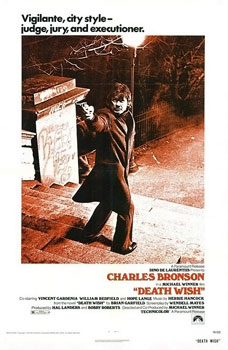
Bronson’s Revenge: Death Wish (1974, directed by Michael Winner)


To quote “Dirty” Harry Callahan, “I’m all broken up about his rights.”
In 1972, a novel by Brian Garfield was published.  The novel was about a meek New York City accountant named Paul Benjamin.  After Paul’s wife is murdered and his daughter is raped, Paul suffers a nervous breakdown.  A self-described bleeding heart liberal, Paul starts to stalk the streets at night while carrying a gun.  He is hunting muggers.  At first, he just kills the muggers who approach him but soon, he starts to deliberately set traps.  Sinking into insanity, Paul becomes just as dangerous as the men he is hunting.  Garfield later said that the book was inspired by two real-life incidents, one in which his wife’s purse was stolen and another in which his car was vandalized.  Garfield said that his initial response was one of primitive anger.  He wondered what would happen if a man had these rageful thoughts and could not escape them.

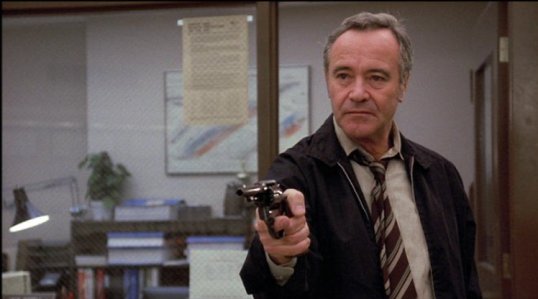
The title of that novel was Death Wish.  Though it was never a best seller, it received respectful reviews and Garfield subsequently sold the film rights.  At first, Sidney Lumet was attached to direct and, keeping with Garfield’s portrayal of Paul Benjamin, Jack Lemmon was cast as the unlikely vigilante.

Lumet, ultimately, left the project so that he could concentrate on another film about crime in New York City, Serpico.  When Lumet left, Jack Lemmon also dropped out of the film.  Lumet was replaced by Michael Winner, a director who may not have been as thoughtful as Lumet but who had a solid box office record and a reputation for making tough and gritty action films.

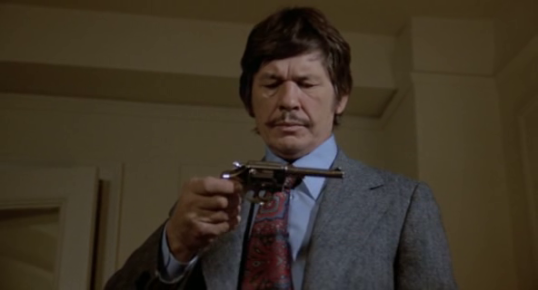
Winner immediately realized that audiences would not be interested in seeing an anti-vigilante film.  Instead of casting an actor with an intellectual image, like Jack Lemmon, Winner instead offered the lead role (now named Paul Kersey and no longer an accountant but an architect) to Charles Bronson.  When Winner told Bronson that the script was about a man who shot muggers, Bronson replied, “I’d like to do that.”

“The script?” Winner asked.

“No, shoot muggers.”

At the time that he was cast, Charles Bronson was 52 years old.  He was the biggest star in the world, except for in America where he was still viewed as being a B-talent at best.  Bronson was known for playing tough, violent men who were not afraid to use violence to accomplish their goals.  (Ironically, in real life, Bronson was as much of an ardent liberal as Paul Kersey was meant to be at the beginning of the movie.)  Among those complaining that Charles Bronson was all wrong for Paul Kersey was Brian Garfield.  However, Bronson accepted the role and the huge box office success of Death Wish finally made him a star in America.

To an extent, Brian Garfield was right.  Charles Bronson was a better actor than he is often given credit for but, in the early scenes of Death Wish, he does seem miscast.  When Paul is first seen frolicking with his wife (Hope Lange) in Hawaii, Bronson seems stiff and awkward.  In New York City, when Paul tells his right-wing colleague (William Redfield) that “my heart does bleed for the less fortunate,” it doesn’t sound natural.  But once Paul finds out that his wife has been murdered and his daughter, Carol (Kathleen Tolan), has been raped, Paul gets mad and Bronson finally seems comfortable in the role.

In both the book and the original screenplay, both the murder and the rape happened off-screen.  Never a subtle director, Winner instead opted to show them in a brutal and ugly scene designed to get the audience as eager to shoot muggers as Bronson was.  Today, the power of the scene is diluted by the presence of Jeff Goldblum, making his screen debut as a very unlikely street thug.  Everyone has to start somewhere and Goldblum got his start kicking Hope Lange while wearing a hat that made him look like he belonged in an Archie comic.

With his wife dead and his daughter traumatized, Paul discovers that no one can help him get justice.  The police have no leads.  His son-in-law (Steven Keats) is a weak and emotional mess.  (As an actor, some of Bronson’s best moments are when Paul makes no effort to hide how much he loathes his son-in-law.)  When a mugger approaches Paul shortly after his wife’s funeral, Paul shocks himself by punching the mugger in the face.

When Paul is sent down to Arizona on business, he meets Ames Jainchill (Stuart Margolin), a land developer who calls New York a “toilet” and who takes Paul to see a wild west show.  Later at a gun club, Paul explains that he was a conscientious objects during the Korean War but he knows how to shoot.  His father was a hunter and Paul grew up around guns.  When Paul returns to New York, Ames gives him a present, a revolver.  Paul is soon using that revolver to bring old west justice to the streets of New York City.

As muggers start to show up dead, the NYPD is outraged that a vigilante is stalking the street.  Detective Frank Ochoa (Vincent Gardenia) is assigned to bring the vigilante in.  But the citizens of New York love the vigilante.  Witnesses refuse to give an accurate description of Paul.  When Paul is wounded, a young patrolman (Christopher Guest, making almost as unlikely a film debut as Jeff Goldblum) conspires to keep Paul’s revolver from being turned over as evidence.

The critics hated Death Wish, with many of them calling it an “immoral” film.  Brian Garfield was so disgusted by how Winner changed his story that he wrote a follow-up novel in which Paul is confronted by an even more dangerous vigilante who claims to have been inspired by him.  Audiences, however, loved it.  Death Wish was one of the top films at the box office and it spawned a whole host of other vigilante films.

Death Wish is a crude movie, without any hint of subtlety and nuance.  It is also brutally effective, as anyone who has ever felt as if they were the victim of a crime can attest.  In a complicated and often unfair world, Kersey’s approach may not be realistic or ideal but it is emotionally cathartic.  Watching Death Wish, it is easy to see why critics hated it and why audiences loved it.

It is also to see why the movie made Bronson a star.  Miscast in the role or not, Bronson exudes a quiet authority and determination that suggests that if anyone could single-handedly clean-up New York City, it’s him.  An underrated actor, Bronson’s best moment comes after he punches his first mugger and he triumphantly reenters his apartment.  After he commits his first killing, Bronson gets another good scene where he is so keyed up that he collapses to the floor and then staggers into the bathroom and throws up.  Garfield may have complained that the Death Wish made his madman into a hero but Bronson’s best moments are the ones the suggest Paul has gone mad.  The real difference between the book and the movie is that the movie portrays madness as a necessary survival skill.

This Friday, a new version of Death Wish will be playing in theaters.  Directed by Eli Roth, this version starts Bruce Willis as Dr. Paul Kersey.  Will the new Death Wish be as effective as the original?  Judging from the trailer, I doubt it.  Bruce Willis or Charles Bronson?  I’ll pick Bronson every time.

Tomorrow, Bronson returns in Death Wish II!

9 Favorite Revenge Films


Having recently seen Michael Caine’s revenge film Harry Brown I got to thinking about other revenge-themed films I’ve watched through the years and I realized that there were quite a bit of them. There’s something just primal and Old Testament about revenge flicks. It doesn’t matter whether they’re high-brow art-house films or the cheapest grindhouse flicks in the end it all boils down to one individual raining down their own version of Divine Wrath on those who wronged them.

Who hasn’t fantasized or thought about going all medieval on someone who just screwed them over. Maybe it was an infraction that was minor that one didn’t need to get overly upset over or something so heinous that only violence at its most basest was the only response. Going through with such thoughts usually stayed there: in one’s thoughts and imaginings. Revenge films seems to be quite popular because they allow even the meekest and most pacifist to secretly live vicariously through the revenge-minded leads in the film.

The list below is not the best revenge films out there but they definitely are my favorites…

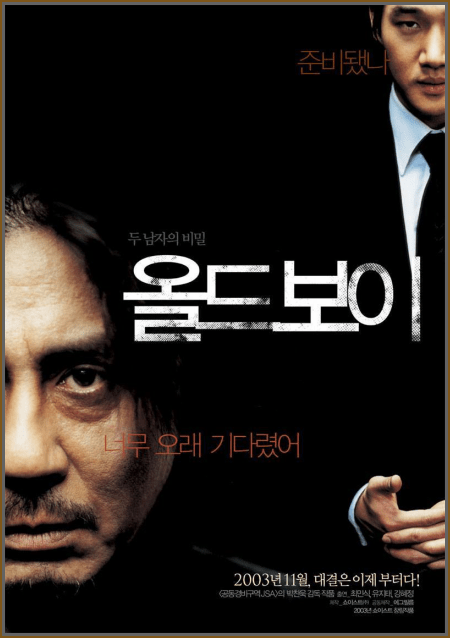
Oldboy – This revenge film by South Korean auteur Park Chan-wook wasn’t just a blast to watch but also happens to be one of the best films of the past decade. It takes a simple plot of a man imprisoned against his will for 15 years with no explanation whatsoever that he literally goes insane and back to sane during his captivity. Revenge being the one thing which keeps him going and revenge he gets to inflict on all those he discovers were responsible. The mind-twisting last act in the film takes the revenge-theme right on it’s head as we find out that the main lead wasn’t the only one on a revenge train of thought.

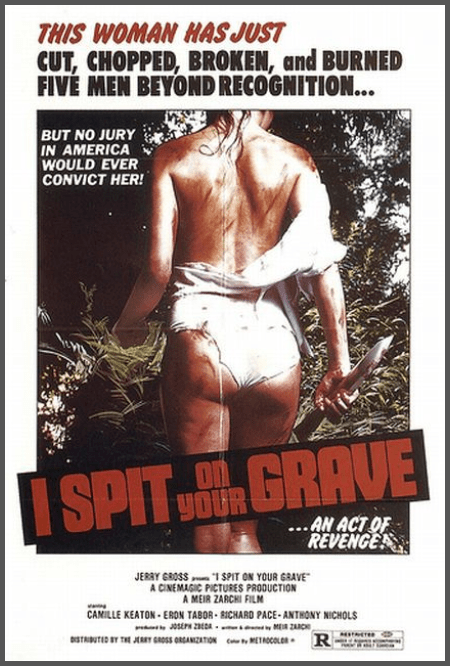
I Spit On Your Grave aka Day of the Woman – This grindhouse classic from Meir Zarchi is the epitome of the rape victim turned revenge valkyrie. The film is not very easy to sit through since there’s nothing subtle about how filmmaker Meir Zarchi filmed every exploitative scene. From the prolonged gang rape sequence to each subsequent revenge act by Camille Keaton’s Jennifer character. Some critics have blasted the film as pandering to the lowest common denominator while others have hailed it as a post-modern feminist film. I like to think that both sides are correct and that the film lies somewhere in the middle. It definitely will put a scare on any group of men who are having thoughts of shenanigans.

Death Wish – When people hear revenge flick they almost always say this iconic film by Charles Bronson from the 70’s. The film was adapted from Brian Garfield’s 1072 novel of the same name and directed by Michael Winner. While critics had mixed reactions to the film with some calling it irresponsible filmmaking, the nation as a whole embraced the film. Here was a film which screamed to the nation that the rising crime-rate in the U.S. during the 1970’s wasn’t going to go unanswered. While some people may have seen the film as a blank check to actually commit vigilantism in the end it just helped a country sick and tired of the crime they see day in and day out. Again here was art becoming a driving force in changing a nation’s collective malaise into something more positive. It didn’t hurt that Bronson was badass as Paul Kersey.

Kill Bill: Volume 1-2 – Who else but the video clerk made good would make what I would consider the greatest genre mash-up film ever made. Quentin Tarantino’s ode to kung fu, spaghetti westerns and revenge flicks became so massive that he had to split the film into two volumes. I am talking about Kill Bill. Not his greatest film ever but I definitely consider it his most geek-friendly and most entertaining. Uma Thurman as The Bride tearing a bloody and witty path of revenge on those who failed to kill her created some of the most iconic fight sequences of the generation this film came out in. Every scene almost seemed to be inspired by other films of a similar theme and genre that film geeks everywhere must’ve exploded in their pants from all the awesomeness they were witnessing. Each volume had two great action sequences that were both fantastical and brutal.

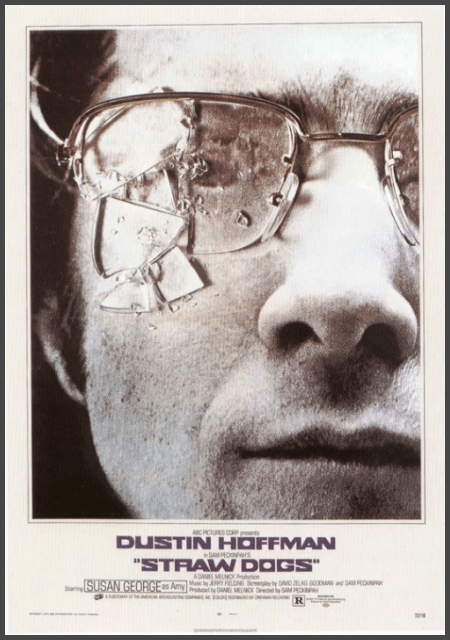
Straw Dogs – One of the most controversial films in Sam Peckinpah’s controversy-filled directing career. Released in 1971 it told the story of how even the meekest person could be pushed into dealing out extreme violent justice on those who have wrong them and those they love. Seen by critics as quite misogynistic due to the nature of the rape scene of Susan George’s Amy character the film was banned for two decades in the UK for it’s unflinching look at violence. Being a huge fan of Sam Peckinpah I had to see it and when I did it automatically became one of my favorite films ever and not just a favorite revenge film. If there was ever a modern retelling of a Biblical-level fable it is this classic from Sam Peckinpah. Every revenge-fueled act by Dustin Hoffman literally oozes Old Testament justice. Just the way I like my revenge. 🙂

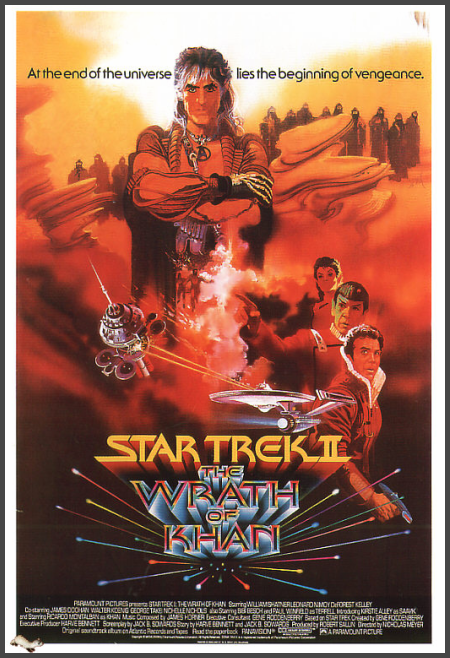
Star Trek II: The Wrath of Khan – Speaking of Biblical this first sequel in the Star Trek film franchise still considered by fans and non-fans alike as the best in the series. Hard to argue with them since it’s also an opinion I share. The sequel takes a popular episode from the original series and follows it up with all the cast of characters older and more seasoned. In the case of Ricardo Montalban’s Khan Noonian Singh quite seasoned and classy as smooth Corinthian leather. It’s a film with Shatner’s Kirk and Montalban’s Khan in an everending cycle of revenge which would culminate in what would be one of film’s most heartbreaking scenes. One could taste the revenge emanating from the two characters as age-won wisdom and genetically-engineered intellect fell by the wayside to feed the vengeance sought by Kirk and Khan. This revenge flick also has one of the most awesome death speeches by a character on film.

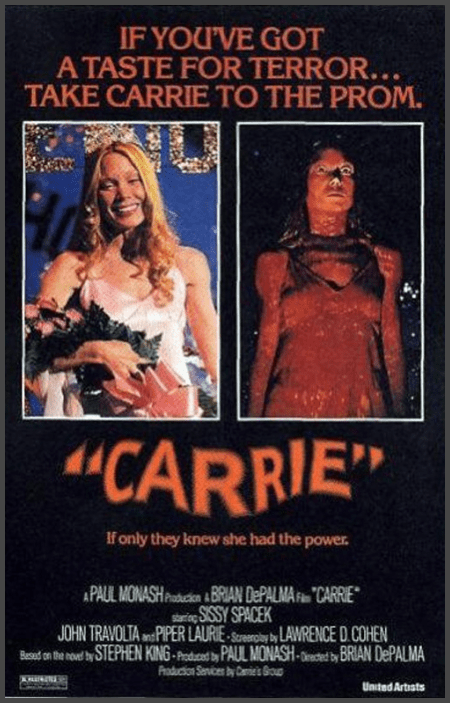
Carrie – Brian De Palma’s film adaptation of one of Stephen King’s better horror novels still seen by many as the best film adapt of a King novel. It combines the existential horror of being a girl and her body maturing in the dog-eat-dog world of high school and the horror said girl can inflict on those tormenting her. It’s high school bullying and revenge with a healthy dose of Stephen King shenanigans mixed in. Sissy Spacek was great as the titular character. One doesn’t have to be a high school girl to feel for Carrie and what she goes through. Her snapping in the last act and inflicting her psychokinetic-brand of revenge on her tormentors must’ve gotten more than a few “Hell yeah!” from some of the teens and adults who went through high school hell. It also has a classic line uttered by Carrie’s mother played by Piper Laurie: “I can see your dirty pillows. Everyone will.”

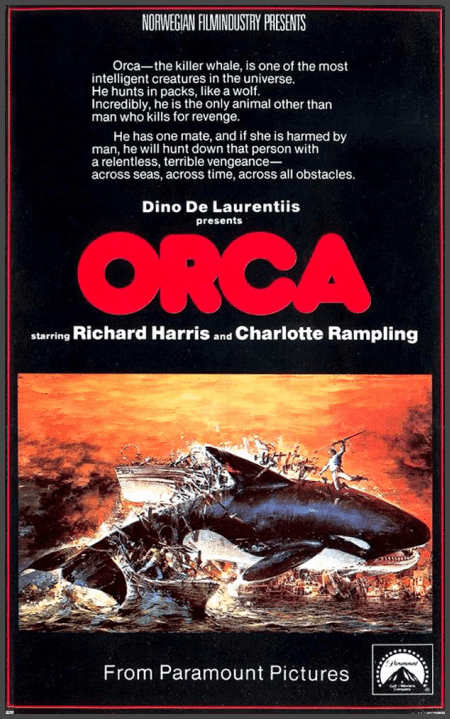
Orca – This film was to be producer Dino De Laurentiis’ attempt to capitalize on the success of Steven Spielberg’s classic man-versus-nature thriller, Jaws. Starring Richard Harris, Charlotte Rampling and Bo Derek the film wasn’t a success when it first came out. While Spielberg’s film was a modern retelling of Moby Dick this killer whale version by director Michael Anderson was Death Wish on water with Paul Kersey as the killer whale. This was one of the first films where I realized none of the people on the screen were worth rooting for to survive. I was all for the killer whale who was on a warpath to avenge his mate and unborn wee killer whale who were killed by Harris and his crew. Shamu this killer whale was not and it always brought a smile to my face whenever the killer whale outsmarted the humans and killed each and everyone in inventive ways. I’m wondering if all the killer whales in all the aquatic parks are just biding their time before they too go all Orca on their handlers and the audience. I’d pay to see that!

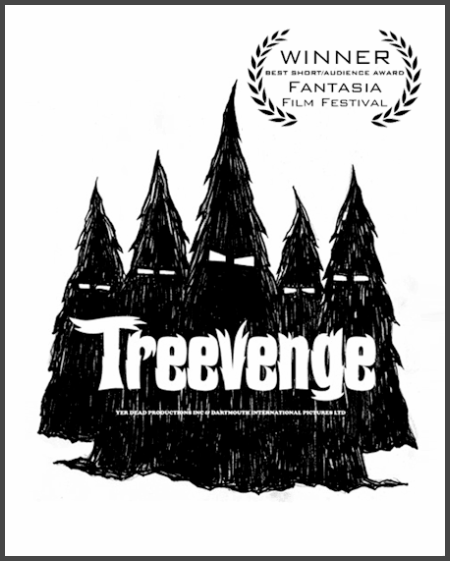
Treevenge – Last but not least the greatest film ever made!